Home Weird World Science How the earth was formed

How the earth was formed

0
72

How the earth was formed

The Violent, Untold Truth of Earth’s Origins: 4,600 Million Years of Chaos

Forget the polite, sanitized diagrams you saw in high school textbooks. You know the ones. They show a nice, neat cloud of dust gently swirling until—poof—a blue marble appears. It looks peaceful. It looks inevitable. But here is the reality check they often skip over: The history of our world isn’t a story of creation. It is a story of survival.

We are standing on a crime scene.

The birth of Earth, roughly 4.54 billion years ago, wasn’t a construction project. It was a demolition derby on a cosmic scale. We are talking about a time when the solar system was a shooting gallery. Gravity was the trap. Rocks were the ammunition. And somehow, amidst a billion years of fire, collisions, and toxic gas, we ended up with paradise. But how? And what are the odds?

Let’s rip apart the timeline. We need to look at the blood and guts of the solar system to understand why we are even here to ask these questions.

The Solar Nebula: The Cosmic Blender

Rewind the clock. Go back 4.6 billion years. There is no Earth. There is no Sun. There is just a massive, cold cloud of gas and dust floating in the void. Astronomers call this the Solar Nebula. It sounds pretty, right? It wasn’t.

Something disturbed this cloud. Maybe it was a shockwave from a nearby supernova—a dying star exploding and screaming its final breath into the dark. That shockwave hit our dust cloud and kicked off a gravitational collapse. The center got hot. Insanely hot. That became our Sun.

But what about the leftovers? The debris? That’s us.

Think of the dust bunnies under your bed. Now imagine gravity pulling them together. Dust became pebbles. Pebbles became rocks. Rocks became boulders the size of mountains. And they weren’t just floating around. They were smashing into each other at thousands of miles per hour. This process is called accretion.

It’s a fancy word for “violence.”

The Proto-Earth: A Magma Nightmare

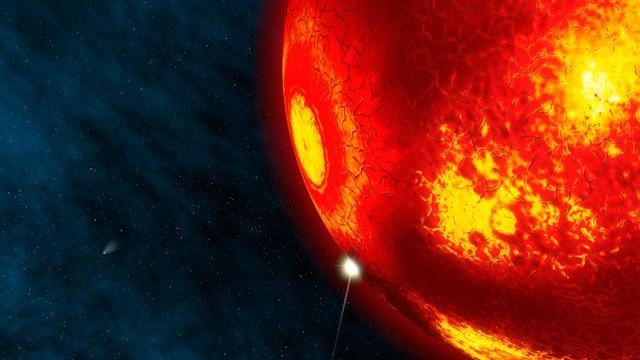
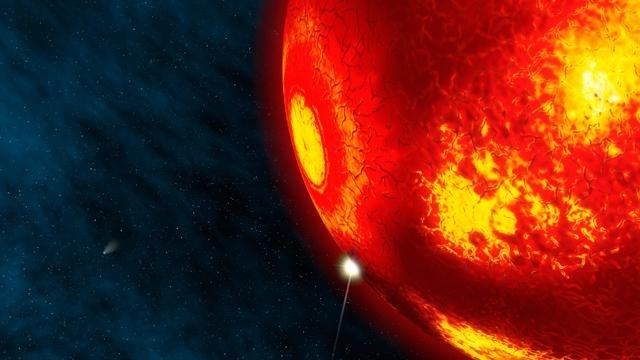
The early Earth was not the Blue Planet. Not even close. If you had a time machine and stepped out onto the surface 4.5 billion years ago, you would be vaporized instantly. The floor was lava. All of it. The entire surface was a churning, boiling ocean of molten rock.

There was no air to breathe. The atmosphere was a toxic cocktail of hydrogen and helium, mostly escaping into space because the planet’s gravity wasn’t yet strong enough to hold them down. Volcanoes were erupting everywhere, spewing out water vapor, ammonia, and carbon dioxide. It was a vision of hell.

The Planetary Murder Mystery: The Theia Impact

Here is where things get really strange. Have you ever looked at the Moon and wondered why it’s so big? Compared to other moons in our solar system, ours is a giant. It shouldn’t be there. It’s too large for a planet our size to capture just by gravity.

The leading theory? It’s called the Giant Impact Hypothesis. But let’s call it what it really is: A planetary collision.

The theory goes like this: About 4.5 billion years ago, Earth wasn’t alone in its orbit. There was a stalker. Another planet, roughly the size of Mars. Scientists named it Theia (after the mother of the Moon goddess Selene).

Theia and Earth were on a crash course. And they didn’t just graze each other. It was a direct hit.

Boom.

Imagine the energy of trillions of nuclear weapons going off at the exact same second. That was the impact. Theia was obliterated. The Earth was nearly destroyed. The collision was so violent that it liquefied the planet again, blasting a massive ring of debris into orbit. For a while, Earth looked like Saturn. It had rings.

Over millions of years, that debris ring clumped together to form the Moon. So, when you look up at the night sky, you aren’t just looking at a rock. You are looking at the corpse of a dead planet that Earth destroyed and absorbed.

The Hadean Eon: When Earth Was Under Attack

Geologists call the first 500 million years of Earth’s history the “Hadean Eon.” Named after Hades. The Greek underworld. Hell.

Why? Because even after the Moon formed, the beatings didn’t stop. The solar system was still cleaning up its mess. This led to a period known as the Late Heavy Bombardment.

Imagine a rainstorm, but instead of water, it’s asteroids the size of Texas. For millions of years, Earth was pummeled by space rocks. These impacts kept the crust molten. They prevented life from getting a foothold. Every time the planet started to cool down, WHACK! Another asteroid slammed into it, resetting the thermostat to “incinerate.”

The Water Paradox: Where Did the Ocean Come From?

This brings us to one of the biggest mysteries in science. Water. We are covered in it. We are made of it. But in the Hadean Eon, Earth was way too hot for liquid water. Any water would have boiled off into space instantly.

So, where did the oceans come from? Did they magically appear?

There are two main schools of thought, and both are mind-bending:

  • The Comet Delivery Service: Some scientists think the water was delivered by icy comets and asteroids during the heavy bombardment. Basically, we are swimming in melted space ice.
  • The Inside-Out Theory: Others believe the water was trapped inside the minerals of the Earth itself, deep in the mantle, and was sweated out through volcanic eruptions over billions of years.

Either way, eventually, the bombardment slowed down. The Earth cooled. The steam in the atmosphere condensed. And then, it rained.

It didn’t rain for a few days. It rained for centuries. A flood of biblical proportions, filling the low basins and creating the first primordial oceans. The stage was finally set.

The Impossible Spark: Life Begins

Somewhere between 3.8 and 3.5 billion years ago, the impossible happened. Dead matter came alive.

We still don’t know how. This is the “Holy Grail” of science. Was it a lightning strike hitting a pool of amino acids? Was it a chemical reaction deep near a hydrothermal vent at the bottom of the ocean? Or—and here is the alternative theory that keeps me up at night—was it Panspermia?

Panspermia is the theory that life didn’t start here. It hitchhiked. Microbes trapped inside a meteor from Mars or another star system crashed into Earth, found the water, and woke up. Are we all aliens? It’s possible.

These first life forms were simple. Single-celled bacteria. They didn’t need oxygen. In fact, oxygen was poison to them. They lived in a world of methane and sulfur. If you went back in time to visit them, you would suffocate in minutes.

The Great Oxidation Event: The First Apocalypse

Fast forward to about 2.4 billion years ago. A new player entered the game: Cyanobacteria. Blue-green algae.

These little guys figured out a magic trick. Photosynthesis. They could take sunlight and turn it into energy. But this process had a waste product. A gas that was toxic to almost everything else on the planet.

Oxygen.

We think of oxygen as the breath of life. But back then? It was a killer. As cyanobacteria pumped oxygen into the oceans and atmosphere, it caused a mass extinction. It wiped out the anaerobic microbes that had ruled the world for a billion years. This is known as the Great Oxidation Event. It was a chemical warfare on a planetary scale.

But it had a side effect. The oxygen reacted with methane in the atmosphere. Methane is a powerful greenhouse gas that keeps the planet warm. When the oxygen destroyed the methane, the Earth’s temperature crashed.

The planet froze. Completely. This is the “Snowball Earth” hypothesis. For millions of years, Earth was a giant white ice cube floating in space. Life barely hung on, huddling near volcanic vents for warmth.

The Moving Jigsaw Puzzle: Plate Tectonics

While the atmosphere was changing, the ground beneath was moving. Literally.

Earth is the only planet we know of with active plate tectonics. The crust isn’t a solid shell; it’s broken into giant plates that float on the gooey mantle below. They crash into each other, pull apart, and slide past one another.

Why does this matter? Because without plate tectonics, you probably wouldn’t be here.

  • Recycling: Tectonics recycle carbon. When dead stuff falls to the ocean floor, it gets sucked into the mantle, melted, and burped back out by volcanoes as CO2. This acts as a thermostat for the planet.
  • Continent Shifting: You’ve heard of Pangea, the supercontinent. But there were others before it, like Rodinia. The continents are constantly dancing. When they smash together, they build mountains. When they pull apart, they make oceans.

The Cambrian Explosion: Life Goes Wild

For billions of years, life was boring. Just slime and single cells. Scientists call this “The Boring Billion.” Then, about 580 million years ago, something clicked. Complex, multicellular life appeared.

Then came the Cambrian Explosion (approx. 541 million years ago). In a geological blink of an eye, evolution went into overdrive. Suddenly, we had eyes, legs, shells, teeth, and predators. Life diversified into almost every major group of animals we see today.

Why did it happen so fast? Some say it was the oxygen levels finally getting high enough. Others say it was an arms race—predators evolved, so prey had to evolve armor.

The Uncomfortable Question: Are We Just Lucky?

When you look at the 4.6 billion-year history of Earth, you realize something terrifying. It is a miracle we made it.

We survived the solar nebula. We survived the Theia impact. We survived the asteroid bombardment. We survived the freezing of Snowball Earth. We survived five major mass extinctions (including the one that killed the dinosaurs).

The Earth isn’t just a rock. It’s a self-regulating, chaotic, violent, and beautiful system. The biosphere (life) shapes the atmosphere. The atmosphere shapes the geology. The geology shapes the life. It is all connected.

So, the next time you step outside and take a breath of fresh air, remember: That air was made by tiny bacteria billions of years ago. The ground you walk on is recycled magma. And the moon watching over you is the ghost of a dead planet.

We are the survivors of the greatest story ever told. And the story isn’t over yet.

What lies beneath?

We have only scratched the surface. Literally. We have never drilled through the crust to the mantle. We assume we know what’s down there based on seismic waves, but do we? There are vast “blobs” of dense material deep inside the Earth—remnants of Theia, perhaps?—that scientists still can’t explain.

The history of Earth is written in the rocks, but we are still learning how to read the language. Stay curious. Question the timeline. And remember: The ground beneath your feet is not as solid as you think.

Originally posted 2013-05-07 21:07:07. Republished by Blog Post Promoter