Friday, September 11, 2026

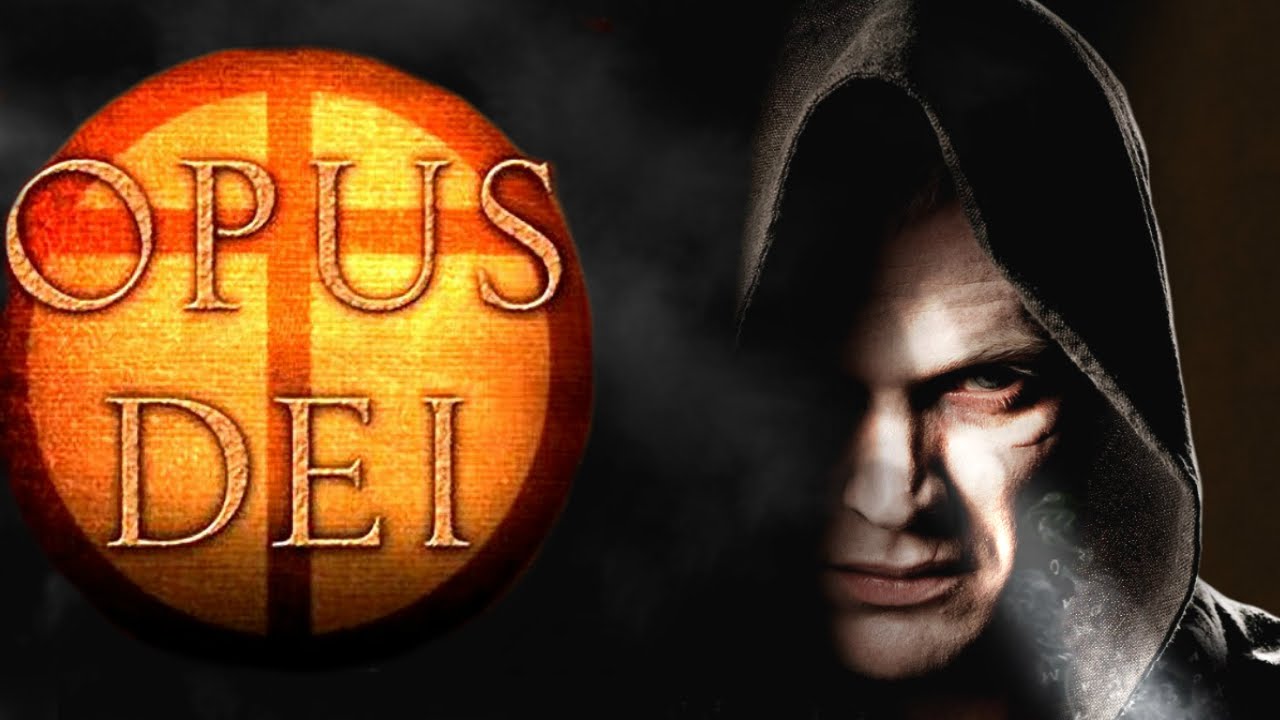
How Dangerous Is Opus Dei

You’ve heard the name. Whispered. Spoken in hushed tones.

Opus Dei.

Maybe you first saw it splashed across the pages of a thriller, a name linked to shadowy assassins and ancient conspiracies. Maybe you heard it from a friend, a story about a co-worker who suddenly became distant, their life consumed by a new, all-encompassing devotion. Or maybe you’ve just felt it, a sense that within the ancient walls of the Catholic Church, there are forces at play that operate by a different set of rules.

They call themselves “The Work of God.” A simple, elegant name for a mission they claim is pure: to help ordinary people find sanctity in their everyday lives. In their work. In their families. On the surface, it’s a beautiful idea. A noble calling.

But pull back the curtain, and the questions start to multiply. The whispers turn into screams. What is Opus Dei, really? Is it a blessed path to holiness, or a sophisticated, modern-day cult with immense wealth and terrifying influence? What happens behind the closed doors of their pristine centers? And are the rumors of bizarre rituals, psychological control, and a secret agenda to control the world from the inside out actually true?

The answer is far more complex, and far more disturbing, than you can possibly imagine.

The Saint with a Secret: Who Was Josemaría Escrivá?

To understand the mystery of Opus Dei, you have to understand its founder. A man the Vatican now calls a saint. A man his critics call a master manipulator.

Josemaría Escrivá de Balaguer. Born in Spain in 1902. A young priest with a vision. On October 2, 1928, the story goes that God showed him his mission. He was to create a new path within Catholicism, a way for everyone—doctors, lawyers, factory workers, politicians—to become saints without abandoning the world. This was the birth of Opus Dei.

His core message was simple and powerful: your desk is your altar. Your daily grind is your prayer. It was revolutionary. It spread like wildfire, first through Franco’s Spain and then across the globe.

Escrivá compiled his teachings into a small book called “The Way.” It contains 999 maxims, short, punchy points for spiritual guidance. To his followers, it’s a book of profound wisdom. To outsiders who read it, it can be deeply unsettling. Maxims like, “Don’t let your life be sterile. Be useful. Blaze a trail,” sound inspiring. But then you read others: “To obey is the sure way. To obey blindly a superior is the way of sanctity.” Or, “Have a ‘holy intransigence’ which is not, of course, pig-headedness.”

Blind obedience. Holy intransigence. Suddenly, the language shifts. It sounds less like spiritual advice and more like a manual for absolute control.

A Controversial Path to Sainthood

Escrivá died in 1975. In a move that shocked many with its incredible speed, the Vatican beatified him in 1992 and canonized him as a full-fledged saint just ten years later in 2002. For context, this process usually takes decades, sometimes centuries. The rush raised eyebrows and fueled suspicions. How did this happen so fast? Critics, including high-ranking priests and former Opus Dei members, pointed to immense pressure and a sophisticated lobbying campaign from within the organization itself. They claimed that dissenting voices were silenced and that a sanitized, mythologized version of Escrivá was presented to the world. Was his sainthood a genuine miracle or a masterclass in public relations and internal politics?

Cracks in the Facade: The Cult of Secrecy

One of the biggest red flags for any organization is secrecy. And Opus Dei is wrapped in it.

While they operate universities, schools, and student residences openly, the inner workings of the organization and the very identity of its members are guarded with an intensity that borders on paranoid. Members are often encouraged not to advertise their affiliation. They call it “holy discretion,” arguing that they don’t want to seem superior or boastful. But critics have a different name for it.

Infiltration.

Think about it. If members of a highly disciplined, ideologically uniform group hold key positions in government, finance, media, and academia, but no one knows they are connected, what does that give them? Power. Unseen influence. The ability to shape society from the shadows, all while presenting a public face of being just ordinary Catholics.

The Tiers of Devotion

This secrecy is built into the very structure of the group. Membership isn’t a simple, one-size-fits-all arrangement. It’s a stratified system that demands different levels of commitment.

  • Numeraries: The core of Opus Dei. They are celibate members who live in special centers, segregated by sex. They pledge their lives to the organization, often from a very young age. Critically, they turn over their entire salaries to Opus Dei, receiving a small stipend back for personal expenses. Their mail can be opened, their friendships monitored. Their life is no longer their own.
  • Associates: Also celibate, but they do not live in the centers, often due to family commitments. Their dedication, however, is just as total.
  • Supernumeraries: The largest group. These are married members who live with their families. They integrate the “Plan of Life” into their family world, contribute financially, and help with recruitment. They are the public-friendly face of Opus Dei.

This structure creates a powerful dynamic: a small, totally committed core of celibate numeraries directing a much larger, more integrated network of supernumeraries out in the world. It’s a brilliant model for growth and influence.

The Dark Side of Devotion: Whips, Chains, and Pain

This is where the story takes a turn into the truly medieval. It’s the part that sounds like it was ripped straight from the pages of a gothic horror novel. But it’s real.

It’s called corporal mortification. The “sanctification of the flesh” through pain.

For at least two hours every day, celibate members of Opus Dei are expected to wear a cilice. This is a small chain with sharpened points that they strap tightly to their upper thigh. It doesn’t break the skin, but it digs in, a constant, nagging source of pain. A reminder of Christ’s suffering. A way to discipline the body.

But that’s not all.

Once a week, they practice what is called “the discipline.” In the privacy of their room, during a time of prayer, they whip their own backsides with a small, knotted cord whip. The rule is to say a short prayer, like the “Hail Holy Queen,” during the lashing. It’s not meant to draw blood, just to inflict stinging pain.

Opus Dei defends these practices. They say it’s a voluntary, private act of penance with a long history in the Catholic Church, practiced by countless saints. They argue it’s no different than an athlete pushing their body to the limit or someone fasting for a diet. It’s about discipline. About conquering worldly desires.

But to former members and psychologists, this is something far more sinister. They see it as institutionalized self-harm. A tool of control. When you are regularly inflicting pain on yourself at the direction of an organization, it creates a powerful psychological bond. It breaks down your sense of self-worth and replaces it with a desperate need for the group’s approval. It’s a way to prove your loyalty. A way to prove you are worthy.

Is it a holy act of piety? Or is it a carefully calibrated technique to ensure obedience?

Mind Control or Spiritual Direction? The Plan of Life

Control in Opus Dei isn’t just physical. The psychological architecture is even more powerful.

Every member is expected to follow a rigorous daily schedule known as the “Plan of Life.” It’s an unrelenting torrent of religious obligations from dawn until dusk.

It includes:

  • The “Heroic Minute”: Getting out of bed immediately when the alarm goes off.
  • Morning Offering.
  • Daily Mass and Communion.
  • At least half an hour of mental prayer.
  • Spiritual reading.
  • The Angelus prayer at noon.
  • Reciting the entire Rosary.
  • An examination of conscience before bed.

And so much more. There is no downtime. Every moment is structured, monitored, and dedicated to “The Work.” It leaves little room for independent thought, personal reflection, or outside hobbies. The system is designed to consume you.

“Fraternal Correction” and The Chat

This intense structure is reinforced by two key practices: the “fraternal correction” and “the chat.”

The chat is a weekly, one-on-one meeting with a “spiritual director” from within Opus Dei. It’s not a confession to a priest. It’s a detailed accounting of your life, your thoughts, your failings, and your adherence to the Plan of Life. Ex-members describe it as a form of psychological surveillance, where their innermost thoughts are scrutinized and corrected to align with the organization’s ideology.

Even more invasive is the fraternal correction. Any member is encouraged to “correct” another member if they see them deviating from the norms. This could be anything from the way they dress, the friends they keep, or the “wrong” tone of voice they used. This creates an environment of constant monitoring, not just by superiors, but by peers. You are always being watched. Judged. Corrected. It isolates members from their own instincts and forces them to rely completely on the group for their sense of right and wrong.

Former members speak of being pressured to cut ties with friends and even family who are seen as a “bad influence.” Their world shrinks until the only people left in it are other Opus Dei members. This is a classic tactic of high-control groups. Isolate. Control. Dominate.

Follow the Money: The Opus Dei Financial Empire

Where there is secrecy and power, there is always money. And Opus Dei has a lot of it.

The organization’s finances are notoriously opaque. As a personal prelature of the Pope—a unique and powerful status—they have a degree of autonomy that makes them function almost like a global, tax-exempt diocese without borders. Their exact net worth is unknown, but estimates run into the billions.

Where does this wealth come from?

  1. The Numeraries: Remember, the celibate core members hand over their entire salaries. A doctor, a lawyer, an engineer working a high-paying job for 40 years will pour millions directly into the organization’s coffers.
  2. The Supernumeraries: Married members are expected to donate generously and frequently.
  3. The Elite Donors: Opus Dei has a long and documented history of aggressively recruiting the wealthy and the powerful. They offer spiritual guidance, and in return, they receive donations, bequests, and inheritances that build their endowment.

This money isn’t just sitting in a vault. It’s put to work. Opus Dei funds a massive global network of ventures:

  • Universities and Business Schools: Prestigious institutions like the University of Navarre in Spain and the IESE Business School are major centers for shaping the minds of future leaders and, not coincidentally, for recruiting new members from the elite.
  • Student Residences and Conference Centers: These are often the first point of contact for potential young recruits, offering a clean, structured, and “wholesome” environment that slowly introduces them to the group’s ideology.
  • Foundations and NGOs: These organizations give Opus Dei a public face of charity and social good, while also serving as vehicles for their financial and ideological expansion.

Is this just good stewardship of God’s money? Or is it the construction of a self-perpetuating machine designed to accumulate wealth, power, and influence under the protection of the Church?

The Da Vinci Code Effect: Where Fiction and Reality Collide

For millions of people, their first and only exposure to Opus Dei was Dan Brown’s sensational 2003 novel, *The Da Vinci Code*, and the subsequent blockbuster film.

The book portrayed Opus Dei as a sinister, murderous sect at the heart of a global conspiracy, complete with a self-flagellating albino assassin monk named Silas. Let’s be clear: much of this was pure fiction. Opus Dei does not have assassin monks. There is no evidence they are hunting down the descendants of Jesus Christ. The organization rightly pointed out these were slanderous inventions.

But here’s the thing. Dan Brown didn’t invent the controversy. He amplified it.

The reason his portrayal was so believable to so many people is that it tapped into *real*, pre-existing fears and criticisms of the group.

  • The secrecy? It was real.
  • The intense, all-consuming devotion? Real.
  • The practice of corporal mortification with whips and cilices? Shockingly, absolutely real.
  • The vast, unexplained wealth and political influence? Real.

Dan Brown took the known, unsettling facts about Opus Dei and wove them into a fictional narrative. He may have gotten the details wrong, but he captured a fundamental truth that people sensed about the organization: that there was a dark, hidden side to “The Work of God.” The book was a global phenomenon that forced a deeply secretive organization into the harsh glare of the public spotlight, and they have been on the defensive ever since.

What is the Endgame? The Ultimate Conspiracy

So we pull all the threads together. The secrecy. The pain. The psychological control. The money. The power. It begs the ultimate question: What is the real goal?

Is Opus Dei simply a very intense, very disciplined, and very misunderstood group of devout Catholics trying to live holy lives in a secular world? Is all the criticism just anti-Catholic bigotry, as they so often claim?

Or is it something more?

The deepest conspiracy theory about Opus Dei is that it functions as a “church within the Church.” A highly organized, ideologically rigid faction seeking to gain control of the Vatican itself and, through it, to remake the world in its own conservative, authoritarian image. Are they placing their members in key positions in global finance, government, and media not just to “sanctify” their work, but to execute a coordinated, long-term plan? A quiet crusade to roll back modernism and enforce their version of God’s will on everyone?

Think about it. An organization whose members don’t advertise their affiliation, who are bound by strict obedience, who control billions of dollars, and who believe they are on a divine mission. What are the limits to what such a group could achieve?

We are left with a chilling set of possibilities. Perhaps Opus Dei is exactly what it says it is. A force for good. A demanding but rewarding path to God.

Or perhaps it is one of the most successful and dangerous cults on the planet, hiding in plain sight, wrapped in the sacred robes of the Catholic Church. The truth remains behind closed doors, locked away by vows of silence and obedience. The whispers continue. And we are left to wonder just how deep the influence of “The Work” really goes.

Arindam Mukherjee
Arindam Mukherjee
Arindam loves aliens, mysteries and pursing his interest in the area of hacking as a technical writer at 'Planet wank'. You can catch him at his social profiles anytime.
RELATED ARTICLES

20 COMMENTS

- Advertisment -

Most Popular

Recent Comments

Warren Pan Abbott on The legend of the Devil Monkey !
chris davies on The McPherson Tape Mystery
Reed Reedly on ET has Internet!
Bea Houseoffashion on Proof Of Time Travellers – Gallery
Marcus2012 on ET has Internet!
Reed Reedly on ET has Internet!
LaughsAtConspiracyNuts on The 9/11 Conspiracy – Myths and Facts
Alex Sliverman on Did the ancients fly?
Doctor Wholigan on Time Traveler in 1938 film
chris davies on The McPherson Tape Mystery
Archie1954 on 10 secret UFO hideouts
chris davies on Ghosts of flight 401
Marcus2012 on ET has Internet!
jason Macdonald on Proof of Time Travel? – China
chris davies on Long-Lost Pyramids Found?
Reed Reedly on ET has Internet!
Milkman on Connected Universe
Tenmiles on Baigong Pipes Mystery
Simon Foster on Sirius – The Documentary
From the 1st April on 2013 – Alien Contact date ?
SkyWatcher on Is ET ignoring us?
I Come From The Future on Obama to make UFO Alien disclouser soon ?
ÛñK?øWn on 2013 – Alien Contact date ?
Just another person on 2013 – Alien Contact date ?
Malcolm Windowcleaner on The strange case of Rudolph Fentz
Mason Servio on Strange Things on Mars
Marke Wisdom Seeker on What will we find as arctic melts?
Andrea A Elisabeth Levyne on Aliens Captured in Varginha, Brazil
Mitch Grouyeki on Amazing Space Shuttle pictures