Tuesday, May 12, 2026
HomeWeird WorldSpaceESA is planning to build a Moon base by 2030

ESA is planning to build a Moon base by 2030

It hangs in the night sky. Silent. Watching. For thousands of years, humans have looked up at that glowing silver orb and wondered: What is up there?

Then, we actually went.

Between 1969 and 1972, twelve men walked on the lunar surface. They planted flags. They hit golf balls. They gathered rocks. And then? We stopped. Cold turkey. For over half a century, no human has set foot on the Moon. Why? Did we lose interest? Was it too expensive? Or… were we warned off?

Whatever the reason for the long hiatus, the silence is about to break. The race is back on, and this time, we aren’t just visiting. We are moving in.

The European Space Agency (ESA) dropped a bombshell that shook the foundations of the aerospace community. They aren’t just talking about planting another flag. They are talking about a permanent residence. A village. And they plan to build it in a way that sounds straight out of a science fiction nightmare.

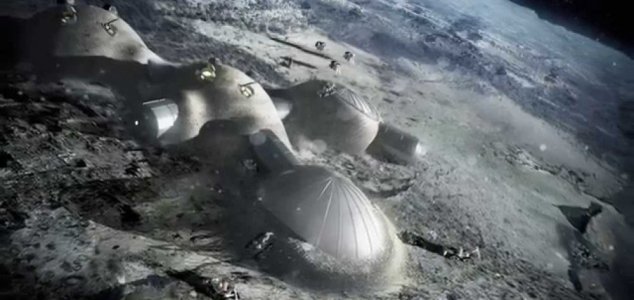
 Moon base

The Moon base would be built by robots using 3D printing technology.

The 2030 Deadline: A Race Against Time

The European Space Agency believes humans will be living on the lunar surface within the next 14 years. Well, that was the initial projection. Now? The clock is ticking louder than ever. We are staring down the barrel of 2030.

When it comes to next-generation space travel, Mars seems to be the destination that most people are screaming about. Elon Musk wants to die on Mars (just not on impact). NASA has been keenly pursuing the goal of landing humans on the Red Planet, and scientists have long been working on the technologies needed to take us there. It’s the sexy choice. The long shot.

But Mars is not the only target worth striving towards—there is another much closer to home.

Mars is months away. If something goes wrong, you are dead. The Moon? It’s a three-day trip. It’s in our backyard. We might have already landed astronauts there several decades ago, but the moon still remains the perfect place to set up a base and to learn more about living and working on other worlds.

Think of it as a sandbox. A proving ground. Before you try to swim across the ocean, you learn to tread water in the pool. The Moon is our pool.

The “Moon Village” Concept: Not What You Expect

This week—and in ongoing updates since the initial leak—officials at the European Space Agency have revealed plans to further pursue the idea of using robotics and 3D printing to set up a base on the surface of the moon by as early as 2030. This isn’t just a vague idea. It is a calculated, strategic move involving some of the biggest architectural minds on Earth, including the legendary firm Foster + Partners.

The space agency believes that the construction would take as little as three months to complete. Just 90 days. That is faster than it takes to build a standard suburban house in America.

But how? How do you build a structure on a rock with no atmosphere, bombarded by cosmic radiation, where the temperature swings from boiling to freezing in the blink of an eye?

You don’t bring the building materials with you. You use what is already there.

Deep Dive: The 3D Printing Revolution in Space

Here is where it gets wild. The cost of shipping heavy materials—concrete, steel, brick—to the Moon is astronomical. Literally. It costs thousands of dollars per pound to lift something out of Earth’s gravity well. Building a base using Earth materials would bankrupt the planet.

So, the ESA plan uses Regolith.

Regolith is the scientific name for Moon dirt. But it’s not like the dirt in your garden. It is jagged, razor-sharp, glass-like dust that hasn’t been smoothed down by wind or water for billions of years. It sticks to everything. It destroys machinery. It is nasty stuff.

The ESA’s plan flips the script. Instead of fighting the dust, they will weaponize it.

  1. Step One: A rocket lands a cylindrical module. This isn’t the house; it’s the skeleton. An inflatable dome extends from this cylinder.
  2. Step Two: Robots—autonomous rovers—deploy immediately. They act like massive 3D printers on wheels.
  3. Step Three: These robots scoop up the sharp lunar dust. Using binding agents or concentrated solar energy (sintering), they turn that dust into a concrete-like shell.
  4. Step Four: Layer by layer, the robots spray this lunar concrete over the inflatable dome.

Why cover it? Protection. The resulting base would be capable of housing up to four astronauts safely inside the inflatable core, while the thick outer shell of 3D-printed rock shields them from gamma rays, solar flares, and micrometeoroids that slam into the surface faster than bullets.

It’s an igloo. But made of stone. Built by robots. In space.

The Dark Side: Why Are We Really Going Back?

You have to ask yourself the hard questions. Why the sudden urgency? Why are Europe, China, Russia, and the US all suddenly scrambling to stake a claim on the lunar South Pole?

Is it just for science? Don’t be naive.

There are theories floating around the darker corners of the internet that suggest this is about resources. Specifically, Helium-3. This is an isotope that is incredibly rare on Earth but abundant on the Moon. It could theoretically power nuclear fusion reactors—clean, limitless energy. The country that controls the Moon’s Helium-3 controls the future of Earth’s economy.

Or is it military? The ultimate “high ground.” If you have a base on the Moon, you can monitor everything happening on Earth. You can launch things down the gravity well with terrifying ease.

And let’s not forget the “Alternative History” angle. Conspiracy theorists have claimed for decades that the Apollo missions spotted things they weren’t supposed to see. Structures on the dark side. Ancient ruins. Strange lights. Some claim we never stopped going—that we’ve had secret bases up there since the 70s (Project Horizon, anyone?).

If the ESA is publicly announcing a base for “four astronauts,” does that mean there’s already a base for forty? Or is this the public cover story for an excavation project? What are they planning to dig up?

Life Inside the Lunar Shell

Imagine the psychological toll. You are living inside a bubble, buried under tons of dirt. No windows looking out at the landscape—too much radiation. Just screens.

The ESA claims the base will be situated on the rim of the Shackleton Crater at the lunar South Pole. Why there? Because of the “Peaks of Eternal Light.” These are spots that receive almost constant sunlight, providing non-stop solar power. But just a few miles away, in the bottom of the crater, are regions of eternal darkness—shadows that haven’t seen the sun in two billion years. Frozen water ice hides there. Water means life. Water means rocket fuel (hydrogen and oxygen).

The stakes couldn’t be higher. A video detailing how the construction would be carried out can be viewed below. Watch closely. Look at the precision of the machines. This isn’t a cartoon; this is a blueprint.
The Great Filter: Will We Make It?

The timeline is aggressive. “As early as 2030.” That is right around the corner. Technology moves fast, but bureaucracy moves slow. Yet, the pressure from competitors like China’s CNSA (which has its own plans for a lunar research station) is lighting a fire under western space agencies.

We are standing on the precipice of a new era. For the first time in history, humans might become a multi-planetary species. Not just visitors. Residents.

But the Moon is unforgiving. One crack in the hull. One solar flare that the shielding misses. One malfunction in the oxygen recyclers. It’s game over. The Moon keeps its secrets, and it doesn’t welcome guests warmly.

What If It Works?

If the robots succeed, if the 3D printers turn dust into fortresses, think of the implications. We could print cities on Mars. We could print stations on asteroids. The Moon is just the first brick in a road that leads to the stars.

Keep your eyes on the sky. The robots are coming. And they are packing their bags for the Moon.

Arindam Mukherjee
Arindam Mukherjee
Arindam loves aliens, mysteries and pursing his interest in the area of hacking as a technical writer at 'Planet wank'. You can catch him at his social profiles anytime.
RELATED ARTICLES
- Advertisment -

Most Popular

Recent Comments

Warren Pan Abbott on The legend of the Devil Monkey !
chris davies on The McPherson Tape Mystery
Reed Reedly on ET has Internet!
Bea Houseoffashion on Proof Of Time Travellers – Gallery
Marcus2012 on ET has Internet!
Reed Reedly on ET has Internet!
LaughsAtConspiracyNuts on The 9/11 Conspiracy – Myths and Facts
Alex Sliverman on Did the ancients fly?
Doctor Wholigan on Time Traveler in 1938 film
chris davies on The McPherson Tape Mystery
Archie1954 on 10 secret UFO hideouts
chris davies on Ghosts of flight 401
Marcus2012 on ET has Internet!
jason Macdonald on Proof of Time Travel? – China
chris davies on Long-Lost Pyramids Found?
Reed Reedly on ET has Internet!
Milkman on Connected Universe
Tenmiles on Baigong Pipes Mystery
Simon Foster on Sirius – The Documentary
From the 1st April on 2013 – Alien Contact date ?
SkyWatcher on Is ET ignoring us?
I Come From The Future on Obama to make UFO Alien disclouser soon ?
Just another person on 2013 – Alien Contact date ?
Malcolm Windowcleaner on The strange case of Rudolph Fentz
Mason Servio on Strange Things on Mars
Marke Wisdom Seeker on What will we find as arctic melts?
Andrea A Elisabeth Levyne on Aliens Captured in Varginha, Brazil
Mitch Grouyeki on Amazing Space Shuttle pictures