Friday, June 5, 2026
HomeFilms & DocumentariesDoes Diet Coke Give You Cancer?

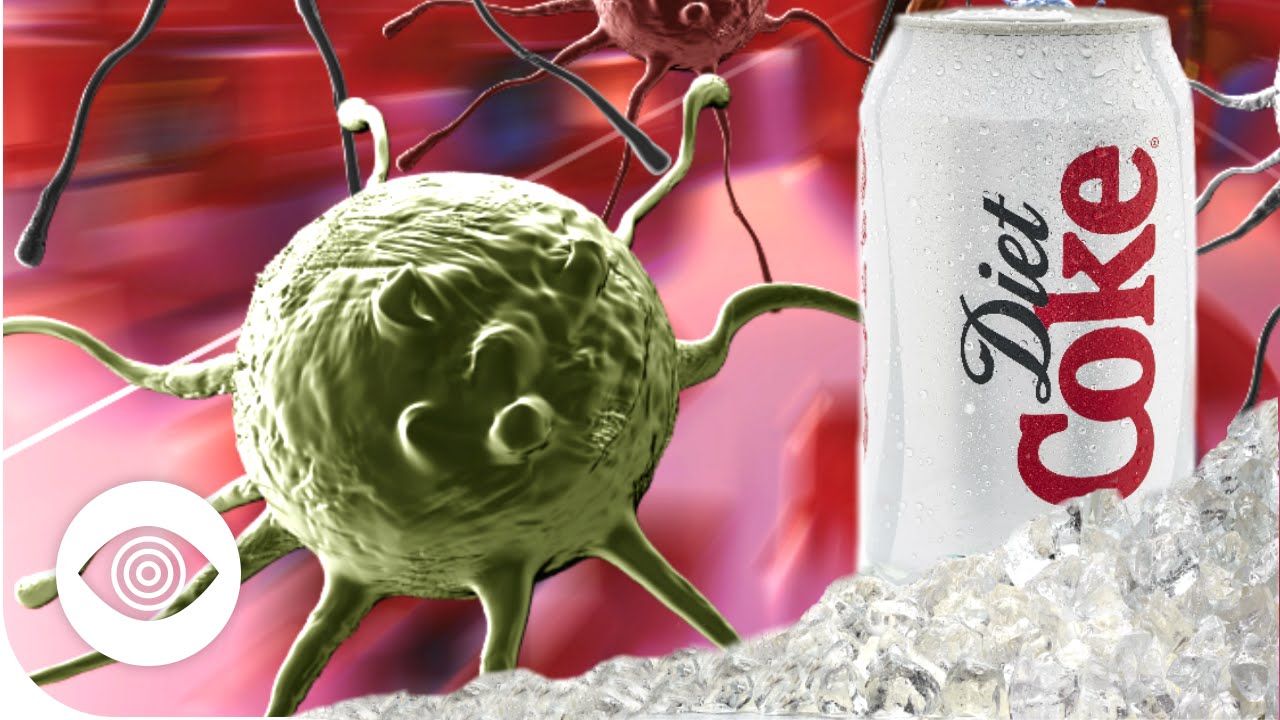
Does Diet Coke Give You Cancer?

The Aspartame Deception: Is Your Diet Soda a Ticking Time Bomb?

You see it everywhere. In the grocery store aisle. The vending machine at work. The mini-fridge at home. A brightly colored can, glistening with condensation.

It whispers a sweet promise.

All the fizz. All the flavor. None of the guilt.

Zero calories. Zero sugar.

You pop the tab, that satisfying *psssst* a prelude to the bubbly rush. You take a sip, believing you’ve made the smart choice, the healthy choice. You’re dodging the sugar bullet, outsmarting the system. But what if the system has already outsmarted you? What if that can isn’t a guilt-free treat, but a Trojan horse? A chemical cocktail designed by corporate giants and rubber-stamped by the very watchdogs paid to protect you?

What if the biggest ingredient in your diet soda isn’t water, or flavor, but a carefully concealed lie?

Strap in. Because we’re about to peel back the label on the diet drink industry and expose the chilling story that has been bubbling just beneath the surface for decades. This isn’t just about soda. It’s about control, chemistry, and a conspiracy of convenience that might be costing us far more than we could ever imagine.

The Sweet Promise of a Bitter Pill

To understand the grip of diet soda, you have to travel back in time. Picture the post-war boom. A new era of prosperity, television, and… expanding waistlines. As society became more sedentary, a new obsession took hold: the slim figure. The calorie became public enemy number one. The diet industry was born, and it was hungry.

The problem was simple. People loved sweets. Especially sweet drinks. But sugar was the enemy. The industry needed a miracle. A substance that could trick the tongue into tasting sweetness without delivering the caloric payload.

Enter the artificial sweetener. First came saccharin, with its slightly metallic aftertaste and a cloud of controversy. Then came cyclamate, which was later banned in the US after studies linked it to bladder cancer in rats. The market was desperate for a perfect, clean-tasting, “safe” replacement.

And then, in 1965, a chemist named James M. Schlatter, working for the pharmaceutical company G.D. Searle, stumbled upon it by accident. He was working on an ulcer drug and licked his finger to pick up a piece of paper. It was intensely sweet. He had discovered aspartame.

It was the golden ticket. 200 times sweeter than sugar. No bitter aftertaste. And best of all? Virtually no calories. The industry had its miracle. The era of diet soda was about to explode.

A Chemical Cocktail in a Can: What Are We *Really* Drinking?

So you crack open that can of Diet Coke, or Pepsi Max, or whatever your zero-sugar poison of choice is. You scan the ingredients. Carbonated water, caramel color, phosphoric acid, potassium benzoate… and then you hit the big ones. The sweeteners. The chemicals that make the magic happen.

And one name has dominated the conversation—and the controversy—for over forty years: Aspartame.

Aspartame: The Villain of the Story?

It’s a simple compound, made of two amino acids—aspartic acid and phenylalanine. Sounds natural enough, right? Amino acids are the building blocks of protein! This is the line the industry has sold us for decades.

But here’s what they don’t put in the commercials.

When your body metabolizes aspartame, it breaks it down into those two amino acids, but also into a third, far more sinister substance: methanol.

Methanol. Otherwise known as wood alcohol. It’s a poison. In the body, the liver converts methanol into formaldehyde. Yes, *that* formaldehyde. The same pungent chemical used to embalm the dead. From there, it’s converted into formic acid, the same venom used by fire ants.

The defense you’ll hear is that the amount is tiny. They’ll tell you that fruit juice has methanol, too! And that’s true. But the methanol in natural foods is always accompanied by high levels of ethanol, which acts as a protective antagonist, preventing it from converting into formaldehyde. Aspartame contains no ethanol. The methanol is “free,” and your body is defenseless against it.

Think about that for a second. Every sip of diet soda introduces a tiny, tiny drop of a known neurotoxin into your system. A drop that becomes embalming fluid.

Deep Dive: The Scandal of Aspartame’s Approval

You would think a chemical with this kind of profile would face an uphill battle for approval. You would be right. And the story of how it got the green light from the Food and Drug Administration (FDA) is where this story shifts from a health concern to a full-blown conspiracy.

G.D. Searle first petitioned the FDA for approval in the early 1970s. The initial data they submitted was so flawed, so riddled with what one investigator called “manipulated” results, that the FDA launched a grand jury investigation into the company for “concealing material facts and making false statements.”

Think about that. The FDA was on the verge of criminally indicting the very company pushing this new sweetener.

But then something strange happened. The U.S. Attorney on the case, Samuel Skinner, delayed the grand jury proceedings. He delayed them just long enough for the statute of limitations to run out. And where did Samuel Skinner go after he quit his job as U.S. Attorney? He took a high-paying job at Searle’s law firm.

It gets worse. In 1977, as the controversy raged, a new CEO took the helm at G.D. Searle. His name was Donald Rumsfeld. Yes, the same Donald Rumsfeld who would later become a two-time Secretary of Defense. Rumsfeld, a political operator with deep connections in Washington, vowed to get aspartame approved using his political muscle, not scientific merit.

When Ronald Reagan took office in 1981, Rumsfeld was on his transition team. One of the first things Reagan’s new administration did was appoint a new FDA commissioner, Arthur Hayes Hull, Jr. Against the advice of his own internal scientists and a Public Board of Inquiry which had previously voted unanimously to keep aspartame off the market, Hull’s FDA approved aspartame for use in dry goods in 1981. In 1983, it was approved for use in carbonated beverages.

And what happened to Commissioner Hull after he pushed through the approval? He resigned from the FDA under a cloud of controversy and immediately took a position as a senior medical advisor for Burson-Marsteller. And who was Burson-Marsteller’s biggest client? G.D. Searle.

It’s not a smoking gun. It’s a thermonuclear explosion of conflicts of interest.

The Whispers That Became a Roar: The First Viral Conspiracy

For years, the doubts festered in the shadows. But then, in the mid-90s, the internet arrived. And with it, the first truly viral piece of online “fake news.” It was a chain email, a wall of text allegedly written by a “Nancy Markle.”

It spread like digital fire.

The email was a bombshell. It claimed that aspartame, now branded as NutraSweet and Equal, was responsible for an epidemic of diseases. It linked the sweetener to multiple sclerosis, lupus, fibromyalgia, brain fog, seizures, and even Gulf War Syndrome. It told terrifying stories of pilots losing their licenses due to seizures after drinking diet soda and people being misdiagnosed with MS only to have their symptoms vanish when they gave up the chemical.

Was it all true? Almost certainly not. “Nancy Markle” was a fabrication, a composite of various anti-aspartame theories floating around. But it didn’t matter. The email struck a nerve. It tapped into a deep, primal fear: that we are being poisoned by the very products we trust.

It put the aspartame conspiracy on the map. It planted a seed of doubt that, for millions of people, has never gone away.

“I Just Knew It Was The Diet Soda…”

Go to any online forum about chronic illness. Any discussion group about strange, unexplained symptoms. You will find them. The stories. Thousands upon thousands of them.

“I had crippling migraines for a decade. The doctors couldn’t figure it out. I quit my six-a-day Diet Coke habit, and they were gone in a week.”

“My joints ached constantly. I felt like I was 80 years old. Someone told me to look into aspartame. I stopped using Equal in my coffee, and the pain disappeared.”

“I was dizzy all the time. My memory was shot. I couldn’t focus. It felt like my brain was broken. On a whim, I cut out all artificial sweeteners. Three weeks later, the fog lifted. It was like someone turned the lights back on.”

These are the anecdotal evidence files. The personal testimonies that the mainstream media and medical establishment dismiss as “unscientific.” But can millions of people all be wrong? Can they all be imagining the same set of symptoms that magically resolve when they remove the same chemical from their diet?

The establishment calls it the “nocebo” effect—the power of suggestion making you feel ill. But for those who have lived it, it feels less like suggestion and more like liberation from a chemical prison.

The Official Story vs. The People’s Verdict

So, we stand at a crossroads. On one side, you have the full weight of global regulatory bodies. On the other, you have decades of user reports, troubling animal studies, and a history of approval that stinks of corruption.

The Regulatory Defense: “Safe For Consumption”

Ask the FDA. Ask the European Food Safety Authority (EFSA). Ask Health Canada. They will all give you the same, calm, rehearsed answer. Aspartame is one of the most thoroughly studied food additives in history. Hundreds of studies have been done. It is perfectly safe for human consumption within the “Acceptable Daily Intake” or ADI.

They will tell you that the fears are based on junk science and internet hysteria. They will point to industry-funded studies—studies that almost universally find no problems—as proof of its safety.

This is what they want you to believe. That their process is pure. That their science is sound. That there is no reason for you to worry. Go back to drinking your soda.

The Money Trail: Who Profits From Our Sickness?

But let’s ask a different question. Who pays for these studies? An analysis of the available research found a shocking discrepancy. Of the studies funded by the sweetener industry, 100% found that aspartame was safe. One hundred percent. Of the studies conducted by independent researchers, over 90% found at least one problem or potential health concern.

Is that a coincidence? Or is that the sound of science being bought and paid for?

Follow the money. The artificial sweetener industry is a multi-billion-dollar behemoth. It is deeply intertwined with the “Big Food” corporations that pack our shelves with processed, chemical-laden products. These corporations have immense lobbying power. They have a vested financial interest in keeping their golden goose, the “diet” industry, alive and well.

And let’s take it one step further. What if a population that is chronically, low-key sick is more profitable than a healthy one? Headaches, joint pain, fatigue, digestive issues… what do these things sell? They sell pills. Over-the-counter painkillers. Prescription medications. They fuel the equally massive pharmaceutical industry. Is it really so crazy to think that one industry might be feeding the other, with us caught in the middle?

Beyond Aspartame: The New Generation of Sweet Deceivers

The heat on aspartame became so intense that the industry began to shift. You started seeing “Aspartame Free!” proudly displayed on labels. But they didn’t go back to sugar. Oh no. They simply swapped one chemical for another.

Enter Sucralose (Splenda) and Acesulfame Potassium (Ace-K). They are the new guard. Marketed as safer, better alternatives. But the whispers are starting about them, too. Studies are now emerging linking sucralose to damage to the gut microbiome—the delicate ecosystem of bacteria in your intestines that governs everything from your digestion to your mood and immune system.

And just recently, the World Health Organization itself dropped a bombshell. After a massive review of the evidence, they officially recommended against using artificial sweeteners for weight control, stating there are no long-term benefits and there could be “potential undesirable effects” from long-term use, including an increased risk of type 2 diabetes and cardiovascular diseases. The WHO’s cancer research agency also labeled aspartame as “possibly carcinogenic to humans.”

The official story is finally starting to crack.

The Ultimate Question: What If It’s All True?

Take a step back. Let the implications sink in. What if the conspiracy isn’t just a theory? What if for half a century, one of the most popular consumer products on the planet has been a slow-acting poison?

What if millions of people suffering from chronic, “mystery” illnesses are not mysteries at all, but victims of a mass-poisoning event carried out in plain sight? Sanctioned by our governments, and sold to us with a smile and a catchy jingle.

The scale of the deception would be staggering. It would mean the regulatory bodies designed to protect us are, at best, incompetent, and at worst, complicit. It would mean the medical system is treating symptoms while ignoring a root cause that’s sitting in everyone’s refrigerator.

It’s not just a can of soda. It’s a symbol. It’s a question of who you trust. The faceless corporation with a multi-billion-dollar product to protect? The government agency with a history of backroom deals? Or your own body?

The next time you reach for that “guilt-free” can, stop. Look at the ingredients list. It’s not just a list of chemicals. It’s a story. And it might be time you started reading between the lines.

Previous article
Next article
Arindam Mukherjee
Arindam Mukherjee
Arindam loves aliens, mysteries and pursing his interest in the area of hacking as a technical writer at 'Planet wank'. You can catch him at his social profiles anytime.
RELATED ARTICLES

19 COMMENTS

- Advertisment -

Most Popular

Recent Comments

Warren Pan Abbott on The legend of the Devil Monkey !
chris davies on The McPherson Tape Mystery
Reed Reedly on ET has Internet!
Bea Houseoffashion on Proof Of Time Travellers – Gallery
Marcus2012 on ET has Internet!
Reed Reedly on ET has Internet!
LaughsAtConspiracyNuts on The 9/11 Conspiracy – Myths and Facts
Alex Sliverman on Did the ancients fly?
Doctor Wholigan on Time Traveler in 1938 film
chris davies on The McPherson Tape Mystery
Archie1954 on 10 secret UFO hideouts
chris davies on Ghosts of flight 401
Marcus2012 on ET has Internet!
jason Macdonald on Proof of Time Travel? – China
chris davies on Long-Lost Pyramids Found?
Reed Reedly on ET has Internet!
Milkman on Connected Universe
Tenmiles on Baigong Pipes Mystery
Simon Foster on Sirius – The Documentary
From the 1st April on 2013 – Alien Contact date ?
SkyWatcher on Is ET ignoring us?
I Come From The Future on Obama to make UFO Alien disclouser soon ?
ÛñK?øWn on 2013 – Alien Contact date ?
Just another person on 2013 – Alien Contact date ?
Malcolm Windowcleaner on The strange case of Rudolph Fentz
Mason Servio on Strange Things on Mars
Marke Wisdom Seeker on What will we find as arctic melts?
Andrea A Elisabeth Levyne on Aliens Captured in Varginha, Brazil
Mitch Grouyeki on Amazing Space Shuttle pictures