Friday, June 5, 2026
HomeFilms & DocumentariesDid The Titanic Really Sink?

Did The Titanic Really Sink?

The Titanic Conspiracy: What If the Ship That Sank… Wasn’t the Titanic?

You know the story. Everyone does. It’s a modern myth etched into our collective memory. A story of hubris, ice, and the cold, dark Atlantic.

April 14th, 1912.

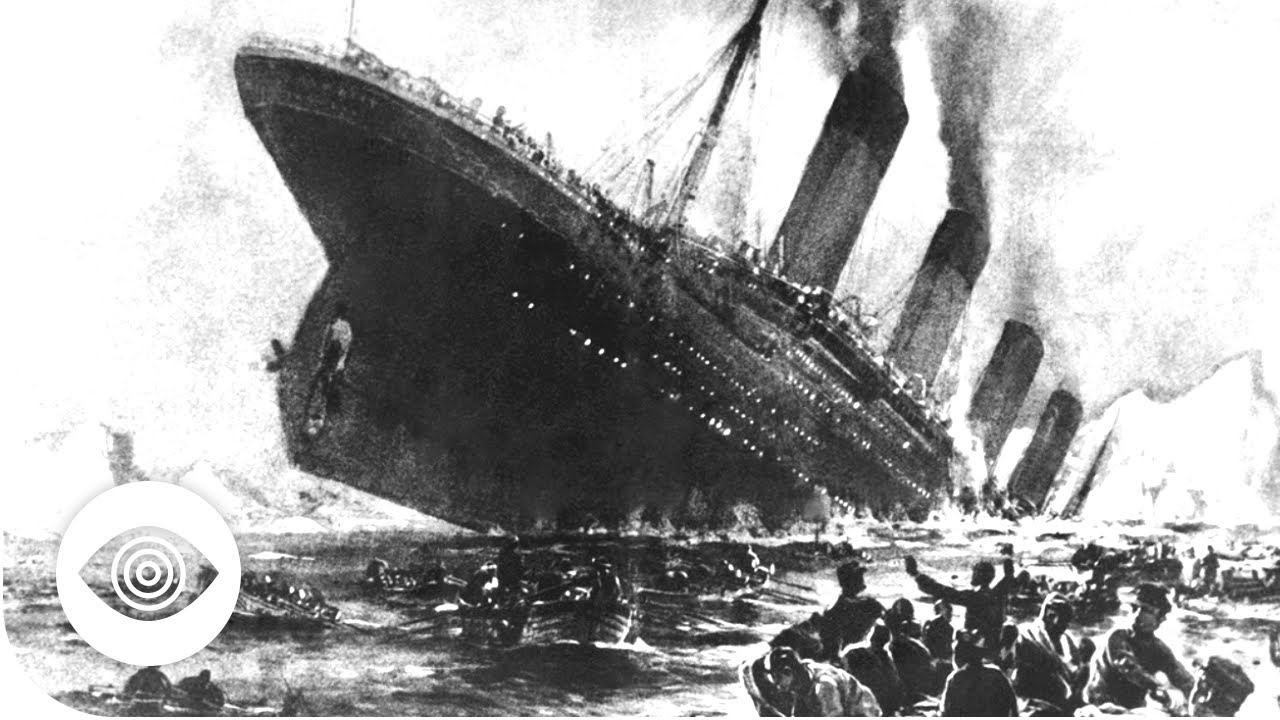
The RMS Titanic, the largest ship ever built, a floating palace hailed as “unsinkable,” strikes an iceberg on its maiden voyage from Southampton to New York. In less than three hours, the titan of the seas plunges to its watery grave, taking more than 1,500 souls with it. It’s a tragedy that has fascinated and horrified us for over a century.

But what if that story… is a lie?

What if the ship resting in pieces two and a half miles beneath the waves isn’t the Titanic at all? What if it’s her nearly identical twin, the RMS Olympic, sent to the bottom of the ocean as part of the most audacious and deadly insurance scam in history? Buckle up. Because the official story has holes you can steer a crippled ocean liner through.

The Two Sisters: A Story of Ambition and Disaster

To understand this theory, you first need to know that the Titanic wasn’t one-of-a-kind. She had sisters. The White Star Line, owned by the mega-financier J.P. Morgan, commissioned three colossal Olympic-class liners to dominate the transatlantic passenger trade: the Olympic, the Titanic, and the Britannic.

The Olympic was the first born, launched in 1910. She was the pride of the fleet, the trailblazer. But her career was anything but smooth. In September 1911, just five voyages into her service, the Olympic had a very, very bad day.

Deep Dive: The HMS Hawke Incident

Picture this. The RMS Olympic is leaving Southampton, steaming through a narrow channel. Nearby is a British Royal Navy cruiser, the HMS Hawke. In a moment of confusion and miscalculation, the two massive vessels collide. The much smaller, but powerfully built, warship smashes its reinforced bow deep into the Olympic’s starboard side, tearing two huge gashes in her hull above and below the waterline.

The damage was catastrophic. The Olympic limped back to port, her steel frame bent, her hull breached, her propeller shaft twisted. She was wounded. Badly.

An official inquiry blamed the Olympic for the collision, meaning White Star Line’s insurance claim was denied. They were on the hook for the massive repair costs *and* the lost revenue while the ship was out of service. This wasn’t just a dent; it was a financial black hole. The repairs were so extensive that they had to cannibalize parts from the still-under-construction Titanic just to get the Olympic seaworthy again. The brand-new, nearly finished Titanic was delayed. The company was bleeding money.

J.P. Morgan and the White Star Line had a problem. A very expensive, damaged, and now-uninsurable problem named the Olympic.

The Ultimate Insurance Fraud: The Switch

This is where the story takes a dark turn. This is where the whispers from the shadows begin to make a chilling kind of sense.

The theory is brutally simple. The owners had two nearly identical ships. One was a damaged, cursed money-pit. The other was a brand new, pristine vessel insured for a fortune. So, they hatched a plan. A plan to swap them.

Think about it.

The two ships are sitting side-by-side in the Harland and Wolff shipyard in Belfast. They are, to the casual observer, identical. Under the cover of repairs and final outfitting, the theory goes, the names on the ships were swapped. Linens, lifeboats, stationery, dinner plates—anything with the ship’s name was easily exchanged. The damaged, patched-up Olympic was given a fresh coat of paint and rebranded as the “new” RMS Titanic. The actual, pristine Titanic was quietly refitted to serve as the Olympic.

The plan? Send the damaged ship—the former Olympic, now posing as the Titanic—on its “maiden voyage.” Stage a minor, controlled accident in the Atlantic. Have rescue ships waiting nearby. Evacuate all the passengers and crew. Let the wounded vessel sink to the bottom of the ocean. Then, J.P. Morgan and White Star Line could collect the massive insurance payout on a “brand new” ship, getting rid of their damaged asset and solving their financial crisis in one fell swoop.

It was genius. It was diabolical. And according to proponents of this theory, it almost worked.

The Trail of Clues: Hiding in Plain Sight

This sounds like something out of a movie, right? A plot too audacious to be real. But the people who believe this theory point to a breadcrumb trail of evidence that they say proves the switch was real.

The Porthole Puzzle

Look at the photographs. It’s all in the photographs. Early pictures of the Olympic show an uneven spacing of portholes on her C-deck. The Titanic, on the other hand, was built with evenly spaced portholes from the start to correct this minor design flaw.

Now, look at the photos of the ship leaving Southampton for its fateful maiden voyage. The ship that everyone calls the “Titanic.” The portholes are unevenly spaced. They match the original configuration of the Olympic, not the Titanic. Did they really tear out the steel plates and re-drill the portholes on a brand new ship to match its older, flawed sister? Or is it simply because that *was* the Olympic?

The Last-Minute Cancellations of the Elite

Here’s where it gets really suspicious. The Titanic’s maiden voyage was the hottest ticket in the world. A-listers and industrial titans were clamoring to be on board. Yet, a shocking number of the most powerful people mysteriously canceled their trip at the very last minute.

Who canceled?

  • J.P. Morgan: The man who owned the ship. He claimed a sudden illness.
  • Henry Clay Frick: A steel magnate and associate of Morgan. His wife sprained her ankle.
  • John D. Rockefeller: Arguably the richest man in the world.

Coincidence? Or did the men at the very top of the pyramid know that the voyage was doomed from the start? Did they quietly warn their friends to stay away?

A Convenient Tragedy: Eliminating the Opposition

If the last-minute cancellations are suspicious, the list of who *didn’t* cancel is downright chilling. This is where the insurance scam theory collides with an even bigger, darker plot involving the creation of the Federal Reserve.

Three of the most powerful and outspoken opponents of a central U.S. bank were on board the Titanic. All three of them died.

  • John Jacob Astor IV: One of the wealthiest men in America. He was a vocal opponent of the Federal Reserve plan.
  • Benjamin Guggenheim: A member of the wealthy mining family. Also an opponent.
  • Isidor Straus: The co-owner of Macy’s department store. Another powerful opponent.

These weren’t just random millionaires. They were major roadblocks to J.P. Morgan’s plan to establish a central bank, a plan that would give him and his circle of financiers unprecedented control over the American economy. With them out of the way, the opposition to the Federal Reserve was critically weakened. The Federal Reserve Act was passed the very next year, in 1913.

Was the sinking not just about money, but about power? Was it a mass assassination disguised as a maritime disaster?

What Went Wrong?

If the plan was just to sink an empty ship or evacuate the passengers, why did over 1,500 people die? The theory has an answer for that, too.

The “accident” was never supposed to be that bad. The ship was supposed to suffer a minor collision and sink slowly, over many hours, giving plenty of time for a full rescue. Waiting nearby, allegedly, was the SS Californian. Online researchers have pointed out that the Californian’s cargo hold was curiously empty of cargo, but filled with thousands of wool blankets and sweaters. Why? Was it prepared for a rescue mission?

But something went terribly wrong. The ship, the damaged and weakened ex-Olympic, was sailing too fast through a known ice field. The iceberg didn’t just bump the ship; it tore a massive, 300-foot gash in the hull. The damage was far, far worse than anyone could have planned for.

The ship didn’t sink slowly. It sank fast. Terrifyingly fast.

To make matters worse, the SS Californian, the supposed rescue ship, was out of communication. Its sole radio operator had signed off for the night just minutes before the Titanic began frantically sending its SOS signals. By the time they saw the distress flares, it was too late. The plan had spiraled into a catastrophe of unimaginable proportions.

The Wreck at the Bottom of the Sea

For 73 years, the ship rested in darkness, its secrets locked away. Then, in 1985, oceanographer Robert Ballard and his team discovered the wreck. This, surely, would be the final proof. This would end the conspiracy theories forever.

Or did it just add more fuel to the fire?

Internet sleuths and researchers pore over the underwater footage, and what they claim to find is startling. Some point to the ship’s hull number, which was stamped on various parts. The Olympic’s number was 400, and the Titanic’s was 401. Did Ballard find “401” on the wreck? Well, it’s complicated. The key areas are either destroyed, covered in silt, or curiously hard to make out in the footage. But some researchers claim to have found the number “400” on a propeller.

Then there’s the name. We’ve all seen the footage of the bow with the letters T-I-T-A-N-I-C still faintly visible. Case closed, right? Not so fast. The theory suggests the conspirators didn’t just paint over the name “Olympic” on the hull. They physically removed the individual letters and replaced them. But look closer at some of the underwater photos. You can almost see the faint outline of the letters “M” and “P” from “Olympic” beneath the peeling paint.

Is it just a trick of the light and rust? Or is it the ghost of the ship’s true identity, bleeding through after a century in the deep?

Why Won’t This Story Die?

Mainstream historians dismiss the switch theory out of hand. They argue that swapping two of the largest moving objects ever made by man would be a logistical impossibility. Thousands of workers would have had to be involved, and someone would have talked. The sheer number of custom-fitted interior parts, from carpets to wood panels, would have made a switch impossible to hide.

But for every official explanation, there’s a counter-argument that keeps the mystery alive.

The differences between the ships were subtle, mostly cosmetic. The switch could have happened over weeks in the dry dock, with workers assuming they were just completing their normal jobs. To a riveter or a painter, one massive hull looks much like another. And in an era before the 24-hour news cycle and the internet, who would even know?

The story persists because it speaks to a deeper truth: that the official narratives we are given are not always the whole story. It taps into our distrust of immense wealth and concentrated power. Could men like J.P. Morgan, driven by profit and power, really sacrifice 1,500 lives for a financial scheme? When you look at history, is it really that hard to believe?

Down in the crushing blackness of the North Atlantic, the great ship lies broken. Its silence is deafening. For over a century, we’ve called it the Titanic. We’ve told its story, mourned its victims, and marveled at its tragic grandeur.

But as you stare at the ghostly images from the seabed, a chilling question remains. Was it a tragic accident that claimed the world’s most famous ship? Or was it the perfect crime, a cold-blooded conspiracy that sent the *wrong ship* and its human cargo to a watery grave, a secret the architects took to their own?

The ocean keeps its secrets well. For now.

Arindam Mukherjee
Arindam Mukherjee
Arindam loves aliens, mysteries and pursing his interest in the area of hacking as a technical writer at 'Planet wank'. You can catch him at his social profiles anytime.
RELATED ARTICLES

20 COMMENTS

- Advertisment -

Most Popular

Recent Comments

Warren Pan Abbott on The legend of the Devil Monkey !
chris davies on The McPherson Tape Mystery
Reed Reedly on ET has Internet!
Bea Houseoffashion on Proof Of Time Travellers – Gallery
Marcus2012 on ET has Internet!
Reed Reedly on ET has Internet!
LaughsAtConspiracyNuts on The 9/11 Conspiracy – Myths and Facts
Alex Sliverman on Did the ancients fly?
Doctor Wholigan on Time Traveler in 1938 film
chris davies on The McPherson Tape Mystery
Archie1954 on 10 secret UFO hideouts
chris davies on Ghosts of flight 401
Marcus2012 on ET has Internet!
jason Macdonald on Proof of Time Travel? – China
chris davies on Long-Lost Pyramids Found?
Reed Reedly on ET has Internet!
Milkman on Connected Universe
Tenmiles on Baigong Pipes Mystery
Simon Foster on Sirius – The Documentary
From the 1st April on 2013 – Alien Contact date ?
SkyWatcher on Is ET ignoring us?
I Come From The Future on Obama to make UFO Alien disclouser soon ?
Just another person on 2013 – Alien Contact date ?
Malcolm Windowcleaner on The strange case of Rudolph Fentz
Mason Servio on Strange Things on Mars
Marke Wisdom Seeker on What will we find as arctic melts?
Andrea A Elisabeth Levyne on Aliens Captured in Varginha, Brazil
Mitch Grouyeki on Amazing Space Shuttle pictures