The name “Bush” is practically American royalty. It screams power. It screams legacy. We’re talking about a political dynasty that managed to put not one, but two men in the Oval Office. For decades, they shaped the geopolitical landscape, launched wars, and defined what it meant to be the “Leader of the Free World.” But every castle is built on a foundation. And sometimes? That foundation is cracked. Sometimes, it’s buried in mud. And sometimes, if you dig deep enough, you find something that terrifies you.
What if the fortune that propelled this family to the dizzying heights of global power was seeded by the very enemy the United States fought to destroy? We aren’t talking about rumors whispered in dark corners of the internet. We are talking about federal documents. Seized assets. A money trail that leads from Wall Street straight to the heart of the Third Reich.
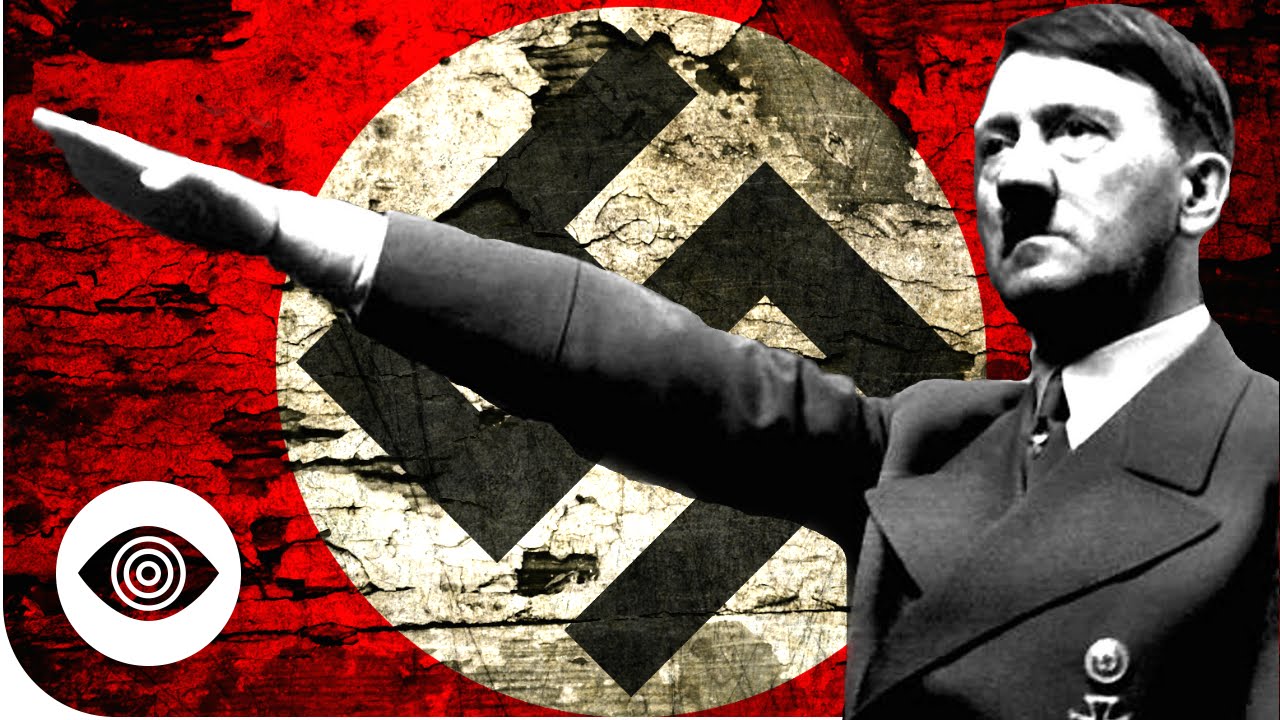
The question isn’t just a conspiracy theory. It is a historical paradox that makes you question everything you learned in school: Did the Bush family help finance Adolf Hitler?
The Ghost in the Machine: Prescott Bush
To understand this mess, we have to look back. Before George W. dodged shoes in Iraq, and before George H.W. declared a New World Order, there was Prescott Bush. The patriarch. The grandfather. A man with icy blue eyes and a handshake that could crush coal into diamonds. He was a Connecticut Senator, a wall street titan, and a member of the ultra-secretive Skull and Bones society at Yale.
But in the 1930s and early 40s, Prescott wasn’t worried about being a Senator. He was worried about making money. Lots of it.
He was a managing director at Brown Brothers Harriman, one of the most powerful private investment banks in the world. But his real role—the one that keeps historians awake at night—was his position on the board of the Union Banking Corporation (UBC).
This sounds boring, right? A bank. A board. Suits and ties. Don’t be fooled. UBC wasn’t a normal bank. It didn’t have tellers handing out lollipops. It was a holding company. A funnel. A pipeline designed for one specific purpose: to move money, gold, and steel interests back and forth between the United States and Germany.
The Thyssen Connection: Financing the War Machine
Here is where the plot thickens like day-old concrete. UBC wasn’t managing money for just anyone. They were the American banking arm for a German industrialist named Fritz Thyssen.
Who was Thyssen? He wasn’t just a rich guy. He was the steel magnate who wrote a book literally titled “I Paid Hitler.”
Thyssen was the wallet behind the Nazi party. When the Nazi party was broke, struggling, and on the verge of collapse in the late 1920s, Thyssen kept the lights on. He funded the rallies. He funded the brownshirts. He bought the megaphone that Hitler shouted into.
And who managed Thyssen’s money in New York? Prescott Bush.
Through the Union Banking Corporation, the Bush patriarch helped manage the vast Thyssen empire’s American assets. While Hitler was tearing up the Treaty of Versailles and rebuilding the German army, money was flowing through accounts overseen by Prescott Bush. It was a trans-Atlantic handshake that ignored the gathering storm clouds.
1942: The Government Kicks Down the Door
Let’s fast forward. It’s 1942. Pearl Harbor has happened. The United States is at total war. Young American men are dying in the Pacific and preparing to die in Europe. The country is united against the Axis powers.
But on Wall Street, business was still business.
The U.S. government, however, had seen enough. They had been tracking the money. They knew that UBC wasn’t just an innocent bystander. On October 20, 1942, the hammer dropped. Under the Trading with the Enemy Act, the U.S. Alien Property Custodian seized the assets of the Union Banking Corporation.
This is a matter of public record. It is not a fantasy. The government seized the bank because it was viewed as a Nazi front organization.
The vesting order (Vesting Order No. 248) didn’t mince words. It seized the stock of the corporation. And who owned the stock? The directors. And who was a director? Prescott Bush.
They didn’t stop there. In the weeks that followed, the government seized four more Nazi-associated companies that were linked to the same banking network. These included a shipping line used to smuggle German spies and a steel concern.
Why Wasn’t He Arrested?
This is the question that burns. If you or I were caught funneling money for a foreign enemy during wartime, we’d be thrown in a dark hole and the key would be melted down.
But Prescott Bush? He didn’t spend a night in jail. He wasn’t put on trial for treason. Why?
Because that is how the game is played at the top level. The excuse was simple: Bush and his partners were just “holding” the shares for the Dutch bank (which was a front for the Nazis). They claimed ignorance. They claimed they were just businessmen doing their jobs, unaware of the political machinations of their clients.
The government quietly seized the assets, managed them for the duration of the war, and—get this—gave them back afterwards.
In 1951, the assets were liquidated. Prescott Bush received $1.5 million from the sale. That’s about $16 million in today’s money. That money helped launch his son, George H.W. Bush, into the oil business. The oil business led to the CIA. The CIA led to the Vice Presidency. And the rest is history.
The “Business Plot”: It Gets Darker
If you think managing Nazi money is bad, hold onto your seat. There is another layer to this story that often gets scrubbed from the textbooks. We need to talk about the Business Plot of 1933.
While Hitler was consolidating power in Germany, some ultra-wealthy American industrialists looked across the ocean and thought, “Hey, that fascism thing looks pretty efficient.”
They hated Franklin D. Roosevelt. They hated the New Deal. They thought FDR was a socialist destroying their wealth. So, a group of powerful bankers and businessmen allegedly hatched a plot to overthrow the U.S. government.
They wanted to install a fascist dictator in the White House. They planned to raise a private army of 500,000 veterans, march on Washington, and force FDR to hand over power to a “Secretary of General Affairs.”
Who did they try to recruit to lead this coup? Major General Smedley Butler, one of the most decorated Marines in history. But Butler wasn’t a traitor. He was a patriot. He went to Congress and blew the whistle.
What does this have to do with the Bushes?
Investigative journalists and historians (like John Buchanan) have linked the financing of this plot to the same circle of people surrounding Prescott Bush. The congressional committee that investigated the plot confirmed that the attempt was real, but they mysteriously stopped short of naming names or prosecuting the wealthy backers. The transcripts were redacted. The story was buried.
Was Prescott directly involved? The paper trail is smoky, but the connections are undeniable. It’s the same group of people. The same money. The same ideology of “profits over democracy.”
The Defense: “It Was Just Business”
Skeptics will tell you to calm down. They’ll say, “Look, everyone traded with Germany in the 30s. Ford did it. GM did it. IBM did it. Prescott Bush was just a banker.”
That is true. Corporate America has a lot of blood on its hands from that era. Henry Ford famously received a medal from Hitler. IBM machines tallied the victims of the Holocaust.
But does “everyone else was doing it” make it right?
The difference with the Bush connection is the timing. UBC was seized in late 1942. This was long after the invasion of Poland. Long after the world knew what the Nazis were. The Bush-led bank didn’t stop until the federal government forced them to stop.
Furthermore, this wasn’t selling cars or typewriters. This was high-level finance for the man (Thyssen) who built the Nazi war machine from the ground up. Without Thyssen’s steel and money, Hitler might have remained a failed painter ranting in a beer hall.
The Silence of the Lambs
For decades, this story was a whisper. It was discussed in conspiracy circles but ignored by the mainstream media. When George H.W. Bush ran for President, nobody asked him about his father’s Nazi bank accounts. When George W. Bush ran, the files were collecting dust in the National Archives.
It wasn’t until recently, with the declassification of documents and the relentless work of independent researchers, that the full picture started to emerge.
Why the silence? Because it shatters the American myth. We like to believe in clear lines between Good and Evil. We want to believe that World War II was a pure fight for freedom.
But the reality is messier. The reality is that American money helped build the monster we had to fight. And the profits from that monster helped build one of the most powerful political families in American history.
The “What If” Scenario
Let’s play a mental game. Imagine for a second that the Trading with the Enemy Act was enforced with the full weight of the law.
- Scenario A: Prescott Bush is arrested in 1942. He is tried for treason or trading with the enemy. He goes to prison. The family fortune is confiscated, not returned.
- The Result: There is no seed money for George H.W. Bush’s oil ventures. No CIA directorship. No Vice Presidency. No Presidency. No George W. Bush in 2000. No Iraq War. No Patriot Act.
The timeline of the entire 20th and 21st centuries changes completely. The domino effect is staggering.
It forces us to ask: How much of our modern world was shaped by the leniency shown to a few wealthy bankers in 1942?
Modern Implications and The “Deep State”
This story is red meat for anyone who believes in the concept of a “Deep State” or a ruling elite class. It reinforces the idea that there are two sets of rules: one for you and me, and one for the people who own the banks.
If you get caught sending $500 to a sanctioned country today, the FBI will be knocking on your door before you can hit “send.” But the Bush family legacy suggests that if you move millions for a genocidal regime, you might just get a slap on the wrist and a future presidency.
It also explains the Bush family’s obsession with secrecy. The Skull and Bones society, the CIA background—it all fits a pattern of operating in the shadows. When your family fortune is born in the gray areas of morality, you learn to keep the curtains drawn tight.
Conclusion: The Verdict of History
So, did Prescott Bush help Hitler into power?
Technically? Yes.
By managing the finances of Fritz Thyssen, the man who single-handedly bankrolled the early Nazi party, Prescott Bush played a cog in the machine. He greased the wheels. He kept the money flowing when it mattered most.
Was he a Nazi? Probably not. He was a capitalist. And in the 1930s, for men like Prescott Bush, capitalism didn’t have a conscience. It only had a bottom line.
But that money—blood money, stained with the horrors of the 20th century—didn’t vanish. It grew. It compounded. It educated presidents. It funded campaigns. It bought influence.
The next time you hear a politician talk about “American Values,” remember this story. Remember 39 Broadway, New York City. Remember the Union Banking Corporation. And remember that sometimes, the history books leave out the most important chapters.
History is written by the victors. But the receipts? The receipts are still in the archives, waiting for anyone brave enough to read them.
Dig Deeper into the Rabbit Hole
If this story boiled your blood, you need to see what else we’ve uncovered. The rabbit hole goes deeper than you can imagine.
- The Atomic Secret: Did the Nazis actually beat us to the nuclear bomb, only to lose the war before they could use it? Watch the investigation here.
- The Assassins: We know about Valkyrie, but what about the other men who tried to take Hitler down? See the failed plots.
- The Modern Connection: The Bush family history gets even stranger when you look at their ties to the Bin Laden family. Coincidence? Or something else? Watch the breakdown.
Originally posted 2015-03-07 19:00:06. Republished by Blog Post Promoter