The Question That Won’t Go Away: Did They Know?
Everyone remembers where they were.
The sky was a brilliant, almost defiant blue that Tuesday morning. A perfect late-summer canvas, soon to be scarred forever by smoke, fire, and a wound on the American psyche that has never truly healed. We were shown the images. We were told the story. A simple, horrifying story of unimaginable evil striking a nation at peace, a narrative of surprise and shock that galvanized a generation.
But what if that’s not the whole story?
What if the shock was not universal? What if, in the hushed corridors of power, the events of September 11th, 2001, were not a surprise at all, but the grim, explosive finale to a long series of ignored warnings and memos that were practically screaming of an impending catastrophe? This isn’t just a fringe theory whispered in the dark corners of the internet. It’s a question built on a foundation of declassified documents, insider testimony, and a chilling pattern of inaction that demands a second look.
So let’s ask the question out loud. The one that gets you labeled and dismissed. The one that still hangs, heavy and toxic, in the air two decades later.
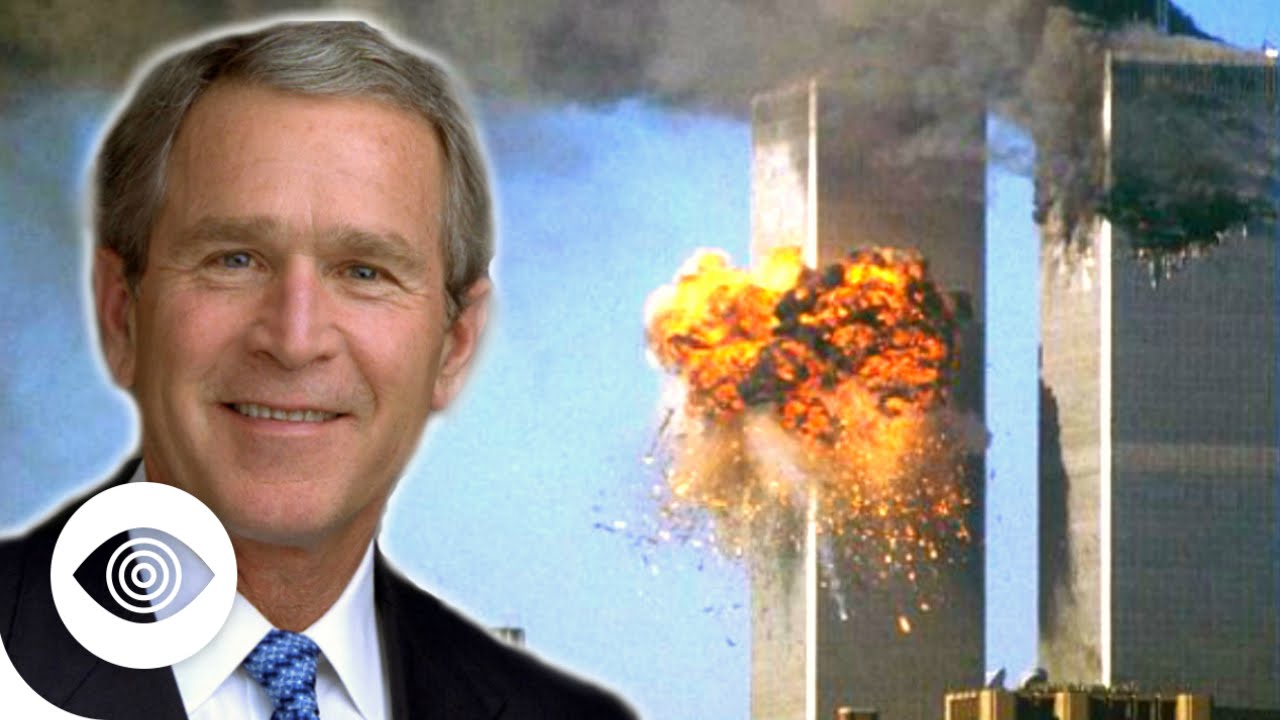
Did George W. Bush and his administration simply fail to stop 9/11? Or did they, for reasons we are only now beginning to comprehend, *let it happen*?

The Memo That Should Have Changed Everything
Let’s travel back to a hot summer day in Crawford, Texas. August 6th, 2001. President George W. Bush is on vacation at his ranch, a full 36 days before the attacks. It was on this day he was handed his Presidential Daily Briefing (PDB), a top-secret summary of the most vital intelligence a president needs to know.
This one was different.
The title alone should have set off every alarm bell in the Western Hemisphere: “Bin Ladin Determined To Strike in US.”
Think about that. This wasn’t a vague “chatter” warning. It wasn’t a maybe. It was a declarative statement. The document, now declassified, is stunning in its clarity. It mentioned FBI information indicating “patterns of suspicious activity in this country consistent with preparations for hijackings or other types of attacks.” It specifically noted that Bin Laden’s followers might “seek to hijack a U.S. aircraft.” It even referenced a call to the US embassy in the UAE in May of 2001 saying a group of Bin Laden supporters were planning attacks in the United States.
A Deep Dive: What is a Presidential Daily Briefing?
To grasp the weight of this, you need to understand what a PDB is. It’s not junk mail. It’s not a newspaper. It is the single most sensitive and important intelligence document produced by the entire U.S. intelligence apparatus, curated and hand-delivered to the President of the United States. It contains information from the CIA, NSA, DIA, and every other spy agency, boiled down to the most pressing threats to national security.
When a PDB lands on the president’s desk with a title like that, it’s the intelligence community’s version of a fire alarm, a tornado siren, and a flashing red light all rolled into one. It is the ultimate call to action.
And what was the response? Reportedly, President Bush told the CIA briefer, “All right. You’ve covered your ass, now.” And then… nothing. Crickets. The nation continued its summer slumber, completely unaware that a clock was ticking down to zero.
Not a Whisper, But a Roar of Warnings
The August 6th PDB wasn’t a lone voice in the wilderness. It was the crescendo of a global chorus of warnings that, when viewed in hindsight, looks less like a series of missed dots and more like a giant, flashing neon sign being willfully ignored.
- The Phoenix Memo: In July 2001, just weeks before the PDB, an FBI agent in Arizona named Kenneth Williams sent a memo to headquarters. He noted an “inordinate number of individuals of investigative interest” enrolling in civilian flight schools in Arizona. He theorized that Al-Qaeda could be using these schools to train terrorists for operations. He urged a nationwide review of flight schools. His recommendation went nowhere. It was buried in the bureaucracy.
- The Moussaoui Case: On August 16, 2001, French national Zacarias Moussaoui was arrested in Minnesota on immigration charges. Why? Because flight school instructors reported him as dangerously suspicious. He’d paid thousands in cash to learn to fly a 747 but showed no interest in learning how to take off or land. He just wanted to know how to steer it in the air. FBI agents on the ground frantically tried to get a warrant to search his laptop, believing he was a terrorist who might “fly an aircraft into the World Trade Center.” The request was denied by higher-ups at FBI headquarters. The laptop, which contained clues that could have unraveled the plot, sat unexamined in an evidence locker on September 11th.
- Foreign Intelligence Screaming for Help: This wasn’t just an American intelligence failure. Foreign governments were practically begging the U.S. to listen. Russian intelligence warned the U.S. about imminent attacks on airports and government buildings. Egyptian President Hosni Mubarak has stated he personally warned the Americans that Al-Qaeda was planning something terrible involving airplanes. Even the Taliban, through a foreign minister, sent a message in August warning that Bin Laden was planning a “huge attack” on American soil.
One warning is a fluke. Two is a coincidence. But this? This was a symphony of alarms. And no one, it seems, was conducting.

Where Were the Jets? The Unsettling Silence of NORAD
Let’s set aside the intelligence failures for a moment and focus on the morning of September 11th itself. The North American Aerospace Defense Command, or NORAD, is a joint US-Canadian organization responsible for protecting the airspace of North America. Their entire reason for existing is to identify and intercept airborne threats.
In the year 2000 alone, NORAD scrambled fighter jets 67 times to investigate wayward aircraft. It was standard. It was routine. A plane goes off course, loses radio contact, or its transponder stops working, and within minutes, F-15s or F-16s are scrambled to see what’s going on.
On September 11th, 2001, four commercial airliners went silent. They deviated wildly from their flight paths. They turned off their transponders. They were clearly, catastrophically hijacked.
And NORAD’s response was… paralyzed. Lethargic. Unfathomably slow.
Consider the timeline for American Airlines Flight 77, the plane that hit the Pentagon. It took off, made a U-turn over Ohio, and flew back toward Washington D.C. for over 40 minutes. It was a rogue, unaccounted-for aircraft heading directly for the nation’s capital, the most heavily-defended airspace on the planet. And nothing stopped it. No jets from Andrews Air Force Base, just 10 miles from the Pentagon, were scrambled until after the building was already a smoking ruin.
The “War Games” Coincidence
So what happened? Was it incompetence? Or was there something else at play?
This is where things get even stranger. On the morning of 9/11, multiple U.S. military and intelligence agencies were in the middle of a series of large-scale air defense exercises. One, called “Vigilant Guardian,” was a NORAD exercise that simulated a hijacking of a commercial airliner. Another involved inserting “false blips” onto FAA radar screens.
Could it be the most horrible coincidence in history? Or did these exercises create a fog of war, intentionally or not, that made it impossible for air traffic controllers and military commanders to distinguish between a real attack and a fake one? Some researchers go further, suggesting the drills were the perfect cover, a way to ensure that the standard response protocols would be confused, delayed, and ultimately fail, allowing the attacks to succeed. The fog of war provided the perfect excuse.
The Fork in the Road: Criminal Incompetence or Chilling Complicity?
When you lay out all the evidence, you arrive at a crossroads with two very different, and equally disturbing, paths.
Path One: A Colossal Failure of Imagination
This is the official story, the one presented by the 9/11 Commission. It argues that the Bush administration, only in office for eight months, was focused on Cold War-era threats like missile defense. They inherited a bureaucratic system where the CIA and FBI didn’t share information effectively. While the system was “blinking red,” there was so much noise and chatter that they couldn’t pick out the signal. They simply failed to “connect the dots.”
In this version, it’s a story of systemic failure, of missed opportunities, and a tragic lack of imagination. It’s a conclusion of catastrophic incompetence, but not malice. It’s a comforting explanation because it chalks everything up to a correctable mistake.
Path Two: Let It Happen On Purpose (LIHOP)
This is the path less traveled, the one that leads to a much darker place. The “Let It Happen On Purpose” theory doesn’t claim Bush and his cabinet *planned* the attacks. Instead, it posits that they were aware of the plot, knew it was coming, and made a calculated decision to stand down and allow it to unfold.
But why? What possible motive could there be? The answer, according to those who walk this path, can be found in a document published a year *before* the attacks.
It was called “Rebuilding America’s Defenses,” a paper written by a neoconservative think tank called The Project for the a New American Century (PNAC). Its members included a who’s-who of the future Bush administration: Dick Cheney, Donald Rumsfeld, Paul Wolfowitz, and others. The paper openly called for a massive expansion of American military power and a more aggressive foreign policy to assert U.S. dominance, particularly in the Middle East.
But they acknowledged a problem. The American public wouldn’t support such a radical shift. They wrote that the process of transformation would be a long one, “absent some catastrophic and catalyzing event – like a new Pearl Harbor.”
One year later, they got their “new Pearl Harbor.”
And what happened in the aftermath? The Patriot Act, which massively expanded government surveillance powers. The invasion of Afghanistan. And, most importantly for many of the PNAC authors, the invasion of Iraq, a goal they had championed for years. 9/11 provided the perfect justification, the blank check, to enact their entire pre-planned agenda. Was it just a horribly convenient tragedy, or was it a tragedy allowed to happen for the sake of an agenda?
The Dust Never Settles
Two decades have passed. A new generation has been born with no memory of a world before the towers fell. For them, it is history, a chapter in a textbook.
But for millions of others, the questions remain. The official story, with its gaps and contradictions, feels thin. The sheer number of warnings ignored, the inexplicable paralysis on the day itself, and the almost psychic-level “prediction” of a “new Pearl Harbor” by the very men who would soon be in power… it all feels like too much to be a coincidence.
We may never have a signed confession. We may never have the “smoking gun” document that lays it all bare. All we have are the pieces. The August 6th memo. The Phoenix memo. The unanswered pleas of FBI agents and foreign governments. The silent jets.
Was it the greatest intelligence failure in modern history? Or was it something else? A quiet, deliberate, world-altering decision to step aside and let the fire burn, knowing you have the gasoline and matches ready to build a new world from the ashes?
The dust from that September morning may have settled physically, but the questions it kicked up are still swirling in the air, waiting for an answer that has yet to come.