The Loch Ness Monster: A 2016 Sighting Reignites the World’s Deepest Mystery
Some mysteries are etched not in stone, but in water. Dark, cold, peaty water. Water so deep it could swallow skyscrapers whole. We’re talking, of course, about Loch Ness. A name that conjures a single, powerful image: a long-necked beast, a prehistoric ghost haunting the Scottish Highlands. For decades, the story has flickered between serious investigation and tourist-trap folklore. But every so often, something happens. Something gets captured. Something that makes even the most hardened skeptic lean in a little closer and whisper… what if?
This is the story of one of those moments. A moment that, thanks to a simple photograph, sent a fresh jolt of electricity through a very old legend.
The Photo That Stunned the Internet
It wasn’t a monster hunt. It was a search for deer. Ian Bremner, a 58-year-old distillery worker and amateur photographer, was doing what he loved most: escaping into the rugged beauty of the Scottish Highlands. He was after a shot of the majestic red deer, not a mythical beast. The loch was just part of the stunning backdrop. The air was crisp. The water, a dark mirror reflecting the moody sky. He drove, he stopped, he snapped pictures. Just another weekend.
Or so he thought.
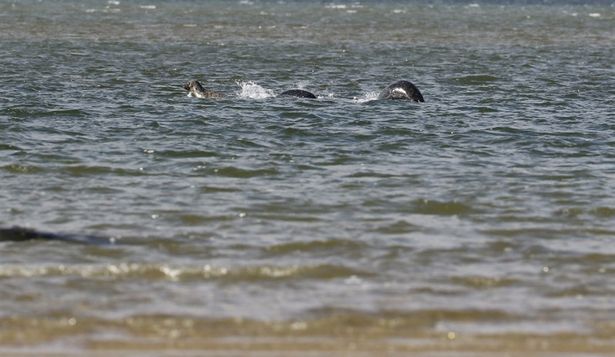
It was only when he returned to his home in Nigg, Invergordon, that the anomaly appeared. He was sifting through the day’s pictures on his computer, looking for that perfect landscape shot. Then he stopped. He zoomed in. He stared. In the waters of Loch Ness, midway between the villages of Dores and Inverfarigaig, was something that did not belong.

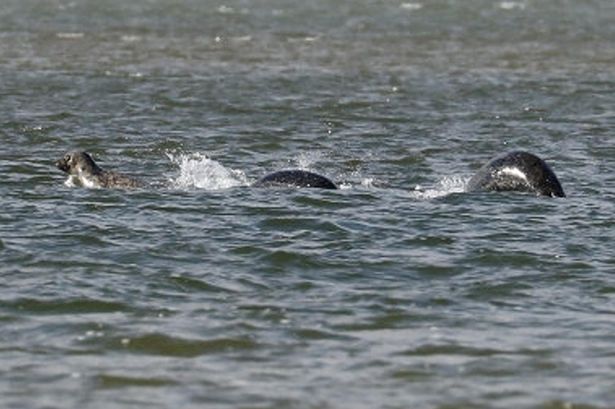
Three humps. Unmistakable. They broke the surface of the water, arcing in a perfect line. At the front, a head seemed to bob just above the waves. At the back, a tail appeared to be flapping, propelling the creature forward. The being looked to be at least two meters long, its skin a silvery-grey against the dark water. It was moving, swimming away from the shore, a silent traveler in the immense loch.
Bremner was floored. He hadn’t seen a thing with his own eyes. The camera had captured what he missed. As he told the press, “It’s a part of the world that always makes you second guess what you’re seeing.” This time, the second guess was a doozy.
The immediate online reaction was, predictably, a mix of awe and intense skepticism. The most common explanation? Seals. “It’s just three seals playing in a line!” cried the internet debunkers. And it’s plausible. Seals are known to swim in the area, occasionally making their way in from the sea. They could, if timed perfectly, create a similar image.
But look closer. Really look.

The spacing seems too perfect. The humps too uniform. The “head” and “tail” seem connected to the central body in a way that feels more like a single, undulating creature than three separate mammals. Ian Bremner himself, a man who spends countless hours in the wild, remained unconvinced by the simple explanation. He believed he had accidentally captured something else. Something… ancient.
A Legend Born of Darkness and Water
To understand why a picture like Bremner’s can cause such a stir, you have to understand the sheer weight of history behind it. The Loch Ness Monster isn’t a modern invention. It’s a story that goes back centuries, long before cameras or the internet even existed.
The Saint and the Water Beast
The first recorded encounter is buried deep in the past, in the year 565 AD. The story involves the Irish monk, St. Columba, who was doing missionary work in Scotland. According to the biography written a century after his death, Columba came across a group of locals burying a man by the River Ness. They told him the man had been mauled and dragged under by a “water beast.”
Undaunted, Columba ordered one of his followers to swim across the river. As the man entered the water, the beast surfaced again, roaring and charging with its mouth wide open. The terrified locals screamed. But Columba, full of faith, stepped forward, made the sign of the cross, and commanded the beast, “Go no further! Do not touch the man! Go back at once!”
Miraculously, the creature stopped as if “pulled back with ropes,” and fled into the depths. Was it a miracle? A folktale? Or the first documented sighting of the creature we now call Nessie?
The Road That Woke a Monster
For centuries, the story remained a local legend. Whispers. Folklore. But that all changed in 1933. A new road, the A82, was completed along the loch’s northern shore. For the first time, drivers had a clear, unobstructed view of the water’s vast expanse. And suddenly, the sightings exploded.
Did the construction work, the blasting and digging, awaken something that had been slumbering in the depths? Or was it simply that more people were looking? Either way, the modern legend was born on April 14, 1933, when a local couple, the Mackays, saw an “enormous animal rolling and plunging” in the loch. Their story was reported in the Inverness Courier, and the editor used the word “monster.”
The fuse was lit.
The Hoax That Fooled the World
You can’t talk about Loch Ness without talking about the “Surgeon’s Photograph.” It is, without a doubt, the most famous picture of a monster ever taken. Published in the Daily Mail in 1934, it shows the iconic, graceful head and long neck of a creature rising from the water. For 60 years, this image was the cornerstone of Nessie belief. It defined what the monster looked like. It was proof.
And it was a complete and utter fake.
The truth came out in 1994, a shocking deathbed confession that pulled the rug out from under a global legend. The photo was a revenge plot masterminded by a man named Marmaduke Wetherell. He had been hired by the Daily Mail to find the monster but was publicly humiliated when the “tracks” he found turned out to be from a hippo-foot umbrella stand. To get his revenge, he and his son-in-law, Christian Spurling, fashioned a “monster” out of a toy submarine and some wood putty. They photographed it and had a respectable London surgeon, Robert Kenneth Wilson, pass it off as his own to lend it credibility.
The confession was a body blow to believers. But here’s the conspiratorial twist: does the fact that the most famous photo was a hoax invalidate *all* the other sightings? Or did the hoaxers simply build a model of something that people were *already* seeing? They didn’t invent the long-necked shape; they copied the descriptions from other eyewitnesses like George Spicer, who a year earlier described seeing “a most extraordinary form of animal” cross the road in front of his car.
The Hunt: From Binoculars to Sonar Beams
The Surgeon’s Photograph may have been fake, but it kicked off a frenzy of monster hunting that continues to this day. At first, it was people with binoculars and cameras, sitting on the shores for hours, days, weeks, hoping for a glimpse.
Then, technology entered the picture.
Operation Deepscan’s Ghostly Contacts
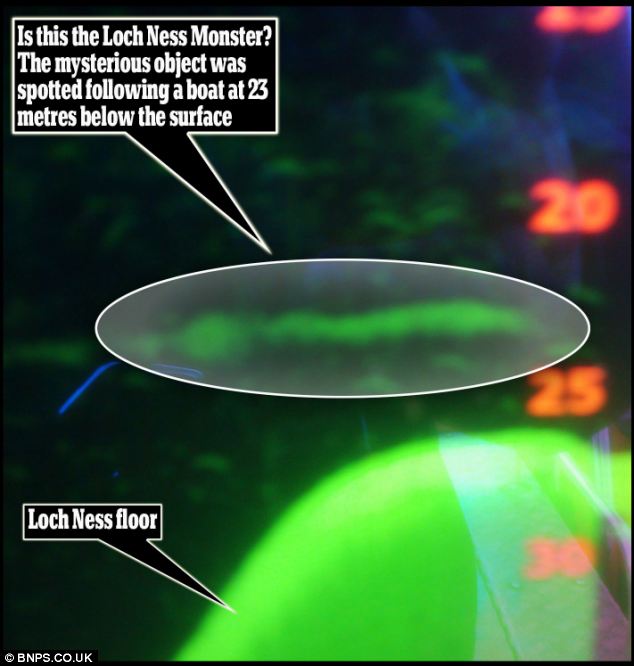
In 1987, the most ambitious search to date, Operation Deepscan, was launched. A fleet of 24 boats was equipped with sonar and lined up, shoulder-to-shoulder, to sweep the entire length of the loch. It was a million-pound gamble. Over the course of a weekend, they got three significant sonar contacts.
One contact was described as being “larger than a shark but smaller than a whale.” The sonar operator watched it for several minutes before it moved away and vanished into the depths near Urquhart Castle. The objects were big. They were deep. And they were moving. But the sonar couldn’t provide a clear picture. The results were tantalizing, but ultimately, inconclusive. Ghosts on a machine.
The BBC Search: Case Closed? Not So Fast.
The original article mentions the 2003 BBC search, which used 600 separate sonar beams and satellite tracking to paint a comprehensive picture of the loch’s contents. Their conclusion? Nothing. No monster. They declared the myth “busted.”
But let’s put that in perspective. Loch Ness is 23 miles long and over 750 feet deep. It contains more fresh water than all the lakes of England and Wales combined. The water is so murky with peat that visibility is practically zero just a few feet below the surface. The sides of the loch are riddled with underwater caves, crevices, and canyons that sonar can’t properly penetrate.

Did the BBC prove the monster doesn’t exist? Or did they just prove that it’s very, very good at hiding in a near-perfect environment for concealment? They proved no large animal was swimming in the open water *while they were looking*. That’s not quite the same as proving the loch is empty.
So, What IS Nessie? The Top Theories Examined
If something is in that loch—if Ian Bremner, the Spicers, and hundreds of others saw *something*—what could it be? The theories range from the fantastical to the surprisingly plausible.
Theory 1: The Lost World Dinosaur (The Plesiosaur)
This is the classic. The one everyone knows. The idea that a population of prehistoric marine reptiles, the plesiosaurs, somehow survived the extinction of the dinosaurs and found a refuge in Loch Ness. It’s a romantic, thrilling idea. The long neck, the humps—it fits the classic descriptions perfectly.
The problems, however, are huge. Plesiosaurs were air-breathers; they’d have to surface constantly, meaning they’d be seen far more often. The loch is also extremely cold, and as reptiles, they would struggle to survive. Furthermore, for a species to survive for 65 million years, you’d need a sizable breeding population, not just one or two lonely monsters. There simply isn’t enough food in the loch to support a herd of giant reptiles. It’s a great story, but biologically, it’s a long shot.
Theory 2: The Colossal Eel
This is a much more modern and scientifically grounded theory. The European eel is known to live in Loch Ness. They are born in the Sargasso Sea and migrate thousands of miles to rivers and lakes in Europe. What if, due to some genetic anomaly or unique conditions in the loch, some of these eels just… never stopped growing?
A 20- or 30-foot-long eel, swimming near the surface, would look exactly like a series of humps. Its body undulating through the water would perfectly match many sightings. In 2018, a massive eDNA (environmental DNA) study of the loch was conducted by scientists from New Zealand. They took water samples from all over the loch to see what DNA was present. They found no reptile DNA. No shark DNA. But what they did find was a massive, overwhelming amount of eel DNA. The lead researcher, Professor Neil Gemmell, concluded that while he didn’t believe in a monster, the giant eel theory was the one a “large amount of data” supported and remained “plausible.”
Theory 3: The Ancient Greenland Shark
Here’s a theory that’s gained traction on internet forums. The Greenland shark is a creature straight out of a nightmare. It can grow up to 24 feet long, lives in frigid Arctic waters, and can live for over 400 years, making it the longest-living vertebrate on Earth. They are dark, slow-moving, and look utterly primeval.
Could one or more of these sharks have made their way into the loch thousands of years ago when sea levels were different and become trapped? The water temperature is perfect for them. Their slow, silent movement fits the profile. It’s a wild idea, but in a mystery this deep, you can’t rule anything out.
Theory 4: A Trick of the Mind?
This is the explanation skeptics always return to. There is no monster. Every sighting is a misidentification. A floating log. A boat wake. A swimming deer. Otters playing. And of course, seals. The power of suggestion is strong. When you are standing on the shore of the world’s most famous monster lake, you *want* to see something. Your brain is primed to interpret ambiguous shapes in the water as the one thing you’re hoping to find.
Nessie in the 21st Century: The Hunt Goes Digital
The hunt for Nessie has evolved. Today, you don’t even have to go to Scotland. A 24/7 webcam streams a live feed of the loch, allowing armchair monster hunters from around the world to keep watch. And they do. Several “official” sightings recorded in the Official Loch Ness Monster Sightings Register have come from people staring at their computer screens hundreds or thousands of miles away.
Modern technology, like the drone photography and satellite imagery that debunked one recent “sighting” as just a boat, cuts both ways. It makes it harder to fake evidence, but it also gives us more eyes on the water than ever before. The mystery endures because, for every debunked photo, another one like Ian Bremner’s comes along—one that is just plausible enough to make you wonder.
The Question That Won’t Die
Science tells us it’s impossible. Logic tells us it’s a myth. The evidence, from hoaxes to inconclusive sonar blips, is messy and unreliable. But the legend of Loch Ness persists for a reason. It speaks to the part of us that wants the world to still hold deep, undiscovered secrets. It represents the idea that there are still dragons on the map, monsters in the deep.
The cold, black water of Loch Ness holds its secrets tightly. After all the years, all the searches, and all the theories, we are left standing on the shore, staring out at the water, just like Ian Bremner did. We are left with grainy photos, strange sonar readings, and a feeling that we don’t know everything.
The question is not, “Do you believe in the Loch Ness Monster?” The real question, the one that lingers long after you look away, is… what did he *really* see in that water?
Originally posted 2016-09-17 05:46:49. Republished by Blog Post Promoter