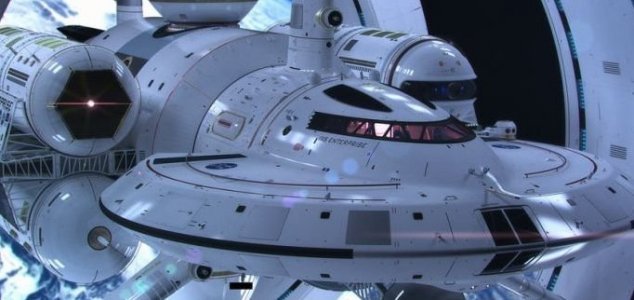
Home Weird World Space Can EmDrive take us to Mars in 70 days ?

Can EmDrive take us to Mars in 70 days ?

0
64

Physics is usually a strict teacher. It has rules. Laws. Commandments that cannot be broken. You drop an apple; it falls. You push a wall; the wall pushes back. But every once in a long while, something comes along that doesn’t just bend the rules—it snaps them in half.

For decades, humanity has looked at the stars and felt a crushing sense of distance. Mars is too far. Alpha Centauri is a lifetime away. Our rockets are basically giant flying gas cans, exploding their way upward, fighting gravity every inch of the way. We are shackled by the “Rocket Equation,” a mathematical prison that says if you want to go further, you need more fuel. But to carry more fuel, you need… more fuel.

It’s a losing game.

But what if you didn’t need fuel? What if you could build an engine that moves without pushing anything out the back?

Enter the EmDrive.

Can EmDrive take us to Mars in 70 days ?

The Impossible Engine That Just Won’t Die

The EmDrive could revolutionize space travel. That is the understatement of the century. If this thing is real, it doesn’t just change space travel; it rewrites the textbooks sitting in every university on Earth.

NASA’s mysterious electromagnetic propulsion engine has managed to pass a rigorous peer review process, a moment that sent shockwaves through the scientific community. For years, this device was laughed at. It was the punchline of engineering jokes. Serious scientists wouldn’t touch it for fear of ruining their careers.

Why? Because it sounds like magic.

First developed back in 2001 by aerospace engineer Roger Shawyer, EmDrive allegedly works by converting electrical power into thrust without the need for propellant. That last part is the kicker. “Without propellant.” In the vacuum of space, you usually move by throwing stuff out behind you (exhaust) to push yourself forward. That is Newton’s Third Law: For every action, there is an equal and opposite reaction.

The EmDrive ignores this. It creates thrust through a process that scientists argue is in direct violation of the laws of physics. Imagine sitting in the driver’s seat of your car and pushing on the steering wheel so hard that the car moves forward. That is effectively what the EmDrive claims to do. It pushes against itself, and somehow, the universe lets it move.

Mars in a Matter of Weeks?

A potentially revolutionary piece of technology, the engine could significantly reduce the time it takes to reach other worlds and make it possible for humans to get to Mars in under three months.

Let’s talk about the math here. Right now, a trip to Mars is a grueling, dangerous six-to-nine-month cruise. You are exposed to cosmic radiation. Your bones decay in zero gravity. Your mind starts to fray from the isolation.

If Shawyer’s math holds up, and if the NASA tests weren’t a fluke, the EmDrive could slash that time to 70 days. Maybe less. A trip to the Moon would take four hours. That isn’t space travel; that’s a morning commute. This technology would effectively turn the solar system into our backyard.

The NASA Leak That Changed Everything

Now according to sources at NASA, a paper detailing the design and build of the mysterious engine has passed a rigorous peer review process and is set to be published in the near future.

This was the turning point. For years, the EmDrive existed on the fringes of the internet. It was discussed on conspiracy forums and obscure science blogs. But when NASA’s Eagleworks laboratory—a division dedicated to advanced propulsion physics—took a look, the laughter stopped.

Led by Dr. Harold “Sonny” White, the Eagleworks team put the drive through a battery of tests. They put it in a vacuum. They isolated it. They tried to eliminate every possible external force.

The result? It moved.

It wasn’t a lot of movement. We are talking about micronewtons of thrust. A tiny amount. But it was there. And in physics, “any” thrust from a closed system is impossible. It’s like finding a ghost in a machine. You can’t ignore it.

The “Black Box” Problem

One of the biggest mysteries surrounding EmDrive is its apparent ability to produce thrust without producing any sort of exhaust, something that conventional physics deems impossible and a conundrum that has led some scientists to suggest that we simply lack the means with which to adequately measure whatever exhaust is actually being produced by it.

Skeptics immediately pounced. They shouted, “Thermal expansion!” They claimed the engine was just heating up and pushing against the air (even though it was tested in a vacuum). They claimed magnetic interaction with the Earth’s field. They looked for any reason, any glitch, that could explain the movement without breaking Newton’s laws.

But the anomaly persisted.

How Is This Even Possible?

If you ask Roger Shawyer, he will tell you it’s all about relativity. He claims the shape of the drive—a tapered copper cone—is the secret.

The authors of the new paper however suggest that the reason the engine doesn’t appear to be producing any exhaust is because the photons coming out of it are interfering with one another.

“In the cavity the input photons will bounce back and forth, and invariably some of them will interfere completely destructively,” they wrote. “Then the two photons will be exactly 180 degrees out phase.”

Let’s break that down into plain English. You pump microwaves into this copper cone. The microwaves bounce around like crazy inside. Because the cone is wider at one end and narrower at the other, the waves hit the ends with different force.

According to the theory, this difference in radiation pressure creates a net force. The cone pushes itself.

Conventional physicists scream at this explanation. They say, “You can’t lift yourself by pulling on your own belt!” But there are other theories floating around the dark corners of the web that try to explain it.

Theory 1: Pilot Wave Theory

Some researchers suggest the EmDrive isn’t pushing against “nothing.” It’s pushing against the quantum vacuum itself. Imagine space isn’t empty. Imagine it’s a roaring ocean of energy, popping in and out of existence. The EmDrive might be “pushing” against this quantum sea, like a swimmer pushing against water.

Theory 2: Quantized Inertia

This is where it gets really weird. A physicist named Mike McCulloch proposed that the EmDrive works because of “Quantized Inertia.” It involves the Unruh effect—radiation that you only see when you accelerate. The theory suggests the cone shape shields the Unruh radiation differently at each end, creating a vacuum imbalance that pulls the ship forward. If this is true, we aren’t just looking at a new engine; we are looking at a new understanding of gravity itself.

The Skeptics vs. The Believers

Whether this adequately explains all of the EmDrive’s peculiarities however remains to be seen.

Science is a battlefield. For every paper published supporting the EmDrive, three more come out trying to debunk it. Recently, researchers in Dresden, Germany, built their own copy. They ran tests. Their conclusion? The thrust might be coming from unshielded cables interacting with the Earth’s magnetic field. A false positive.

Does that mean it’s over?

Not even close.

The “failed” tests haven’t stopped the believers. The Chinese government has released state media reports claiming they have already tested the EmDrive in orbit aboard their Tiangong-2 space station. They claim it works. Are they lying? Is it propaganda? Or do they know something we don’t?

Then there is the U.S. military. The X-37B space plane—a robotic shuttle that stays in orbit for years doing classified missions—has long been rumored to be testing exotic propulsion systems. If the EmDrive works, you can bet the military isn’t going to announce it on the evening news. They would keep it dark.

The UFO Connection

We can’t talk about propellant-less propulsion without mentioning the elephant in the room. The Tic Tac UFOs.

In 2004 and 2015, US Navy pilots encountered objects that defied logic. These “Tic Tacs” moved at hypersonic speeds. They stopped instantly. They accelerated instantly. And most importantly: they had no exhaust plumes.

Look at the description. No wings. No rotors. No burning gas coming out of the back.

If the EmDrive is real, it explains exactly how a craft like that could operate. It wouldn’t need fuel tanks. It could hover silently. It could accelerate without the inertia crushing the pilot (if combined with mass-reduction technology).

Is the EmDrive actually reverse-engineered technology? Or is it simply human discovery stumbling upon the same physics that advanced civilizations mastered eons ago?

The Future is Waiting

We stand at a crossroads.

Path A: The skeptics are right. The EmDrive is a measurement error. A loose cable. A thermal drift. We are stuck with chemical rockets, and Mars remains a distant, dangerous dream.

Path B: The anomaly is real. We have cracked the code of gravity and inertia. The solar system opens up. We mine asteroids. We colonize Mars. We travel to the moons of Jupiter on the weekend.

History is full of things that were “impossible” until they weren’t. Flying was impossible. Breaking the sound barrier was impossible. Going to the moon was impossible.

Roger Shawyer is still out there. He is still building. He is still insisting that the physics are sound. The NASA paper exists. The data is in the books. The door has been cracked open just a tiny bit. The question is, are we brave enough to kick it down and see what’s on the other side?

Keep your eyes on the skies. The next revolution won’t come with a bang and a cloud of smoke. It will come silently, in a copper cone, defying everything we thought we knew.

Originally posted 2016-09-16 10:44:26. Republished by Blog Post Promoter

Originally posted 2016-09-16 10:44:26. Republished by Blog Post Promoter