
Tuesday, May 12, 2026
HomeWeird WorldParanormalBrown Lady Ghost - The Famous picture investigated

Brown Lady Ghost – The Famous picture investigated

The Ghost That Haunts the Internet: Is This the Most Famous Spirit Ever Photographed?

Look at it. Really look.

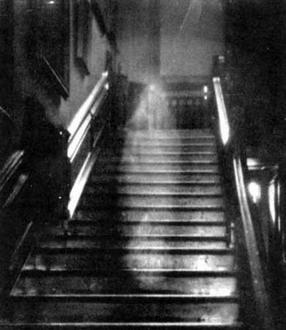
A spectral, almost translucent figure descends a grand staircase. It’s not a person, not quite. It’s an impression. A lingering shape of someone who once was, caught between worlds. Light seems to pass right through her. There’s a form, a head, shoulders, the sweep of a long dress… but it’s all ethereal. A smudge of sorrow on the fabric of reality.

This is the Brown Lady of Raynham Hall.

And this single photograph, snapped in a flash of terrified inspiration back in 1936, has fueled nightmares and debates for nearly a century. It’s the white whale of ghost photography. The one image that even hardened skeptics have trouble dismissing entirely. But is it the real deal? A genuine snapshot of the afterlife?

Or is it one of the most brilliant, enduring hoaxes ever conceived?

Forget what you think you know. We’re going deeper. We’re pulling apart the history, the heartbreak, and the photographic evidence to get to the bottom of a mystery that refuses to die. Because the story behind this picture is far more terrifying than the image itself.

A Routine Photoshoot Goes Horribly Wrong

September 19th, 1936. A crisp autumn day in Norfolk, England. Two professional photographers, Captain Hubert C. Provand and his assistant, Indre Shira, were on assignment for the high-society publication, Country Life magazine. Their job was simple: capture the stately elegance of Raynham Hall, a country estate that had been in the Townshend family for 400 years.

They were professionals. They knew their craft. Light, shadow, composition. It was just another day at the office.

Until it wasn’t.

They were setting up their equipment on the main staircase, a magnificent piece of architecture. Shira was preparing the camera for one final shot. As Captain Provand stood under the black cloth, ready to take the picture, his assistant suddenly shouted.

“Quick! Look!”

Provand, annoyed, peered out. “What’s all the fuss?”

Shira pointed, his voice trembling. “There’s a figure on the stairs. A vaporous form. Can’t you see it?”

Provand saw nothing. He thought his assistant was hallucinating, or worse, playing a prank. But Shira was insistent. He described a hazy, veiled figure slowly, deliberately, descending the steps right towards them. Trusting his partner’s panic, Provand ripped the cap off the lens and fired the flashbulb, his heart suddenly pounding in his chest.

After the flash faded, Shira explained what he saw. A spectral lady, gliding down the stairs. Provand remained a doubter, but they packed up their gear and headed back to London. In the darkroom, as the chemical bath did its work, an image slowly materialized on the negative. An image that shouldn’t have been there.

There, on the grand staircase of Raynham Hall, was the ghostly shape of a woman. The Brown Lady. When the photo was published in Country Life on December 26, 1936, it caused a sensation. The world had its first, and perhaps its best, picture of a ghost.

Who Was the Woman in the Brown Brocade Dress?

To understand the ghost, you have to understand the woman. You have to understand the pain.

Her name was Lady Dorothy Walpole, born in 1686. She wasn’t just any aristocrat; she was the sister of Sir Robert Walpole, the man considered to be Great Britain’s very first Prime Minister. She was part of a political dynasty. She was beautiful, intelligent, and trapped.

Her husband was Charles “Turnip” Townshend, 2nd Viscount Townshend. A powerful man with a volcanic temper. Their marriage was a political arrangement, a merger of two powerful families. It was not a love story.

Deep Dive: A Gilded Cage and a Furious Husband

Before her marriage to Townshend, Dorothy had been entangled in a scandalous affair with Lord Wharton, a notorious womanizer. The affair was squashed, and she was pushed into marriage with Charles to save the family’s reputation. But Charles Townshend never forgot. He was a man obsessed with legacy and honor, and he believed his wife had stained both.

The legend says he discovered evidence that Dorothy had been unfaithful *during* their marriage. His rage was absolute. But a public divorce would be a cataclysmic scandal, dragging both the Townshend and Walpole names through the mud.

So he chose a different path. A crueler one.

The official records state that Lady Dorothy Walpole died suddenly of smallpox and was buried in 1726. But the whispers around Norfolk told a different, far darker story. They said the funeral was a sham. A mock burial with an empty coffin. They said Charles Townshend, in a fit of jealous rage, locked his wife away in a remote corner of Raynham Hall. He told the world she was dead, effectively erasing her from existence. She was forbidden from seeing her own children, left to rot in solitude until she finally did die, years later, from a broken heart and neglect.

Is it true? A powerful man faking his wife’s death and imprisoning her for life? It sounds like something out of a gothic novel. But the sheer persistence of the ghost story gives it a terrifying weight. Spirits, they say, are born from tragedy. And Dorothy’s story is a tragedy of the highest order.

A Trail of Terror: The Sightings Before the Photo

Long before Captain Provand’s flashbulb lit up that staircase, the staff and guests of Raynham Hall knew they weren’t alone. The Brown Lady had been making her presence known for over a century.

Christmas, 1835: A Party Crasher from Beyond

The first widely recorded sighting happened during a Christmas celebration. Imagine the scene: roaring fires, festive decorations, lords and ladies celebrating. A guest, a Colonel Loftus, was heading to his room for the night. As he walked down the hall, he saw a woman ahead of him. He noted her old-fashioned brown brocade dress. He was about to approach her when she turned, and his blood ran cold.

Her face was pale and luminous. But where her eyes should have been, there were only dark, empty sockets. The sight was so shocking he sketched a picture of the apparition, showing it to other guests the next day. A week later, he and another guest named Hawkins saw her again, this time on the main staircase, confirming the horrifying details.

1836: A Skeptic Faces the Unthinkable

Captain Frederick Marryat was not a man who believed in ghosts. He was a celebrated novelist, a friend of Charles Dickens, and a man of logic. When he heard the stories of the Brown Lady, he practically demanded to stay in the haunted room to prove it was all nonsense.

He didn’t just sleep there; he came armed. Convinced a local prankster was behind the sightings, he kept a loaded pistol by his bedside.

One night, returning to his room with two other members of the Townshend family, he saw her. There, in the hallway, was the lady in the brown dress, gliding towards them. She carried a lamp, and as she drew closer, she turned and gave them a “diabolical grin.”

In a moment of pure instinct, Marryat raised his pistol and fired point-blank at the figure. The bullet passed straight through her, embedding itself in the door behind. The apparition vanished. The Brown Lady was not a prank. She was something else entirely.

Other sightings followed. In 1926, the son of the current Marquess Townshend and his friend saw her on the same staircase, recognizing her instantly from the family portraits of Dorothy Walpole. The ghost was becoming more brazen, more visible. It was as if she was leading up to something. A grand performance.

Ten years later, she was ready for her close-up.

The Inescapable Image: Hoax or Haunting?

The 1936 photograph is where the debate truly ignites. It’s one thing to hear spooky stories. It’s another to see the evidence printed in black and white.

The Case for a Real Ghost

Country Life magazine didn’t want to be made a fool of. They staked their reputation on the photo. Before publishing, they brought in photographic experts to examine the original negative. The conclusion? There were no signs of tampering. No evidence of retouching, no signs of a composite image. It appeared to be a single, unaltered exposure.

Furthermore, Provand and Shira were respected professionals. Faking a ghost photo would have been career suicide. They stuck to their story for the rest of their lives, even when faced with ridicule. Shira, the one who saw it with his own eyes, was particularly adamant.

The Skeptic’s Playbook

Of course, the debunkers came out in force. And they had some plausible theories.

  • The Grease Smear: The oldest trick in the book. A skilled artist could have smeared a thin layer of grease or Vaseline on the camera lens in the shape of a person. When the photo is taken, the smeared area appears hazy and translucent. Plausible, but would it look this detailed?
  • The Classic Double Exposure: This is the leading theory for many. The idea is that two images were captured on the same piece of film. First, a shot of the empty staircase. Second, a shot of someone in a costume (or a statue) superimposed over it. The problem? Experts at the time said the negative showed no signs of this, and achieving such a perfect alignment by accident would be nearly impossible.
  • The Man in a Sheet: Another popular idea is that during a long exposure (common at the time for interior shots), Shira or an accomplice slowly walked down the stairs covered in a sheet. This movement would cause the figure to appear blurry and transparent. It’s a clever idea, but does the figure in the photo really look like a person under a sheet? The form seems too distinct, the head and shoulders too clear.

What Modern Sleuths Are Saying

The debate has raged into the digital age. Internet forums and paranormal subreddits are filled with threads dissecting the photo pixel by pixel. Some digital analysts claim they can see inconsistencies in the lighting, suggesting the “ghost” is illuminated differently from the staircase. Others argue the physics of the light passing through the form are perfect, something incredibly difficult to fake with 1930s technology.

One fascinating recent theory suggests the image isn’t a ghost at all, but a “camera artifact” caused by a reflection of a nearby window or light source bouncing around inside the camera’s bellows. Yet, no one has been able to replicate the effect perfectly. The Brown Lady remains an enigma.

The 100-Year Pattern: Is She Coming Back?

This is where the story gets really strange. Look at the timeline. It’s not just a series of random events. There appears to be a pattern. A chillingly precise one.

Think about it.

Lady Dorothy Walpole actually died in 1726.

The terrifying sighting by Captain Marryat, where he shot right through her, was in 1836. Exactly 110 years later. But wait.

A major, confirmed sighting by the Townshend family themselves happened in 1926. Exactly 100 years after Marryat’s encounter.

And when was the famous photograph taken? 1936. Exactly 100 years after Captain Marryat’s run-in. A decade after the family saw her.

The numbers are… odd. It’s as if her energy surges on a centennial cycle. A hundred years of quiet slumber, followed by a period of intense activity. Coincidence? A trick of memory and reporting? Or is it a supernatural clock, ticking down to her next appearance?

If the pattern holds, the math is simple. And terrifying.

1936 was the last major event. Add one hundred years.

That brings us to 2036.

Are we on the verge of the Brown Lady’s return? In an age of 4K cameras, full-spectrum sensors, and live-streaming ghost hunts, could the next appearance be the one that provides undeniable proof, once and for all? Or has her tortured spirit finally found peace, leaving us with nothing but a faded photograph and a story that chills us to the bone?

We don’t have the answers. No one does. All we have is the photograph. The story. And the lingering question that hangs in the air like a cold mist: What, or who, is still walking the stairs at Raynham Hall? The prisoner of a ruthless husband, or the star of a clever fraud? Look at the picture one more time. The choice, for now, is yours.

Amit Ghosh
Amit Ghoshhttps://coolinterestingnews.com
Aloha, I'm Amit Ghosh, a web entrepreneur and avid blogger. Bitten by entrepreneurial bug, I got kicked out from college and ended up being millionaire and running a digital media company named Aeron7 headquartered at Lithuania.
RELATED ARTICLES
- Advertisment -

Most Popular

Recent Comments

Warren Pan Abbott on The legend of the Devil Monkey !
chris davies on The McPherson Tape Mystery
Reed Reedly on ET has Internet!
Bea Houseoffashion on Proof Of Time Travellers – Gallery
Marcus2012 on ET has Internet!
Reed Reedly on ET has Internet!
LaughsAtConspiracyNuts on The 9/11 Conspiracy – Myths and Facts
Alex Sliverman on Did the ancients fly?
Doctor Wholigan on Time Traveler in 1938 film
chris davies on The McPherson Tape Mystery
Archie1954 on 10 secret UFO hideouts
chris davies on Ghosts of flight 401
Marcus2012 on ET has Internet!
jason Macdonald on Proof of Time Travel? – China
chris davies on Long-Lost Pyramids Found?
Reed Reedly on ET has Internet!
Milkman on Connected Universe
Tenmiles on Baigong Pipes Mystery
Simon Foster on Sirius – The Documentary
From the 1st April on 2013 – Alien Contact date ?
SkyWatcher on Is ET ignoring us?
I Come From The Future on Obama to make UFO Alien disclouser soon ?
ÛñK?øWn on 2013 – Alien Contact date ?
Just another person on 2013 – Alien Contact date ?
Malcolm Windowcleaner on The strange case of Rudolph Fentz
Mason Servio on Strange Things on Mars
Marke Wisdom Seeker on What will we find as arctic melts?
Andrea A Elisabeth Levyne on Aliens Captured in Varginha, Brazil
Mitch Grouyeki on Amazing Space Shuttle pictures









