Monday, June 1, 2026
HomeAlien LifeAre There Aliens On Mars?

Are There Aliens On Mars?

The Red Planet’s Veiled Secret: Are We Being Told the Whole Story About Life on Mars?

You’ve seen the pictures. The endless, rusty desert. The cold, silent plains under a thin, pink sky. For decades, we’ve been fed a single, unchanging story about Mars. It’s dead. A beautiful, desolate tomb that maybe, just maybe, once held a puddle or two.

But is that the truth?

Is that the *whole* truth?

Because something doesn’t add up. The whispers from the fringes of science, the strange images beamed back by our own rovers, the nagging feeling that we are looking at the ruins of a world that was once so much more. The official story is clean. Too clean. It feels managed. Sanitized. They call it a dead world. But what if it’s just sleeping? Or what if it’s a crime scene, and the culprits are trying to erase the evidence?

Forget what you think you know. We’re going deeper. We’re peeling back the layers of dust and propaganda to ask the one question that might change everything: What is really happening on Mars?

Then Came the Water… And Everything Changed

Let’s rewind to 2015. For years, the gatekeepers at NASA had been cautiously hinting. Frost. Ice caps. Possible ancient riverbeds. But they always maintained a safe distance. Mars was dry. Sterile. Then, suddenly, the story shifted. In a globally televised press conference, they made an announcement that sent shockwaves through the world. They had found it. The smoking gun.

Liquid water. Salty brine, flowing down crater walls, staining the Martian soil in the here and now. Not billions of years ago. Today.

It was a seismic admission. Because on Earth, where you find water, you find life. Every single time. In volcanic vents. In frozen Antarctic lakes. In the deepest, darkest trenches of the ocean. Life always finds a way.

So why would Mars be any different?

The announcement was hailed as a monumental discovery. But for those who had been paying attention, it felt less like a discovery and more like a confession. A controlled release of a truth they could no longer contain. Was this the first crack in the dam of secrecy? The beginning of a slow-drip disclosure designed to prepare us for something much, much bigger?

The implications are staggering. If there is water, there could be microbes. If there are microbes, there could be more complex organisms sheltering beneath the surface, away from the harsh radiation. The official discovery of water wasn’t an ending. It was the beginning of a thousand new questions. And it forces us to look back at the evidence we’ve been told to ignore for decades.

A Gallery of Ghosts: The Anomalies NASA Wants You to Forget

Long before rovers kicked up red dust, our orbiters were mapping the planet from above. And they saw things. Things that defied geology. Things that looked… artificial. The official explanation was always the same. A trick of light. A play of shadows. A psychological tic called “pareidolia” where our brains see patterns that aren’t there. And for a while, most of us accepted that. But look at the evidence. All of it. Together. Can it all be just a coincidence?

The Face That Stared Back

It all started in 1976. The Viking 1 orbiter snapped a photo of a region called Cydonia. And there it was. Staring up into the void of space. A face. Unmistakable. With a clear eye, a nose, a mouth. It was monumental, a mile long, looking like a relic from a lost chapter of cosmic history. A Martian Sphinx.

NASA scientists laughed it off almost immediately. “A trick of light and shadow!” they declared, patting everyone on the head. “The sun was at a low angle. It’s just a mesa. Nothing to see here.” They released the photo years later, almost as a joke.

But people didn’t laugh. They saw it. They couldn’t un-see it. For years, researchers like Richard Hoagland and others championed the Face as definitive proof of a lost Martian civilization. They argued that its features were too symmetrical, too perfect to be natural.

Years later, NASA targeted the area with higher-resolution cameras. The new images they released were a mess. A heavily eroded, pixelated lump. “See?” they said. “Told you so. Just a hill.” Case closed. But was it? Critics pointed out that the new images were taken under completely different lighting conditions, from different angles. Had they deliberately chosen the least flattering photo possible to kill the controversy? What if the Face of Mars wasn’t a trick of the light, but a monument so ancient, so weathered, that only the perfect light could reveal its true form?

Pyramids in the Dust

As if the Face wasn’t enough, just a few miles away from it lies something even harder to dismiss. The “D&M Pyramid.” It’s a massive, five-sided structure with shockingly clear geometric definition. It doesn’t look like a mountain. It looks like it was built. Its angles and lines seem to align with other features in the area, suggesting a deliberate, planned layout. A complex.

And it’s not alone. The entire Cydonia region is littered with strange, geometric mounds that many researchers call the “City.” These aren’t random lumps. They appear to show signs of design and purpose.

Geologists will tell you that nature can create straight lines. Crystals. Fault lines. But can it create a sprawling complex of five-sided pyramids and a giant humanoid face, all in the same neighborhood? How many “coincidences” are we expected to swallow before we are allowed to consider the obvious? That someone, or something, built them.

Curiosity’s Bizarre Scrapbook

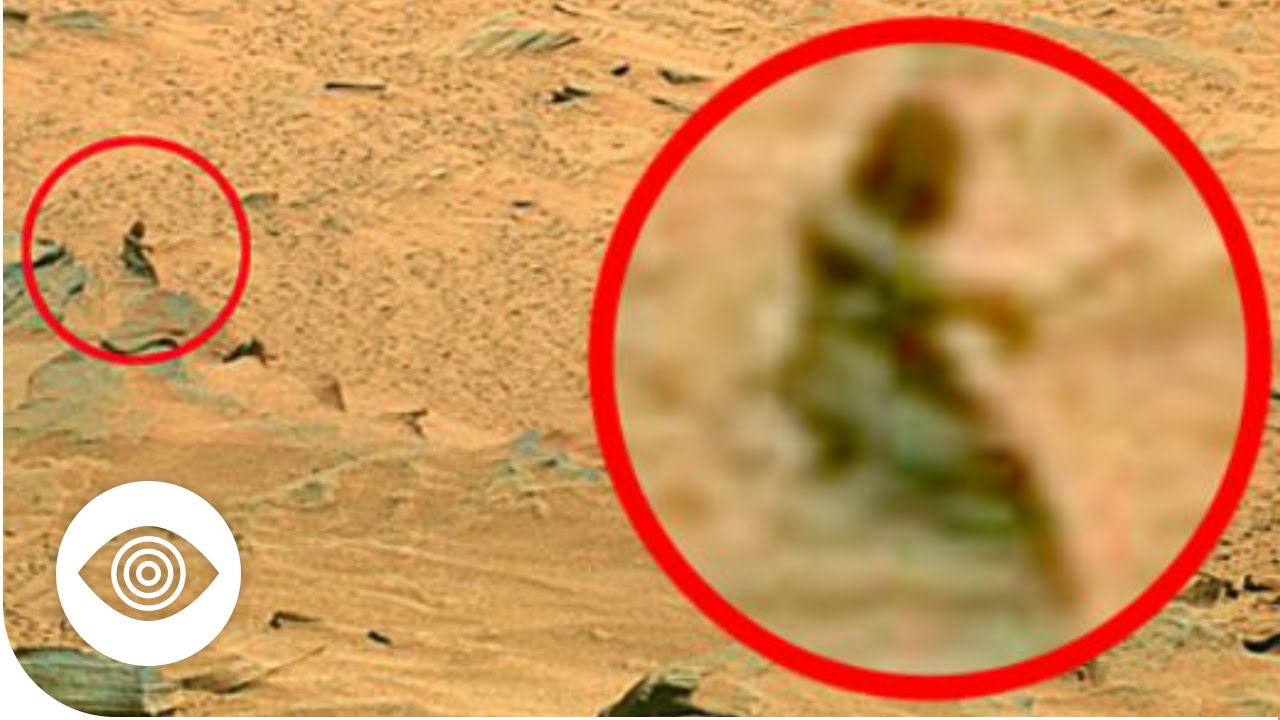
When the rovers landed, the anomalies came thick and fast. Now we weren’t just looking at blurry shapes from orbit; we were down on the ground. And the cameras were picking up some truly baffling objects that the official channels seemed bizarrely determined to ignore.

Have you seen them? The images circulate on internet forums and YouTube channels, shared by digital archaeologists poring over the raw data NASA makes public.

  • The “Martian Thigh Bone”: An object photographed by the Curiosity rover that looks, for all the world, like a fossilized femur. Its shape is undeniably organic. NASA’s explanation? A rock sculpted by wind and water erosion. A very, very specific rock.

  • The “Traffic Light”: A rock formation with three perfectly aligned, similarly sized spheres stacked vertically. It looks manufactured. It looks familiar. The official line: a peculiar but entirely natural geological formation. Another coincidence.

  • The “Mars Rat”: A shape nestled between two rocks that is the spitting image of a rodent, complete with an eye, nose, and ear. Pareidolia, they shouted! Your brain is playing tricks on you! But the detail is startling.

  • The “Floating Spoon”: A long, thin rock formation suspended in the air with a perfect shadow underneath, proving it’s not a trick of the camera. What kind of wind carves a rock into a delicate spoon shape and then leaves it hovering over the ground?

One of these might be a fluke. Two might be a coincidence. But there are hundreds. Domes. Statues. Objects that look like twisted metal. Geometric shapes that have no business being in a natural landscape. Each time, the explanation is the same. It’s a rock. It’s erosion. It’s your faulty brain. But when does the excuse of coincidence become more fantastic than the truth it’s trying to hide?

The Methane Mystery: A Planet’s Living Breath?

Perhaps the most compelling evidence for *current* life on Mars isn’t a strange rock, but something we can’t even see. It’s a gas. Methane.

On our planet, over 90% of the methane in the atmosphere is produced by living organisms. From microbes to cows, life makes methane. It’s a biological signature. Methane is also destroyed by sunlight, so if you detect it in an atmosphere, it means something is actively producing it. Right now.

And we have detected methane on Mars. Not a constant, steady amount, which you might expect from geological processes. No. We’ve detected strange, seasonal plumes. Puffs of methane that appear in the Martian summer, then vanish in the winter. It’s as if the planet is breathing.

What could be causing it? NASA remains “agnostic.” They suggest it could be unknown geological reactions between water and rock deep underground. But that doesn’t explain the seasonal timing. What does? A bloom of subterranean microbes, waking up and metabolizing in the warmer summer months, releasing their gaseous waste into the thin atmosphere. An active, hidden biosphere, exhaling just beneath our rovers’ wheels. The methane isn’t a geological quirk. It could be the clearest sign yet that Mars is not dead.

Deep Dive: Reconstructing a Lost Martian Paradise

To understand what Mars might be hiding, we have to understand what it once was. Forget the red desert of today. Journey back in your mind. Three, maybe four billion years ago.

The sky was blue. Thick clouds dotted the heavens. And water was everywhere. Vast oceans shimmered under a younger, warmer sun. Rivers, miles wide, carved the colossal canyons we see today, like the Valles Marineris—a scar so huge it would stretch across the entire United States. Rain fell. Tides ebbed and flowed. Mars was a water world. A twin to early Earth.

It had all the ingredients for life as we know it. Water. A thick atmosphere. A protective magnetic field, shielding the surface from deadly solar radiation. It was a paradise. A cradle of evolution.

So what happened?

Catastrophe. The planet’s molten core cooled and solidified. Its magnetic dynamo sputtered and died. Without that magnetic shield, the solar wind—a constant stream of charged particles from the sun—stripped Mars of its atmosphere, molecule by molecule. The air thinned. The pressure dropped. The oceans boiled away into space. The planet froze, bled out, and turned the shade of rust we see today.

But life is tenacious. It doesn’t just give up. As the surface became uninhabitable, life would have retreated. Downward. Into the soil, into caves, into the water trapped deep in the planet’s crust. As the world above died, a new world below could have thrived. The civilization we see the ruins of on the surface might have been just one chapter in the planet’s long story. What if their descendants are still there, waiting in the deep?

The Ultimate Question: Why the Cover-Up?

This is the question that keeps people up at night. If even a fraction of this is true—if there are ruins on Mars, or living microbes beneath the soil—why would they hide it? Why would governments and space agencies actively suppress the single greatest discovery in human history?

The reasons are as terrifying as they are logical.

Think about the impact. The revelation of alien life, even microbial, would shatter our world. Every religion on the planet would be thrown into chaos. Our entire understanding of our own origin and place in the universe would be upended overnight. Could our fragile society handle that shock? A famous 1960 study, the Brookings Report, commissioned by NASA itself, warned that the discovery of intelligent extraterrestrial life could cause a global breakdown of civilization.

Then there’s technology. What if we found more than just ruins? What if we found their technology? Their power sources? Their data? The nation that controls that information would control the world. It would be a secret too valuable to share. A weapon too powerful to reveal.

And what if there’s a darker reason? What if the life on Mars isn’t extinct? What if it’s there, and it knows we’re here? Perhaps the secrecy is not a cover-up, but a quarantine. A “Prime Directive” to leave it alone, for our safety or for theirs.

This is why the internet sleuths continue their work. They comb through every raw image NASA uploads, convinced the agency is altering the colors to make Mars look more red and alien, hiding the tell-tale blue of a sky or the green of primitive lichen. They believe the truth is hidden in plain sight, buried under layers of digital manipulation and dismissive press releases.

Is Mars Trying to Tell Us Something?

Maybe we’re asking the wrong questions. We look at Mars and we ask, “Is there life over there?” What if the real question is, “What does the death of their world mean for ours?”

Mars is not just a mystery. It’s a warning. A vision of a potential future for Earth. It’s a planet that lost its atmosphere, lost its oceans, and died. It is a ghost haunting our solar system, a reminder that planets are fragile. That life is precious.

The secrets of Mars are not just about aliens. They are about us. Our past, our future, our vulnerability in a vast and unforgiving cosmos.

The next time you look up at the night sky and see that faint, red spark, what will you see? A cold, dead rock? A world of coincidences and tricks of the light?

Or will you see a silent tomb, waiting for us to finally find the courage to open the door and learn the truth?

Arindam Mukherjee
Arindam Mukherjee
Arindam loves aliens, mysteries and pursing his interest in the area of hacking as a technical writer at 'Planet wank'. You can catch him at his social profiles anytime.
RELATED ARTICLES

20 COMMENTS

- Advertisment -

Most Popular

Recent Comments

Warren Pan Abbott on The legend of the Devil Monkey !
chris davies on The McPherson Tape Mystery
Reed Reedly on ET has Internet!
Bea Houseoffashion on Proof Of Time Travellers – Gallery
Marcus2012 on ET has Internet!
Reed Reedly on ET has Internet!
LaughsAtConspiracyNuts on The 9/11 Conspiracy – Myths and Facts
Alex Sliverman on Did the ancients fly?
Doctor Wholigan on Time Traveler in 1938 film
chris davies on The McPherson Tape Mystery
Archie1954 on 10 secret UFO hideouts
chris davies on Ghosts of flight 401
Marcus2012 on ET has Internet!
jason Macdonald on Proof of Time Travel? – China
chris davies on Long-Lost Pyramids Found?
Reed Reedly on ET has Internet!
Milkman on Connected Universe
Tenmiles on Baigong Pipes Mystery
Simon Foster on Sirius – The Documentary
From the 1st April on 2013 – Alien Contact date ?
SkyWatcher on Is ET ignoring us?
I Come From The Future on Obama to make UFO Alien disclouser soon ?
ÛñK?øWn on 2013 – Alien Contact date ?
Just another person on 2013 – Alien Contact date ?
Malcolm Windowcleaner on The strange case of Rudolph Fentz
Mason Servio on Strange Things on Mars
Marke Wisdom Seeker on What will we find as arctic melts?
Andrea A Elisabeth Levyne on Aliens Captured in Varginha, Brazil
Mitch Grouyeki on Amazing Space Shuttle pictures