The Astronaut’s Secret: What Neil Armstrong Hid in His Closet for 46 Years
Some secrets are buried in classified government vaults. Others are whispered in the smoke-filled backrooms of power. And some? Some are hidden in plain sight. In a closet. For nearly half a century.
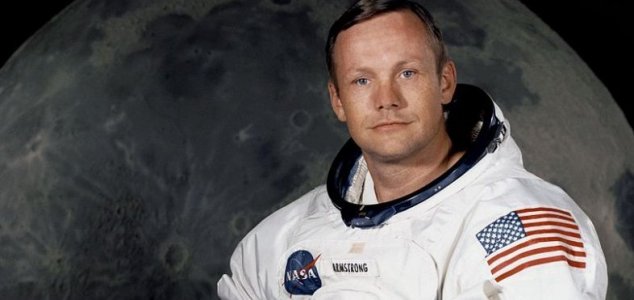
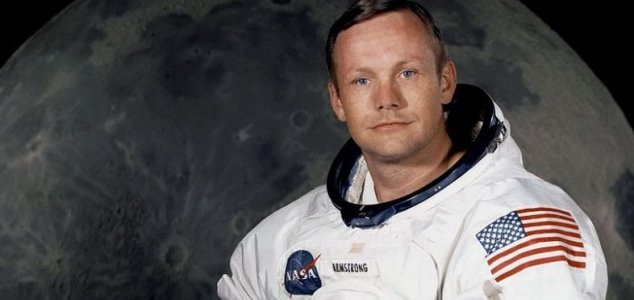
Neil Armstrong. The name itself is history. A symbol of courage, precision, and a quiet, Midwestern humility that seemed almost superhuman. He was the First Man. The one who stepped off that ladder and into the dusty expanse of another world, delivering a line that would echo through eternity. He was a global icon who wanted nothing more than to be a private citizen. He shunned the spotlight, dodged the press, and lived a life of profound normalcy after achieving the profoundly abnormal.
But he was keeping a secret.
A big one.
After his death in 2012, his widow, Carol, began the somber task of sorting through a lifetime of possessions. In the back of a closet, she found it. A simple white bag. A forgotten piece of cloth that, to the untrained eye, looked like laundry. But this was no ordinary bag. This was a McDivitt Purse. A Temporary Stowage Bag. And it had been to the Moon.

Inside, a collection of objects that were never supposed to come back to Earth. Items that history, and even NASA’s own official flight logs, recorded as having been left behind on the lunar surface, abandoned to save precious weight for the life-or-death ascent. Yet here they were. In a closet in Ohio. What was going on?
A Ghost from the Sea of Tranquility
Imagine that moment. Carol Armstrong, pulling out this bag, feeling the weight of it. Unzipping it to find not old sweaters, but metal tools and alien-looking contraptions caked with what could only be one thing. Moon dust.
This wasn’t just a discovery; it was a bombshell. A personal, historical bombshell that rewrites a small but fascinating corner of the Apollo 11 story. The famously by-the-book commander, the engineer who calculated every risk, had apparently smuggled a bag of souvenirs home from the single most documented and scrutinized journey in human history.
The question isn’t just what was in the bag. The real question is *why*.
Why would a man who never sought credit, who never bragged, who deflected praise at every turn, secretly keep these priceless artifacts? Why hide them from historians, from NASA, from his own family, for forty-six years? Was it simple sentimentality? A personal memento from the greatest adventure of all? Or was there something else at play?
Deep Dive: The “Trash” That Rewrote History
When the contents were finally cataloged by experts, jaws dropped. This wasn’t just a handful of random nuts and bolts. These were key pieces of the Apollo 11 mission hardware. Each item tells a story, and together, they paint a picture of a man making a split-second decision a quarter of a million miles from home.
The Eye That Watched the Giant Leap
Perhaps the most stunning item in the bag was the 16mm Data Acquisition Camera. This is not just *a* camera. This is *THE* camera. It was mounted in the window of the Lunar Module Eagle, and its lens captured the most famous footage in human history: the final moments of the descent, the landing on the Sea of Tranquility, and Neil Armstrong himself taking that “one small step.”
Think about that. The camera that filmed humanity’s arrival on another world was supposed to be lunar landfill. Its job was done. According to every flight plan, it was to be tossed out onto the surface with the other garbage to reduce the Eagle’s weight for takeoff. Firing that ascent engine was one of the most critical moments of the mission; every single ounce mattered. Leaving the camera behind was not a suggestion. It was a command rooted in physics and survival.
And yet, Armstrong took it. He unplugged it, coiled its cable, and stuffed it into his personal souvenir bag. Why? Did he know, even then, how profoundly important that footage would be? Did he feel, on a gut level, that the device that bore silent witness to their triumph deserved a better fate than rusting for eternity on an airless moon? It’s a shocking, almost rebellious act for a man defined by his adherence to protocol.
The Astronaut’s Lifeline
Also inside the bag: Armstrong’s waist tether. During his historic moonwalk, this was the strap that connected him to the Eagle lander while he was on its porch. It was, quite literally, his lifeline before he stepped into the unknown. It’s a piece of simple nylon webbing and a metal hook, but its symbolism is immense. It represents the fragile connection between that lone explorer and his only sanctuary in the most hostile environment imaginable.
This is an intensely personal item. It wasn’t just a piece of shared mission equipment; it was *his* tether. To bring it back feels less like a historical act and more like a deeply personal one. Like a soldier keeping a piece of his parachute or a mountain climber keeping the rope from a legendary ascent. It was a tangible link to the most profound and dangerous moment of his life.
The Tools of an Alien World
The rest of the bag was a treasure trove of what Armstrong himself would later call “odds and ends.”
- A utility light and its power cable, which would have illuminated the dark interior of the Eagle.
- An emergency wrench. A simple, stark tool that could have been the difference between life and death if a critical component had needed a manual override.
- Optical Alignment Sights, part of the lander’s navigation system.
- Mirrors, netting, and various brackets and clips.
On their own, they are just pieces of hardware. But together, recovered from a secret bag 46 years later, they become something more. They are relics. They are the mundane, workaday objects that made the miracle of the moon landing possible. And they were all hand-picked by the commander, for reasons he took to his grave.
Bending the Rules at the Edge of Forever
This is where the story shifts from a charming historical footnote to a genuine mystery. Bringing this bag back was a direct violation of the mission’s weight budget. The calculations for lifting off the moon were terrifyingly precise. The Lunar Module’s ascent engine had a single job, with no backup. It had to fire perfectly and lift the exact planned weight, or Armstrong and Aldrin would be stranded forever.
The bag and its contents weighed about 2.3 kilograms (around 5 pounds). Does that sound like a lot? No. But in the unforgiving math of spaceflight, it was an unknown variable. It was an unauthorized addition to a very, very delicate equation. Did Aldrin know? Did Mission Control? The evidence suggests… no.
The Cryptic Transmission: Hiding in Plain Sight?
This is where it gets chilling. Just before liftoff from the moon, as they were preparing to jettison equipment, Armstrong had a very curious exchange with Mission Control. The transcript is now legendary among space enthusiasts and conspiracy theorists. He mentions a bag, the McDivitt purse, filled with what he calls “a bunch of trash.”
Listen to his words, broadcast across the void of space:
“You know, that – that one’s just a bunch of trash that we want to take back – LM parts, odds and ends, and it won’t stay closed by itself; we’ll have to figure something out for it.”
Read that again. “Just a bunch of trash that we want to take back.”
Was this a genius piece of misdirection? By calling it “trash” and mentioning it in a casual, off-the-cuff way, was he essentially hiding it in plain sight from the flight controllers in Houston? He presents it as a disposal problem—a bag that won’t stay closed—not as a collection of historic artifacts he’s adding to the payload. It’s a masterful piece of understatement. He sounds like a guy trying to get a leaky garbage bag out to the curb, not a commander secretly preserving a priceless camera for posterity.
Mission Control, busy with a thousand other pre-flight checks, seems to have paid it little mind. The conversation moves on. And the bag, with its hidden treasures, was secured for the journey home.
The Internet Explodes: What Are They *Really* Hiding?
Naturally, when this story broke, the internet’s mystery-solving communities went into overdrive. The official story—that Armstrong was just a sentimental guy—is too simple for many.
One popular theory is that taking home “souvenirs” was an unspoken perk for the Apollo astronauts. These men were risking everything, flying on machines built by the lowest bidder. Maybe NASA looked the other way, allowing them to keep a few personal mementos as a small reward. If so, what else is out there? Are there other closets in other astronauts’ homes with other bags full of moon artifacts?
A darker strain of speculation wonders if the bag was cover for something else. Was there something *in* the bag that he didn’t want NASA to find? Or was the bag itself a decoy, a distraction while something even more significant was brought on board? These theories lack evidence, but they speak to the deep suspicion that surrounds the official narrative of the space race.
The most likely answer, however, is also the most human one.
The Heart of the First Man
Strip away the titles. The Commander. The First Man. The Icon. What you have left is Neil Armstrong, the aerospace engineer from Ohio. A man who spent his entire life obsessed with the mechanics of flight. When he looked at these objects, he likely didn’t see museum pieces. He saw the elegant solutions to impossible engineering problems. The wrench that represented contingency planning. The camera that represented a triumph of remote imaging. The tether that was a simple, perfect safety device.
He was the ultimate engineer, and these were the tools of his trade, used on the most important job site in history. He couldn’t just throw them away. It would be like asking a master carpenter to burn his favorite hammer.
He didn’t talk about it because that wasn’t his way. He never wrote a tell-all book. He rarely gave interviews. He saw himself as just one person in a chain of 400,000 who made the moon landing happen. To him, keeping these items was likely a private act of remembrance, a way to hold on to the reality of an experience that must have felt like a dream. He didn’t want a parade for it. He didn’t want to sell them. He just wanted to have them. To know they were there. Safe.
Today, the bag and its contents are exactly where they belong: on display at the Smithsonian National Air and Space Museum, part of a collection that Armstrong himself helped to establish. They have been studied, preserved, and admired by millions. The discovery of this hidden cache didn’t tarnish the legacy of Neil Armstrong. It deepened it. It revealed a hidden, sentimental, and slightly rebellious side to the cool, calm commander. It showed us that even the greatest of heroes have their secrets. Even if they’re just hidden in the back of a closet.
Originally posted 2015-11-10 15:29:16. Republished by Blog Post Promoter