Home Weird World Strange Places Ancient pyramids discovered in Sudan

Ancient pyramids discovered in Sudan

0
68

The Forgotten Pyramid Forest: Sudan’s City of the Dead Shocks Archaeologists

Forget everything you think you know about pyramids. Forget the towering limestone giants of Giza, baking under the Egyptian sun. Forget the pharaohs and the mummies we see in museums. We need to go south. Deeper into the African continent, following the winding path of the Nile into the sands of modern-day Sudan.

Because there, a discovery was made that tears up the history books.

It’s a place called Sedeinga. And it’s home to a necropolis so strange, so dense, it looks like a petrified forest of stone triangles. A ghost city of the dead.

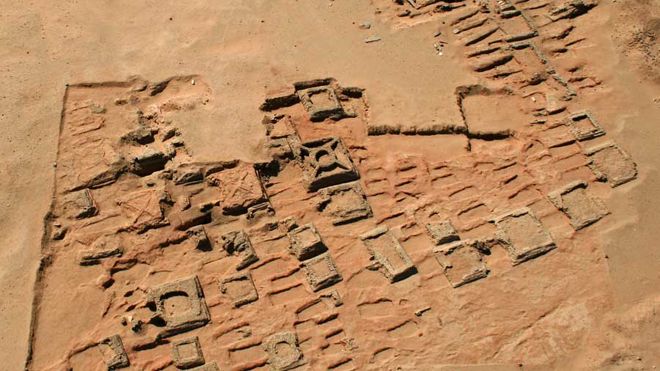
Between 2009 and 2012, archaeologists were stunned to uncover at least 35 pyramids. But that was just the start. Further work revealed hundreds. Yes, *hundreds*. And they weren’t miles apart. They were crammed together, shoulder to shoulder, in a chaotic, desperate jumble. Why? What forgotten kingdom built this baffling monument field, and what drove them to this pyramid-building obsession?

The answer lies with a civilization you were probably never taught about in school. A powerhouse of Africa. The Kingdom of Kush.

A Shock in the Sand: The Discovery That Rewrote the Map

Imagine the scene. A team of researchers, led by archaeologist Vincent Francigny, scanning the arid landscape. They knew this region was historically significant. But they weren’t prepared for this.

Their sensors went wild. Beneath the dunes, there wasn’t just a tomb or two. There was a city of them. In a single mind-boggling season in 2011, they unearthed 13 pyramids packed into a space of just 5,381 square feet. That’s barely bigger than a professional basketball court. Think about that. Thirteen multi-story stone tombs built for the eternal afterlife, all squeezed into a space where 10 people play a game.

It made no sense. This wasn’t the royal, spacious layout of an Egyptian burial ground. This was something else. Something frantic.

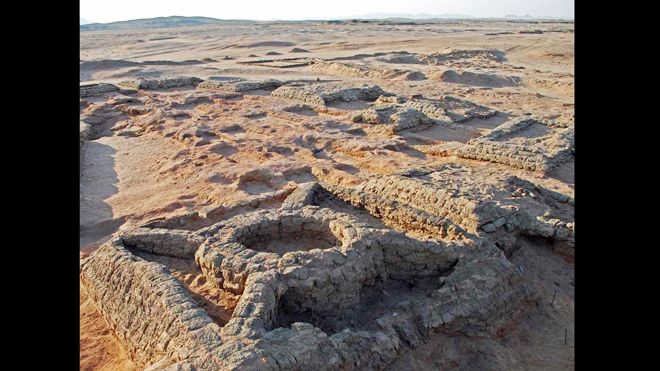
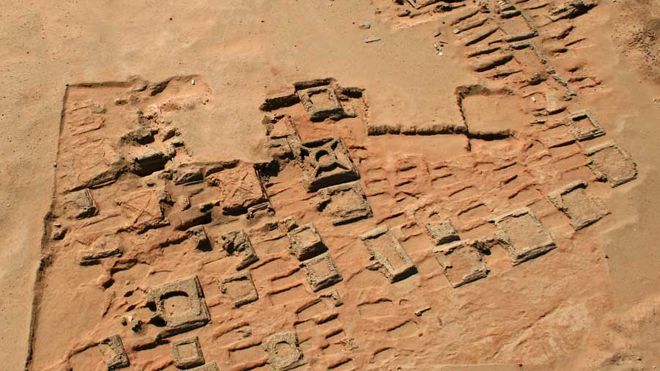
This aerial photo shows a series of pyramids and graves that a team of archaeologists has been exploring at Sedeinga in Sudan. Since 2009 they have discovered at least 35 small pyramids at the site, the largest being 22 feet in width.

These structures date back roughly 2,000 years. This was the era of the Roman Empire’s peak, a time when Cleopatra, the last pharaoh of Egypt, had already met her end. But here, far to the south, a different story was unfolding. The Kingdom of Kush was not just surviving; it was thriving. And its people had a fever. A pyramid fever.

Deep Dive: Who Were the Black Pharaohs of Kush?

So who were these Kushites? To call them Egypt’s neighbor is a massive understatement. Their relationship was a sprawling, centuries-long saga of war, trade, conquest, and cultural fusion.

Kush, often called Nubia, was the land of gold. Of ivory. Of exotic animals and formidable warriors. For thousands of years, they were Egypt’s main trading partner and its greatest southern rival. They were a distinctly African civilization, with their own language, their own gods, and their own unique traditions.

But the gravitational pull of Egyptian culture was strong. The Kushites adopted Egyptian gods, used a form of hieroglyphic writing, and, most importantly, they fell in love with the idea of the pyramid as the ultimate gateway to the afterlife.

When Nubia Ruled the World

There was even a time, a truly spectacular period around the 8th century BC, when Kush conquered Egypt. They didn’t burn it to the ground. They revered it. The Kushite kings saw themselves as the true heirs of the pharaohs, the ones who would restore Egypt to its former glory. They established the 25th Dynasty, ruling as the “Black Pharaohs” for nearly a century over a combined empire that stretched from the heart of Africa to the Mediterranean.

They built and restored temples in Thebes and Karnak. And when they died, they were buried back home in Nubia, under pyramids. Their capital, Meroë, is another famous Nubian pyramid site, but even Meroë doesn’t explain the sheer madness of Sedeinga.

The Sedeinga Anomaly: A Pyramid-Building Frenzy

Sedeinga is different. It breaks the rules. The largest pyramid found here is only about 22 feet wide at its base. The smallest is a mere 30 inches across, barely big enough for a child’s burial. This tells us something revolutionary.

Pyramids were no longer just for kings and queens.

In Kush, it seems, *everyone* could get a pyramid. It was a democratization of eternal life. The desire to be remembered, to have a permanent monument on Earth, had filtered down from the absolute monarchs to the common people. Or at least, to those with enough money to hire a few stonemasons.

sedeinga pyramids

The construction style also tells a story. Unlike the massive, solid blocks of Giza, most Sedeinga pyramids were a shell of stone blocks filled with rubble and earth. A faster, cheaper way to get the iconic shape. This wasn’t about building a mountain to last ten thousand years; it was about getting your pyramid up, securing your spot in the sacred landscape before someone else took it.

This explains the density. It was a real estate rush for the afterlife. A spiritual gold rush where the prize was a plot of holy ground.

Cracking the Kushite Code: Clues from the Tombs

What did the archaeologists find inside these mini-monuments? No mountains of gold or jewel-encrusted chariots. The tombs had long since been looted, but fragments of the story remained.

They found offering tables, flat stones where families would leave food and drink for the spirits of their ancestors. Many were inscribed not with hieroglyphs, but with Meroitic, the unique cursive script of the Kushite language, which we are still struggling to fully decipher. It’s like finding a library of books in a language we can’t quite read. The secrets are right there, just out of reach.

They also found the capstones. These were the pyramid’s final piece, the pointed top stone. At Sedeinga, these were sometimes decorated with carvings. A lotus flower blooming. A bird taking flight. These symbols, borrowed from Egyptian art, represented rebirth and the soul’s journey to the heavens.

Even more fascinating were the imported goods. Beads and glasswork from the Roman Empire, thousands of miles to the north. This shows Sedeinga wasn’t some isolated outpost. It was connected. It was a hub on a continental trade network, a place where Nubian traditions met the influence of the wider world.

Internet Theories & Lingering Mysteries: What Are We REALLY Looking At?

This is where the official story ends and the speculation begins. And online, the theories are running wild. When a discovery this strange pops up, it attracts questions that mainstream archaeology often hesitates to ask.

What If It Was a Status Symbol?

One popular theory is purely economic. As Kush grew wealthy from trade, a new middle class of merchants, officials, and skilled artisans emerged. They had money, but they weren’t royalty. How do you show off your new status? You can’t build a palace, but you *can* build a pyramid for your family tomb. It was the ultimate ancient status symbol. The bigger your pyramid, the more important you were. The rush at Sedeinga could have been a centuries-long competition among families, each trying to outdo the other on this crowded, sacred piece of land.

Was This A Sacred Power Spot?

Another idea digs deeper into the spiritual. What if this specific bend in the Nile at Sedeinga was considered profoundly holy? Perhaps it was the location of a great mythical event, or the site of an ancient, revered temple, now lost to the sand. People might have believed that being buried on this exact spot gave their soul a fast track to the afterlife. It wasn’t just desirable real estate; it was a spiritual launchpad. This would explain why people were willing to build tiny, cramped pyramids—getting a spot, any spot, was all that mattered.

The “Energy Grid” Conspiracy

And then there’s the more “out there” thinking you find in the deep corners of the web. Some alternative history buffs have pointed to the sheer density of the pyramids. Could it be a clue to their function? They ask: what if the Kushites weren’t just building tombs? What if they believed that a high concentration of pyramids, with their sacred geometry, created something? A field of spiritual energy? A beacon for the gods or the souls of the dead?

They see the Sedeinga necropolis not as a graveyard, but as a giant, stone circuit board, designed to focus some kind of cosmic or telluric power. While there’s zero archaeological evidence for this, the image is a powerful one. A silent, humming engine of stone in the middle of the desert.

The Final Fade of a Forgotten Empire

The pyramid-building craze at Sedeinga lasted for centuries. But nothing lasts forever. The world was changing. The Roman Empire, once a trading partner, began to weaken. New powers were rising.

To the east, the Kingdom of Aksum in modern-day Ethiopia was growing into a dominant force. They controlled the Red Sea trade routes, cutting off Kush’s economic lifeline. At the same time, the climate was shifting. The relentless Sahara was expanding, making agriculture more difficult.

The Kingdom of Kush didn’t fall in a single, great battle. It slowly faded. Its cities were abandoned, its language forgotten, and its people were absorbed into new cultures. The pyramid-building stopped. The desert sands blew in, and the stone forest of Sedeinga was buried. It slept for nearly two thousand years.

Until now.

The discovery of Sedeinga is more than just a footnote in African history. It’s a revelation. It proves that ancient Africa was a place of incredible innovation, wealth, and complex societies. It shows us a civilization that took a famous idea—the pyramid—and made it entirely their own, turning it from a symbol of ultimate royal power into a popular expression of hope for eternity.

The sand of Sudan has given up one secret. But how many more are still out there, waiting? Every grain of sand in that desert could be covering another Sedeinga. Another lost city. Another chapter of human history we never even knew was written.