Home Weird World Strange Places ANCIENT FORTRESS FOUND IN SPAIN BY SCIENTISTS

ANCIENT FORTRESS FOUND IN SPAIN BY SCIENTISTS

0
97

Everything You Know About the Bronze Age is Wrong

History books love to tell us a simple story. They say that 4,000 years ago, Europe was a backwater. They tell us people were living in mud huts, banging rocks together, while the “real” civilizations were busy building pyramids in Egypt or ziggurats in Mesopotamia. They want you to believe that advanced engineering didn’t exist in the West until the Romans showed up thousands of years later.

They are lying to you.

Something has been found in Spain that shatters that timeline completely. It doesn’t just bend the rules of history; it breaks them in half. We are talking about a discovery so massive, so complex, and so “impossible” that it forces us to ask: Who really built the ancient world?

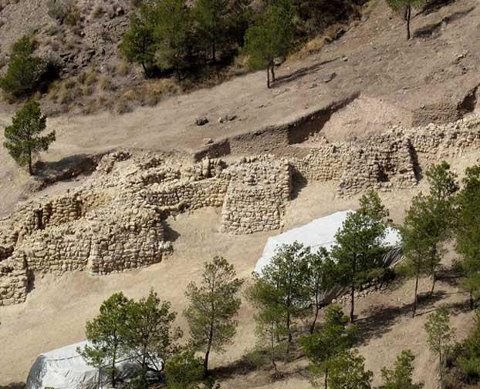
Deep in the sun-baked sierras of Totana, in the Murcia region of Spain, archaeologists stumbled upon a ghost. A stone monster.

ANCIENT FORTRESS FOUND IN SPAIN

Meet La Bastida. This isn’t just a pile of rocks. This is a military super-structure that shouldn’t exist.

The “Troy of the West” Discovered

Spanish archaeologists, led by the tenacious Vicente Lull from the Autonomous University of Barcelona, started digging. They expected pottery. Maybe some arrowheads. Standard stuff. What they found instead sent shockwaves through the entire archaeological community.

They unearthed a fortification system that is 4,200 years old.

Let that sink in. 4,200 years. That puts this construction right in the heart of the Bronze Age. But the tech? The engineering? It’s lightyears ahead of what “primitive” Europeans were supposed to be capable of. We are talking about walls that were 10 feet thick. Massive. Impenetrable. These walls soared 22 feet into the air. Imagine standing at the bottom of a two-story building made of solid stone, looking up at archers ready to rain death down on you.

This was a fortress built for total war.

The Impossible Geometry

Here is where it gets weird. Really weird.

The towers found at La Bastida aren’t round. They aren’t square. They are pyramid-shaped. The archaeologists have uncovered six of them so far along a 230-foot stretch of the wall. But the full perimeter? It measured a staggering 1,000 feet.

Why is the shape important? Because pyramid-based towers don’t belong in Bronze Age Spain. Not according to the mainstream timeline. This specific architectural style—using heavy cornerstones and lime mortar to create steep, defensible angles—is something you see in the advanced civilizations of the Eastern Mediterranean. You see it in the Second City of Troy.

Yes, that Troy. The one from the Iliad. The one with Achilles and Hector.

La Bastida was built around 2200 BC. The Trojan War (if it happened historically) and the walls of Troy coincide with similar technological booms. How did a settlement in Spain have the same blueprint as the most legendary city in the East? Did they have contact? Or is there a lost parent civilization that seeded both of them?

A Military Machine That Rewrites History

This wasn’t a farmer’s fence. This was a machine designed to kill.

The entrance to the fortress features a “postern gate.” In military strategy, this is a secondary door or gate, usually concealed, allowing the defenders to make sneak attacks on the besiegers. It’s a complex tactical feature.

Finding a postern gate in a 4,200-year-old Spanish fort is like finding a jet engine on a Wright Brothers plane. It implies a level of military sophistication, hierarchy, and strategic planning that Western Europe wasn’t supposed to have for another thousand years.

Professor Lull and his team were baffled. They noted that the construction used large stones held together with lime mortar. This is huge. The use of mortar requires chemistry. It requires kilns. It requires a massive industrial effort to burn limestone, create the mix, and transport it.

Who were the foremen? Who were the architects? You don’t just wake up one morning and figure out how to build a 22-foot high pyramid tower with a hidden tactical gate. Knowledge like that is inherited. Or it’s brought from somewhere else.

The El Argar Enigma

The people who built this are called the El Argar culture. If you haven’t heard of them, don’t feel bad. Textbooks barely mention them. But they were the first state-level society in the western Mediterranean.

They appeared suddenly. They dominated. Then they vanished.

La Bastida wasn’t just a fort; it was a capital city. At its peak, nearly 1,000 people lived inside these walls. That sounds small by modern standards, but 4,000 years ago? That was a metropolis. That was New York City.

They controlled a territory as big as modern-day Belgium. They had a rigid class system. We know this because of their graves. Some people were buried with gold, silver, and incredible weapons. Others? Dumped in jars with nothing.

This society was brutal. It was violent. And it was incredibly powerful. The discovery of La Bastida proves that the El Argar people had a centralized government capable of mobilizing hundreds of workers to move thousands of tons of stone. You don’t get that with a tribal council. You get that with a King. Or a Tyrant.

The “Eastern Connection” Theory

Let’s get controversial.

The style of La Bastida is so unique for the region that many experts refuse to believe it was a local invention. The leading theory? People from the East—from the Levant, or Anatolia (modern Turkey)—sailed across the Mediterranean and set up shop in Spain.

Think about the implications.

If this theory holds water, it means the ancient world was far more connected than we are told. It means ships were crossing the entire length of the Mediterranean Sea, carrying engineers, soldiers, and architects, 4,000 years ago. It suggests a colonization event that history forgot.

Was La Bastida an outpost? A colony of a lost empire? Or was it a refuge for people fleeing a catastrophe in the East? The timing aligns with the “4.2 Kiloyear Event”—a massive climate shift that caused droughts and collapsed civilizations across Mesopotamia and Egypt. Did the elites pack up their tech and run to Spain?

Deep Dive: The Brutal Reality of Ancient Combat

Stand on those walls in your mind. Look out over the Spanish dust. What were they afraid of?

You don’t build walls 10 feet thick unless you have enemies. Big ones.

The Bronze Age was not a peaceful time of spiritual awakening. It was a meat grinder. The weapons found at El Argar sites are terrifying. Halberds (axes on poles), short swords, daggers. These weren’t for hunting boars. They were for hacking through human bone.

The postern gate at La Bastida suggests they were dealing with siege warfare. This means their enemies weren’t just raiding parties; they were organized armies capable of sitting outside a city for months, trying to starve the inhabitants out.

The existence of this fortress implies a state of total, constant war. Who was attacking them? Other El Argar cities? Or someone else? A threat so dangerous they had to turn their city into a stone mountain.

The Sudden Collapse: Where Did They Go?

Around 1550 BC, it all stopped.

La Bastida was abandoned. The El Argar civilization collapsed. It wasn’t a slow decline. It was a crash.

Fire layers in the archaeological record suggest the city was burned. But was it invaders? Or was it a revolution?

Some theories suggest the lower classes finally snapped. The elite, living in their pyramid towers, hoarding the grain and the gold, pushed the peasants too far. The fortifications that were built to keep enemies out might have become the prison walls that kept the rulers in.

When the smoke cleared, the El Argar culture was gone. The knowledge of how to build these massive stone structures vanished with them. The people who came after them went back to living in simple huts. The technology was lost.

Does that make sense to you? How do you “forget” how to build a fortress? Unless the people who knew the secrets were systematically wiped out.

Why Mainstream History Ignores This

Why isn’t La Bastida on the cover of every history magazine? Why isn’t it as famous as Stonehenge?

Because it doesn’t fit the narrative.

Academic history moves like a glacier. It hates anomalies. When something like La Bastida pops up—an architectural marvel in the “wrong” place at the “wrong” time—it gets filed away as a curiosity. They call it a “local anomaly.” They shrug.

But we know better.

This fortress is proof that the timeline of human development is not a straight line from primitive to advanced. It’s a rollercoaster. Civilizations rise, they achieve impossible things, and then they crash and burn, leaving only stones behind. We are walking on top of the ruins of giants.

The Legacy in the Stone

Vicente Lull and his team at the Autonomous University of Barcelona are still digging. Only a fraction of the site has been uncovered. What else is buried there?

More towers? Underground tunnels? Written records that could crack the code of their language?

Every shovel of dirt removed from Totana brings us closer to a truth that might be uncomfortable for traditional historians. The people of the Bronze Age were smarter, tougher, and more connected than we give them credit for.

La Bastida stands as a silent witness. Its pyramid towers point to the sky, a signal from the past that says: “We were here. We were powerful. And we are waiting for you to find us.”

Next time someone tells you that ancient Europe was nothing but tribes and mud, show them the walls of Murcia. Show them the fortress that shouldn’t exist.

Originally posted 2016-04-13 12:28:07. Republished by Blog Post Promoter