The Silent Sentinel: Why We Were Never Alone on the Moon
Look up. Go outside tonight and just look up. It hangs there in the sky, a silver coin, a nightlight, a silent watcher. We think we know the Moon. We think it’s just a dead rock, a dusty satellite that got caught in Earth’s gravity billions of years ago. We learned about the craters in grade school. We watched the grainy footage of Neil Armstrong. We put a flag on it. Case closed, right? Wrong.
Dead wrong.
For decades, a comfortable blanket of silence has covered our nearest neighbor. But that blanket is fraying. It’s tearing apart at the seams. Thanks to the relentless work of amateur astronomers, whistleblowers, and the sheer volume of high-definition data slipping through the cracks of government censors, the narrative is shifting. We aren’t looking at a desolate wasteland. We might be looking at a graveyard. Or a base. Or a home.
Every single year, the resolution gets sharper. The cameras get better. And with every fresh batch of pixels downloaded from lunar orbiters, the official story—the one that says “nothing to see here”—gets harder to swallow. The anomalies are piling up. They are undeniable. They are geometrically impossible for nature to create. And they are staring right back at us.

The Impossible Geometry of the Lunar Surface
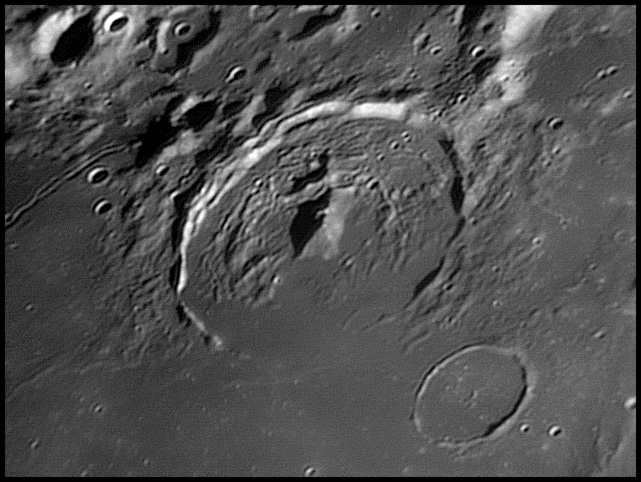
Take a look at that image above. Really look at it. Stop scrolling for a second and zoom in with your eyes. What do you see? NASA tells you that is a rock. A geological formation. A trick of light and shadow.
Does that look like a rock to you?
Nature creates chaos. It creates fractals, jagged edges, rolling hills, and random scatter patterns. Nature hates straight lines. It despises perfect symmetry. Yet, here we have something that stands tall, erect, and defiant against the gray backdrop. It casts a shadow that suggests significant height—a spire, perhaps? A tower? It looks like a sentinel standing guard.
This isn’t just pareidolia—the psychological phenomenon where our brains spot faces in toast or clouds. That’s the lazy explanation skeptics use to brush off the unexplainable. This is structural. This implies design. If you saw that shape on the horizon of the Nevada desert, you wouldn’t think “mountain.” You would think “building.” Why does the logic change just because it’s 238,000 miles away?
The “Airbrush” Conspiracy: What Are They Hiding?
Let’s get into the weeds. The stuff they don’t teach you in science class. For years, conspiracy theorists were laughed at for suggesting that NASA sanitizes images. Then came the whistleblowers.
Have you heard of Sergeant Karl Wolfe? He was in the Air Force, working with high-security clearance at the NSA. He went on record—risking everything—to tell the world what he saw. He claimed that during a repair job on equipment receiving lunar orbiter data, an airman showed him a mosaic of the dark side of the moon. The airman pointed to a structure. A base. Geometric shapes. Towers. Radar dishes.
Wolfe said the Air Force knew. He said they were terrified. He said the mandate was simple: remove the evidence before the public sees it.
This brings us to the “smudging.” If you browse the official archives, you will often find strange, blurred patches on high-resolution maps. Just a little blurry square in the middle of a crisp crater. Why? Glitch? Data corruption? Or is that the digital equivalent of a black marker redacted file?
These latest pictures of the moons surface show some good evidence of ancient building ruins. And the harder we look, the more the “glitch” excuse falls apart.
The “Shard” and the “Tower”
Check out the image above. Focus on the verticality. On Earth, erosion tears down high structures. Wind, rain, tectonic movement—they all work to flatten tall things. The Moon has no wind. No rain. No plate tectonics. If you build something there, it stays there. For millions of years.
What about this ?
This looks remarkably like the anomalies hunters call “The Shard.” Rising miles above the surface, casting a long, distinct shadow. Is it a venting tube? A remnant of a mining operation? Some theorists suggest the Moon isn’t a planetoid at all, but a hollowed-out station—a “Death Star” disguised as a rock. It sounds crazy. I know. But stick with me.
When Apollo 12 intentionally crashed their Lunar Module onto the surface to test their seismic equipment, something terrifying happened. The Moon rang. It didn’t thud. It didn’t crash and go silent. It rang like a giant bell for nearly an hour.
Solid rocks don’t ring. Hollow metal spheres ring.
If the Moon is artificial, or at least hollowed out and repurposed, then the things we see on the surface aren’t just rocks. They are the ventilation systems. The access ports. The antennae of a civilization that might have been watching Earth before humans even discovered fire.
The Silence of Apollo: Why Did We Stop?
This is the question that keeps me up at night. We went to the Moon in 1969. We played golf. We drove a buggy. We went back a few times. And then, in 1972, we stopped.
Cold turkey.
Technology exploded in the last 50 years. We have iPhones more powerful than the computers that landed Apollo 11. We have reusable rockets. We have rovers on Mars. Yet, no human has set foot on the Moon in over half a century. Why?
The official excuse is “budget cuts.” They say the public lost interest. Do you buy that?
Or is it possible we were told to stay away?
There is a persistent rumor among the astronaut community—whispered at dinner parties, hinted at in memoirs—that Neil Armstrong and Buzz Aldrin were not alone when they landed. The story goes that two massive spacecraft were perched on the crater rim, watching them. “They are here. They are watching us,” Armstrong reportedly said on a medical channel that bypassed the public broadcast.
If we were warned off, it explains the sudden cancellation of Apollo 18, 19, and 20. It explains why we are only now, tentatively, talking about going back—but this time with the military-focused Space Force involved.
The Industrial Complex on the Surface
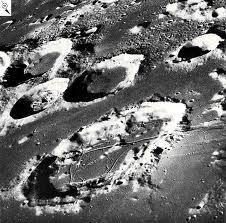
Now, we need to talk about the heavy hitter. The image that changes everything. If the previous photos were “weird rocks,” this next one is a smoking gun.

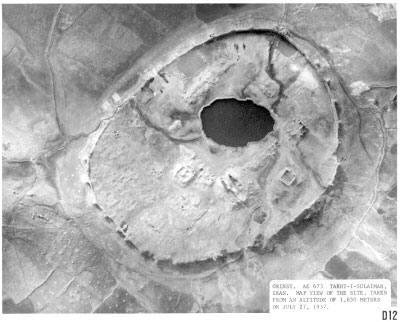
Look at the structure here. This isn’t a single tower. This is a complex.
Notice the right angles. The walls. The way the light hits what appears to be a roofed structure. This looks like an industrial facility. It resembles the bunkers we build on Earth to protect against aerial bombardment. Or perhaps a processing plant.
One of the leading theories regarding extraterrestrial interest in the Moon is Helium-3. It’s an isotope that is incredibly rare on Earth but abundant on the lunar surface. It is the perfect fuel for nuclear fusion. Clean, limitless energy. A civilization capable of interstellar travel would need pit stops. They would need gas stations.
Is that what we are looking at? An ancient, abandoned refueling depot?
Or is it not abandoned at all?
The “Lights” That Shouldn’t Be There
For centuries—long before NASA existed—astronomers reported seeing strange lights on the moon. They called them “Transient Lunar Phenomena” (TLP). Flashes of red. Glows of blue. bright spots that appear and vanish in seconds.
Aristarchus crater is famous for this. Hundreds of reports. If the Moon is a dead rock, it shouldn’t have lights. It shouldn’t have active glowing regions. Volcanoes? The Moon is geologically dead. Gas venting? Maybe.
Or maybe someone is turning the lights on.
When you combine the TLP reports with images like the one above, the picture becomes clear. We are looking at infrastructure. The “complex” in the image above shows signs of intelligent layout. There are pathways. There is a perimeter. It doesn’t follow the chaotic flow of lava or the splatter of an asteroid impact. It follows a blueprint.
The China Connection
Recently, China’s Yutu-2 rover spotted something on the far side of the Moon. They called it the “Mystery Hut.” It was a cube-shaped object on the horizon. The Chinese space agency hyped it up, drove towards it, and then… weeks later… released a photo saying, “Oh, it was just a rock that looked like a rabbit.”
Maybe it was. Or maybe the same pressure that silenced Sergeant Wolfe is working on an international level.
The “Cube” looked perfect from a distance. Geometrically sound. Then, the close-up looked like a lump of coal. We have to ask ourselves: are we seeing the real photos? Or are we seeing the “safe” version? In the age of AI and Photoshop, altering a jagged building to look like a smooth rock takes seconds.
What Does This Mean For Us?
If these images show what we suspect they show, history needs a rewrite. A total reboot. It means we are the new kids on the block. It means that while our ancestors were banging rocks together in caves, someone else was pouring concrete (or something stronger) on the Moon.
It raises the terrifying question: Where did they go?
Did they leave? Or are they still there, underground, inside the honeycomb tunnels of the hollow moon, watching our chaotic little planet spin?
The recent UAP (Unidentified Anomalous Phenomena) hearings in the US Congress have admitted that objects are flying in our skies with technology we don’t understand. Where are they coming from? Deep space? Another dimension?
Or are they just commuting from the suburbs?
The Moon is close. It’s a three-day trip. If you wanted to monitor a developing species—us—without interfering too much, the Moon is the perfect observation post. It’s tidally locked, meaning one side always faces away from Earth. The “Dark Side.” The perfect place to hide a base. You can park your mothership on the back, fly your drones around the front, and the monkeys down on Earth are none the wiser.
Open Your Eyes
The skeptics will scream “pixels!” They will scream “light tricks!” They will demand you stop asking questions and go back to watching sitcoms. But you have the images right here.
Scroll back up. Look at the tower. Look at the complex. Trust your gut.
We are living in a time of disclosure. The floodgates are opening. These photos are just the droplets before the storm. The Moon isn’t just a rock. It’s a message. And it’s time we started reading it.
Keep watching the skies. And more importantly, keep watching the shadows on the Moon. The truth is hiding in the dark.