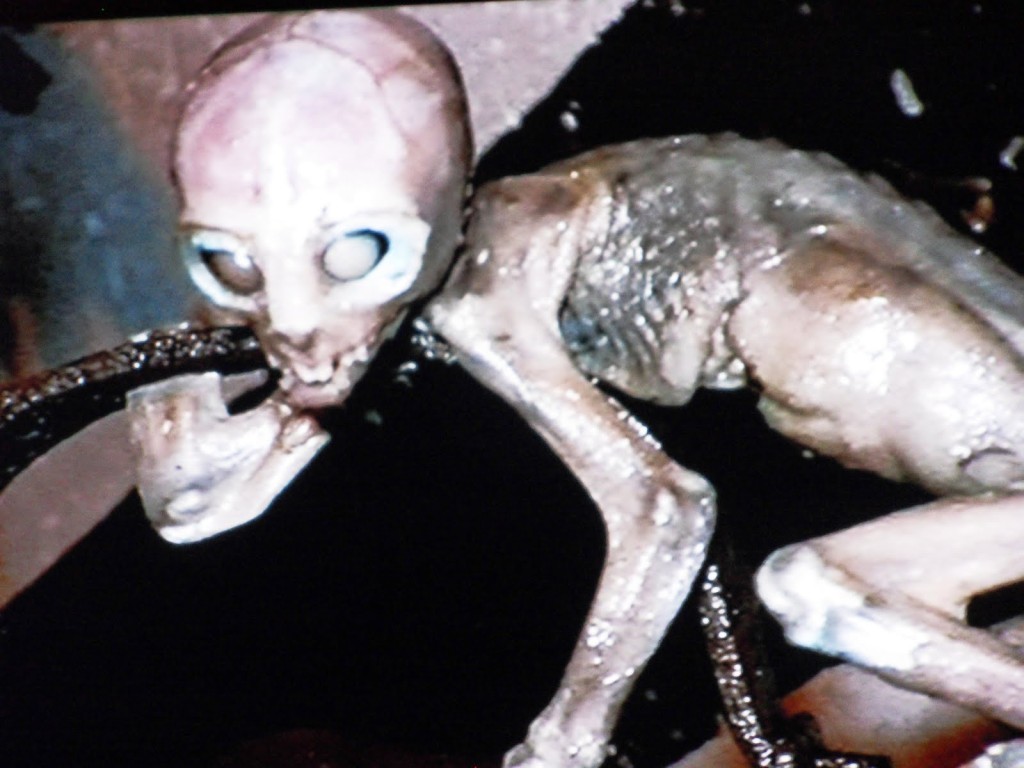
The Paracas Enigma: Is This Tiny Peruvian Skeleton Proof of an Alien-Human Bloodline?
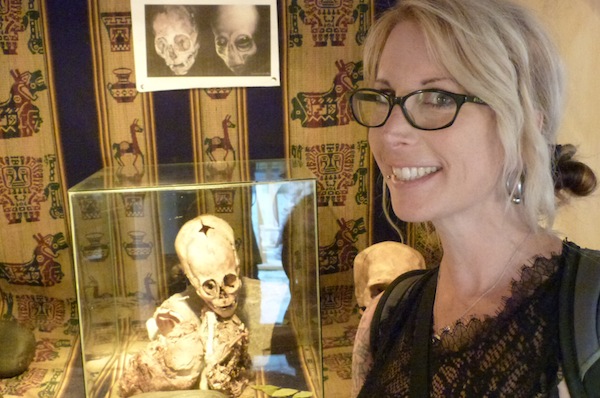
Forget what you learned in history class. Forget the neat, tidy timelines and the comfortable explanations. We’re about to peel back the curtain on a discovery so profound, so utterly bizarre, that it threatens to shatter the very foundation of human history. Deep in the dusty landscapes of Peru, a tiny skeleton was unearthed. A baby. But this was no ordinary child.
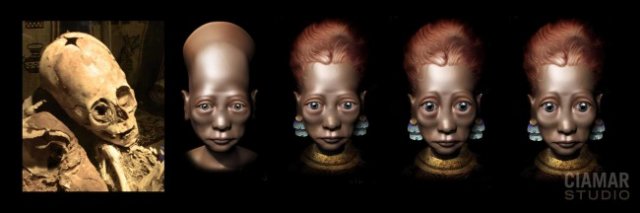
Its skull, impossibly long. Its rib cage, missing pieces. Its spine, strangely thick.
The mainstream story has an answer for everything. A convenient label. A tidy box to put it in. But some boxes just won’t close. And this one? This one has been blown wide open. What if this small, fragile skeleton is not just an archaeological curiosity, but a biological bombshell? What if it’s the physical proof of a story that has only been whispered in ancient texts and conspiracy forums? The story of us… and them.

A Find That Defies All Explanation
The story gained momentum thanks to the relentless work of Brien Foerster, a researcher and assistant director of the Paracas History Museum. Foerster isn’t your typical academic, content to dust off pottery shards. He’s a maverick, an explorer on the fringe, drawn to the artifacts that science has either ignored or couldn’t explain. He has dedicated years to studying the strange, forgotten relics of South America, and this skeleton might just be his most earth-shattering find.
Imagine the moment of discovery. The careful brushing away of dirt, the slow reveal of bone. And then, the chilling realization. This isn’t right. The remains belonged to an infant, perhaps no more than a few months old. But its features were unlike any human baby. Let’s break down the sheer strangeness of what they found.
Deep Dive: The Impossible Cranium
The first and most striking feature is the skull. It’s enormous, stretching backward into an almost alien cone shape. The official explanation you’ll get from any textbook is a practice called “artificial cranial deformation.” Ancient cultures across the globe, including those in Peru, would bind an infant’s head with boards and cloth. The pressure, applied over months and years, would reshape the soft, pliable skull into a desired form, often as a marker of elite status.
Simple, right? Case closed.
Not even close. The process of head-binding takes *years* to achieve such a dramatic result. And this skeleton? It’s a baby. No baby has ever been found with such extreme elongation. It simply didn’t live long enough for the binding process to have this effect. Furthermore, head-binding only changes the *shape* of the skull; it doesn’t change the total cranial volume—the amount of space inside. The Paracas skulls, including this infant’s, are said to have a cranial volume up to 25% larger than a modern human’s. You can’t add more brain-space with boards and cloth. That’s not biology. That’s something else.
And then there’s the structure. Human skulls are made of several plates connected by sutures. The Paracas skulls often have different suture patterns, sometimes missing the sagittal suture that runs down the middle of our heads. This isn’t a modification. This is a fundamental, genetic difference. Was this infant *born* this way?
A Rib Cage From Another World?
The weirdness doesn’t stop at the head. A standard human has 12 pairs of ribs. It’s a fundamental part of our anatomy. This tiny skeleton was reported to have only 11 pairs. While rare genetic mutations can cause variations in rib count, it’s yet another anomaly to add to a rapidly growing pile. When you have one strange feature, it’s a curiosity. When you have a cluster of them—a bizarre skull, a different bone structure, and an abnormal rib count—you’re no longer looking at a simple mutation. You’re looking at a completely different blueprint.

Foerster also pointed out an “inordinately thickened neck and spinal column.” What kind of physiology would require such a robust support structure? Perhaps one designed to hold up a head that was not only larger but also heavier and shaped differently than our own. It’s another piece of the puzzle that just doesn’t fit the human picture.
The Paracas Skulls: An Entire Race of the Unknown
This single baby skeleton isn’t an isolated incident. It’s the tip of a terrifyingly large iceberg. The Paracas peninsula in Peru is famous for a massive discovery made in the 1920s by archaeologist Julio Tello. He uncovered a sprawling, complex graveyard containing the remains of over 300 individuals with some of the most dramatically elongated skulls ever found.
These weren’t just slightly modified. They were otherworldly. And they had other strange features, too. Many of them had fine, reddish-blonde hair. This is a massive anomaly, as Native American peoples are known for having thick, straight black hair. Where did the red hair come from?
For years, these skulls sat in museums, labeled as examples of head-binding and largely ignored by the wider scientific community. But Brien Foerster and his team weren’t satisfied. They managed to get permission to take samples for DNA analysis. The results, as they were announced, sent shockwaves through the alternative history community.
According to preliminary reports from their chosen labs, the mitochondrial DNA (which is passed down from the mother) showed mutations “unknown in any human, primate, or animal known so far.” The geneticist who supposedly conducted the initial analysis was quoted as saying they were dealing with “a new human-like creature, very distant from Homo sapiens, Neanderthals and Denisovans.”
Could this be it? The smoking gun? Genetic proof that a different species of intelligent being once walked the Earth, right here in Peru? A species that may have interbred with humans?
A Global Conspiracy of Conical Heads
The rabbit hole gets deeper. The Paracas skulls are not unique. This phenomenon is global.
Elongated skulls have been found everywhere. Egypt. Malta. Russia. Mexico. Iraq. A strange pattern of cone-headed beings scattered across the ancient world. In Egypt, they are depicted in art, belonging to the royal family of the Pharaoh Akhenaten, whose daughters are always shown with strangely elongated heads. In Malta, the skulls found in the Hypogeum of Ħal Saflieni exhibit the same baffling features. These cultures were separated by vast oceans and thousands of years. How could they all independently decide to reshape their heads in such a specific, bizarre way?
Unless they weren’t deciding at all. What if they were imitating someone? Or something?
This is the core of the ancient astronaut theory. The idea that ancient humans didn’t worship imaginary gods, but were in contact with advanced, non-human visitors. Visitors who perhaps looked like this. The practice of skull elongation, then, wasn’t just a fashion statement. It was a profound act of reverence. An attempt to look like the “gods” who came from the stars, who brought them knowledge of mathematics, astronomy, and architecture. It was a way to pay tribute, to mark themselves as the chosen lineage of these powerful beings.

Ancient texts from around the world are filled with stories of powerful beings descending from the sky and interbreeding with humans. The Bible speaks of the “Nephilim,” the offspring of the “sons of God” and the “daughters of men,” who were described as giants and “mighty men of old.” The Book of Enoch describes them in even more detail. Native American legends, like those of the Paiute, tell of brutal wars against a race of red-haired, cannibalistic giants. Could these all be different cultural interpretations of the same unbelievable truth? That we were not alone. That a different race, a race with elongated skulls and superior knowledge, lived among us.
The Official Story: A Dose of Skepticism
Of course, the mainstream scientific community has a very different take. They remain steadfast in their explanations, and it’s only fair to hear them out before we jump to conclusions.
Skeptics argue that the claims about cranial volume are exaggerated or based on flawed measurements. They insist that every single elongated skull can be explained by artificial cranial deformation, even the extreme ones found in Paracas. The baby skeleton? They might suggest it’s a tragic case of a birth defect, like hydrocephalus or craniosynostosis, combined with post-mortem deformation in the ground.
And what about that bombshell DNA evidence? Critics are quick to point out that the results announced by Foerster and his team were never published in a peer-reviewed scientific journal. This is a massive red flag. Peer review is the gold standard of science, ensuring that results are scrutinized, tested, and validated by other experts. Without it, the findings are just claims. The DNA could have been contaminated, the analysis flawed, or the results misinterpreted. In fact, subsequent, more rigorous tests have often concluded that the skulls fall within the known variations of Native American haplogroups, attributing any weirdness to ancient, degraded DNA.
The red hair? It can be explained by the passage of time. Under certain soil conditions, dark hair can lose its pigmentation and turn reddish-brown. It doesn’t necessarily point to a European or non-native origin.
To the skeptic, the Paracas skulls are a fascinating example of an extreme cultural practice, and the baby skeleton is a sad anomaly. Nothing more.
But What If…? The Questions That Won’t Go Away
The skeptical view is clean. It’s simple. But does it really explain everything? Does it explain the sheer volume of anomalies? The different suture patterns? The impossibly large cranial capacity? The global consistency of the phenomenon?
What if the official story is the real fantasy? A comforting bedtime story to help us sleep at night, while the truth is far more strange and unsettling.
Let’s entertain the possibility. Just for a moment. What if Brien Foerster is right? What if this baby was a hybrid? The offspring of a human and something… else. What does that mean for us?
It means our entire history is a lie. It means that the tales of gods from the stars weren’t myths, but historical accounts. It means that alien blood might run through the veins of humanity itself. Who were they? A ruling class? A scientific expedition? Survivors of a cosmic catastrophe?
And the most chilling question of all: if they were here once, where did they go? Did they leave? Did they die out? Or did they simply… disappear into the population, their strange genetics now diluted and hidden within our own? The mystery of the Paracas skeleton is more than just a question about a strange bone. It’s a question about who we are. Where we come from. And whether or not we have been alone on our journey through time.
The tiny skeleton from Peru lies silent, but it screams a question across the centuries. A question that, for now, has no answer. It is a puzzle box of bone and dust, waiting for the one person brave enough to find the key.