The Cursed Camera: The Family That Photographed Shipwrecks for 130 Years
Imagine the sound. Not the gentle lapping of waves, but the violent, final scream of a dying giant. The sickening crunch of a wooden hull splintering against unseen rocks. The roar of a winter storm swallowing the cries of men. It’s a sound of pure, terrifying chaos.
Now, imagine another sound cutting through the gale.
A click.
The quiet, deliberate sound of a camera shutter, freezing that single moment of oblivion for all time. While sailors fought for their lives, while captains watched their worlds torn apart, one family was always there, on the cliffs, in the storm, camera in hand, to capture the end.
This isn’t a tall tale. It’s the bizarre and haunting true story of the Gibson family of the Isles of Scilly. Four generations. One grisly obsession. For over a century, they built the most complete and chilling photographic record of maritime disasters the world has ever seen. But as you look at their ghostly images, you have to ask yourself a question that sends a shiver down your spine.
Were they just brilliant photographers? Or were they the impossibly lucky, or perhaps impossibly cursed, chroniclers of death at sea?
Meet the Ghost-Catchers of the Cornish Coast
Our story begins with a man named John Gibson. In the 1860s, John, a seaman himself, bought his first camera. This was not a simple decision. Photography back then was a beast. It was a messy, complicated, and expensive process involving giant wooden boxes, fragile glass plates, and volatile chemicals. It was an art for patient men in quiet studios. Not for a man living on a remote archipelago off the coast of Cornwall, a place battered by some of the most ferocious seas on the planet.
But John wasn’t interested in portraits of smiling children. He was interested in the power of the ocean he knew so well. He turned his lens to the sea. And the sea, in turn, offered him a parade of horrors.
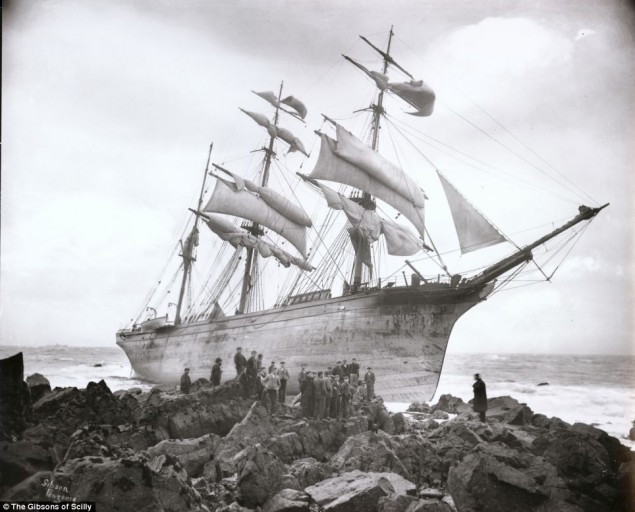
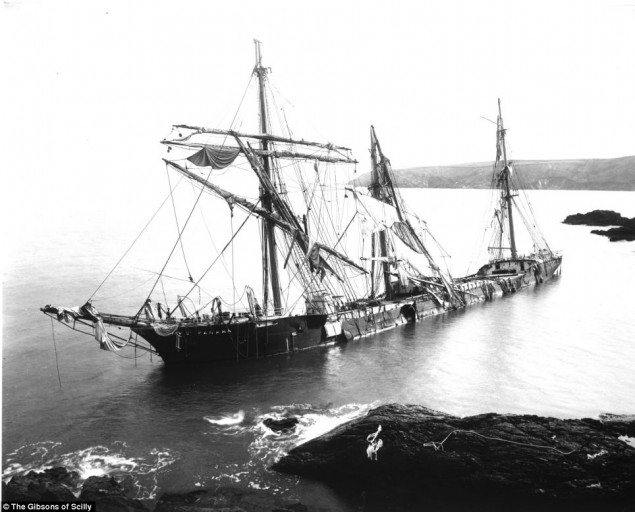
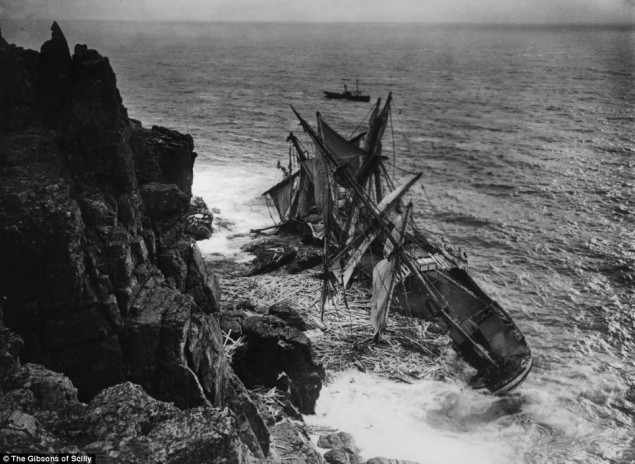
The family business—or obsession—was born. When John eventually passed, his sons Herbert and James took up the camera. After them came Frank, and then his son, Alexander. From the 1860s to the 1990s, a Gibson was always watching. Waiting. The camera was a family heirloom, passed down like a strange and solemn duty. They documented over 200 shipwrecks, creating a staggering visual library of tragedy.

Deep Dive: The Graveyard of the Atlantic
Why so many shipwrecks? To understand the Gibsons, you have to understand where they lived. The Isles of Scilly are a cluster of low-lying islands sitting right at the entrance to the English Channel. Think of them as granite teeth waiting just below the surface of the water.
For centuries, this was one of the busiest shipping lanes in the world. Ships coming from the Americas, Africa, and beyond all funneled through this narrow passage on their way to London, Liverpool, and the ports of Europe. But this stretch of water is a death trap. It’s plagued by:
- Vicious Storms: The Atlantic Ocean throws its full, untamed fury at these islands. Hurricanes, gales, and monster waves are common.
- Thick Fog: Dense, disorienting fog can roll in without warning, making navigation by sight impossible. Before modern radar, a ship’s captain was sailing blind.
- Treacherous Rocks: Hundreds of sharp, barely submerged granite reefs surround the islands. A small navigational error of just a few hundred yards could be a death sentence.
Local legends called the area the “Graveyard of the Atlantic.” It was a place where fortunes were lost and lives were extinguished in the blink of an eye. For the people who lived there, shipwrecks were a part of life. They were a source of salvage, a cause for heroic rescue attempts, and a constant, grim reminder of the sea’s power. For the Gibsons, they were a calling.
More Than Luck? The Gibson Family Secret
To be at the right place at the right time once is luck. Twice is a coincidence. But over 200 times for 130 years? That starts to feel… different.
How did they do it?
The Gibsons weren’t just photographers; they were masters of their environment. They understood the tides, the winds, and the currents better than anyone. They knew which winds would push a struggling ship towards which specific set of rocks. They had a network. Islanders, fishermen, and lifeboat crews would send word the moment a ship was in distress. The family would then scramble, hauling their monstrously heavy equipment over rugged cliffs and beaches, often in the teeth of a raging storm, to get the shot.
It was an act of extreme photojournalism before the term even existed. They weren’t just taking pictures; they were risking their own lives to document the final moments of others.
But online forums and modern mystery-hunters have started asking darker questions. Could their timing have been *too* perfect? Some theories, whispered in the corners of the internet, point to the old legends of “wreckers”—villains who would deliberately lure ships onto the rocks with false lights to plunder their cargo. There is absolutely no evidence that the Gibsons were involved in such a thing. They were, by all accounts, respected members of their community who often participated in rescue efforts. But their uncanny ability to be on the scene does make you wonder. Did they simply possess an almost supernatural instinct for disaster?

What If: The Camera as a Witness
Let’s play a “what if” game. What if their camera wasn’t just recording history, but influencing it? In a world without 24-hour news, their photographs were the only proof of what happened out there in the waves. Their images were used in official inquiries and newspaper reports across the globe. The stark, black-and-white evidence they provided showed the world the brutal reality of the sea.
Did their photos lead to better safety measures? Did the image of a massive steamship torn in two on the rocks push shipping companies to invest in better navigation tools? It’s entirely possible. In their strange, grim way, the Gibsons may have helped save future lives by so vividly documenting the ones that were lost.
Their camera wasn’t just a passive observer. It was a witness for the prosecution in the case of Man vs. Ocean. And the evidence it presented was damning.
Analyzing the Ghostly Evidence
Look at the photographs themselves. They are more than just historical records. They are works of art, born from chaos. The long exposure times of early cameras blur the crashing waves into a milky, ethereal mist. The ships, stuck fast on the rocks, appear like dying beasts, their masts and funnels askew, their bodies broken.
You can almost feel the cold spray and hear the wind howling. You see the tiny figures of the crew clinging to the rigging, or the brave lifeboat men rowing into the impossible surf. Each photo is a story.
Take the image of the German mail ship, the *Schiller*, which wrecked in 1875, killing over 300 people. Gibson’s photo shows its three broken masts sticking out of the water like a trio of tombstones. It’s a silent, devastating testament to the scale of the loss.
Or look at the photos of the *Minnehaha* in 1910, a huge 13,000-ton liner stranded on the rocks. The photos show it completely at the mercy of the sea, waves crashing over its decks. It looks like a toy in a bathtub. A massive, powerful piece of human engineering, rendered completely helpless.

The fuzzy, grainy quality of the old technology adds to the horror. These aren’t crisp, high-definition digital images. They are ghosts. They are smudges of light and shadow, moments snatched from the jaws of time, preserving the terror and the awe of the event. You are looking at the very moment of destruction, a moment that the people in the photo did not know they would survive.
The Legacy Left Behind in Silver Nitrate
For decades, the Gibson collection was a local legend. But eventually, the world took notice. The archive, containing over 1,000 original glass plate negatives, was put up for auction. The estimated value? A staggering £150,000. Why so much? Because this collection is unique. There is nothing else like it in the world.
It’s not just a collection of boat pictures. It’s a 130-year-long diary of a place and a way of life. It’s a study in courage, showing the incredible bravery of the Scilly lifeboat crews who would row into any storm to save lives. It’s a history of shipbuilding, showing the transition from sail to steam. Most of all, it’s a profound meditation on the relationship between humanity and the natural world.
UNESCO estimates there are over 3 million shipwrecks lying on the ocean floor. We find them now with sonar, with robots, with submersibles. We find the silent skeletons. But the Gibsons… they captured the moment the ships died. They captured the noise, the fear, and the fury.
The camera of the Gibson family is silent now. The last of the photographer dynasty, Frank and Alexander, have passed on. Technology has changed. GPS, radar, and advanced weather forecasting have made the waters around the Isles of Scilly far safer. The “Graveyard of the Atlantic” claims far fewer victims now.
But the photos remain. A frozen legacy. A collection of captured ghosts. They remind us that for all our modern confidence, the ocean is big, it is powerful, and it does not care about us. The Gibsons knew that. And they spent their lives making sure we would never forget it.