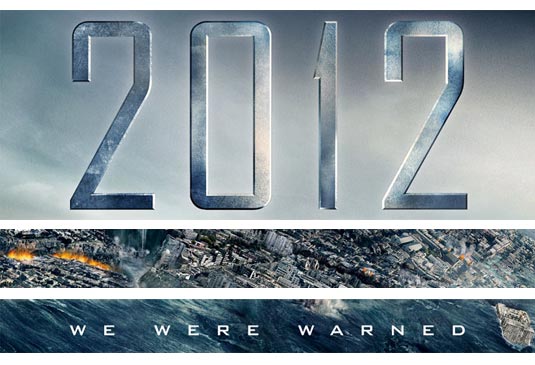
The 2012 Apocalypse: What Really Happened to the End of the World?
Remember it? The feeling in the air. The buzz. The low-grade, thrumming anxiety that pulsed through the internet in the years leading up to it.
2012.
The year the world was supposed to end.
Hollywood cashed in with blockbuster disaster films. Survivalist forums exploded. Documentaries with ominous music filled late-night TV slots. Everywhere you looked, someone was talking about December 21, 2012. It was a deadline. A final appointment for all of humanity. A date circled in red on a calendar designed by a civilization that vanished centuries ago.
And then… nothing. The day came. The sun rose. The Earth kept spinning. We all woke up on December 22nd, a little confused, maybe a little embarrassed, and went about our lives.
But the story didn’t die. Not really. The questions just changed. It went from “Will the world end?” to something far more interesting: “What was that all about?” Was it just mass hysteria? A misunderstanding of an ancient culture? Or did the official story—the one peddled by agencies like NASA—miss something profound?
Let’s pull on our boots and wade back into the murky waters of the greatest doomsday prophecy that never was. Because the truth behind the 2012 phenomenon is a wilder, stranger, and more complex story than you remember. It’s a tale of rogue planets, cosmic alignments, and a fundamental misreading of one of history’s most sophisticated cultures.

The Mayan Calendar: A Cosmic Odometer, Not a Doomsday Clock
The entire 2012 panic started with a single source: the ancient Maya. They were brilliant astronomers, mathematicians, and architects. Their civilization, which flourished in Mesoamerica, left behind stunning pyramids, intricate artwork, and one of the most complex time-keeping systems ever devised.
This wasn’t your standard kitchen calendar. The Maya used multiple calendars simultaneously, but the one that caused all the fuss was the Long Count.
Deep Dive: Understanding the Long Count
Think of the Long Count not as a clock that stops, but as an odometer on a car. It just keeps rolling over. It measures time in cycles. A day is a K’in. Twenty K’in make a Winal. Eighteen Winal make a Tun, and so on, into massive spans of time called K’atuns and B’ak’tuns.
A B’ak’tun is a major cycle lasting roughly 394 years. The grand cycle, the one everyone was watching, was made up of 13 of these B’ak’tuns, totaling about 5,125 years. According to the math, this Great Cycle began in 3114 B.C. and was set to complete its 13th B’ak’tun on… you guessed it. December 21, 2012.
So, was this the end? Not according to the actual experts, or even the modern-day Maya themselves. For them, it was simply the end of one creation cycle and the beginning of another. It was a time for immense celebration, not fear. It was New Year’s Day on a cosmic scale. Imagine the panic if someone believed your wall calendar ending on December 31 meant the concept of “time” itself would cease to exist. It sounds absurd, but that’s precisely the logic that fueled the 2012 scare.
In fact, out of thousands of Mayan inscriptions, only one known artifact, a stone tablet known as Tortuguero Monument 6, even mentions the 2012 date in a prophetic context. And its inscription is damaged and subject to debate. Most scholars believe it refers to the return of a specific Mayan deity, not a planet-shattering apocalypse.
Enter Planet X: The Story of Nibiru
If the Mayan prophecy was the kindling, a rogue planet was the gasoline poured on the fire. This is where the story gets really strange.
Enter Nibiru, also known as Planet X.
This idea didn’t come from the Maya. It came from the interpretations of ancient Sumerian texts by a writer named Zecharia Sitchin. Sitchin claimed the Sumerians—a civilization even older than the Maya—knew of a 12th planet in our solar system (counting the sun and moon). This planet, Nibiru, supposedly swings through the inner solar system on a massive 3,600-year orbit. According to his story, it was the home of an advanced alien race called the Anunnaki, who came to Earth to mine gold and created humanity as a slave species.
Sounds like a sci-fi movie, right? Well, this theory existed long before 2012. In the 1990s, a psychic claimed to be channeling aliens who warned that Planet X would fly by Earth in May 2003, causing a catastrophic pole shift. When May 2003 came and went without incident, the doomsday date wasn’t discarded. It was simply moved.
The 2012 Mayan date was just too perfect to pass up. The two completely separate, unrelated theories—the end of the Mayan calendar and the return of Nibiru—were smashed together into one terrifying super-prophecy. The internet did the rest, creating a feedback loop of fear.
But Could It Be Real?
This is where the official story pushes back, hard. NASA and astronomers worldwide were flooded with questions. Their answer was blunt and consistent.
There is no Nibiru.
Their reasoning is simple, and it’s grounded in basic physics. If a massive planet were on a collision course with Earth, or even just set to pass through the inner solar system, we would know. We wouldn’t need a top-secret telescope to see it.
Think about it. A body that large, coming that close, would have been one of the brightest objects in the night sky for months, if not years, leading up to its arrival. It would be visible to the naked eye. Its gravitational pull would be causing havoc with the orbits of Mars, Jupiter, and Earth itself. We would be feeling its effects long before we could see it.
Yet, there was nothing. No orbital wobbles. No mysterious new star in the sky. The Nibiru story was, from a scientific standpoint, a complete fabrication. An internet hoax. Many believers pointed to the dwarf planet Eris as proof, but Eris is a real, documented object that never comes closer than 4 billion miles to Earth. It poses zero threat.
Cosmic Nightmares: Alignments and Solar Kill-Shots
With the Nibiru story facing heavy skepticism, other theories rushed in to fill the void. If a rogue planet wasn’t going to get us, maybe the very fabric of the galaxy would.
The Galactic Alignment Theory
One of the most popular ideas was the “galactic alignment.” The theory claimed that on December 21, 2012, the Earth, the Sun, and the exact center of the Milky Way galaxy would align perfectly. This alignment, some said, would expose the Earth to powerful, unknown energies from the supermassive black hole at the galactic core, triggering earthquakes, super-volcanoes, and untold destruction.
It sounds terrifying. It also has a few problems.
First, this “alignment” is not a one-day event. The Sun passes through the galactic equator every year during the winter solstice. Because of the sheer scale of the galaxy, the sun is within the “alignment zone” for years at a time. It’s not a sniper shot; it’s like being in a very, very wide room.
Second, there’s no known physical mechanism by which the galactic center could suddenly zap the Earth. The gravitational pull from the supermassive black hole, Sagittarius A*, is immense, but we are 27,000 light-years away. Its pull on us is astronomically weak—far, far weaker than the pull of our own Sun. The official science says this alignment is an annual event of absolutely no consequence.
Solar Flare Superstorm
A much more plausible scenario was the threat of a “solar kill-shot.” The idea was that the Sun, reaching the peak of its 11-year solar cycle, would unleash a solar flare of unprecedented power. This coronal mass ejection (CME) would slam into Earth’s magnetic field, overwhelm it, and fry the global power grid, plunging humanity back into a pre-industrial dark age.
Unlike Nibiru, this threat is actually real. We have historical precedent. In 1859, the Carrington Event, a massive solar storm, hit the Earth. It was so powerful that telegraph systems burst into flames and the Northern Lights were seen as far south as the Caribbean. If a storm of that magnitude hit us today, our satellite-dependent, grid-powered world would be in serious, serious trouble.
But predicting solar flares is notoriously difficult. While 2012-2013 was a solar maximum, it turned out to be one of the weakest in a century. The solar kill-shot never materialized.
When the World Flips Over: The Pole Shift Panic
Perhaps the most visceral and cinematic of all the 2012 theories was the idea of a pole shift. The very ground beneath our feet betraying us in an instant.
But people were often talking about two very different things.
1. Magnetic Pole Reversal: This is a real, scientifically documented process. The Earth’s magnetic poles—the North and South that our compasses point to—have flipped many times in the planet’s history. It’s a slow, messy process that takes thousands of years, where the magnetic field weakens, multiple north and south poles can pop up around the globe, and then it eventually re-establishes itself in the opposite direction. While a weaker magnetic shield would let in more solar radiation, there’s no evidence in the fossil record that these reversals cause mass extinctions. More importantly, geologists are confident we are not on the verge of one happening anytime soon.
2. Crustal Displacement: This is the big one. The disaster movie scenario. Championed by a theory from historian Charles Hapgood (and famously endorsed by Albert Einstein, though with reservations), this is the idea that the entire solid outer crust of the Earth could suddenly slip and slide over the molten core beneath. In a matter of hours, continents could be dragged to the poles, ice caps could move to the equator, and thousand-foot-tall tsunamis would scour the planet clean. This is the scenario depicted in the movie *2012*. It is a terrifying thought. It is also a theory with virtually no support in the modern geological community. The forces required to make the entire lithosphere of a planet break free and shift so dramatically are almost beyond comprehension. An impossible rotation.
The doomsday prophets expertly blended these two ideas—the reality of magnetic shifts and the fiction of crustal displacement—into one terrifying hybrid to fool people. A classic bait-and-switch.
A Post-Mortem: What Did 2012 Really Mean?
So here we stand, more than a decade later. The world didn’t end. The prophecies failed. Was it all just a big joke?
Maybe not.
Some who believed in the 2012 prophecy now argue that the “end of the world” was never meant to be a physical cataclysm. It was meant to be a shift in human consciousness. The end of the world *as we know it*. The dawn of a new age of awareness, spirituality, and enlightenment.
Look at the world since 2012. Think about the explosive rise of social media, the radical shifts in global politics, the increasing awareness of social and environmental issues. You could argue that the world *is* a fundamentally different place than it was before 2012. Could this be the transformation the prophecy was truly about?
Or perhaps the 2012 phenomenon was simply a mirror, reflecting our own modern anxieties. In an age of economic instability, political division, and rapid technological change, the idea of a cosmic reset button can be, in a strange way, appealing. It was a story that gave a date and a reason for our collective unease.
The 2012 scare may be over, but our fascination with the end is not. It’s a story as old as humanity itself. The dates just change. The 2012 prophecy faded, but the human need to look for answers in the heavens and signs in the earth remains as powerful as ever.
It was a dress rehearsal. A fire drill for the apocalypse. And it taught us one very important thing: when the next great prophecy comes along—and it will—we might want to read the fine print before we start building the bunker.