Tuesday, May 12, 2026
HomeFilms & DocumentariesWho Are Islamic State?

Who Are Islamic State?

The Ghost in the Machine: Who Are They, Really?

Turn on the news. Any channel. It doesn’t matter which one. For years, one name dominated the ticker tape at the bottom of the screen. A name that seemed to appear out of thin air. ISIS. Daesh. The Islamic State.

But the official story? It has holes. Gaping, massive holes you could drive a truck through. Speaking of trucks, we’ll get to those shiny white Toyotas later.

You’ve been told the standard narrative. A group of radicals in the desert got organized, got lucky, and somehow managed to conquer a landmass the size of Great Britain virtually overnight. They defeated modern armies. They bypassed global intelligence networks. They produced Hollywood-grade propaganda films that looked like they were edited in a sleek studio in Los Angeles, not a cave in Syria.

Does that make sense to you?

History is rarely a straight line. It’s a jagged mess of shadows, backroom deals, and money trails that lead to places you’d never expect. To understand the “most powerful terrorist group in the world,” we have to ignore the press releases. We have to look at the anomalies. The glitches in the matrix.

The Sudden Rise: From nobodies to conquerors

Let’s rewind. The year is 2014. The world is watching the World Cup. Distracted. Happy. Suddenly, a group previously known as “Al-Qaeda in Iraq” — a group that was supposedly beaten, broken, and scattered — roars back to life.

But they didn’t just come back. They evolved.

They swept through Mosul, Iraq’s second-largest city. The Iraqi army? Funded by billions of US tax dollars? Trained by the best Western advisors? They vanished. They dropped their guns. They stripped off their uniforms. They ran.

How does a ragtag militia terrify a national army into submission without barely firing a shot? Fear is a weapon, sure. But fear requires marketing.

And ISIS had the best marketing department on the planet.

The Hollywood Connection: Propaganda or Production?

This is where things get weird. Really weird.

Go back and look at the old terror videos from the early 2000s. Osama bin Laden in a cave. Grainy VHS quality. Terrible audio. A static camera shot that goes on for twenty minutes. It was amateur hour.

Now, look at what ISIS released in 2014 and 2015.

High-definition resolution. 4K cameras. Drone shots. Slow-motion captures. Professional color grading. Crisp, lapel-mic audio. These weren’t videos made by guys running for their lives in the desert. These were productions.

Ask yourself this: Where did they get the post-production software? Who taught them the pacing of a modern action movie trailer? Who was the director?

Some internet theorists suggest this wasn’t just “good luck.” The sophisticated editing bore an uncanny resemblance to Western media styles. It was designed to go viral. And it did. It worked perfectly to recruit disaffected youth from London, Paris, and Minneapolis.

Was this simply the democratization of technology? Or was there a helping hand? A hidden director behind the curtain ensuring the “villain” looked as scary and high-def as possible to justify what came next?

The “Site Intelligence” Loophole

Whenever a new, terrifying video dropped, who found it first? Almost every single time, it was the SITE Intelligence Group. Based in Bethesda, Maryland.

They would “discover” these videos on obscure jihadist forums before anyone else. Then, they would release them to the mainstream media. The news networks didn’t find the videos; they were handed them. This bottleneck of information raises eyebrows.

If you control the release of the enemy’s propaganda, do you control the enemy’s narrative? It creates a feedback loop. The public gets scared. The military budget goes up. The war continues. The circle remains unbroken.

The Mystery of the White Toyotas

Visuals matter. And nothing is more iconic in modern conflict footage than the “technical.” A pickup truck with a heavy machine gun mounted in the bed.

But when ISIS rolled into Syria and Iraq, they weren’t driving rusted-out scraps from the 1980s. They were driving fleets—literal convoys—of brand new, sparkling white Toyota Hilux trucks and Land Cruisers.

Hundreds of them. Maybe thousands.

Where did they come from?

You can’t just walk into a dealership in Raqqa and finance a fleet of trucks. Toyota has strict policies against selling to paramilitaries. Yet, there they were. Identical models. Sequential features. It looked like a corporate lease program for warlords.

US officials asked Toyota. Toyota said they had no idea. The investigation hit a wall. But trace the logistics. Shipping thousands of vehicles requires ports. It requires paperwork. It requires a blind eye turned by massive bureaucracies.

Some theories point to the US State Department sending “non-lethal aid” to “moderate rebels” in Syria. Trucks. Radios. Medical supplies. But in the chaos of war, definitions blur. “Moderate rebels” defect. They trade gear. They get overrun.

Did American taxpayers inadvertently buy the very fleet that terrorized the Middle East? Or was it intentional? A way to destabilize the region by flooding it with resources, knowing exactly whose hands they would fall into?

Camp Bucca: The University of Jihad

If you want to know where the monster was born, don’t look at a mosque. Look at a prison.

Camp Bucca. Southern Iraq. Run by the US military.

In the mid-2000s, this detention center housed some of the most dangerous men in the region. But it also housed Ba’athist secular military officers from Saddam Hussein’s fallen regime. Men who drank alcohol and didn’t care much for religion, but knew how to run an army/intelligence network.

The US put the religious zealots and the secular military strategists in the same yard. For years.

It was a networking event. It was a merger.

Abu Bakr al-Baghdadi, the future “Caliph” of ISIS, was there. According to reports, he was a model prisoner. Quiet. Kept the peace. The Americans released him. They let him go.

Inside those fences, the ideology of extremism met the tactical genius of Saddam’s old intelligence service. They swapped notes. They wrote the business plan on the back of napkins (metaphorically speaking). When the gates opened, they didn’t just scatter. They launched.

Was this incompetence? A massive oversight by prison administrators? Or was it a strategy? The “Hornet’s Nest” theory suggests that intelligence agencies *wanted* to concentrate the extremists in one spot to monitor them, or perhaps, to weaponize them against other enemies in the region (like Iran).

Follow the Money: The Oil Heist

War is expensive. Bullets cost money. Salaries cost money. You can’t run a “state” on prayers.

At its peak, ISIS was the richest terror group in history. We’re talking billions. How?

They captured oil fields. That’s the simple answer. But here’s the complex question: Who was buying the oil?

You can’t sell crude oil on eBay. You need pipelines. You need tanker trucks. You need a buyer with a refinery. You need access to the global market.

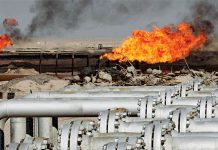
Satellite images showed lines of tanker trucks stretching for miles, crossing borders into Turkey. The oil was being sold. It was entering the global supply chain. For years, the airstrikes avoided these trucks.

Why?

Was it because destroying the oil would hurt the local population? Or was it because powerful regional players—allies of the West—were profiting from the black market trade? The spice must flow. The oil must flow.

It wasn’t until Russia entered the theater and began bombing the tanker convoys that the revenue stream started to dry up. That raises uncomfortable questions about geopolitical alliances. If the “bad guys” are selling oil, and the “good guys” are letting them do it, who is actually fighting whom?

The “Proxy War” Reality

Strip away the religious rhetoric. Strip away the flags. Look at the map.

Syria is a chessboard. On one side, you have the Assad regime, backed by Russia and Iran. On the other side, you have… a mess. The US, Turkey, Saudi Arabia, Qatar, Israel. All have interests. All want influence.

Many geopolitical analysts argue that ISIS wasn’t a spontaneous creation. They were a tool. A battering ram.

If you want to topple a dictator like Assad, but you can’t invade directly because of international law, what do you do? You create chaos. You fund “rebels.” You turn a blind eye when those rebels get radicalized.

General Wesley Clark, a retired four-star US general, once said in an interview regarding the origins of ISIS: “Our friends and allies funded ISIS to destroy Hezbollah.”

Let that sink in. “Our friends and allies.”

The theory is that the Gulf States and Turkey wanted a Sunni pipeline to Europe. Assad stood in the way. Iran stood in the way. So, the dogs of war were let loose. ISIS was the resulting Frankenstein’s monster—a proxy army that broke its leash and turned on its masters.

The “Oded Yinon” Plan

Dig deeper into the history books. Look up the “Oded Yinon Plan.” This was an Israeli strategic paper from the 1980s. Its thesis? To ensure Israel’s survival, the surrounding Arab nations must be fragmented. Balkanized. Broken into smaller, warring tribal states based on ethnicity and religion.

Iraq broken into three pieces (Sunni, Shia, Kurd). Syria shattered.

Look at the map today. What do you see? You see exactly that. The borders drawn by the British and French after WWI have been erased by blood. ISIS accomplished what diplomats never could. They partitioned the Middle East.

Was the rise of the Caliphate the execution of a decades-old geopolitical strategy? Or just a coincidence of chaos?

The Psychological Operation: Management by Terror

Fear paralyzes the rational mind. When people are afraid, they demand safety. They give up liberties. They support wars they would otherwise oppose.

ISIS was the perfect bogeyman.

In the US and Europe, the threat of ISIS was used to justify massive surveillance expansions. “We need to read your emails to stop the terrorists.” “We need to track your location to prevent another attack.”

The brutality was the point. The orange jumpsuits (a visual echo of Guantanamo Bay, ironically). The cages. It was theater designed to provoke a visceral reaction.

It pulled the US military back into Iraq after they had left. It justified bombing campaigns in Syria. It kept the military-industrial complex churning. Raytheon stocks go up when missiles fly. Lockheed Martin doesn’t profit from peace.

Where Are They Now?

The news cycle moved on. ISIS lost its territory. The “Caliphate” was dismantled. Baghdadi was hunted down (under strange circumstances involving underwear theft for DNA testing—another bizarre detail). Trump announced they were “100% defeated.”

But an ideology doesn’t die with a landmass.

They dispersed. They went back to the shadows. Or, as some theorists suggest, they were simply “deactivated.” Put back in the box until they are needed again.

We are seeing pop-ups in Africa now. ISIS-K in Afghanistan. The brand franchises out like a fast-food chain. Whenever a region needs destabilizing, the black flag conveniently appears.

Is it organic? Are these angry young men finding a cause? Or is the brand being applied from the outside by intelligence agencies needing a reason to intervene in resource-rich areas?

The Uncomfortable Conclusion

We may never know the full truth. Documents are classified. Witnesses disappear. The desert swallows the evidence.

But we know this: The story of a bunch of guys in a cave outsmarting the world’s combined intelligence agencies doesn’t hold water. It defies logic. It defies logistics.

They had money. They had oil buyers. They had brand new trucks. They had media production teams. They had free passage across borders.

Someone opened the gates. Someone signed the checks.

The next time you see a boogeyman on the news, look past the scary flag. Look at the equipment. Look at the production value. And ask yourself: Who benefits from this fear?

Because in the world of high-stakes conspiracy, nothing is ever what it seems. The truth isn’t just out there—it’s usually buried under a mountain of lies.

Stay curious. Stay skeptical. And keep your eyes open.

Arindam Mukherjee
Arindam Mukherjee
Arindam loves aliens, mysteries and pursing his interest in the area of hacking as a technical writer at 'Planet wank'. You can catch him at his social profiles anytime.
RELATED ARTICLES

20 COMMENTS

- Advertisment -

Most Popular

Recent Comments

Warren Pan Abbott on The legend of the Devil Monkey !
chris davies on The McPherson Tape Mystery
Reed Reedly on ET has Internet!
Bea Houseoffashion on Proof Of Time Travellers – Gallery
Marcus2012 on ET has Internet!
Reed Reedly on ET has Internet!
LaughsAtConspiracyNuts on The 9/11 Conspiracy – Myths and Facts
Alex Sliverman on Did the ancients fly?
Doctor Wholigan on Time Traveler in 1938 film
chris davies on The McPherson Tape Mystery
Archie1954 on 10 secret UFO hideouts
chris davies on Ghosts of flight 401
Marcus2012 on ET has Internet!
jason Macdonald on Proof of Time Travel? – China
chris davies on Long-Lost Pyramids Found?
Reed Reedly on ET has Internet!
Milkman on Connected Universe
Tenmiles on Baigong Pipes Mystery
Simon Foster on Sirius – The Documentary
From the 1st April on 2013 – Alien Contact date ?
SkyWatcher on Is ET ignoring us?
I Come From The Future on Obama to make UFO Alien disclouser soon ?
ÛñK?øWn on 2013 – Alien Contact date ?
Just another person on 2013 – Alien Contact date ?
Malcolm Windowcleaner on The strange case of Rudolph Fentz
Mason Servio on Strange Things on Mars
Marke Wisdom Seeker on What will we find as arctic melts?
Andrea A Elisabeth Levyne on Aliens Captured in Varginha, Brazil
Mitch Grouyeki on Amazing Space Shuttle pictures