Home Films & Documentaries What Happened To Flight MH370?

What Happened To Flight MH370?

19
81

The Ghost Plane: What REALLY Happened to MH370?

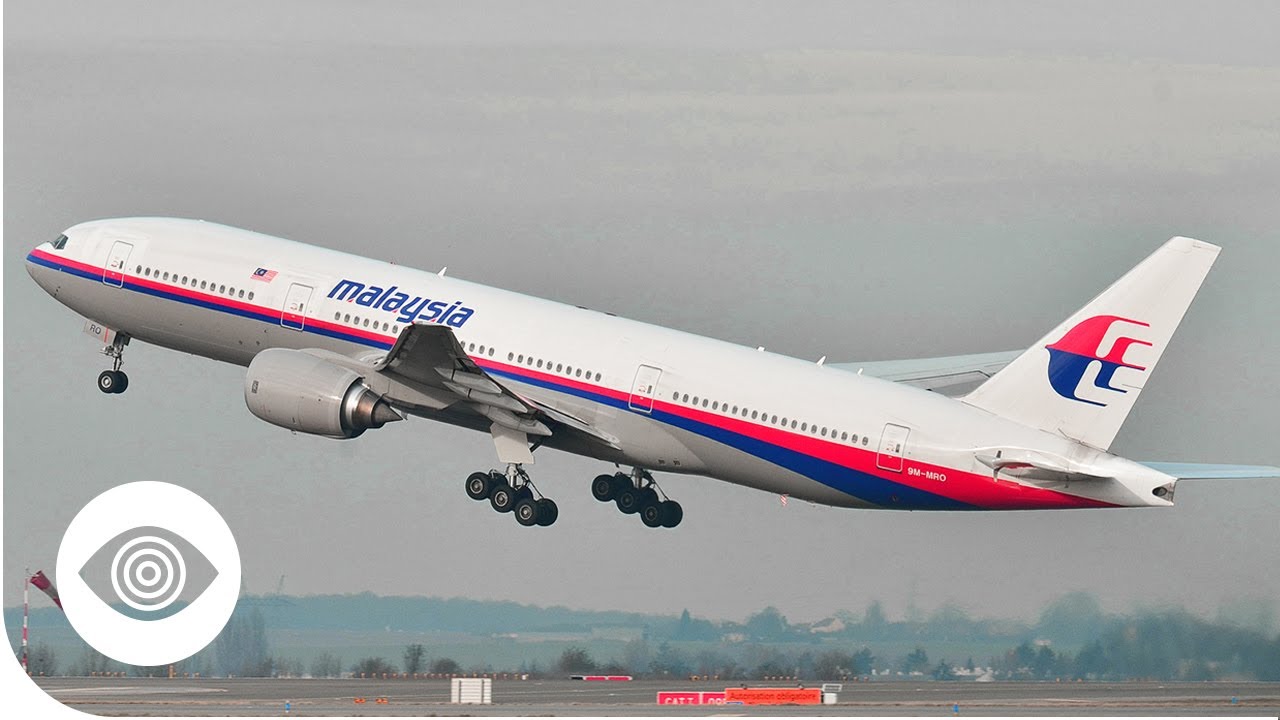
It was supposed to be just another red-eye flight. A routine trip from Kuala Lumpur to Beijing. For the 227 passengers and 12 crew members aboard Malaysian Airlines Flight 370, March 8th, 2014, was the beginning of a journey. A vacation. A business trip. A homecoming.

They never arrived.

Instead, the Boeing 777, one of the safest aircraft ever built, became a ghost. It slipped off radar screens and vanished into the night, sparking the largest, most expensive search in aviation history and leaving behind a mystery that continues to haunt us. The official story tells of a tragic accident in a remote stretch of ocean. But the official story is full of holes. Holes big enough to fly a 777 through.

What happened in the cockpit that night? Where did the plane actually go? And who, or what, was responsible for erasing 239 souls from the face of the Earth? The answers aren’t in the official reports. They’re found in the shadows, in the data that doesn’t add up, and in the theories that officials wish would just go away.

Forget what you think you know. We’re going deep.

A Night Like Any Other

The air in Kuala Lumpur International Airport was thick with the typical late-night buzz. The soft chime of boarding calls. The low rumble of rolling suitcases. Families saying their goodbyes, business travelers checking their phones one last time. Flight MH370 sat gleaming under the terminal lights, a modern marvel of engineering being prepped for its six-hour flight to China.

In command was 53-year-old Captain Zaharie Ahmad Shah, a veteran pilot with over 18,000 hours of flying experience. By his side was 27-year-old First Officer Fariq Hamid, on his final training flight before being fully certified on the 777. The cabin crew prepared the aircraft, the passengers found their seats, and at 12:42 AM local time, MH370 pushed back from the gate.

Everything was perfect. The takeoff was smooth. The climb, flawless. The plane ascended into the clear night sky, a tiny pinprick of light on its programmed course over the South China Sea. At 1:19 AM, as the plane passed from Malaysian to Vietnamese airspace, a final, calm message was sent from the cockpit.

“Good night, Malaysian three seven zero.”

That was the last anyone ever heard from them. Silence.

Erased from the Sky

Two minutes later, at 1:21 AM, something extraordinary happened. The plane’s transponder—the device that communicates its identity, altitude, and speed to air traffic control—was switched off. It was a deliberate act. Not a malfunction. Someone in that cockpit wanted to become invisible.

The plane vanished from civilian radar screens. Gone.

But military radar is a different beast. It sees things differently. And what Malaysian military radar saw was terrifying. Instead of continuing on its path to Beijing, the unidentified blip they later confirmed was MH370 made a sudden, sharp left turn. It flew back across the Malay Peninsula, a silent giant deviating wildly from its path. It threaded a needle between the airspace of Thailand and Indonesia, as if piloted by someone who knew exactly how to avoid detection. It then banked south and flew out over the vast, empty expanse of the Indian Ocean.

For hours, it flew on. A ghost plane on a phantom journey. And then, nothing.

The Official Narrative: A Trail of Digital Breadcrumbs

For weeks, the world searched in the wrong place. The South China Sea became the focus of a massive international effort, but they were chasing a phantom. The real clues weren’t on the water; they were in space.

A British satellite company, Inmarsat, detected a series of automated “pings” from the aircraft. These weren’t communications; they were more like digital heartbeats. The plane’s satellite data unit was automatically responding to a ground station’s hourly status checks. The system was supposed to be dormant, but one of the plane’s electrical systems had likely been rebooted mid-flight, triggering the satellite link to power back on.

These pings didn’t give a location. But by measuring the time it took for the signals to travel, investigators could calculate the plane’s distance from the satellite. This created a series of enormous circles on the map. By analyzing the tiny frequency shifts in the signal—a phenomenon known as the Doppler effect—they could determine if the plane was moving toward or away from the satellite. The data suggested a southern route.

The final ping was received at 8:19 AM. Based on the plane’s fuel load, investigators drew a final, massive curve across the southern Indian Ocean. The “seventh arc.” They believe that somewhere along this desolate, thousand-mile line, MH370 ran out of fuel and plunged into one of the deepest, most treacherous parts of the world’s oceans.

The search shifted. Ships and planes scoured millions of square miles of ocean. Underwater drones mapped a seafloor more rugged than the Grand Canyon. They found shipwrecks. They found sea volcanoes. They found nothing else.

Years later, debris started washing up. A flaperon—a part of the wing—on Réunion Island. Other pieces in Mozambique, Tanzania, and Madagascar. All were confirmed to be from a Boeing 777, and the flaperon was proven to be from MH370 itself. The wreckage seemed to confirm the crash theory. But for many, it only created more questions.

Deep Dive: The Theories They Don’t Want You to Consider

The official story is tidy. But it feels incomplete. It doesn’t explain the *why*. It doesn’t explain the deliberate silence, the calculated turn, the hours of phantom flight. And that’s where the real investigation begins.

Theory 1: The Pilot Did It

This is the theory that investigators privately favor but publicly downplay. It’s the darkest possibility: that Captain Zaharie Ahmad Shah deliberately crashed the plane in a horrifying act of mass murder-suicide. The evidence is circumstantial, but chilling.

The flight path. The deliberate shutdown of communications. The careful navigation to avoid radar. This wasn’t an accident; it was the work of a skilled pilot who knew exactly what he was doing. And then there’s the flight simulator. At his home, Captain Zaharie had a sophisticated, custom-built 777 flight simulator. FBI analysis of the hard drive found deleted data points. When recovered, they showed a simulated flight path that eerily mirrored the one MH370 is believed to have taken—a long journey south into the Indian Ocean, ending when the virtual fuel ran out.

The Malaysian government initially denied this, then confirmed it. Why the hesitation? Was there more? Friends and family describe Zaharie as a kind, gentle, and respected family man with no signs of distress. But was he hiding a darker side? Or is he a convenient scapegoat for a mystery with no easy answers?

Theory 2: The Ghost Fire

What if the pilots weren’t villains, but heroes fighting a losing battle? This theory suggests a catastrophic event onboard—most likely a fire—incapacitated the crew and turned MH370 into a “ghost flight.” A fire in the cargo hold, perhaps sparked by a shipment of lithium-ion batteries known to be on board, could have produced toxic smoke, overwhelming everyone on the flight deck.

In this scenario, the sharp turn wasn’t malicious. It was a desperate attempt to divert to the nearest suitable airport, like Pulau Langkawi. But before they could land, the pilots were overcome. The plane, with its autopilot still engaged, simply continued flying its last programmed heading until it ran out of fuel. This would explain the silence—no time for a mayday call. It would explain the deviation from the flight plan.

But does it hold up? The transponder and other communications systems weren’t just knocked out; they were switched off in a specific sequence that’s hard to explain with a random fire. Still, it’s a terrifyingly plausible scenario that paints the final hours of MH370 in a tragic, rather than sinister, light.

Theory 3: The High-Tech Hijack

Here’s where things get strange. Onboard MH370 were 20 employees of Freescale Semiconductor, a tech company involved in advanced electronics and “cloaking” technology. Days after the flight vanished, a patent for a new semiconductor was approved, with the rights split between the company and four of the employees on the plane. With them gone, the entire patent belonged to Freescale. Coincidence? Many think not.

This theory posits that the flight was targeted. Hijacked not by terrorists in the cabin, but by someone who remotely seized control of the aircraft’s fly-by-wire systems. For years, theorists have pointed to patents for “uninterruptible autopilot” systems that would allow government agencies or even corporations to take control of a commercial airliner from the ground. Could MH370 have been the first real-world test of such a system?

Was the plane flown to a secret location, its passengers and valuable tech cargo captured? It sounds like science fiction. But the precise, controlled flight path and the complete shutdown of communications feel less like a panicked pilot or a fire, and more like a cold, calculated, professional operation.

Theory 4: A Military Mistake and a Massive Cover-Up

Let’s look at the map again. Where was MH370 flying after it turned back? It flew right over a very sensitive part of the world, heading in the general direction of one of the most secretive military installations on the planet: Diego Garcia.

This tiny atoll in the middle of the Indian Ocean is a massive US naval and airbase. The theory goes that MH370, flying dark with no transponder, was mistaken for a threat. A threat that was neutralized. Was the plane accidentally shot down during a military exercise? Or did it witness something it wasn’t supposed to see, forcing a military power to take it out of the sky?

A shootdown would explain the sudden disappearance. And a cover-up by one or more global superpowers would certainly explain the confusing data, the shifting search zones, and the reluctance of some governments to share their full military radar information. It would also explain why the search in the southern Indian Ocean, meticulously guided by the satellite data, has yielded nothing. What if the pings were a distraction? A brilliant piece of electronic misdirection to send the entire world looking in the wrong place while the real crash site was scrubbed clean?

The Lingering Questions That Keep Us Awake

Years have passed. Millions of dollars have been spent. The official search is over. But the questions remain, louder than ever.

Why was there never a distress call? Even with a fire or a sudden decompression, pilots are trained to send a mayday.

Why were the phones of some passengers reportedly still ringing for days after the disappearance? Telecom experts say this is normal, a network glitch as a phone searches for a signal. But for grieving families, it was a torturous glimmer of hope that their loved ones were still alive.

Why has the full cargo manifest never been released? We know about the lithium batteries and a shipment of mangosteens. What else was in that hold?

And the biggest question of all: In an age where we can track our pizza delivery to the front door, how can a 200-foot-long airplane simply cease to exist?

The disappearance of MH370 changed aviation forever. New rules are being put in place for constant aircraft tracking. But that does little for the families of the 239 who are still living in limbo, trapped between hope and grief.

The truth is out there. It might be buried under miles of water in the Indian Ocean. It might be hidden in a classified government file. Or it might be so simple and yet so terrible that we can’t bring ourselves to accept it. One day, we might find the plane. But it’s unlikely we will ever truly know what happened in the final, silent hours of the ghost flight.

The sky is emptier without them. And the silence they left behind is deafening.

Originally posted 2014-03-21 21:00:01. Republished by Blog Post Promoter