The Paper Madness: 4 Cursed, Unreadable, and Dangerous Books That Baffle Science
History isn’t neat. We like to think it is. We want to believe that the past is a library where every book is cataloged, every language is translated, and every mystery has a footnote explaining exactly what happened. But that is a lie.
The truth? History is messy. It’s full of black holes.
Sometimes, we dig up things that simply shouldn’t exist. We find manuscripts written in languages that nobody speaks. We find diagrams of plants that don’t grow on this planet. We find books that drive computer algorithms crazy and make linguists pull their hair out. Are they elaborate pranks? Coded spy manuals? Or are they debris from civilizations we’ve totally forgotten?
Grab a coffee. Maybe keep the lights on. We are going to look at four texts that refuse to be read. These aren’t just old books; they are cognitive hazards. They challenge everything we think we know about the timeline of humanity.

The Rohonc Codex: The Nightmare of Hungary
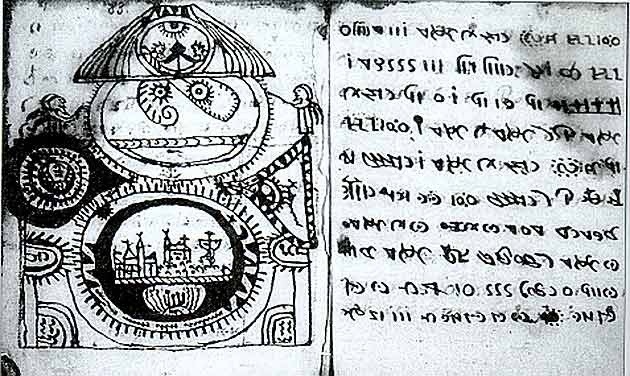
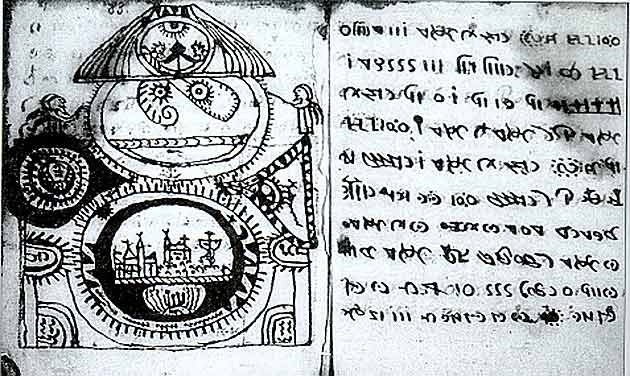
Imagine a book that appears out of thin air. No author. No origin story. Just 448 pages of headache-inducing scribbles. That is the Rohonc Codex.
It showed up in the early 19th century. A Hungarian count named Gusztáv Batthyány donated his massive personal library to the Hungarian Academy of Sciences. It was a noble gesture. But hidden in that stack of 30,000 books was this little anomaly. A ticking time bomb for historians.
It looks innocent enough. But open it up. Chaos.
Why It Breaks Your Brain
The script is wrong. It’s all wrong. It has ten times the number of distinct symbols that any known alphabet should have. Most alphabets, like the one you are reading right now, have between 20 and 40 letters. The Rohonc Codex has nearly 800 unique symbols. 800!
What kind of language needs 800 letters? Is it a syllabary? A logotype system like Chinese? Or is it a code meant to compress information?
Scholars have tried everything. They tried reading it right-to-left. Left-to-right. Bottom-to-top. They threw modern cryptography software at it. The result? Nothing. Static. The paper itself is Venetian, dating back to the 1530s, which gives us a clue about when it was made, but not why.
The “Sumerian” Theory and Other Wild Guesses
Because nobody can read it, everybody projects their own fantasies onto it. In the 20th century, a researcher named Mahesh Kumar Singh claimed the text was a variation of Hindi. He translated a few pages. It turned out to be gibberish. Another guy claimed it was ancient Sumerian mixed with Hungarian (a linguistic combination that makes zero historical sense).
The illustrations offer the only solid ground, and even that ground is shaky. We see crosses. We see scimitars. We see distinct religious iconography that suggests a clash—or a union—between Christian, Muslim, and Pagan worlds.
The Current Verdict: The most compelling modern theory comes from a pair of Hungarian researchers who argue it’s a system of “stenography” or shorthand. They believe it’s a boring religious text hidden behind a hyper-complex cipher to protect it from persecution. But until someone cracks the full code, it remains a paper brick of mystery.
The Book of Soyga: The Magician’s Killer
Let’s switch gears. The Rohonc Codex is unreadable, but we don’t know who wrote it. The Book of Soyga is different. We know exactly who owned it, and that makes it terrifying.
It belonged to John Dee.
If you don’t know John Dee, picture a real-life Gandalf who also happened to be a math genius and Queen Elizabeth I’s personal spy (he literally signed his letters “007”). Dee had the largest library in England. He was obsessed with talking to angels. He used crystal balls, mediums, and weird mirrors to try and dial up the divine frequency.
And the Book of Soyga was his manual.
Lost in the Stacks
For centuries, this book was a ghost. We knew it existed because Dee complained about it in his diaries. He was obsessed with it. He claimed the book contained the ultimate secrets of the universe, but even he couldn’t figure out the encoded tables at the end. He asked the Archangel Uriel (yes, he thought he was talking to an archangel) about the book.
According to Dee’s journals, the angel replied that the book was given to Adam in the Garden of Eden but warned him: “Calculated time is not for every man.”
Then the book vanished. Gone. Poof.
Fast forward to 1994. A scholar named Deborah Harkness is digging through the British Library. She’s bored, looking at catalogs. And there it is. The catalog listed it as Aldaraia (cryptic Latin for something like “The Collection”). It had been sitting there, mislabeled, under dusty piles of other books, for hundreds of years. She found a second copy in Oxford shortly after.
The 36 Tables of Madness
The book is mostly Latin spells and demonology. Typical 16th-century magic stuff. But the end of the book? That’s where the trap is.
There are 36 large square tables filled with 40,000 randomized letters. It looks like a word search puzzle from hell. Dee spent years trying to find the pattern. He believed these letters were the names of powerful spirits.
Here is the kick: Modern mathematicians finally cracked the algorithm a few years ago. It turns out the letters are based on an incredibly advanced mathematical formula related to the word “Soyga.” It wasn’t random. It was computer-like code written by hand in the 1500s. Why go to that trouble? What happens when you pronounce the combinations correctly?
Dee was told by his “angels” that he would die within two and a half years if he deciphered it. He didn’t. He died an old, broken man. The book survived.
The Oera Linda Book: Atlantis and the Nazis
If the first two books are mysteries, this one is a weapon. The Oera Linda Book is controversial, dangerous, and almost certainly a fraud. But it is a fraud that people were willing to kill for.
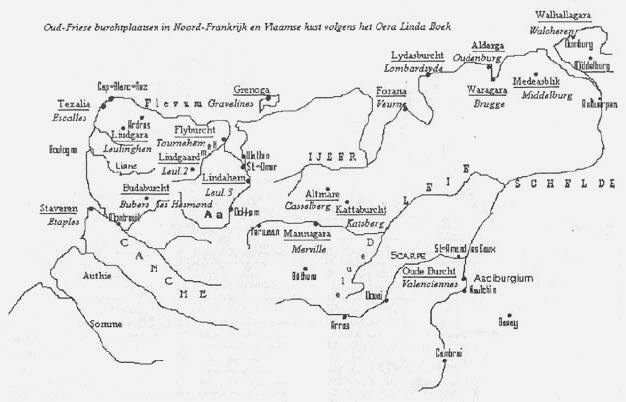
Surfacing in 1867, this manuscript claims to be an ancient wisdom text from the Frisian people (an ethnic group in the Netherlands and Germany). But it doesn’t just talk about farming or taxes. No.
It rewrites human history.
The text claims that Europe was ruled for thousands of years by a matriarchy of priestesses. It describes a lost continent—essentially Atlantis—called Atland that sank in 2194 BC. It paints the Frisian people as the original “superior” race who invented the alphabet and civilization.
Himmler’s Bible
You can guess who loved this story. The Nazis.
While mainstream linguistic experts looked at the Oera Linda Book and laughed (the paper was machine-made in the 19th century, and the “ancient” language was just bad, broken Frisian), the SS didn’t care about facts. They cared about mythology.
Heinrich Himmler, the architect of the Holocaust, was obsessed with the occult. He wanted a substitute for Christianity—a religion that centered on Germanic superiority. The Oera Linda Book was perfect. It gave them an ancient lineage. It gave them a justification for their hate. It became known as “Himmler’s Bible.”
Scholars today call it a “pareidolic text”—we see what we want to see in it. It was likely written by a fundamentalist Dutch preacher in the 1860s as a satire or a nationalist fantasy. But it proves a scary point: A fake history book can be just as powerful as a real one if the wrong people believe it.

The Voynich Manuscript: The Everest of Cryptography
And now, we arrive at the boss level. The Voynich Manuscript.
If you are a fan of unsolved mysteries, this is the holy grail. It sits in the Beinecke Rare Book & Manuscript Library at Yale University (catalog number MS 408). It is beautiful. It is disturbing. And it is completely impenetrable.
Carbon dating places the vellum (animal skin paper) between 1404 and 1438. It’s real. It’s old. It’s not a modern fake. But what is written on it defies logic.
The Impossible Plants
Flip through the pages. You see drawings of herbs and plants. Standard medieval herbal, right? Wrong. Botanists have analyzed every single drawing. They can identify… maybe two or three. The rest? They are chimeras. Roots of one plant pasted onto the flowers of another. Leaves that follow no geometric pattern found in nature.
It’s a botany textbook for a planet that doesn’t exist.
The Naked Ladies in the Tubes
Then you get to the “Balneological” section. This part is arguably the weirdest. It features page after page of naked women bathing in strange, green pools. They are connected by elaborate plumbing systems—tubes, pipes, and weird organic flows. Some look like organs. Some look like alchemy setups.
Is it medical? Is it about reproduction? Is it a recipe for the Elixir of Life? The women look bored, casual, floating in these biological machines. It’s surreal art centuries ahead of its time.
The Code That Beats Computers
But the text. Oh, the text. It flows. It has a script that looks swift and practiced. Whoever wrote this didn’t hesitate. They weren’t copying symbol by symbol; they were writing a language they knew.
Linguists look for something called “Zipf’s Law.” It’s a statistical rule that all natural human languages follow regarding how often words are repeated. Guess what? The Voynich Manuscript follows Zipf’s Law perfectly. It has the heartbeat of a real language.
Yet, nobody can read a word.
The Latest Theories:
- The Extinct Dialect: In 2019, a researcher claimed it was written in a lost “proto-Romance” dialect spoken by commoners in the Mediterranean. (Debunked by most, but interesting).
- The Aztec Connection: Some botanists think the plants look like species from Central America, suggesting the book was created in the New World by missionaries and Aztec elders.
- The Self-Cipher: The theory that a medieval doctor invented a private language to hide trade secrets about medicine and abortion (hence the naked women and tubes).
Why We Can’t Look Away
These books haunt us because they represent the “unknown unknown.” We have mapped the globe. We have scanned the ocean floor. But we can hold these books in our hands, scan them at high resolution, and still be completely locked out.
Maybe the Voynich Manuscript is a joke. Maybe the Book of Soyga is just math. But there is a tiny, nagging voice in the back of our heads that asks: “What if they are instructions?”
And as long as we can’t read them, that possibility remains alive.