The Impossible Arrival
New York City. Mid-June. 1950.
The air was thick. Hot. Smelling of exhaust and asphalt. Times Square was a screaming neon canyon, the heart of the American century pumping blood through the streets. Cars were big. Loud. Chromed monsters roaring down the avenues. Pedestrians were a blur of fedoras and summer dresses.
And then, right in the middle of the traffic, a hole seemed to punch through the fabric of reality.
A man appeared. Just like that. No warning. No flash of light. He was just there.
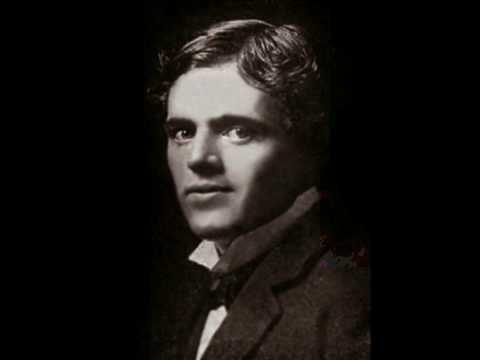
He didn’t belong. You could tell instantly. In a sea of 1950s bustle, this guy was a ghost from another world. He was wearing a long, thick coat despite the summer heat. Tight pants. A buttoned vest. And on his face? Incredible, thick mutton-chop sideburns that hadn’t been in style for seventy years.
He looked terrified.
Witnesses said he was spinning around, eyes wide, mouth open in a silent scream. He looked at the towering billboards, the flashing lights, the aggressive yellow taxis. It was sensory overload. A panic attack on a cosmic scale. He took a staggering step backward.
Screeching brakes. A sickening thud.
A yellow taxi, unable to swerve in time, slammed into the stranger. The man in the Victorian suit hit the pavement hard. By the time the crowd gathered and the police whistle blew, the stranger was dead. The chaos of Times Square swallowed him up as quickly as it had spit him out.
But the real madness? That didn’t start until they got him to the morgue.
The Autopsy of an Anomaly
The NYPD had a John Doe. A traffic accident victim. Routine. Sad. Paperwork to file.
Or so they thought.
The officials at the morgue began the standard procedure. Strip the body. Catalogue the effects. Identify the next of kin. But as the coroner’s assistants began pulling items from the dead man’s heavy wool pockets, the room got quiet. Very quiet.
Nothing made sense.
The items on the metal tray weren’t just old. They were impossible. They looked brand new. Not preserved. Not antiques kept in a box. They looked as if they had been bought, minted, or written that very morning.
Here is exactly what they found inside the pockets of the man who fell from the sky:
- A Copper Beer Token: Worth exactly 5 cents. It bore the name of a saloon that nobody had ever heard of. Even the oldest beat cops, men who had walked those streets for forty years, drew a blank.
- A Strange Bill: A receipt for the care of a horse and the washing of a carriage. It was drawn by a livery stable on Lexington Avenue. One problem: That address was now a retail store. The stable hadn’t existed for decades.
- Mint Condition Cash: About 70 dollars in old banknotes. But not “old” like crumpled, yellowed paper. These bills were crisp. Sharp edges. The ink looked wet.
- Business Cards: Perfectly printed cards bearing the name Rudolph Fentz with an address on Fifth Avenue.
- A Letter: This was the kicker. A letter sent to that Fifth Avenue address. It was postmarked Philadelphia. The date? June 1876.
The paper wasn’t brittle. It didn’t crumble when they touched it. It was fresh.
The police looked at the body. A man in his late 20s or early 30s. Perfect skin. No signs of aging. Yet his pockets were full of a life that ended before the lightbulb was common in homes.
The Detective Who Chased a Ghost
Enter Captain Hubert V. Rihm. NYPD Missing Persons Department.
Rihm was a pro. He’d seen it all. Runaways, amnesiacs, con artists faking their deaths. He figured this was a prank. An elaborate hoax. Maybe an actor from a period piece wandered off set and got unlucky. He took the business card—Rudolph Fentz, Fifth Avenue—and went to work.
He went to the address. It was a business. He asked the owner, “Do you know Rudolph Fentz?”
“Never heard of him,” the owner said. “No one by that name lives here. No one works here.”
Rihm checked the records. He checked the fingerprint database. Nothing. He checked the missing persons reports for anyone fitting the description. Zero. It was like Rudolph Fentz had never existed in 1950.
So, Rihm got stubborn. He started digging into the past. He didn’t look for a living man anymore; he looked for a legacy. He scanned telephone books going back years. Finally, he got a hit.
Rudolph Fentz Jr.
It was a listing in a 1939 phone book. Rihm rushed to the address, an apartment building. But he was too late. The tenants told him Fentz Jr. was a man in his 60s who had worked nearby. He had retired. He had moved away in 1940. Gone.
Rihm was chasing smoke. But he wouldn’t quit. He tracked the bank records of Fentz Jr. He found out the man had died five years prior to the investigation. Dead end?
Not quite.
The widow was still alive. She was living out her final days in Florida.
The Impossible Confirmation
Captain Rihm wrote to the widow. He probably expected a confused reply. Maybe a denial. What he got back sent a chill down his spine that no summer heatwave could warm up.
The widow confirmed everything.
She told Rihm that her husband’s father—the original Rudolph Fentz—had disappeared in the spring of 1876. He was 29 years old. A smoker. A dresser. A man who liked his evening strolls.
One night, she said, he lit a cigar and stepped out the front door for a walk to get some fresh air. He told his wife he’d be back shortly.
He never came back.
He wasn’t murdered. His body wasn’t found in the river. He just vanished. Poof. Gone from the face of the Earth in 1876. His family waited. They searched. Eventually, they had him declared dead in absentia.
Rihm sat at his desk. He looked at the file. He looked at the description of the man in the morgue. The age: 29. The clothes: Victorian. The date in his pocket: 1876.
The math was terrifying. A man leaves his house in 1876 for a walk. He takes a few steps, hits a patch of “wrongness” in the universe, and puts his foot down on the pavement of 1950, only to be killed seconds later.
For Rudolph Fentz, no time had passed. He was still on his walk. For the world, 74 years had burned away.
Rihm closed the file. He marked it unsolved. What else could he do? You can’t arrest the laws of physics.
The “Truth” Revealed? (Or So We Thought)
For decades, this story floated around the underground. It was whisper-network gold. Paranormal magazines in the 70s and 80s loved it. It was the perfect ghost story because it had names. It had dates. It felt real.
Then came the internet.
Skeptics and folklore researchers tore the story apart. In 2000, a researcher named Chris Aubeck decided to kill the myth once and for all. He investigated the Spanish magazine ‘Más Allá’, which had run the story as a factual report. He traced the citations back. Back and back.
And he found the smoking gun.
Or so it seemed.
In 2002, Pastor George Murphy stepped forward with a claim. He said the story wasn’t reality—it was science fiction. He pointed to a short story titled “I’m Scared” by the legendary writer Jack Finney (the guy who wrote Invasion of the Body Snatchers).
Finney’s story was published in Collier’s magazine on September 15, 1951. It featured a character named Rudolph Fentz. It featured the 1876 disappearance. It featured the items in the pockets.
The debunkers cheered. Case closed. The story was just a creepypasta before the internet existed. Someone had read Finney’s story, stripped away the “fiction” label, and started spreading it as a real police report. It’s a classic game of “Telephone.”
Jack Finney was dead by then, so nobody could ask him if he based it on a real event. But it didn’t matter. The timeline fit. Finney wrote it in 1951. The rumors started after. Simple cause and effect.
But hold on.
Don’t get comfortable. Because this is where the story goes from “debunked” to “absolutely mind-bending.”
The Twist That Changes Everything
Just when the Fentz mystery was buried in the “Hoax” folder, the universe threw a curveball.
In 2007, a researcher digging through the archives of the Berlin News Archive stumbled upon something that shouldn’t exist. It was a newspaper article. A clipping from a paper published in April 1951.
Read that date again.
April 1951.
This news report detailed the story of the man in Times Square. It listed the items in his pockets. It named Rudolph Fentz.
Why does this matter? Because Jack Finney’s story “I’m Scared” wasn’t published until September 1951. That is five months after the newspaper article was printed.
How could a newspaper report on a fictional story that hadn’t been published yet? How could a journalist quote a book that wasn’t on the shelves?
This discovery blew the skepticism apart. Suddenly, the Jack Finney explanation didn’t work. Did Finney see the news report in April and decide to turn it into a sci-fi story? Was he inspired by a real event?
Or is the loop even stranger?
The Rabbit Hole Goes Deeper
Since the 2007 discovery, internet sleuths have gone into overdrive. Some researchers now claim they have found actual census records from 19th-century New York listing a Rudolph Fentz. Others claim to have found the livery stable records.
The “Fiction” theory is crumbling. We are left with two disturbing possibilities:
- The Leak Theory: Jack Finney heard about a real, suppressed police case from 1950 and fictionalized it to get the truth out, disguising it as a story to avoid government censorship.
- The Time Loop: The story itself is unstuck in time. The report predates the fiction, which predates the legend.
The Physics of Vanishing
Let’s take a step back and look at the “What If.” If Rudolph Fentz was real, what happened to him?
We know Einstein’s theories allow for the bending of space-time. We know about wormholes—theoretical bridges connecting two points in history. Is it possible that there are “soft spots” in our reality? Places where the barrier between Now and Then wears thin?
Times Square in 1950 was a high-energy environment. Electricity. Radio waves. Millions of people. Did that concentration of energy rip a hole in the fabric of the city? Did Rudolph Fentz simply take a wrong turn in 1876 and fall through a crack in the sidewalk of the universe?
Think about the tragedy of it. He didn’t travel to the future to save the world. He didn’t come with a warning. He was just a guy going for a beer. He was a victim of a cosmic hit-and-run.
The Unsolved Legacy
Today, the grave of the man who might be Rudolph Fentz remains unmarked in a Potter’s Field, or perhaps his body was claimed by the timeline and vanished just as mysteriously as it arrived.
The skeptics will tell you it’s just a story. They’ll point to Finney. They’ll ignore the April 1951 newspaper clipping because it doesn’t fit their narrative. They want a clean world where 1876 stays in 1876.
But we know better. We know the world is weird. We know that sometimes, people go missing and are never found. And sometimes, people are found who were never missing.
So, the next time you are walking down a busy street, surrounded by the noise of the modern world, take a look at the people around you. Look at their eyes. Look at their clothes.
If you see someone looking confused, someone who looks like they don’t quite fit… don’t look away.
They might have just arrived.
CASE STATUS: OPEN
Originally posted 2016-04-22 20:28:03. Republished by Blog Post Promoter

Aloha, I’m Amit Ghosh, a web entrepreneur and avid blogger. Bitten by entrepreneurial bug, I got kicked out from college and ended up being millionaire and running a digital media company named Aeron7 headquartered at Lithuania.