Saturday, September 5, 2026
HomeAncient & Lost CivilizationsHistorical MysteriesMystery of the Mona Lisa's smile solved

Mystery of the Mona Lisa’s smile solved

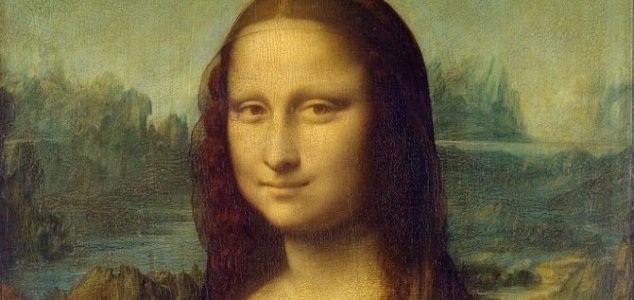
The Mona Lisa Deception: Why Her Smile Is A 500-Year-Old Brain Hack

You think you know this painting.

You don’t.

It hangs behind bulletproof glass in the Louvre, a quiet celebrity mobbed by a constant sea of smartphones. To most, it’s just the world’s most famous portrait. A masterpiece. A box to be checked on a trip to Paris.

But that’s the cover story. The truth is something else entirely.

The Mona Lisa isn’t a painting. It’s a trap for the human mind. A piece of psychological technology, engineered five centuries ago by a man who saw the world not as it was, but as a system to be decoded and, if necessary, rewritten. Leonardo da Vinci wasn’t just an artist; he was a hacker. And his greatest hack is staring right at you.

The secret isn’t *who* she was, or *why* she was smiling. The real question, the one that unlocks the entire puzzle, is *how* she smiles. Because that smile of hers? It breaks the rules of reality. It’s a ghost in the machine of your own eyesight. It’s there, and then it’s gone. And the reason why will change how you look at art, science, and the very nature of perception forever.

Forget what the tour guides told you. We’re going deeper.

The Science of the Uncatchable Smile

For centuries, the debate raged. Was she happy? Sad? Mocking us? Was it the serene smile of a new mother, or the pained grimace of someone suffering from a toothache? Scholars wrote volumes. Poets penned sonnets. Everyone had a theory, but they were all looking at the wrong thing. They were analyzing emotion. They should have been analyzing light and shadow.

The answer finally started to bleed through when modern researchers stopped treating it like a painting and started treating it like a piece of advanced optical engineering. They looked not just at the Mona Lisa, but at another, lesser-known Da Vinci portrait: *La Bella Principessa*.

And they found the same trick. The same impossible magic.

What they discovered was a visual illusion so subtle, so masterfully executed, that it’s taken us 500 years to fully grasp it. They call it the “uncatchable smile,” and it’s a direct assault on how your brain processes the world.

Deep Dive: Your Brain is Being Hacked

Here’s how the hack works. Your eye isn’t a single, uniform camera. It has two different types of vision. Your central vision, the part you use to read this text, is called the fovea. It’s sharp. It sees details, hard lines, and crisp colors. Then you have your peripheral vision. It’s fuzzier, less detailed, but incredibly good at picking up shadows, movement, and low-contrast shapes.

Leonardo, a man who obsessively dissected human eyeballs to understand how they worked, knew this. He exploited it.

He painted the Mona Lisa’s mouth using an almost mythical technique he perfected called *sfumato*. The word literally means “to evaporate like smoke.” He applied dozens of incredibly thin layers of glaze, some thinner than a human hair, to blur the lines between light and shadow. There are no hard edges on the Mona Lisa. None. Especially around the corners of her mouth.

So, what happens?

When you look at her eyes or her forehead, the Mona Lisa’s mouth falls into your peripheral vision. Your fuzzy, shadow-loving peripheral vision picks up on the soft, hazy shadows around her cheeks and mouth. Your brain, trying to make sense of this low-resolution data, fills in the blanks and screams, “She’s smiling!” It constructs a gentle, living smile from the smoky hints Leonardo left for it.

But the moment you try to catch it—the second you look directly at her mouth—you engage your sharp, detail-oriented central vision. It cuts through the *sfumato* fog and sees the truth. The corners of her mouth aren’t really turned up. They’re almost neutral, even slightly downturned. The smile evaporates. It’s gone.

You look back to her eyes. It’s back.

You look at her mouth. It’s gone again.

It’s not a painting of a smile. It’s a machine for creating the *sensation* of a smile inside your own head. Da Vinci isn’t showing you a smile; he’s making your own brain generate one. As the researchers who named the effect wrote in the journal *Vision Research*, “As the smile disappears as soon as the viewer tries to ‘catch it’, we have named this visual illusion the ‘uncatchable smile.’”

This isn’t just art. It’s neuroscience. It’s bio-hacking with a paintbrush.

Beyond the Brushstrokes: The Conspiracy Corner

But is a clever optical illusion the *whole* story? For some, that’s too simple. Too clean. A mind like Leonardo’s, they argue, worked in layers of meaning. The scientific trick is just the first door. What happens when you open it?

You tumble into a rabbit hole of staggering theories, each one more mind-bending than the last.

Theory 1: The Ultimate Self-Portrait

What if the person in the painting isn’t Lisa Gherardini, the wife of a Florentine merchant, at all? What if it’s Leonardo himself, in disguise?

This isn’t just wild speculation. For years, art historians noted a distinct androgyny in the Mona Lisa’s features. Then came the computers. Using digital facial recognition software, researchers have performed overlays of the Mona Lisa with Leonardo’s famous red chalk self-portrait. The results? A chillingly high degree of geometric alignment. The bone structure, the nose, the placement of the eyes—they match up almost perfectly.

If this is true, the entire painting transforms. The smile is no longer the gentle look of a merchant’s wife. It becomes the ultimate intellectual prank. It’s the wry, knowing smirk of a genius who is playing a game with gender, identity, and posterity itself. He’s hiding in plain sight, looking out at us from across the centuries, amused that we’re still trying to figure out his joke.

Theory 2: The Secret of the Unborn Child

Let’s assume the subject *is* Lisa Gherardini. Look at her hands. Notice how they are gently, protectively folded over her stomach. This was a common pose in Renaissance portraiture for expectant mothers. Art historians have also noted a certain fullness in her face and a serene, inward-looking quality to her expression.

The theory suggests her enigmatic smile is one of maternal joy. A private, powerful secret that only she knows. This would also explain why her husband, Francesco del Giocondo, commissioned the portrait but Leonardo never gave it to him. He obsessed over it, working on it for the last 16 years of his life, carrying it with him from Italy to France. Perhaps he felt he had captured something too profound, too personal—the universal mystery of creation—to simply hand it over.

A darker twist on this theory points to the dark veil she wears. Some believe she might have been in mourning for a recently lost child. In this interpretation, the “uncatchable smile” isn’t one of joy, but one of heartbreaking resilience. A fleeting moment of peace in a sea of sorrow. A flicker of hope that is there one moment and gone the next.

Theory 3: A Medical Chart in Disguise

What if the painting is not a portrait of a person, but a portrait of a condition? Over the years, doctors and medical historians have turned their diagnostic eyes on the canvas, and their findings are startling.

In 2004, a team of rheumatologists proposed that her puffy hands and the yellowish tint of her skin could point to hyperlipidemia and heart disease. Others have suggested a condition called bruxism—chronic teeth grinding—which could explain the tension in her jaw, creating the appearance of a forced or restrained smile. A Danish doctor even proposed that the famous smile was a symptom of Bell’s palsy, a form of facial paralysis.

Could Leonardo, the master anatomist, have been documenting not a soul, but a sickness? Was his obsession with the painting an attempt to capture the subtle physical manifestations of a hidden ailment? It’s a chilling thought: that we are not looking at a mystery, but a medical record, written in oil paint.

Ciphers, Aliens, and Secrets in the Varnish

If you thought those theories were strange, buckle up. The digital age has allowed us to scrutinize the Mona Lisa in ways Leonardo could never have imagined. And what we’ve found has thrown open the doors to the truly bizarre.

The Code in Her Eyes

In 2010, Italy’s National Committee for Cultural Heritage announced a shocking discovery. Using super-high-resolution scans of the painting, they found microscopic letters and numbers painted into the pupils of the Mona Lisa’s eyes. They are invisible to the naked eye, a secret waiting 500 years for technology to catch up.

In her right eye, the letters ‘LV’ are clearly visible—almost certainly his own initials. But the left eye is more mysterious. The letters appear to be ‘CE’ or possibly ‘B’. What do they mean? And in the arch of the bridge in the background, the number ‘72’ (or possibly ‘L2’) can be seen. Is it a date? A biblical reference? A key to a cipher?

Suddenly, the painting feels less like a portrait and more like a page from a cryptic manuscript, a message in a bottle from a man who loved codes, puzzles, and hidden meanings.

The Extraterrestrial Guardian

This is where we go completely off the grid. It’s a theory born on the strange fringes of the internet, but it’s visually undeniable and deeply creepy.

Take a high-quality image of the Mona Lisa. Create a mirror image of it. Now, place that mirror image next to the original. Look at the background landscape, where the two halves meet.

A figure emerges. A tall, cloaked figure with a large head, hollow eyes, and long hands. It looks eerily like the classic depiction of a “Grey” alien, or perhaps some sort of high priest. Its face is formed by the features of the mirrored landscape. Its body is the central seam.

Is it just a bizarre coincidence? A case of pareidolia, our brain’s tendency to see faces in random patterns? Or did Leonardo, a man obsessed with symmetry and hidden geometry, deliberately embed this strange guardian into the very fabric of his masterpiece?

It’s impossible to prove, but once you see it, you can’t unsee it. The serene landscape behind her is suddenly transformed into the mask of an otherworldly being.

The Final Mystery: Why Her?

The greatest secret may not be in the paint or the code, but in the history of the canvas itself. For most of its life, the Mona Lisa was not a global icon. It was a well-regarded painting in the French royal collection, but nothing more.

That all changed on August 21, 1911. An Italian handyman named Vincenzo Peruggia, a former Louvre employee, hid in a broom closet overnight, tucked the small poplar-wood panel under his coat, and simply walked out the door with it.

Its theft was the story of the century. The Mona Lisa’s face was on the front page of every newspaper in the world. Her empty space on the Louvre wall drew more crowds than the painting itself ever had. When she was finally recovered two years later, she returned not as a painting, but as a legend. Her fame was forged in absence.

This fame brought new dangers. In 1956, she was attacked twice—once with acid, and once when a man threw a rock at her, chipping the pigment near her left elbow. It was these attacks that led to the installation of the bulletproof glass, sealing her away and elevating her status to something more than art. She became a treasure to be protected, a mystery to be sealed.

So we are left with the ultimate question. Is the Mona Lisa’s power a result of Leonardo’s genius, or a series of historical accidents? Is it a scientific marvel, a coded message, an alien artifact, or just a painting that got lucky?

The answer is, perhaps, all of them.

It is a perfect storm of art, science, myth, and marketing. Leonardo created the uncatchable smile, a trick so profound it keeps the painting alive, breathing. The conspiracy theories provide layers of infinite depth, allowing us to project any mystery we want onto her face. And the theft, the attacks, the bulletproof glass—they built the legend.

The smile is gone the moment you look for it. You can’t catch it. You can’t pin it down. But the mystery? The mystery is always there, looking right back at you.

Arindam Mukherjee
Arindam Mukherjee
Arindam loves aliens, mysteries and pursing his interest in the area of hacking as a technical writer at 'Planet wank'. You can catch him at his social profiles anytime.
RELATED ARTICLES
- Advertisment -

Most Popular

Recent Comments

Warren Pan Abbott on The legend of the Devil Monkey !
chris davies on The McPherson Tape Mystery
Reed Reedly on ET has Internet!
Bea Houseoffashion on Proof Of Time Travellers – Gallery
Marcus2012 on ET has Internet!
Reed Reedly on ET has Internet!
LaughsAtConspiracyNuts on The 9/11 Conspiracy – Myths and Facts
Alex Sliverman on Did the ancients fly?
Doctor Wholigan on Time Traveler in 1938 film
chris davies on The McPherson Tape Mystery
Archie1954 on 10 secret UFO hideouts
chris davies on Ghosts of flight 401
Marcus2012 on ET has Internet!
jason Macdonald on Proof of Time Travel? – China
chris davies on Long-Lost Pyramids Found?
Reed Reedly on ET has Internet!
Milkman on Connected Universe
Tenmiles on Baigong Pipes Mystery
Simon Foster on Sirius – The Documentary
From the 1st April on 2013 – Alien Contact date ?
SkyWatcher on Is ET ignoring us?
I Come From The Future on Obama to make UFO Alien disclouser soon ?
Just another person on 2013 – Alien Contact date ?
Malcolm Windowcleaner on The strange case of Rudolph Fentz
Mason Servio on Strange Things on Mars
Marke Wisdom Seeker on What will we find as arctic melts?
Andrea A Elisabeth Levyne on Aliens Captured in Varginha, Brazil
Mitch Grouyeki on Amazing Space Shuttle pictures