Stop everything you are doing and look in the mirror. What do you see? Flesh? Bone? A biological accident that evolved over millions of years to survive in the wild? That version of humanity is over. It’s done. We are officially living in the era of the glitch.
For centuries, science fiction writers warned us about the moment man and machine would merge. They told us it would start with armies of robotic soldiers or a rogue AI taking over the grid. They were wrong. It didn’t start with a bang. It started with a guy named Neil, a colorblind artist, and a desperate desire to hack the code of his own DNA.
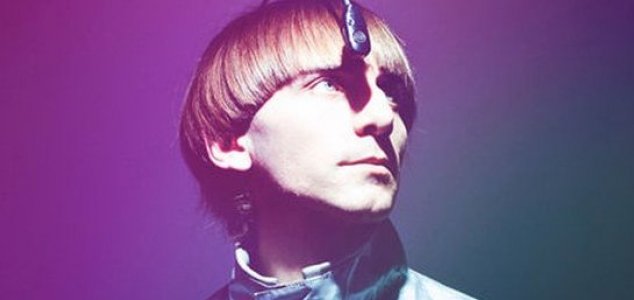
This is Neil Harbisson. He isn’t just a guy wearing a weird headpiece. He is the world’s first legally recognized cyborg. And what he has done to his body isn’t just a medical procedure; it is a rewriting of what it means to be human.
The Boy Who Lived in Greyscale
Imagine waking up every single day in a 1940s noir film. No reds. No blues. No vibrant greens. Just endless shades of grey, black, and white. This was Neil Harbisson’s reality from the moment he took his first breath. He was born with a rare, extreme form of colorblindness called achromatopsia.
For most of us, color is an emotional language. We stop at red lights. We feel calm looking at a blue ocean. We know a banana is ripe when it turns yellow. For Neil, these were just abstract concepts. He was locked out of a sensory experience that 99.9% of the human population takes for granted. But here is where the story takes a sharp left turn into the “Wait, what?” territory.
Neil didn’t want to “fix” his eyes. He didn’t want to see like you and me. He realized that the human eye is actually pretty pathetic. We only see a tiny, laughable sliver of the light spectrum. Why limit yourself to biology when technology can blow the doors off the hinges?
He didn’t just want to see color. He wanted to hear it.
The Underground Surgery That Changed History
This is where things get gritty. You might think, “Oh, he just went to a hospital and got an implant.” Absolutely not. Doctors looked at Neil like he was insane. Bioethics committees slammed the door in his face. No licensed surgeon in their right mind was going to drill a hole into a healthy man’s skull to implant a device that hangs over his face like an anglerfish.
They said it was too dangerous. They said the brain would reject it. They said he was trying to play God.
So, what did Neil do? He went rogue. He found a doctor willing to do the surgery anonymously. Underground. Off the books. This is the cyberpunk reality we are living in right now. The surgery involved osseointegration—fusing metal directly into the bone. The antenna isn’t just stuck on his head; it is anchored deep inside his occipital bone.
Harbisson hacked his own body. He rejected the limitations of nature and installed an upgrade.
How to Hear a Salad: The Mechanics of the Cyborg
Let’s break down how this actually works, because it sounds like magic, but it’s pure, hard physics. The “Eyeborg” antenna detects light frequencies in front of him. It sends those frequencies to a chip implanted in the back of his head.
Here is the mind-bending part: The chip vibrates his skull.
These vibrations travel through his bone structure directly to his inner ear. He isn’t hearing the colors through his ears like you hear music on the radio. He is hearing the colors inside his head through bone conduction. It is a new sense. A completely new input channel that no other human being in history has ever experienced.
- Red sounds like the lowest note, a deep, heavy tone.
- Violet is high-pitched, almost screeching.
- Blue is steady, calm, somewhere in the middle.
For the first few months, it was pure chaos. Imagine walking down a supermarket aisle and being bombarded by a symphony of screaming noises because the cereal boxes are too loud. He had headaches. He couldn’t sleep. His brain was under siege by a constant stream of data it didn’t know how to process.
But then, something incredible happened. The brain, that squishy, mysterious computer, adapted. Neuroplasticity kicked in. The constant noise became background hum. The notes became feelings. Neil stopped trying to memorize what note went with what color. He just felt it.
Within three years, Harbisson had managed to completely memorize the sounds associated with every single color. But he didn’t stop there. He pushed past the limits of human biology.
Superhuman Senses: Seeing the Invisible
This is where the “transhumanism” conspiracy theorists start to sweat. Once you have an antenna that translates light into sound, why stop at the visible spectrum? Human eyes are garbage compared to the rest of the animal kingdom. Birds see patterns on flowers we can’t imagine. Snakes sense heat. Neil decided he wanted in on that action.
He upgraded his software. Now, Neil Harbisson can perceive Infrared and Ultraviolet light.
Think about the implications of that. If he looks at a bank security camera, he can hear the infrared sensors active. If he walks outside on a cloudy day, he can hear the high-pitched whine of UV rays that are dangerous to the skin, telling him the sun is still strong even if he can’t see it. He has senses that evolution did not give us. He is literally sensing things that are invisible to you.
The Government Panic and the Passport Photo
If you think the government was cool with this, think again. When Neil went to renew his passport, the UK passport office rejected his photo. Their rules are strict: no electronic equipment, no hats, nothing obscuring the head.
Neil fought back. He argued that the antenna wasn’t a “device.” It wasn’t a Bluetooth headset he could take off. It was an organ. It was a part of his body, just like his nose or his ears. He argued that removing it would be an amputation.
After weeks of back-and-forth correspondence, the bureaucracy blinked. They accepted the photo. In doing so, the government officially recognized him as a cyborg. This was a legal precedent that flew under the radar for most people, but it changed everything. It acknowledged that technology can be a biological part of a human being.
The Art of Noise: Painting with Mozart
Neil’s condition has led to some of the most bizarre art projects the world has ever seen. Since he hears colors, he can also do the reverse: he can paint sounds. He listens to speeches, music, or even police sirens, and translates them onto a canvas.
He painted Mozart’s “Queen of the Night” aria. To us, it’s music. To him, it’s a specific arrangement of colored stripes. He can look at a face and “hear” the person. Someone with blue eyes, red lips, and pale skin creates a specific chord. He says some of the most beautiful people look “terrible” to him because their sound chords are discordant and ugly. Conversely, someone who might not be traditionally attractive might sound like a beautiful symphony.
He even connects to the internet. Yes, you read that right. Friends can send colors directly to his head from their smartphones. He could be washing dishes in London while a friend in Australia beams the color of a sunset directly into his skull. He is a walking, breathing Wi-Fi hotspot of sensory data.
The Transhumanist Agenda: Are We Next?
Harbisson isn’t just a quirky artist; he is the poster child for the Transhumanism Movement. This is the philosophy that humanity is not the final product. We are just a work in progress. The goal is to merge with technology to eliminate aging, weakness, and sensory limitations.
Critics call it dangerous. They say we are losing our souls. But look at your hand right now. You are probably holding a smartphone. You panic when you lose it. You outsource your memory to Google. You outsource your sense of direction to GPS. Are we really that different from Neil? He just had the guts to put the phone inside his head.
In the future, he hopes to adapt and improve the technology used in his antenna so that it can translate other things, such as the taste of food on a plate, into sound as well. Imagine eating a steak and hearing a cello solo. Imagine biting into a lemon and hearing a high-pitched scream.
The Darker Questions
We have to ask the scary questions. If Neil can connect to the internet, can he be hacked? Could someone beam a sound into his head that drives him crazy? Could a government agency track his location through his own skull?
As we move toward a world of Neuralink (thanks, Elon) and brain-computer interfaces, Neil Harbisson is the canary in the coal mine. He is showing us the possibilities, but also the strange, alien reality of post-human life. What happens when the rich can afford to buy “better” senses than the poor? What happens when you can pay to see in the dark, or hear whispers from a mile away?
We are standing on the edge of a cliff. Neil jumped off years ago and built wings on the way down.
The Final Verdict
Whether implants of this kind will ever become commonplace remains to be seen. But the door is open. It cannot be shut. We have blurred the line between biology and engineering. Neil Harbisson hears the world in a way we can’t even comprehend. He is living in the future while the rest of us are stuck in the past, relying on eyes that haven’t had a software update in 200,000 years.
The question isn’t whether you will become a cyborg. The question is: when?
Originally posted 2016-05-04 21:48:06. Republished by Blog Post Promoter

Arindam loves aliens, mysteries and pursing his interest in the area of hacking as a technical writer at ‘Planet wank’. You can catch him at his social profiles anytime.