The Director Who Became a Deep-Sea Detective
Stop scrolling for a second. Close your eyes. Imagine the absolute, crushing darkness of the ocean floor. We are talking about a place where sunlight has not touched for a hundred years. It is cold. It is deadly. And it is filled with ghosts.
Most people know James Cameron as the guy who makes billion-dollar movies with blue aliens. But let’s get real. The man is an obsession machine. He didn’t just make a movie about the Titanic because he liked the love story. He made the movie so the studio would pay for him to go down there and look at the wreck himself. That is dedication. That is madness.
But the story doesn’t end with Jack and Rose. It doesn’t even end with the Titanic. Cameron returned to the abyss, not just to look at the luxury liner again, but to hunt down an even darker, more violent secret: The DKM Bismarck. This wasn’t a tragedy of hubris; this was a crime scene. A massive steel grave from World War II sitting three miles down.
We are going to crack this open. We are going to look at the “Last Mysteries” of the Titanic and then pivot to the high-stakes forensic investigation of the Bismarck. Was history written by the victors, or did the ocean keep the real score? Let’s find out.
Part I: The Ghosts of the Titanic
We all think we know the story. Iceberg. Unsinkable. Band plays on. Down she goes. But if you think that’s all there is to it, you haven’t been paying attention to the modern forensic data. Cameron’s documentary, Last Mysteries of the Titanic, wasn’t just a sightseeing tour. It was a mission to penetrate the ship deeper than anyone had dared since 1912.
The Bots That Went Where Humans Can’t
You can’t just swim into the Titanic. The pressure down there is 6,000 pounds per square inch. It will turn a human being into jelly in a nanosecond. So, Cameron built bots. Little remote-operated vehicles (ROVs) named Elwood and Jake. These weren’t clunky machines; they were tethers to the past.
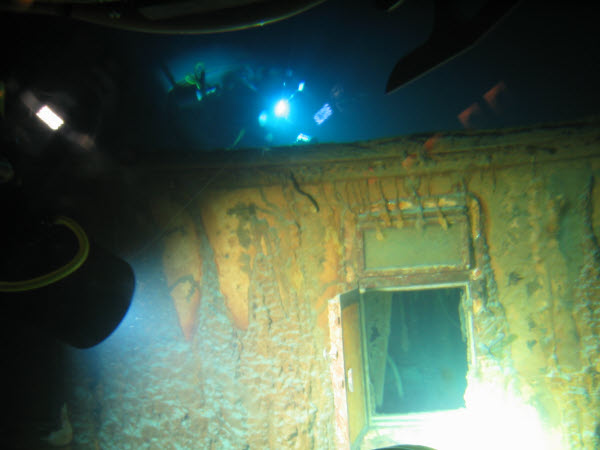
Watching the footage from these dives is haunting. It’s not just rusty metal. They went into the Marconi room—the radio room. This is where the desperate SOS calls were tapped out. Dit-dit-dit-dah-dah-dah. You can almost hear the panic. They maneuvered these tiny robots through collapsed corridors and into the Turkish Baths. And this is where it gets weird.
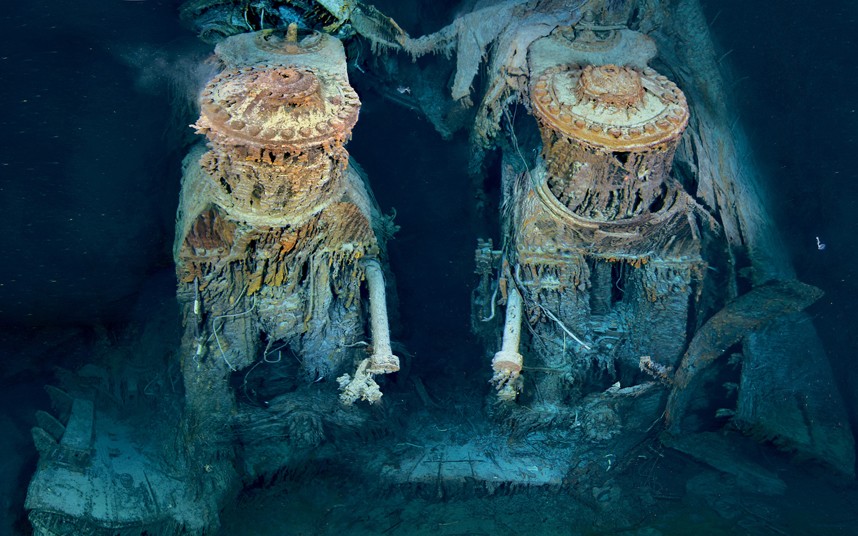
The tiles. The intricate teak wood. Some of it is perfectly preserved. The bacteria that eats the steel hull—the Halomonas titanicae—hasn’t devoured everything yet. It’s a time capsule waiting for the roof to cave in. Seeing a pristine light fixture deep inside a crushed wreck messes with your head. It looks like someone could just flip a switch and turn it back on.
The “Coal Fire” Theory: Was She Doomed Before She Left Port?
Here is a theory that has been blowing up on the forums lately. Some researchers argue that the iceberg was just the final blow. The real killer? A massive coal bunker fire that had been raging inside the Titanic before she even left Southampton.
Look at the photos of the ship leaving port. Some eagle-eyed historians spotted dark smudges on the hull, right where the iceberg eventually hit. Fire weakens steel. If that steel was superheated for days, it became brittle. When the ice brushed against it? Crack. Zipper effect. The “Unsinkable” ship had a glass jaw.
Cameron’s explorations help us look at the damage in a new way. He wasn’t just looking for jewelry; he was looking for structural failure points. The forensics of the break-up—how the stern ripped away from the bow—tell a story of catastrophic stress.

Part II: The Beast of the Atlantic
Now, we shift gears. Leave the luxury and the violins behind. We are moving to 1941. The North Atlantic is a war zone. And there is a monster loose in the water.
Expedition: Bismarck is the documentary where Cameron stopped being just a filmmaker and became a full-blown historian. The film, narrated by the legendary Lance Henriksen (yes, Bishop from Aliens), takes us to a wreck that is even deeper than the Titanic. We are talking 16,000 feet down. That is three miles of vertical black water.
The Weapon That Terrified Churchill
You have to understand the fear. The German battleship Bismarck was the Death Star of its day. It was the largest war vessel ever built at that time. It was fast. It was heavily armored. And it had guns that could lob a car-sized shell over the horizon.
In May 1941, it slipped into the Atlantic to starve Britain by sinking supply convoys. The British Royal Navy sent their pride and joy, the HMS Hood, to stop it. The battle lasted minutes. One salvo from the Bismarck hit the Hood. A pillar of fire shot into the sky. The Hood snapped in half. Out of 1,418 men, only three survived. Three.
Winston Churchill went cold. He issued a command that became legend: “Sink the Bismarck.”
The Great Chase
What followed was one of the most insane chases in naval history. Every available British ship was diverted. They hunted this beast through storms and fog. It was a pack of wolves chasing a tiger. Finally, a lucky torpedo from an obsolete biplane (a Swordfish) jammed the Bismarck’s rudder. The monster was stuck swimming in circles.
The British battleships Rodney and King George V closed in. They didn’t just want to sink her; they wanted revenge. They pounded the Bismarck for hours. Point-blank range. Hundreds of shells. The superstructure was turned into Swiss cheese. But—and here is the mystery—the ship wouldn’t sink.
Part III: Who Killed the Bismarck?
This is where Cameron’s documentary gets controversial. This is the debate that makes historians scream at each other in conference rooms.
The British Narrative: “We blasted it to pieces. We sank the pride of Hitler’s fleet.”
The German Narrative: “You destroyed the guns, but you couldn’t sink the ship. We opened the seacocks. We scuttled her. We chose when she went down.”
Who is lying? Who is telling the truth? This matters. It’s about pride. It’s about engineering.
The Forensic Dive
Cameron went down there to settle the bet. He brought survivors with him—men who were actually on the ship in 1941. Can you imagine that? Being an old man, looking at a screen, and seeing the steel coffin where your friends died 60 years ago? It is heavy stuff.
Using the Mir submersibles, Cameron scanned the hull. The clarity of the high-definition footage was revolutionary for 2002. They inspected the armor belt. They looked for torpedo damage.
The Verdict
Here is what they found: The hull is surprisingly intact. The British torpedoes? They barely scratched the paint on the main armor belt. The “unsinkable” German engineering actually held up against the torpedoes. The massive shellfire destroyed everything above the water line, turning the decks into a slaughterhouse, but the ship’s belly was tight.
Cameron’s team found evidence that strongly supports the German survivors’ story. It looks like the Germans, realizing the ship was a burning wreck with no guns left, detonated charges and opened the valves to let the ocean in. They denied the British the satisfaction of the kill shot.
So, was she sunk? Yes. But she was scuttled too. The British battered her into submission, but the Germans pulled the plug.
The 16,000-Foot Danger Zone
Let’s take a moment to appreciate the insanity of the dive itself. In the blog post, it mentions the crew risked their lives. That is an understatement. At 16,000 feet, if a window cracks, you don’t drown. You implode. You cease to exist in a fraction of a second. It is faster than your brain can process pain.
During the filming, they had tech failures. Cables snagged. Batteries died. The ocean does not want you down there. It fights back. Cameron’s team had to use “revolutionary production techniques” just to get a light to turn on at that depth. They illuminated a world that was meant to be dark forever.
Why Does This Still Matter?
Why are we still talking about rusty metal on the sea floor?
Because these aren’t just ships. They are warnings. The Titanic is a warning about arrogance—thinking we are masters of nature. The Bismarck is a warning about war—the technological perfection of a killing machine that ends up as a tomb for 2,000 boys.
The footage Cameron captured is the closest thing to time travel we have. When you see the boots lying on the sea floor near the Titanic—where the body has long since dissolved, but the tanned leather remains—it hits you. That was a person. When you see the open guns of the Bismarck, frozen in their final firing position, you feel the heat of battle.
Modern Theories and the Future
The internet is buzzing with new ideas. Was there a cover-up regarding the cargo of the Titanic? Did the Bismarck carry secret tech? As we get better sonar and better AI to analyze the scan data, we aren’t running out of mysteries. We are finding new ones.
James Cameron might be done diving (or maybe not, the guy is unpredictable), but the ocean floor is still waiting. There are millions of shipwrecks down there. Millions of stories. Titanic and Bismarck are just the two loudest voices in the choir of the dead.
So next time you watch the movie, remember: The real story is deeper, darker, and much more complicated. The ocean keeps its secrets well, but sometimes, if you have enough light and enough nerve, you can force it to give up a few answers.
What do you think? Was the Bismarck scuttled, or did the Royal Navy earn the kill? And does the “Coal Fire” theory change how you see the Titanic disaster? Drop a comment below and let’s argue history.
Originally posted 2016-03-15 16:27:55. Republished by Blog Post Promoter
![Last-Mysteries-of-the-Titanic[1]](https://coolinterestingnews.com/wp-content/uploads/2012/07/last-mysteries-of-the-titanic1.webp)