The Blueprint for Armageddon: Declassified Plans for World War III
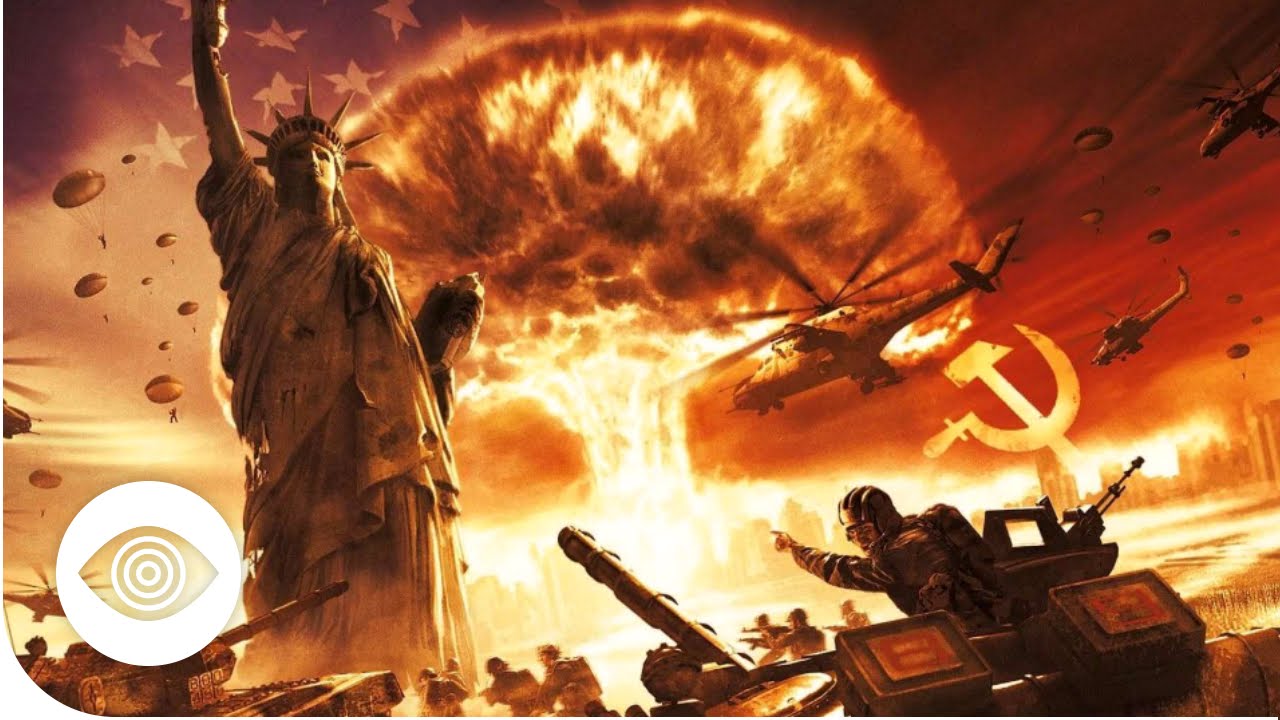
Hit play on that video. Watch the mushroom cloud rise. It’s terrifying, right? But here is the thing that should truly keep you up at night: that isn’t just a clip from a movie. It isn’t a bad dream. For the men running the Pentagon and the Kremlin over the last seventy years, that visual was a Tuesday afternoon planning session.
Most of us walk around believing that World War III is just a fiction. A plot device for video games or dystopian novels. We like to think that our leaders are rational, calm people who would never—ever—push the button unless there was absolutely no other choice. We convince ourselves that the “Mutually Assured Destruction” doctrine kept us safe.
We are wrong.
The truth is much darker. It’s messier. And it’s sitting in dusty filing cabinets in Washington and London, stamped “TOP SECRET” for decades. Military planners haven’t just been thinking about the unthinkable; they have been rehearsing it. They have been writing the scripts for the end of human civilization since the ink was still wet on the surrender treaties of World War II.
These aren’t vague ideas. These are specific, calculated, operational plans. They have names. They have target lists. They have casualty estimates that number in the tens of millions. And some of them came within a hair’s breadth of being executed.
We are going to rip the cover off these declassified files. We are going to look at the specific blueprints drawn up by the US and the UK to obliterate the Soviet Union—and the plans to defend against a Red Dawn invasion of America. This isn’t history class. This is a deep dive into the madness of the military-industrial complex.
Plan Totality (1945): The First Strike
Imagine the year is 1945. The world is cheering. Hitler is dead. Japan has surrendered. The soldiers are coming home, kissing nurses in Times Square. The nightmare is over, right? Wrong.
While the confetti was still being swept off the streets, US General Dwight D. Eisenhower—acting on orders from President Harry S. Truman—was already looking at the next enemy. The Soviet Union. The ally that had just helped crush the Nazis was now the target.
Enter Plan Totality.
This wasn’t a defensive strategy. This was an offensive juggernaut designed to decapitate the Soviet giant before it could even wake up. The Potsdam Conference had just ended. Tensions were simmering. Truman didn’t trust Stalin. Stalin didn’t trust anyone.
The Target List: 20 Cities Marked for Death
Plan Totality was simple. Brutal. Efficient. The US was the only country with the Atomic Bomb at this point. We felt invincible. The plan envisioned a massive, surprise nuclear attack using 20 to 30 atomic bombs.
They didn’t just pick military bases. They picked population centers. They earmarked 20 Soviet cities for total obliteration in a first strike. Look at this list. Really look at it. These aren’t just dots on a map. These were homes to millions of people.
- Moscow: The head of the snake. Gone.
- Leningrad: The cultural heart. Vaporized.
- Gorki, Kuybyshev, Sverdlovsk: Industrial hubs turned to ash.
- Novosibirsk, Omsk, Saratov, Kazan: Wiped off the map.
- Baku: The oil fields. Burning for years.
- Tashkent, Chelyabinsk, Nizhny Tagil, Magnitogorsk: Steel and iron works melted.
- Molotov, Tbilisi, Stalinsk, Grozny, Irkutsk, and Yaroslavl: Targeted for extinction.
The scary part? This wasn’t about winning a long war. It was about “shock and awe” decades before that phrase was invented. The plan assumed that if you hit Russia this hard, this fast, the state would collapse instantly. No long campaigns. No trenches. Just fire and silence.
Deep Dive: The “What If” Scenario
What if Truman had given the order? It’s a terrifying thought experiment. In late 1945, the Soviet air defenses were practically non-existent against high-altitude American bombers. The B-29s would likely have gotten through.
The result? History changes instantly. The Cold War never happens. Instead, we get a unilateral nuclear holocaust. The Soviet Union collapses, but the radioactive fallout drifts over Europe. The US becomes an undisputed global empire, ruling through sheer terror. But the moral cost? The United States would have gone down in history not as the liberator of WWII, but as the butcher of the 20th century.
Operation Unthinkable: Churchill’s Madness
If you thought the Americans were aggressive, wait until you hear about Winston Churchill. The British Prime Minister is often remembered as the bulldog who held the line against Hitler. But by 1945, he was obsessed with a new threat: The Red Army.
Soviet forces were massive. They occupied half of Europe. Stalin was unpredictable. Churchill looked at the map and panicked. He believed that if the West didn’t act immediately, the Soviets would roll all the way to the Atlantic Ocean. He wanted to push them back. By force.
In April and May of 1945—literally days before and after the German surrender—British Armed Forces developed Operation Unthinkable.
The name fits. It was truly insane. It is widely considered the very first scenario for World War III.
The Goal: “Impose Will”
The stated primary goal of the operation was chilling in its imperial ambition: “to impose upon Russia the will of the United States and the British Empire.”
This wasn’t containment. This was aggression. The plan called for a massive surprise attack on Soviet forces in Germany. The date was set: July 1, 1945. Think about that. The war in Europe ended in May. Churchill wanted to start the next one in July.
The plan relied on using American and British troops, but here is the kicker: it also suggested re-arming 100,000 captured German soldiers (the Wehrmacht) and sending them back into battle against the Russians. Imagine the optics. Fighting alongside Nazis against your former ally, less than two months after V-E Day.
Why It Failed
The British Chiefs of Staff Committee took one look at Churchill’s plan and essentially said, “Are you out of your mind?”
They ran the numbers. The Soviet Army outnumbered the Allied forces in Europe by a ratio of roughly 4 to 1 in terms of infantry and 2 to 1 in armor. The Red Army was battle-hardened, ruthless, and sitting on a massive supply line. The British generals concluded that the plan was “militarily unfeasible.”
If they had tried it? It would have been a slaughter. The Soviets likely would have overrun all of continental Europe. France, the Netherlands, Belgium—all would have fallen under the Iron Curtain. Britain would have been isolated, facing a Soviet super-state stretching from Vladivostok to Calais.

Exercise Swarmer (1950): The Invasion of America
Fast forward five years. 1950. The paranoia has shifted. The Soviets detonated their first nuke in 1949, ending the American monopoly. Suddenly, the Pentagon wasn’t just planning to bomb Russia; they were terrified that Russia was coming here.
Enter Exercise Swarmer.
This massive war game took place in North Carolina. It wasn’t just a few guys with maps. It was a colossal field operation designed to simulate an invasion of the continental United States. The scenario? Enemy forces (the Soviets) had landed on American soil. They had seized territory.
The goal of Swarmer was to test a radical new concept: the “Airhead.” Instead of a beachhead (like D-Day), the US forces would counterattack entirely from the sky.
Logistics of Fear
The scale of this exercise proved just how scared the military brass really was. They believed the Atlantic Ocean wasn’t a big enough moat anymore.
- The Fleet: Over 600 transport and fighter aircraft were mobilized.
- The Troopers: A massive airdrop involving 3,900 paratroopers from the legendary 82nd Airborne Division and the 11th Airborne Division.
- The Mission: Fly behind the “enemy lines” (inside the US), drop heavy equipment, seize an airfield, and cut off the invaders’ supply chains.
This exercise changed the way the US military thought about mobility. It proved that you could move an entire army by air. But the subtext was clear: The war is coming home. Get ready to fight in your own backyard. It was Red Dawn thirty years before the movie came out.
Operation Dropshot: The Apocalypse Protocol
Now we get to the big one. The most detailed, terrifying, and comprehensive plan for World War III ever declassified. Operation Dropshot.
Developed in the late 1940s and finalized around 1957, Dropshot was the US contingency plan for a total nuclear and conventional war with the Soviet Union across Western Europe and Asia. If you want to know what the end of the world looks like on paper, this is it.
The Stats of Destruction
At this time, the US nuclear arsenal was still growing. We didn’t have ICBMs (Intercontinental Ballistic Missiles) capable of hitting Moscow from a silo in North Dakota yet. We relied on bombers. The B-36 Peacemaker. The B-47 Stratojet.
Dropshot included specific mission profiles that read like a death wish for the planet:
- The Arsenal: 300 nuclear bombs.
- The Conventional Load: 29,000 high-explosive bombs.
- The Targets: 200 specific sites located in 100 Soviet cities and towns.
- The Objective: To wipe out 85% of the Soviet Union’s industrial potential in a “single stroke.”
Let that sink in. A single stroke. One day. One hour. Three hundred nukes raining down. The plan allocated between 75 and 100 of those nuclear weapons solely to destroy Soviet combat aircraft on the ground. The rest? They were for the factories. The power plants. The people.
The Problem of “Accuracy”
Here is where the history gets even darker. Modern missiles can hit a specific window on a building. In the 1950s? Not so much.
This plan was devised before the era of precision guided munitions. It was also created before Defense Secretary Robert McNamara and President Kennedy shifted the US nuclear strategy to “counterforce” (targeting military bases). At the time of Dropshot, the strategy was “countervalue.” That is military-speak for “City Killing.”
Nuclear weapons at this time were blunt instruments. If you wanted to take out a naval base, you couldn’t just hit the docks. You had to drop a megaton bomb that would vaporize the base and the city of 500,000 people living next to it. The planners knew this. They accepted it.
The aim was explicitly to destroy the enemy’s industrial capacity. To cripple their war economy so thoroughly that they would be eating rats in the rubble for fifty years. It was a plan for genocide in the name of defense.
Modern Resonance: Are the Plans Still There?
You might be reading this thinking, “Well, that was the 1950s. Things are different now.” Are they?
Today, we have OPLANs (Operational Plans) that are far more sophisticated, involving cyber warfare, hypersonic missiles, and space-based weaponry. But the core principle remains. Somewhere in the Pentagon, there is a modern version of Dropshot. There is a file that details exactly which targets in Beijing, Moscow, and Tehran would be hit first.
The technology has changed. The speed has increased. But the willingness to flip the board over and end the game? That hasn’t gone anywhere.

The Uncomfortable Truth
These documents—Totality, Unthinkable, Swarmer, Dropshot—are proof. They prove that the “unthinkable” was actually thought about quite a lot. Men in suits sat in air-conditioned rooms, drank coffee, and drew lines on maps that represented the deaths of millions.
We avoided these scenarios by luck, by diplomacy, and by fear. But as global tensions rise again, as the rhetoric heats up in Eastern Europe and the Pacific, it is worth remembering: the plans are already written. The gun is loaded. All it takes is one person to pull the trigger.
Sleep tight.
Originally posted 2015-07-18 18:03:59. Republished by Blog Post Promoter