The world is obsessed with heat. Global warming, rising tides, burning forests—that’s the narrative pumped into our screens 24/7. But what if the real threat is the exact opposite? What if the sun, the very engine of our existence, is about to go quiet? While everyone is looking at the thermostat going up, a group of frantic astrophysicists is warning us that the mercury is about to crash. Hard.
We aren’t talking about a chilly winter. We are talking about a civilization-altering freeze.
The 2030s: A Decade of Ice?
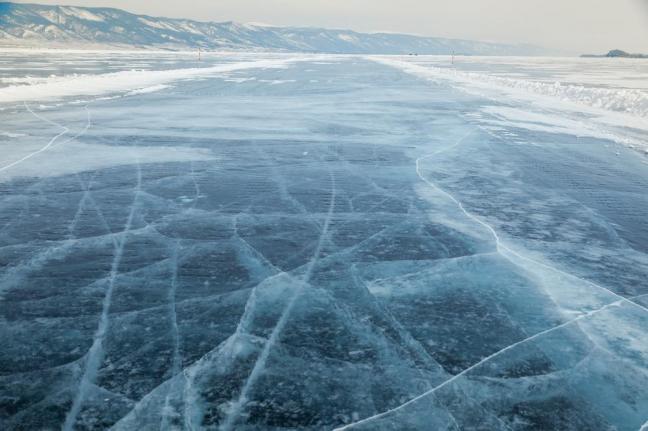
Temperatures could drop substantially by the 2030s. That isn’t a guess. That isn’t a wild theory from a doomsday prepper in a bunker. That is math. Cold, hard, terrifying math. Scientists have calculated that much of the planet could soon be plunged into a decade-long cold spell that could rewrite modern history.
Imagine waking up in June to frost on your windows. Imagine crop failures across the breadbaskets of the world because the growing season was cut short by two months. This is the scenario researchers at the University of Northumbria are looking at. They’ve built a new solar activity model, and they claim it predicts temperature changes with “unprecedented accuracy.”
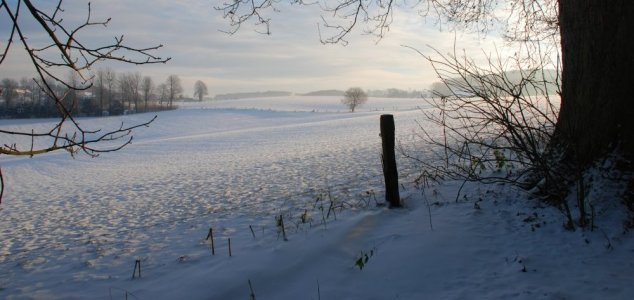
The northern hemisphere could soon find itself plummeting into a period of bitter winters not seen for centuries. We are standing on the edge of a precipice, and nobody seems to be looking down.
The Heartbeat of the Sun is Skipping
To understand why this is happening, you have to stop thinking of the sun as a steady lightbulb. It’s not. It’s a violent, magnetic beast with a heartbeat. This heartbeat drives the solar cycles, usually lasting about 11 years, swinging between high activity (solar maximum) and low activity (solar minimum).
But something is wrong with the beat.
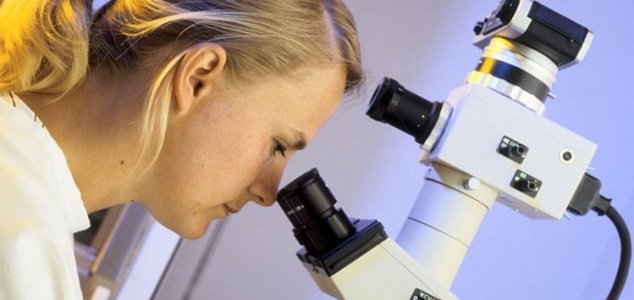
Professor Valentina Zharkova and her team at Northumbria University pulled back the curtain on the sun’s interior. What they found was startling. It wasn’t just one magnetic wave driving the sun’s cycles. It was two.
“We found magnetic wave components appearing in pairs, originating in two different layers in the sun’s interior,” said Prof Zharkova. “They both have a frequency of approximately 11 years, although this frequency is slightly different, and they are offset in time.”
The Double Dynamo Effect
Think of it like two drummers playing a beat. When they are in sync, the noise is loud (high solar activity). But what happens when they fall out of rhythm? What happens when one hits the snare just as the other hits the bass, cancelling each other out?
Silence.
This is what Zharkova’s team calls the “double dynamo” effect. These magnetic waves are fluid movements deep inside the star. Sometimes they amplify each other. But right now? They are moving out of phase. They are drifting apart.
“Over the cycle, the waves fluctuate between the northern and southern hemispheres of the Sun. Combining both waves together and comparing to real data for the current solar cycle, we found that our predictions showed an accuracy of 97 per cent,” Zharkova explained.
Ninety-seven percent. In the world of astrophysics, that isn’t a margin of error. That is a bullseye. If their model holds true, these two waves are about to cancel each other out completely in the 2030s, leading to a phenomenon known as a “Maunder Minimum.”
The Ghost of 1645: The Last Big Freeze
We have been here before. This isn’t theoretical sci-fi; it is recorded history. The last time these magnetic waves went to war with each other and cancelled out, the world entered a period of darkness and cold that lasted for 70 years.
From 1645 to 1715, the sun essentially went to sleep. This era is known as the Maunder Minimum. If you look at sunspot records from that time, they vanish. The face of the sun was blank.
On Earth, the consequences were immediate and brutal.
When the Thames Froze Solid
It caused winters so cold that the River Thames famously froze over for weeks at a time. This wasn’t a thin sheet of ice. This was thick, structural ice. Londoners didn’t just walk across it; they lived on it. Famous “Frost Fairs” were held on the ice. They set up pubs, shops, and bowling alleys right in the middle of the river.
It sounds fun, right? A winter carnival?
Wrong. Outside of the fairs, it was a nightmare. The “Little Ice Age,” as it is often associated, brought famine. Crops rotted in the ground. Livestock froze where they stood. In France, the wine froze in the king’s glasses. In Scandinavia, entire villages were abandoned as the glaciers advanced, crushing farmhouses in slow motion.
People starved. Governments collapsed. The cold didn’t just make you shiver; it broke civilizations.
The Modern Nightmare: What Happens in 2030?
Now, fast forward to today. We like to think we are invincible. We have iPhones, central heating, and global supply chains. We think we can handle a little cold. But can we?
Our entire modern world is built on the assumption of a stable, warm climate. Our agriculture is optimized for specific growing zones. If those zones shift south by 500 miles, the global food supply chain snaps. Wheat doesn’t grow in permafrost.
The Grid Down Scenario
Think about the power grid. When a freak winter storm hit Texas recently, the grid failed. People froze to death in their homes in one of the most advanced nations on Earth. Now imagine that storm doesn’t last for three days, but for three months. Imagine it happens every winter for ten years.
Solar panels? Useless under three feet of snow and a dim sun. Wind turbines? Frozen solid. We are more vulnerable now than the peasants of 1645 because we are completely dependent on fragile technology.
The Science of “The Quiet Sun”
The mechanism behind this impending freeze is fascinating and terrifying. These miniature ice ages are brought about by fluid movements in the sun and occur when those two prominent waves cancel each other out. It’s destructive interference on a stellar scale.
Zharkova’s model predicts that during the 2030s (Solar Cycle 26), the two waves will mirror each other exactly. One will peak in the northern hemisphere while the other peaks in the southern hemisphere. They will be exact opposites.
The result? A drastic reduction in solar magnetic activity. Sunspots could disappear entirely for years. Solar flares would stop. The solar wind would calm down.
The Cosmic Ray Connection
Here is where it gets even more interesting—and where many internet theorists are connecting the dots. When the sun’s magnetic shield weakens (which happens during a Grand Solar Minimum), more cosmic rays from deep space hit the Earth.
Why does that matter? Some controversial theories suggest that cosmic rays act as seeds for cloud formation. More cosmic rays mean more clouds. More clouds mean more sunlight is reflected back into space before it hits the ground. This creates a feedback loop that accelerates the cooling.
It’s a double whammy: The sun puts out less energy, and the Earth reflects more of it away.
The Great Silence: Why Isn’t This Front Page News?
You might be asking yourself: “If there is a 97% chance of a mini ice age in less than a decade, why is nobody talking about it?”
That is the million-dollar question.
The mainstream scientific community is hesitant. They argue that human-driven warming is so powerful it will cancel out any solar cooling. They say the Maunder Minimum only caused a regional cooling in Europe, not a global one. They are banking everything on the idea that CO2 is the only control knob on the climate.
But the sun is the battery of our solar system. If the battery fades, the machine slows down. It doesn’t matter how much insulation you have (CO2) if the heater (the Sun) turns off.
Professor Zharkova has faced pushback. Her papers have been debated, analyzed, and argued over. But the data remains. The mathematical symmetry of the solar cycles she discovered is hard to dismiss.
Preparing for the Cold Truth
Whether the drop is 1 degree or 5 degrees, the disruption will be massive. History tells us that cooling periods are times of strife, revolution, and hunger. Warm periods are times of abundance and expansion.
We are potentially walking into a time of contraction.
So, while the world prepares for heatwaves, maybe it’s time to buy a warm coat. Maybe it’s time to learn how to grow food in a greenhouse. Because if the University of Northumbria team is right, the 2030s aren’t going to be a time of beaches and sunscreen.
They are going to be a time of ice.
The sun is changing. The magnetic heartbeat is skipping. And down here on Earth, we are just waiting for the temperature to drop.
Originally posted 2015-11-18 10:19:06. Republished by Blog Post Promoter

Arindam loves aliens, mysteries and pursing his interest in the area of hacking as a technical writer at ‘Planet wank’. You can catch him at his social profiles anytime.