Home Films & Documentaries How Dangerous Is North Korea?

How Dangerous Is North Korea?

18
79

The Hermit Kingdom’s Hidden Teeth: Is North Korea a Paper Tiger or a Global Nightmare?

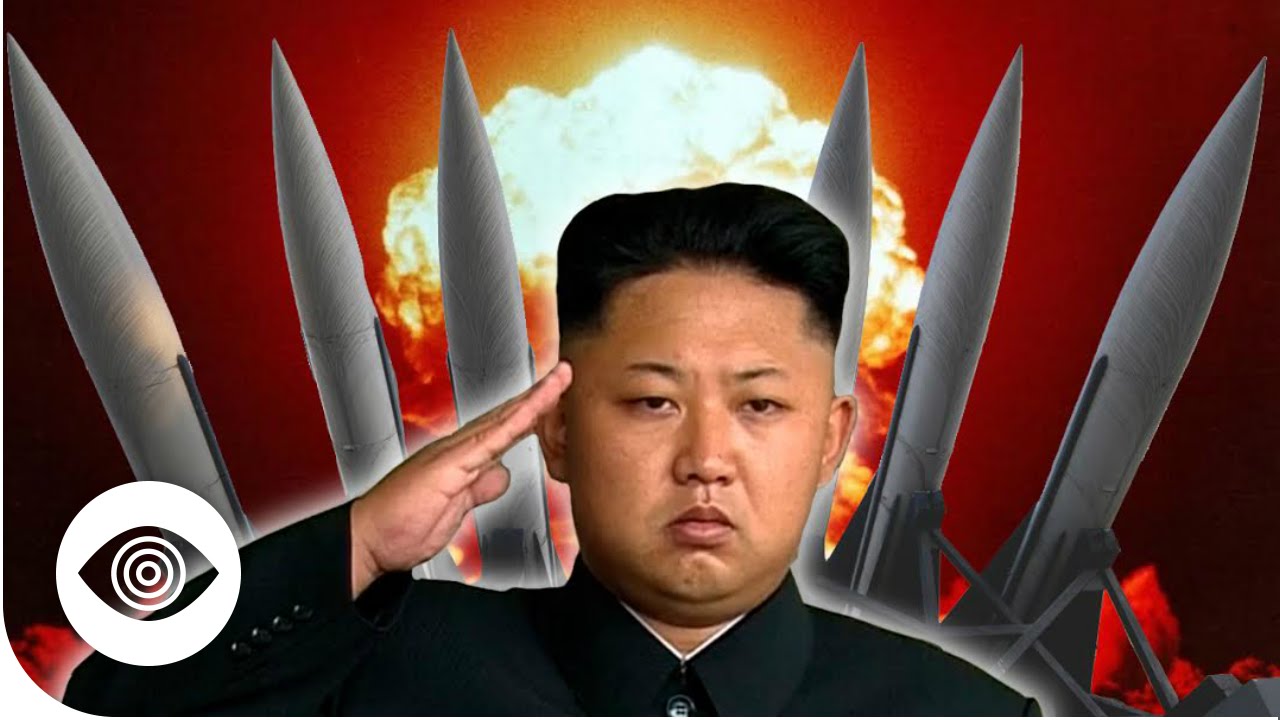
Flick on the news. You’ve seen it. Thousands of soldiers marching in perfect, chilling synchronicity. Goose-stepping automatons. Trucks groan under the weight of missiles so enormous they look like props from a science fiction movie. A stern, unsmiling leader watches from a balcony, clapping methodically. This is the Democratic People’s Republic of Korea. North Korea.

It’s the image they want you to see. An image of absolute power. Unquestioning loyalty. Terrifying strength. And for decades, the world has asked the same question, a question that whispers in the halls of the Pentagon and keeps strategists in Seoul awake at night.

Is any of it real?

Are we looking at a genuine superpower-in-waiting, a rogue state with the power to burn cities to the ground? Or is it all a grand, desperate bluff? A carefully constructed piece of theater designed to keep a starving, crumbling regime from collapsing under its own weight. The truth is far stranger, and far more dangerous, than you can imagine. We’re told one story, but the shadows tell another. Today, we peel back the propaganda and look at the terrifying reality of North Korea’s military machine.

The Cult of Kim: Forging a Million-Man Army

You can’t begin to understand North Korea’s military without first understanding the bizarre, all-encompassing ideology that fuels it. It’s called Juche. The official translation is “self-reliance.” But it’s so much more than that. It’s a quasi-religious state doctrine that places the Kim family at the center of the universe.

It started with Kim Il-sung, the “Eternal President,” a guerilla fighter who became a god in his own country. He wasn’t just a leader; he was the sun. His son, Kim Jong-il, the “Dear Leader,” continued the legacy, a reclusive figure who reportedly invented the hamburger and never once used a toilet. And now, his grandson, the Swiss-educated, basketball-loving Kim Jong-un, the “Supreme Leader,” holds the reins.

Think about that. Three generations. An absolute monarchy disguised as a communist state. Every song, every movie, every school lesson reinforces their divinity. Citizens wear pins with their faces over their hearts. They are taught that the Kims can bend the weather to their will. This isn’t just politics. It’s a cult on a national scale. And what does every cult need? Fanatical followers willing to die for the cause. That’s where the Korean People’s Army (KPA) comes in.

A Nation in Uniform

On paper, the KPA is one of the largest fighting forces on Earth. With over 1.2 million active personnel and another 6 million in reserve, North Korea has more people in uniform than the entire population of New Zealand. One out of every 25 citizens is an active-duty soldier. Let that sink in. It’s a society perpetually on a war footing.

Why? The official reason is the constant, existential threat from the United States and its “puppet,” South Korea. The armistice that ended the Korean War in 1953 was just that—a pause. A ceasefire. The war never officially ended. From the moment they are born, North Koreans are told that the enemy is at the gate, and only the Supreme Leader and his mighty army can protect them.

The DMZ: A Tripwire to Armageddon

Nowhere is this tension more real than at the Demilitarized Zone, the DMZ. It is the most heavily fortified border on the planet. A 160-mile-long, 2.5-mile-wide scar across the Korean peninsula, bristling with landmines, tank traps, electric fences, and soldiers staring each other down, fingers on triggers, 24 hours a day.

But the real threat isn’t what you can see on the surface. It’s what’s pointed at Seoul. The South Korean capital, a glittering metropolis of 10 million people, is only 35 miles from the DMZ. North Korea has thousands of artillery pieces, thousands of them, dug into the mountainsides along the border. We’re talking about a terrifying concentration of conventional firepower. Koksan self-propelled guns. Multiple rocket launchers. Weapons capable of firing a storm of high explosives, and something far worse.

Military simulations are chilling. If the order was ever given, North Korea could rain down an estimated 300,000 rounds of artillery on Seoul in the first hour alone. The city would become a sea of fire. The initial casualties would be catastrophic. This is North Korea’s insurance policy. It’s a promise of mutual destruction that keeps everyone guessing.

Deep Dive: The Invasion Tunnels

As if the artillery wasn’t enough, there’s the secret hiding beneath the DMZ. Tunnels. In the 1970s, South Korean patrols began discovering massive tunnels dug by the North, extending deep under the border. These weren’t small foxholes. They were huge, reinforced passageways, large enough to move an estimated 30,000 troops per hour, complete with lighting and railway tracks. Four have been found so far. How many more are there? Defectors have claimed there could be as many as twenty, some pointing directly at strategic locations in Seoul.

The plan is simple and horrifying: while artillery pummels the city from above, tens of thousands of elite special forces soldiers would pour out from under the ground, sowing chaos and confusion far behind enemy lines. It’s a strategy straight out of a nightmare.

Nukes on Parade: Real Threat or Cardboard Cutouts?

For decades, North Korea’s conventional army was its main threat. But the game changed. Radically. They went nuclear.

Against all odds, despite crippling sanctions and international condemnation, this impoverished, isolated nation built the bomb. They conducted their first nuclear test in 2006. It was small, a fizzle by nuclear standards, and many experts laughed it off. They weren’t laughing for long. Test after test followed, each one more powerful than the last. They went from small atomic devices to what they claim was a full-fledged hydrogen bomb.

Then came the missiles. The parade props started flying. Short-range Scuds gave way to medium-range Nodongs. Then came the Musudan, the Hwasong-12, and finally, the big one: the Hwasong-15 and Hwasong-17. Intercontinental Ballistic Missiles. ICBMs.

On paper, these missiles can reach anywhere in the United States. Chicago. Denver. Washington D.C. The parades were no longer just for show. They were a declaration. A threat.

What if the “Propaganda” is Real?

This is where the debate rages in intelligence circles. Skeptics point to the shaky quality of North Korean technology. Their missiles often fail. They question whether the DPRK has mastered the incredibly difficult technology of miniaturizing a nuclear warhead to fit on a missile. They question if that warhead could survive the fiery reentry into the Earth’s atmosphere.

These are valid questions. But asking them is a dangerous gamble. What if they’ve solved it? Recent internet theories, pouring over parade footage and satellite imagery, suggest the mockups are getting more and more sophisticated. The designs are evolving. What if the failures we see are just the public tests, while the successful ones happen in secret? What if they only need one to work? Just one. The day North Korea proves it has a reliable, nuclear-tipped ICBM, the entire world changes. The balance of power shifts on its axis.

Bureau 121: The Keyboard Warriors of the Hermit Kingdom

But not all of North Korea’s weapons are loud and explosive. Some of their most effective are completely silent. In a world run on data, the keyboard can be as mighty as the missile.

Meet Bureau 121. North Korea’s elite cyber warfare unit. A shadowy army of thousands of highly-trained hackers, many hand-picked from a young age and educated in the best universities in Pyongyang before being stationed in clandestine cells around the world, from China to Eastern Europe.

You’ve heard of their work, even if you don’t know their name. Remember the 2014 hack of Sony Pictures? That was them. They crippled a major Hollywood studio in retaliation for a comedy film mocking Kim Jong-un. Remember the 2017 WannaCry ransomware attack? It encrypted hundreds of thousands of computers in 150 countries, crippling Britain’s National Health Service and causing billions in damages. The NSA pointed the finger directly at Pyongyang.

This is classic asymmetric warfare. A country with a GDP smaller than that of Vermont can inflict billions of dollars of damage on its enemies without firing a single shot. They use their hacking skills not just for disruption, but to steal money. Hundreds of millions, maybe billions, have been stolen from banks and cryptocurrency exchanges to fund their weapons programs. It’s a self-sustaining cycle of digital crime and military ambition.

They could target power grids. Water treatment plants. Stock markets. Financial systems. In the next conflict, the first shots fired might not be from a cannon, but from a keyboard.

The Forgotten Horrors: Chemical and Biological Arsenals

There is one more layer to this threat. One that is so ghastly, people often prefer not to think about it. Chemical and biological weapons.

According to U.S. and South Korean intelligence, North Korea possesses the third-largest chemical weapons stockpile on the planet. We’re talking about thousands of tons of deadly agents. Sarin. Tabun. Mustard Gas. And VX, one of the most toxic nerve agents ever created.

Need proof they’re willing to use it? Look no further than the 2017 assassination of Kim Jong-nam, the estranged half-brother of Kim Jong-un. He was killed in broad daylight in a Malaysian airport. The weapon? VX nerve agent, smeared on his face by two women who thought they were part of a prank TV show. It was a brazen, public display of their capabilities and their utter ruthlessness.

Now, imagine that capability weaponized on a massive scale. Those thousands of artillery pieces aimed at Seoul? They aren’t just designed to fire high explosives. They are designed to deliver chemical warheads. It would be a war crime of unimaginable proportions, causing mass panic and death, making entire sections of the city uninhabitable.

The Final Question: Is It All a Desperate Bluff?

So we come back to the central mystery. The paradox of North Korea.

How can a country that can’t reliably feed its own people, a country whose 1970s-era tanks would be obliterated by modern anti-tank missiles, a country whose air force is flying ancient MiGs that would be swatted from the sky, possibly pose a threat to the most advanced militaries in the world?

This is the “Paper Tiger” theory. The idea that everything is for show. The missiles are mockups. The nuclear tests are exaggerated. The army is a hollow shell of starving, brainwashed conscripts. The theory suggests the regime knows it could never win a conventional war. Its only goal is survival. The nukes, the parades, the threats—it’s all a desperate, high-stakes poker game. They are creating the illusion of a madman with his finger on the button, because a madman is unpredictable, and no one wants to call a madman’s bluff when the pot is the fate of the world.

But what if the tiger is real? What if, beneath the rust and the propaganda, there lies a core of fanatical, deadly competence? An army that believes its leader is a god. An arsenal of terrifying, unconventional weapons. A willingness to sacrifice millions of its own people to inflict pain on its enemies.

The greatest danger from North Korea may not be its strength, but its weakness. A cornered animal is the most unpredictable. If the regime felt it was about to collapse, what would it do? Would it lash out in a final, suicidal blaze of glory, taking Seoul and Tokyo with it? This is the question that haunts the world. We don’t know the answer. And that is the most frightening conspiracy of all.

Originally posted 2015-01-10 18:00:18. Republished by Blog Post Promoter