Saturday, June 6, 2026
HomeFilms & DocumentariesDid Obama Create ISIS?

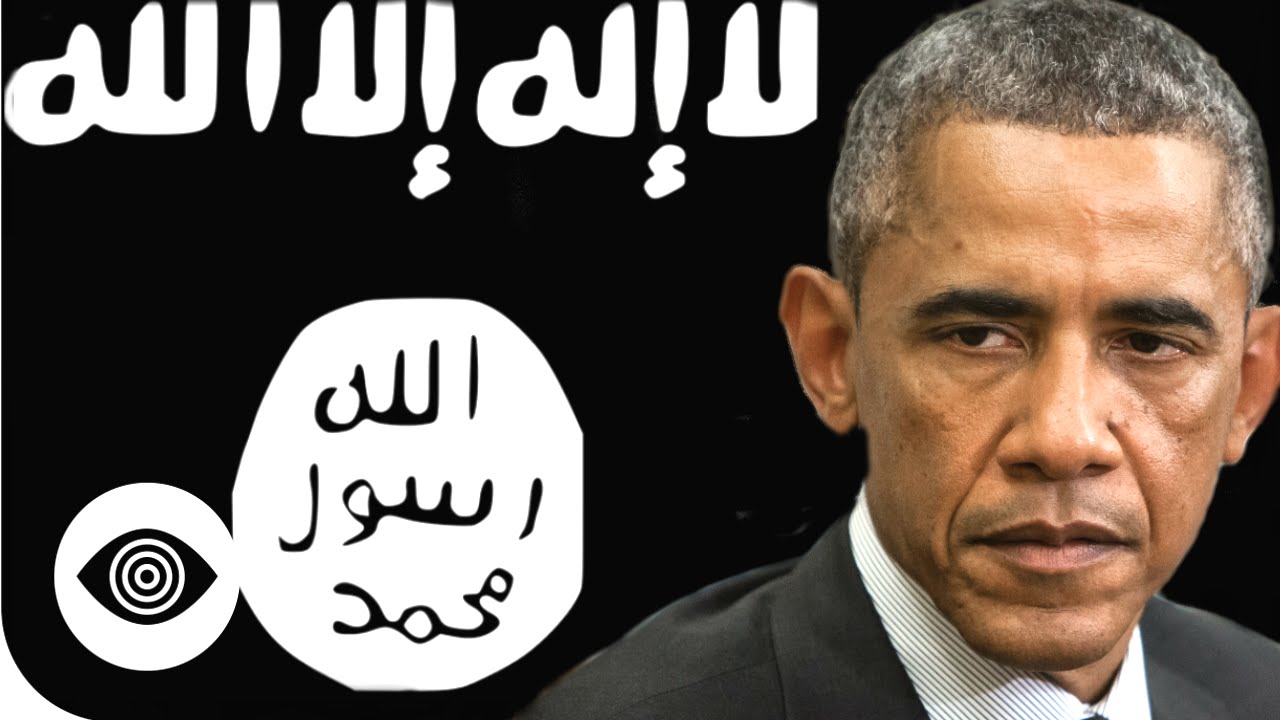
Did Obama Create ISIS?

The Unspoken Question: Did the White House Intentionally Create ISIS?

Let’s get right to it. You’ve heard the whispers. You’ve seen the strange coincidences. You’ve felt that gnawing suspicion that the official story just doesn’t add up. It’s the question they don’t want you to ask.

Did the Obama administration create ISIS?

They’ll call you a conspiracy theorist. They’ll laugh it off. They’ll point to the official narrative, a neat and tidy story about a power vacuum in Iraq and a spontaneous uprising of Sunni extremists. A tragic, but accidental, consequence of war.

It’s a good story. Simple. Easy to digest.

But what if it’s a lie? What if the rise of the most brutal terror group in modern history wasn’t an accident at all? What if it was a plan? A calculated, geopolitical move executed from the highest levels of power, hidden in plain sight.

Forget what the mainstream news told you. We’re going to look at the evidence they ignore, the documents they dismiss, and the patterns they refuse to see. Buckle up. This is the story of how a monster was born, not in a cave in Afghanistan, but in the corridors of Washington D.C.

A Convenient Power Vacuum: The 2011 Iraq Withdrawal

Remember 2011? The war in Iraq was winding down. The official mission was accomplished. It was time to bring the troops home. That was the promise. And on December 18, 2011, the last American combat convoy rolled out of Iraq into Kuwait.

Victory, right? A promise kept.

Or was it the most catastrophic strategic blunder of the 21st century? A mistake so profound, so perfectly timed to create chaos, that you have to wonder if it was a blunder at all.

The official line is that the Obama administration tried to negotiate a new Status of Forces Agreement (SOFA) to keep a residual force of a few thousand troops in Iraq. This small force would have continued training the Iraqi army and, most importantly, provided critical intelligence and air support to prevent extremist groups from re-emerging. But, the story goes, the Iraqi government under Prime Minister Nouri al-Maliki refused to grant legal immunity to U.S. troops, so Washington had no choice but to pull everyone out.

A simple diplomatic failure. Case closed.

But look closer. Dig a little deeper. Critics, including many high-ranking military officials at the time, argue that the White House didn’t try very hard. They say the negotiations were half-hearted, that the administration was more interested in fulfilling a campaign promise than securing the fragile peace in Iraq. They set an impossible bar for the Iraqis to clear and then walked away when it wasn’t met.

Why? Why would they leave a country they’d spent nearly a decade and trillions of dollars stabilizing so completely vulnerable? Why leave the brand-new, US-trained Iraqi army to fend for itself against the ghosts of al-Qaeda in Iraq?

Unless that was the point. You can’t build something new until you demolish what’s already there. To reshape the Middle East, you first need chaos. And a complete, total, down-to-the-last-soldier American withdrawal was the perfect way to light the fuse.

Arming Shadows: The Syrian “Moderate Rebel” Program

As Iraq simmered, a new fire was raging next door in Syria. The Arab Spring had morphed into a brutal civil war, with a collection of rebel groups fighting to overthrow President Bashar al-Assad.

The White House faced a choice. Stay out, or get involved. They chose a third option. A secret option.

It was called Operation Timber Sycamore. A covert CIA program, authorized by President Obama, to arm and train so-called “moderate” Syrian rebels. The goal was to pressure the Assad regime, to give the “good guys” a fighting chance.

Sounds noble, doesn’t it?

Who Decides Who is “Moderate”?

Here’s the problem. In the fog of a chaotic, multi-sided civil war, how do you tell the “moderates” from the extremists? The line is blurry. It shifts daily. Today’s ally is tomorrow’s enemy. A group might seem moderate one day, only to be absorbed by a more radical jihadi faction the next.

The US government poured hundreds of millions of dollars, tons of weapons—including sophisticated anti-tank missiles—into this meat grinder. They were shipping weapons to groups they barely knew, hoping for the best. And what happened?

Exactly what you’d expect.

Those weapons went missing. They were sold on the black market. They were “captured” in battles that seemed more like handovers. Suddenly, the most extreme, radical groups fighting in Syria—groups like the al-Nusra Front (al-Qaeda’s branch in Syria) and a new, even more terrifying group calling itself the Islamic State of Iraq and Syria (ISIS)—were seen wielding brand-new American-made weaponry.

Another tragic mistake? A failure of vetting?

Or was the program working exactly as designed? Perhaps the label “moderate rebel” was just a convenient fiction, a piece of PR to sell a dirty war to the American public. Perhaps the real goal wasn’t to help the moderates win, but simply to fuel the conflict, bleed the Assad regime, weaken his allies Iran and Russia, and keep the region destabilized. ISIS, in this scenario, isn’t an enemy. It’s a tool. A sledgehammer to smash the old order.

The Smoking Gun: A Leaked DIA Document Spells It Out

This is where it goes from suspicion to something much, much darker. This is the part of the story the media almost completely ignored. If there is a “smoking gun,” this is it.

In 2015, the watchdog group Judicial Watch obtained a declassified, but previously secret, document from the Defense Intelligence Agency (DIA). The document is dated August 12, 2012. That’s years before ISIS exploded into the world’s consciousness by capturing Mosul.

Read the words carefully. This is not a blogger’s theory. This is the United States’ own military intelligence agency speaking.

The memo accurately predicts the future. It states that the conflict in Syria is taking a “clear sectarian direction.” It says that “the Salafist, the Muslim Brotherhood, and AQI [Al-Qaeda in Iraq] are the major forces driving the insurgency in Syria.”

Then comes the bombshell paragraph.

The memo states that if the situation continues, there is a possibility of “establishing a declared or undeclared Salafist Principality in Eastern Syria.”

A Salafist Principality. A radical Islamic state. Exactly what ISIS would create two years later. The DIA predicted it. But it gets worse. They didn’t just predict it. They welcomed it.

The very next sentence reads: “this is exactly what the supporting powers to the opposition want, in order to isolate the Syrian regime.”

Read that again. The supporting powers—which the memo identifies as the West, Gulf countries, and Turkey—*wanted* a radical Islamic state to emerge. It was a strategic goal. Why? To “isolate the Syrian regime” and fight back against Iranian influence spreading from Baghdad to Damascus.

This isn’t a prediction. It’s a mission statement. The DIA, in 2012, knew that US policy was directly enabling the creation of what would become ISIS. And they knew it was on purpose.

Was this a warning that was ignored? Or was it a confirmation of a secret, cynical plan that was already in motion? A plan to nurture a monster in the deserts of Syria and Iraq to serve a larger geopolitical purpose.

Deep Dive: The Jihadi University of Camp Bucca

To understand the leadership of ISIS, you have to go back. Back to another American-run project in Iraq. A prison. Camp Bucca.

After the 2003 invasion, the US military rounded up tens of thousands of suspected insurgents. They put them in massive detention centers. The most famous was Abu Ghraib. The most important was Camp Bucca.

Inside its fences, something incredible happened. Low-level thugs were imprisoned alongside brilliant, radical ideologues. Former Ba’athist military officers from Saddam Hussein’s secular regime were locked up with hardened al-Qaeda jihadists. It was a melting pot of rage, military expertise, and radical Islam.

It became, as experts now call it, a “jihadi university.”

The prisoners organized. They formed hierarchies. They used the prison to network, to plan, and to radicalize new recruits. And who was one of the most influential prisoners at Camp Bucca?

A man named Ibrahim Awad Ibrahim al-Badri. You know him as Abu Bakr al-Baghdadi. The future Caliph of the Islamic State.

He, along with at least nine other top members of the future ISIS leadership, spent time in Camp Bucca. They learned from each other. They forged bonds. They planned their next move. When they were released, one by one, between 2004 and 2009, they didn’t just melt back into society. They emerged as the board of directors for the most sophisticated and brutal terrorist organization the world has ever seen.

Another coincidence? Another case of unintended consequences? Or did American intelligence realize they had created the perfect incubator? A place where they could identify, watch, and perhaps even manipulate the next generation of terrorist leaders, all conveniently located in one place.

Following the Trail: The Mystery of the White Toyotas

When ISIS stormed across Iraq in 2014, the world was shocked by the images. Not just the brutality, but the professionalism. They weren’t a rag-tag militia. They were a modern, mobile army.

And what were they driving? Endless convoys of brand-new, gleaming white Toyota Hilux and Land Cruiser pickup trucks. Thousands of them.

Where did they come from?

The question echoed across the internet. US counter-terror officials were even asked about it. Their answer? We don’t know. Seriously. The official response from the most powerful intelligence apparatus on Earth was a shrug.

But internet sleuths started digging. Reports emerged that the U.S. State Department had been supplying large numbers of these very same Toyota trucks to the “Free Syrian Army”—the same moderate rebels whose weapons kept ending up in ISIS hands.

The connection seems obvious. But it was dismissed. Just another coincidence.

Then there’s the weapons. ISIS was armed to the teeth with American M16 rifles, they drove American Humvees, and they even operated American-made M1 Abrams tanks. The official story is that they captured all this equipment from the Iraqi army when it collapsed and fled in places like Mosul.

And certainly, they captured a lot. But did they capture all of it? Or was some of it delivered? Handed over in secret deals? Was the collapse of entire divisions of the Iraqi army, who simply dropped their weapons and ran, part of the plan? A massive, indirect transfer of military hardware to the newly-birthed Caliphate.

What If It Was All On Purpose?

Let’s step back and look at the whole picture. Let’s ask the “what if” question.

What if you wanted to redraw the map of the Middle East? What if you wanted to shatter the alliance between Syria, Iran, and Hezbollah? What if you needed an excuse to put American troops and air power back into Iraq and, for the first time, into Syria?

You would need a villain. A truly terrifying enemy. An enemy so evil that no one would question the need for war.

You would need ISIS.

Think about it in terms of Problem-Reaction-Solution.

1. **Create the PROBLEM:** Foster the conditions for a radical Sunni state to rise. Pull all troops from Iraq, leaving a vacuum. Funnel weapons into the Syrian civil war through a covert program with little oversight, ensuring they fall into extremist hands. Allow future leaders to network and plan in your own prisons.

2. **Wait for the REACTION:** The world watches in horror as ISIS beheads journalists, burns people alive, and commits genocide. The public is terrified. They demand that someone, anyone, do something.

3. **Offer the SOLUTION:** The same powers that created the problem now ride to the rescue. They propose military intervention, airstrikes, and the deployment of special forces. They get the war they wanted all along, but now the public is begging for it.

It’s a cynical game. A terrifying game. But it’s a game that has been played by empires throughout history.

The result? The US was back in Iraq. The US was operating militarily inside Syria with a justification it never had before. Iran’s influence was challenged. And defense contractors made billions.

Incompetence or a masterpiece of covert strategy? You look at the DIA memo. You look at the weapons. You look at Camp Bucca and the perfectly timed withdrawal from Iraq. The coincidences keep piling up until they start to look less like coincidences and more like a blueprint.

They told you it was an accident. They told you it was a tragedy.

But out here, in the shadows of alternative history, we have to consider the chilling possibility that it was a success.

Arindam Mukherjee
Arindam Mukherjee
Arindam loves aliens, mysteries and pursing his interest in the area of hacking as a technical writer at 'Planet wank'. You can catch him at his social profiles anytime.
RELATED ARTICLES

20 COMMENTS

- Advertisment -

Most Popular

Recent Comments

Warren Pan Abbott on The legend of the Devil Monkey !
chris davies on The McPherson Tape Mystery
Reed Reedly on ET has Internet!
Bea Houseoffashion on Proof Of Time Travellers – Gallery
Marcus2012 on ET has Internet!
Reed Reedly on ET has Internet!
LaughsAtConspiracyNuts on The 9/11 Conspiracy – Myths and Facts
Alex Sliverman on Did the ancients fly?
Doctor Wholigan on Time Traveler in 1938 film
chris davies on The McPherson Tape Mystery
Archie1954 on 10 secret UFO hideouts
chris davies on Ghosts of flight 401
Marcus2012 on ET has Internet!
jason Macdonald on Proof of Time Travel? – China
chris davies on Long-Lost Pyramids Found?
Reed Reedly on ET has Internet!
Milkman on Connected Universe
Tenmiles on Baigong Pipes Mystery
Simon Foster on Sirius – The Documentary
From the 1st April on 2013 – Alien Contact date ?
SkyWatcher on Is ET ignoring us?
I Come From The Future on Obama to make UFO Alien disclouser soon ?
Just another person on 2013 – Alien Contact date ?
Malcolm Windowcleaner on The strange case of Rudolph Fentz
Mason Servio on Strange Things on Mars
Marke Wisdom Seeker on What will we find as arctic melts?
Andrea A Elisabeth Levyne on Aliens Captured in Varginha, Brazil
Mitch Grouyeki on Amazing Space Shuttle pictures