The Shadowy Figure Who Saved Independence
It was a sweltering afternoon in Philadelphia. July 4, 1776. The air inside Independence Hall wasn’t just hot; it was heavy. Heavy with fear. Heavy with the scent of treason.
We grow up thinking the signing of the Declaration of Independence was a party. A celebration. Fireworks and handshakes. It wasn’t. It was a death warrant.
Every man in that room knew the stakes. If they put their name on that parchment and the British won, they wouldn’t just be defeated. They would be hunted. They would be dragged from their homes. They would face the hangman’s noose. The silence in the room was deafening. Pens hovered over inkwells. Hands shook. The hesitation was palpable. They needed a push.
And then, according to a legend that has circulated in secret societies and conspiracy circles for over two centuries, a stranger stood up.
He wasn’t a delegate. No one knew his name. No one knew how he got in. But when he spoke, the room froze. He didn’t just speak; he thundered. He told them that God had given America to be free. He predicted a future so glorious that their fear seemed small in comparison. He galvanized them. They signed.
But here is the part that keeps historians and mystery hunters awake at night: When they turned to thank him, the man was gone. vanished. The doors were locked. The guards saw no one leave.
Did this happen? Was this the moment the “Great Experiment” was truly born? And was this mysterious figure a Freemason, an immortal mystic, or something else entirely?
The Hesitation at the Brink of War
Let’s set the stage. The history books gloss over the terror. They show us paintings of men standing tall, looking heroic. But imagine the reality. These were men of property. Men with families. They had everything to lose.
Ben Franklin famously quipped, “We must, indeed, all hang together or, most assuredly, we shall all hang separately.” He wasn’t joking. The British Empire was the most powerful military force on the planet. The idea that a ragtag group of colonies could defeat them was laughable. It was insanity.
The mood in Philadelphia was grim. Outside, the streets were quiet. Inside, the debate raged. Some wanted to wait. Some wanted to patch things up with King George. The document lay on the table. A piece of paper that could turn them into corpses.
This is where the story gets weird. Really weird.
According to accounts popularized by Manly P. Hall—a 33rd Degree Mason and one of the most prolific writers on the occult—the debate was interrupted by a voice from the back of the room. A tall, gaunt man, dressed in a dark cape, stepped out of the shadows. His face was pale. His eyes burned with an intensity that silenced the bickering politicians.
The Speech That Changed History
The stranger didn’t ask for permission to speak. He took it. His voice rang out like a bell.
“Gibbet?” he cried, mocking their fear of the gallows. “They may stretch our necks on all the gibbets in the land; they may turn every rock into a scaffold; every tree into a gallows; every home into a grave, and yet the words of that parchment can never die!”
He wasn’t talking about taxes. He wasn’t talking about laws. He was talking about destiny.
He spoke of a “New Order of the Ages.” He told them that they were not just starting a country; they were igniting a flame that would burn across the world. He spoke with such authority that the fear in the room evaporated. It was replaced by a sense of divine purpose.
“God has given America to be free!” the stranger shouted, ending his speech with a command that shattered the silence: “Sign! That parchment must be signed if the next moment the gibbet’s rope is about your neck! Sign! By all your hopes in life or death, as men, as husbands, as fathers, sign your names to the parchment, or be accursed forever!”
The spell was cast. The hesitation broke. Rush, Jefferson, Franklin, Hancock—they rushed forward. The quills scratched against the paper. The United States was born.
The Impossible Disappearance
The rush to sign caused a commotion. The energy in the room was electric. But once the last name was dry, the delegates remembered the man who had spurred them to action. They turned to the back of the room to offer their gratitude.
Empty.
The space where he stood was vacant. Confused, they checked the doors. Locked from the inside. They asked the sentries stationed outside if anyone had left. The guards shook their heads. No one had entered. No one had left.
How do you explain that? A man appears in a locked room, changes the course of human history with a single speech, and then evaporates into thin air?
This isn’t just a ghost story. It’s a foundational myth of the American mystery tradition. And it leads us directly to the doorstep of the Freemasons.
The Masonic “Great Experiment”
To understand who the stranger might have been, we have to look at who was in the room. It’s no secret that Freemasonry played a massive role in the American Revolution. These weren’t just guys meeting for drinks. They were men obsessed with the ideas of Enlightenment, sacred geometry, and breaking away from the tyranny of monarchs.
George Washington? A Master Mason. Benjamin Franklin? Grand Master of Pennsylvania. John Hancock? Mason. Depending on which list you read, between 9 and 21 of the signers of the Declaration were Freemasons.
But it goes deeper than membership cards. The theory is that the United States was never just a political entity. It was a Masonic project. A “New Atlantis.” A place where the ancient secrets of democracy and liberty—kept alive by secret societies for centuries—could finally be practiced in the open.
If you look at the founding of the USA through this lens, the “Mysterious Professor” wasn’t a ghost. He was an emissary. A representative of the “Invisible College” or the “Great White Brotherhood”—the hidden masters who supposedly guide humanity’s evolution.
Suspect No. 1: The Count of St. Germain
Internet theories and occult historians often point to one specific man as the identity of the stranger: The Count of St. Germain.
If you haven’t heard of St. Germain, strap in. This guy is the ultimate historical enigma. He was a courtier in Europe who dazzled kings and queens. He spoke a dozen languages. He played the violin like a virtuoso. He painted with jewels. And, most strangely, he never seemed to age.
People claimed he was hundreds of years old. He hinted that he had known Jesus. He was an alchemist who supposedly could turn lead into gold and remove flaws from diamonds. Casanova met him. Voltaire called him “The man who knows everything and never dies.”
St. Germain was deeply involved in the secret societies of Europe. He disappeared from the public eye right around the time the American Revolution was kicking off. Some claim he traveled to America to ensure the “plan” succeeded.
Was the man in the dark cape the immortal Count? His speech pattern matches. His sudden appearance and disappearance fit his modus operandi. St. Germain was known for popping up at critical moments in history, whispering in the ears of kings, and then vanishing.
Evidence in Stone: The Layout of Washington D.C.
You might be thinking, “This is just a cool story.” But the fingerprints of this secret influence are literally carved into the ground. You just have to know where to look.
Look at Washington D.C. It wasn’t built randomly. It was designed. The architect, Pierre Charles L’Enfant, was appointed by Washington. L’Enfant was a Freemason. The man who took over, Andrew Ellicott? Freemason.
Take a map of the city. Connect the dots between the White House, the Jefferson Memorial, and the Capitol. What do you see? Skeptics see triangles. Believers see symbols.
The Pentagram: Connect the White House, Dupont Circle, Logan Circle, Washington Circle, and Mt. Vernon Square. You get a perfect five-pointed star. The bottom point lands directly on the White House. In occult lore, an inverted pentagram isn’t always “evil,” but it is powerful. It represents matter triumphing over spirit. Energy being pulled down to earth.
The Compass and Square: The most famous symbol of Freemasonry. You can trace it clearly in the street layout extending from the Capitol building. The city is literally built on a Masonic grid.
The Number 33: There are 33 degrees in the Scottish Rite of Freemasonry. The House of the Temple, the headquarters of the Scottish Rite, is located exactly 13 blocks from the White House. It contains 33 columns, each 33 feet tall.
Coincidence? Maybe. But when you stack them all up, it starts to look like a blueprint.
The Dollar Bill: Hiding in Plain Sight
Reach into your wallet. Pull out a one-dollar bill. You are holding a Masonic tract.
Turn it over. Look at the Great Seal on the left. You see a pyramid. It’s unfinished. Why? Because the work of building the “New Order” is never done. The pyramid has 13 steps (for the colonies, yes, but 13 is also a mystic number of transformation). At the base, the Roman numerals MDCCLXXVI (1776).
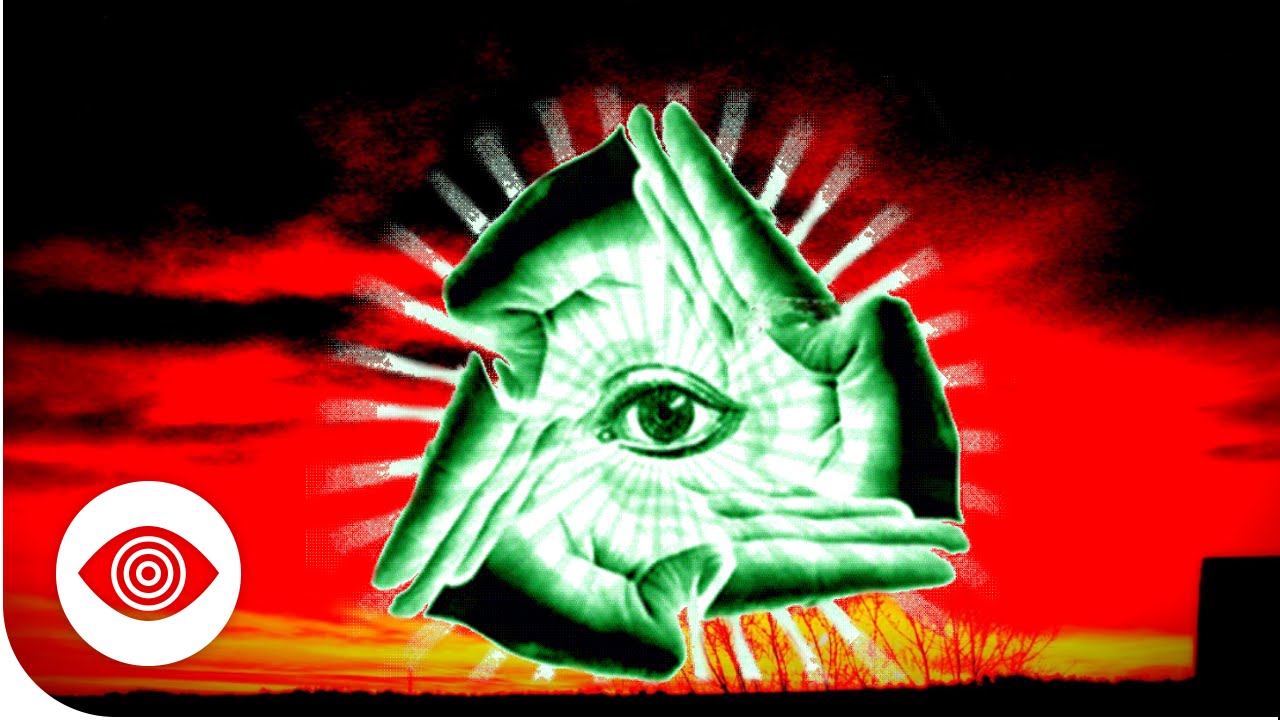
But look at the top. The capstone is hovering. It’s an eye. The “All-Seeing Eye.” The Eye of Providence. Masons call this the Great Architect of the Universe.
Below it, the scroll reads: Novus Ordo Seclorum. “New Order of the Ages.”
Skeptics will tell you these are just common symbols from the 18th century. They say the Eye of Providence is just a Christian symbol for God. But combine it with the Pyramid (an Egyptian symbol), the Latin mottos, and the fact that the men who approved this design were members of secret lodges… and the official story starts to crack.
Franklin himself wanted the seal to depict Moses bringing down the Pharoah. But the final design became strictly esoteric. It’s a beacon. A signal to those “in the know” that this nation was built for a higher, hidden purpose.
The Cornerstone Ceremony
We don’t have to guess if Washington was a Mason. We have the pictures. We have the apron.
On September 18, 1793, George Washington laid the cornerstone of the U.S. Capitol building. He didn’t do it in a military uniform. He didn’t do it in a suit. He wore full Masonic regalia. He wore the apron. He used a silver trowel. He performed the specific rituals of the craft—pouring corn, wine, and oil on the stone.
This was a magical act. In the eyes of a Mason, laying a cornerstone isn’t just construction work. It’s consecrating the building. It’s aligning the structure with the divine geometry of the universe. The Capitol wasn’t just a government building; it was a temple.
Why the “Unknown Speaker” Story Matters Today
Why does this legend persist? Why do we keep clicking on videos about it? Because we want to believe there is a plan.
The world feels chaotic. Politics is a mess. The idea that there was a “Hidden Hand”—a benevolent, super-intelligent force that guided the creation of America—is comforting. It implies that we aren’t just drifting in the void. It implies that the United States has a destiny that hasn’t been fulfilled yet.
Manly P. Hall wrote, “America’s assignment with destiny is not yet finished.” He believed that the Stranger’s speech was a prophecy that hasn’t fully come true. That the “New Order” is still being built.
But there is a darker side to the theory too. If secret societies built the system, do they still control it? If the layout of the capital is designed to channel energy, who is using that energy? And for what?
The Skeptic’s View
To be fair, we have to look at the other side. Historians hate this story. They say there is no record of the speech in the official journals of the Continental Congress. They point out that the story didn’t appear in print until the mid-1800s, in a collection of stories by George Lippard.
They say Lippard was a novelist, a myth-maker. They say he invented the “Unknown Speaker” to sell books and boost patriotism.
But even if Lippard wrote it down first, where did he get the idea? Was he passing on an oral tradition that had been whispered in lodges for decades? And why does the description of the stranger match the description of St. Germain so perfectly?
Sometimes, legends tell a truth that facts cannot. The mood in that room was terrified. The jump to sign was irrational given the danger. Something pushed them. Maybe it was a man. Maybe it was a collective spirit. Or maybe, just maybe, the doors were locked for a reason.
What Do You Believe?
We are left with a puzzle. We have a nation filled with Masonic symbols. We have a capital city designed like a star map. We have a founding father who laid the cornerstone of the government in a ritualistic apron. And we have a persistent legend of a mysterious man who appeared from nowhere to guarantee the birth of the nation.
Did Freemasons create the USA? The answer seems to be a resounding “Yes,” at least in part. They built the framework. They designed the symbols.
But the bigger question is: Who was guiding the Freemasons?
Was the stranger at Independence Hall a time traveler? A guardian angel? The Count of St. Germain? Or just a figment of our collective imagination?
Next time you look at a dollar bill, stare into that eye on the pyramid. It’s staring back. And it’s keeping its secrets.
What do you think? Was the Unknown Speaker real? Let us know in the comments below!