Home Films & Documentaries Cicada 3301: The Internet’s Most Secret Organization?

Cicada 3301: The Internet’s Most Secret Organization?

20
98

The Internet’s Greatest Mystery: Who is Cicada 3301?

It starts with a whisper. A ghost in the machine. One moment, the internet is its usual chaotic self—memes, arguments, cat videos. The next, a single image appears. It’s a spark in the digital darkness, a challenge that will ignite a global firestorm of curiosity, obsession, and paranoia. This isn’t just a puzzle. This is a recruitment test. And the organization behind it might be the most elusive and mysterious group in modern history.

They call themselves Cicada 3301.

And they are looking for “highly intelligent individuals.” The question is… why?

The First Shot: A JPEG That Shook the Web

January 4th, 2012. The date it all began. On the infamous /b/ board of 4chan, a place known more for anarchy than organized thought, a stark image materialized. Black background. Crude white text. It read:

“Hello. We are looking for highly intelligent individuals. To find them, we have devised a test. There is a message hidden in this image. Find it, and it will lead you on the road to finding us. We look forward to meeting the few that will make it all the way through. Good luck.”

It was signed “3301.”

Most users dismissed it. A joke. A troll. Another meaningless bit of internet flotsam. But a few, their curiosity piqued, decided to play along. What did they have to lose? They opened the image in simple text editors, picking at the digital code beneath the surface. And there it was. Hidden. Plain as day if you knew where to look. A line of text pointing to a Caesar cipher, a simple form of encryption known since ancient Rome. This was the first key turning in the first lock.

Solving the cipher led them to a URL. The first step down a rabbit hole that would prove to be deeper and stranger than any of them could have ever imagined.

A Global Scavenger Hunt on a Digital Breadcrumb Trail

The puzzles that followed were a masterclass in complexity. They weren’t just for coders or computer geeks. Oh no. To follow the path of Cicada, you needed to be a polymath. A modern-day renaissance person. The challenges required knowledge of:

  • Cryptography and steganography (hiding messages in files).
  • Number theory and prime numbers (the “3301” name itself is a prime).
  • Victorian occult philosophy and the writings of Aleister Crowley.
  • Classical music and ancient Welsh poetry.
  • Mayan numerology and Anglo-Saxon runes.

This wasn’t a game for amateurs. It was a filter, designed to weed out everyone but the most brilliant and, more importantly, the most persistent. The trail led from hidden messages on a dead-end phone number to book codes hidden in obscure texts. Then, things got real.

Really real.

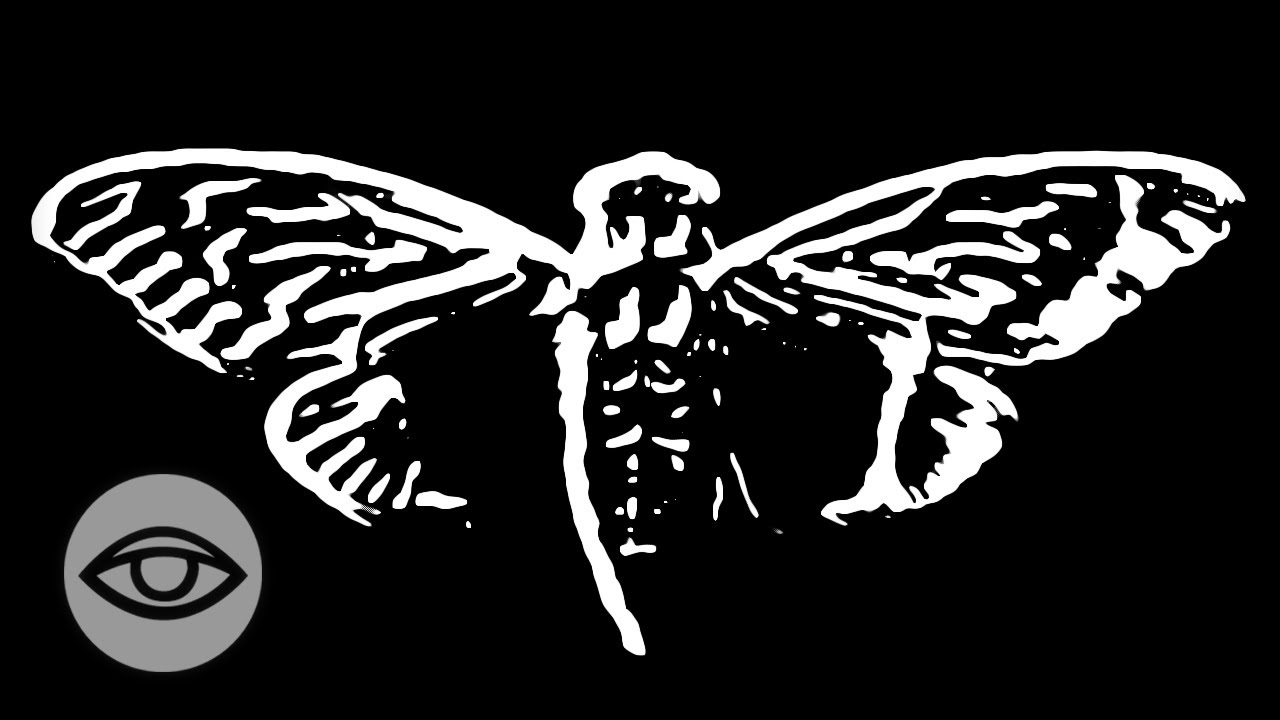
The puzzles jumped off the screen and into the physical world. The digital trail led to a set of GPS coordinates. These coordinates pointed to telephone poles and street signs in 14 different cities across the globe. Warsaw. Paris. Seoul. Miami. Seattle. In each location, investigators found a poster with an image of a cicada and a QR code. The hunt was no longer just for keyboard warriors. It required people on the ground, working together across continents and time zones. A global community of solvers was born, collaborating frantically on forums and IRC channels, each person contributing their unique piece of expertise.

Who Is Behind the Curtain? The Leading Theories

A puzzle this sophisticated, this well-funded, and this widespread can’t be the work of a few bored teenagers in a basement. The resources required, the sheer intellectual firepower, points to something bigger. Something organized. But what?

The Government Agency Theory: A Digital Draft?

This is the most popular theory. The usual suspects. The CIA. The NSA. MI6 in the UK. GCHQ. Think about it. What better way to find the next generation of code-breakers and cybersecurity experts than to create the ultimate un-hackable test? They aren’t looking for people with fancy degrees from MIT or Cambridge. They’re looking for the self-taught prodigies, the ones who think differently, the ones who live and breathe this stuff. The skills Cicada tests for are a perfect match for an intelligence agency’s shopping list: cryptography, data analysis, lateral thinking, and extreme discretion.

The puzzles act as a global filter, identifying the best of the best without them even knowing they’re being interviewed for a job. It’s brilliant. And terrifying.

The Secret Society Theory: A Modern Illuminati?

The name itself, “3301,” screams of esotericism. The number 33 is hugely significant in Freemasonry. The focus on privacy, individual liberty, and anti-censorship messages found within the puzzles points towards a cypherpunk ideology. This line of thinking suggests Cicada 3301 is a secret society of hackers and activists, maybe an offshoot of the group that created Bitcoin, dedicated to building new, unbreakable systems to protect information in the digital age. They aren’t looking for employees; they’re looking for new members. Acolytes. People to join their cause and fight for a free and open internet against the forces of government control and corporate surveillance.

The Corporate Hoax Theory: Just an ARG?

Could this all just be an elaborate Alternate Reality Game (ARG)? A viral marketing campaign for a new movie, video game, or tech product? It’s possible. ARGs have been used by companies like Microsoft to promote their games. But this theory has some serious holes. The Cicada puzzles have been running for years. The 2012 puzzle was followed by a new one in 2013, and another in 2014. If it were marketing, where’s the product? Where’s the big reveal? There has been no financial payoff. No brand name attached. This seems like far too much effort, sustained over too long a period, to just be a clever ad.

What Happens When You Actually Win?

This is the biggest question of all. What lies at the end of the rainbow? For years, the public knew nothing. The winners were sworn to secrecy. They simply vanished from the online forums where they had been collaborating. Silence.

Then, leaks started to appear. Supposed winners broke their silence, sharing what they found. According to these accounts, after solving the final puzzle, the winners received a private email. They were congratulated and told they had proven their worth. But the tests weren’t over.

They were then subjected to a kind of personality and ideological screening. They were asked about their views on freedom of information, censorship, and privacy. The message was clear: Cicada wasn’t just looking for smart people. They were looking for a certain *kind* of smart person. One who shared their philosophical goals.

Those who “passed” this final stage were reportedly accepted into a private forum. They were brought into the fold and given a task: to collectively work on a software project. The goal? To create a new system to advance the cause of privacy and liberty online. After that, the trail goes cold again. The winners who have spoken out have done so anonymously, fearing reprisal from the very organization they worked so hard to join.

Deep Dive: The Unsolvable Book, The Liber Primus

Perhaps the most baffling and compelling artifact to emerge from the Cicada puzzles is the *Liber Primus*, which is Latin for “First Book.” This is not a real-world text. It is a digital book, written entirely by Cicada 3301. Its pages are filled with a complex system of runes, a language no one has ever seen before. The book is the ultimate challenge.

The community of solvers, known as the Cicada Puzzle Wiki, has been trying to decipher this text for years. They have made incredible progress, managing to translate a handful of pages. The translated sections read like a philosophical manifesto. They speak of the nature of reality, the importance of the individual, and the idea that every person is their own god. It’s heavy, esoteric stuff.

But most of the book remains a complete mystery. The encryption methods used on the later pages are so advanced that even the geniuses who solved the initial puzzles are stumped. It is believed that the *Liber Primus* contains the core philosophy and ultimate goals of Cicada 3301. To crack it would be to understand the organization itself. And so far, no one has.

The Long Silence: Where Did Cicada Go?

After the 2014 puzzle, the yearly challenges stopped. 2015 came and went with nothing. The internet waited. Had they found everyone they needed? Was the project over?

Then, in January 2016, a new message appeared, signed with the same PGP signature that verified all previous communications from the group. But it wasn’t a puzzle. It was a warning:

“Beware false paths. Always verify PGP signature from 7A35090F.”

It seemed that imposter groups were trying to hijack the Cicada name. This official message from the real 3301 was a way of telling the world they were still out there, watching. And then… nothing. Complete and total silence ever since.

The community is left to wonder. Is Cicada now operating in deep stealth mode? Did their project succeed? Did it fail? Or is the organization simply dormant, like the insect it’s named after, waiting for the right prime-numbered year to re-emerge and send out its call once more?

Modern internet theories abound. Some on Reddit forums speculate that the “winners” are now working on next-generation privacy tools, perhaps related to blockchain or decentralized networks. Others fear something darker, suggesting the group was either a foreign intelligence operation that was shut down or a radical group that went too far and was forced underground for good.

A Legacy Written in Code

Cicada 3301 has become more than just a puzzle. It’s a modern myth. A legend that shows how a single, anonymous message can spark a global movement of collaboration and intellectual curiosity. It reminds us that even in an age where we think everything is known and catalogued, there are still deep mysteries lurking just beneath the surface of our screens.

The trail may have gone cold, but the questions linger, echoing in the quiet corners of the web.

Who were they? What did they build? And are they still out there, watching, waiting for the next “highly intelligent individual” to prove their worth?

The final answer is still hidden. Maybe it’s in the remaining pages of the Liber Primus. Or maybe… the next puzzle is about to drop. Keep your eyes open.

Originally posted 2013-12-27 20:23:18. Republished by Blog Post Promoter