Monday, June 8, 2026
HomeFilms & DocumentariesAre We Living In The Matrix?

Are We Living In The Matrix?

Are You Living in a Computer Simulation? The Scientific Case That Will Melt Your Brain

Stop what you’re doing. Right now. Look at your hands. Wiggle your fingers. Feel the phone or mouse you’re holding. It feels real, doesn’t it? Solid. Tangible. The weight, the texture, the temperature. It’s undeniably there.

But what if it isn’t?

What if everything you think you know—every memory, every sensation, every person you’ve ever loved, every breath you’ve ever taken—is nothing more than a stream of calculated data? A series of ones and zeroes firing in some unfathomably complex cosmic computer. A simulation. A digital prison for your consciousness.

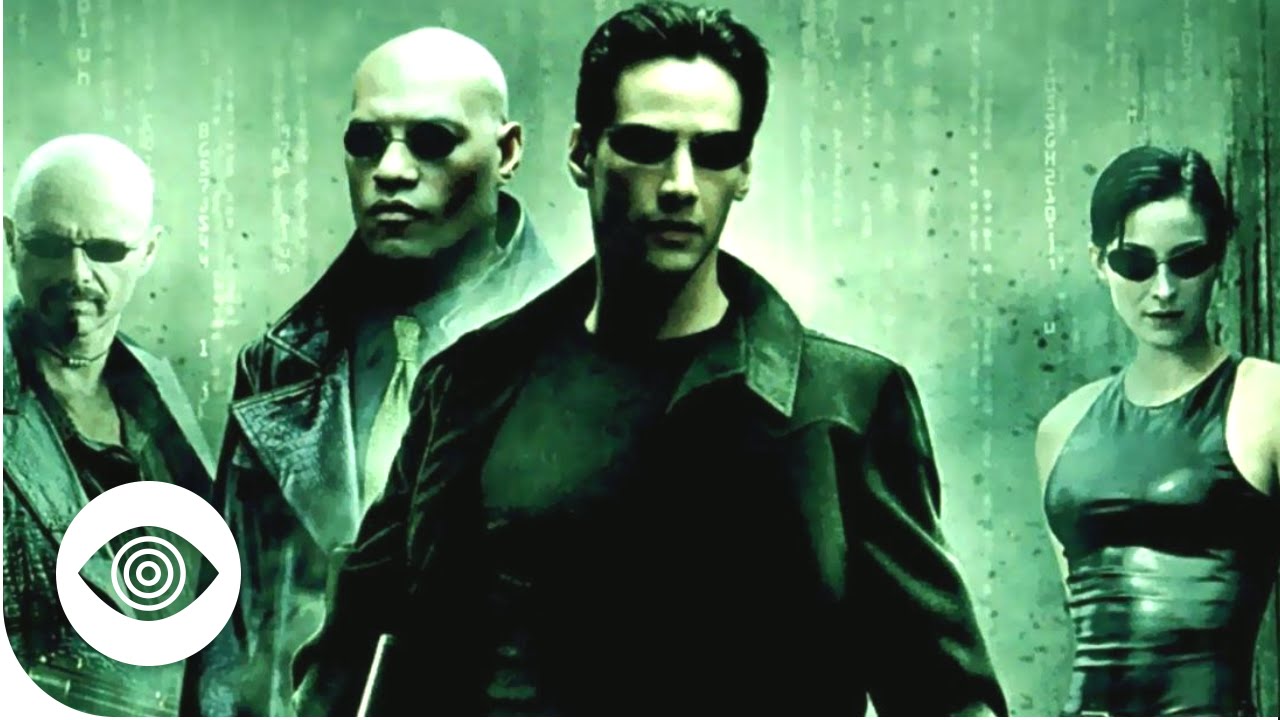
It sounds like science fiction. A late-night thought after watching The Matrix one too many times. For decades, that’s all it was. A fun, philosophical mind-bender to debate with friends.

Not anymore.

Today, some of the most brilliant minds on the planet—physicists, cosmologists, philosophers, and tech billionaires—are taking this idea seriously. Dead seriously. The evidence, they argue, is hiding in plain sight. In the very laws of physics. In the weirdness of our own minds. In the fabric of reality itself. So, take the red pill. Let’s see how deep this rabbit hole really goes.

The Old Dreamers: From Plato’s Cave to an Evil Demon

This whole “reality isn’t real” thing isn’t new. Not by a long shot. Long before computers, our ancestors were wrestling with the same terrifying possibility.

Think back over 2,000 years to ancient Greece. The philosopher Plato asked us to imagine a group of people living their entire lives chained inside a dark cave. Behind them, a fire burns. People walk past the fire, carrying puppets and objects, and their shadows are cast onto the cave wall in front of the prisoners. For these prisoners, the shadows aren’t just shadows. They are reality. It’s all they’ve ever known. What would happen if one of them was freed and dragged out into the sunlight? They’d be blinded, confused, terrified. The real world would seem fake, and the shadow world they left behind would feel like home.

Plato’s Allegory of the Cave was a thought experiment about truth and perception. But doesn’t it sound familiar? A fabricated world that seems completely real to its inhabitants. A hidden truth just outside our field of vision.

Deep Dive: Descartes and the Brain in a Vat

Let’s jump forward to the 17th century. The French philosopher René Descartes took this idea to a whole new level. He was obsessed with finding one thing—just one single thing—he could know for certain. To do this, he decided to doubt everything. His senses could be deceiving him. He could be dreaming. Or, and this is where it gets creepy, what if an all-powerful, malicious “evil demon” was dedicating all its energy to tricking him? This demon could be feeding him a completely false reality, from the sky above to the ground beneath his feet.

How could he prove the demon wasn’t real? He couldn’t. It was a perfect trap. But in his doubt, he found his one certainty: the very act of him thinking about being deceived proved that he, the thinker, existed. “Cogito, ergo sum.” I think, therefore I am.

Modern philosophers updated Descartes’ demon with the “brain in a vat” scenario. Imagine your brain was surgically removed at birth and placed in a jar of life-sustaining fluid. Wires are connected to its neurons, feeding it a simulated reality. You would still think you were living a normal life. You’d feel the sun, taste food, fall in love. You would have no way of knowing you were just a lonely brain in a lab.

For centuries, these were just philosophical puzzles. Then, technology started to catch up with imagination.

The Simulation Argument: Why Odds Are You’re an NPC

In 2003, Oxford philosopher Nick Bostrom published a paper that changed everything. It wasn’t science fiction. It was a cold, logical argument called “Are You Living in a Computer Simulation?” and it presented a brutal trilemma. Bostrom argued that one of the following three statements is almost certainly true:

  1. The Doomsday Scenario: All intelligent civilizations in the universe go extinct before they develop the technology to create ultra-realistic “ancestor simulations.” We’re talking simulations so powerful you couldn’t tell them from base reality. Maybe they blow themselves up, or a gamma-ray burst gets them. Whatever the reason, they never reach the post-human stage.
  2. The Boring Scenario: Advanced, post-human civilizations exist, but for some reason, they have absolutely no interest in running simulations of their ancestors. Maybe they find it unethical. Maybe it’s illegal. Or maybe they just think it’s boring and would rather do… whatever post-human beings do.
  3. The Simulation Scenario: Civilizations DO reach this god-like technological state, and they DO run simulations. And because it would be so easy for them, they wouldn’t run just one or two. They’d run billions. Trillions. If that’s the case, the number of simulated realities would vastly, VASTLY outnumber the one, single “base” reality.

Think about that. If you accept that it’s possible to create such a simulation (and look at the progress of video games in just 40 years!), then you have to confront the odds. For every one “real” universe, there could be billions of fake ones. What, then, are the statistical odds that you—yes, you, reading this right now—happen to be one of the lucky few in the original, organic reality?

The odds are not in your favor. They are billions to one against.

This is the argument that got people like Elon Musk to say there’s a “one in billions” chance we’re in base reality. It’s a conclusion based not on wishful thinking, but on probability.

Glitches in the Matrix: Is Physics Pointing to the Code?

Okay, so the philosophical and probabilistic arguments are compelling. But is there any hard evidence? Anything we can point to in the real world that suggests we’re living inside a computer program? Conspiracy forums and even some mainstream physicists say yes. They argue that the “source code” of our universe reveals itself in the strange rules of physics.

The Universe is Pixelated

In a video game, if you zoom in far enough on an image, you’ll eventually see the pixels—the smallest possible unit of the screen. You can’t have half a pixel. That’s the resolution limit. Does our universe have a similar limit?

It seems so. It’s called the Planck Length. It’s an impossibly small distance (about 1.6 x 10⁻³⁵ meters), but it’s thought to be the absolute shortest, most fundamental unit of space. According to our current understanding of physics, it’s theoretically impossible to measure anything smaller. Is the Planck Length the “pixel” of our universe? Is this the hard-coded resolution of the simulation, beyond which the program simply cannot render?

The Lazy Universe: Quantum Weirdness

This is where things get truly bizarre. The famous double-slit experiment is a cornerstone of quantum mechanics, and it’s also one of the best pieces of “evidence” for simulation theory. Here’s the simple version: if you shoot tiny particles (like electrons) at a screen with two slits in it, they behave like waves, creating an interference pattern on the other side. But—and this is the mind-breaker—if you place a detector by the slits to “watch” which one the particle goes through, the particle instantly stops acting like a wave and acts like a solid little ball. It only goes through one slit, and the wave pattern vanishes.

The very act of observing it changes its behavior.

Simulation proponents have a chilling explanation for this. It’s like a video game saving on processing power. The game doesn’t need to render the detailed world inside a building until your character opens the door and walks inside. Why would the universe bother calculating the definite state and position of a particle if no one is looking at it? It only “renders” the result when a conscious observer (the player) forces its hand. It’s a system optimizing its resources. It’s cosmic laziness.

The Cosmic Speed Limit

Why is there a universal speed limit? Why can’t anything travel faster than the speed of light? In a purely physical, infinite universe, a hard limit like this seems strange. But in a computer simulation, it makes perfect sense. It’s the maximum processing speed of the server running the show. The “processor” of the universe can only compute a particle’s change in position so fast. The speed of light isn’t a physical barrier; it’s a computational one.

Who is the Programmer? And Can We Hack the System?

If we are in a simulation, it begs the biggest question of all: who built it? And why?

One popular theory is the “Ancestor Simulation” we touched on earlier. Our distant, far-future descendants built this simulation to study their own past. We are, in effect, a hyper-realistic historical reenactment. You could be living a simulated version of your great-great-great-great grandfather’s life.

Another idea is that our universe is a giant science experiment. Perhaps some higher-dimensional beings set the physical constants (gravity, the speed of light, etc.) at the start of the Big Bang and are just watching to see what happens. Are we just cosmic sea monkeys in a jar for a fifth-dimensional kid’s science fair project?

The possibilities are endless and terrifying. Are the programmers benevolent? Malicious? Or do they not even care about us, viewing us as nothing more than background characters in their complex game?

Searching for the Exit

Physicists have proposed actual experiments to try and detect the simulation. One idea is to look for “seams” in the fabric of reality. If the universe is a grid, a simulation running on a lattice, then high-energy cosmic rays should behave differently depending on the direction they travel through that grid. So far, we haven’t found anything, but the search is on.

Others believe we might be able to find a bug, an exploit in the code. What is déjà vu? A momentary glitch? A re-loading of a previous save point? What are ghosts or paranormal events? Are they just assets from a previous version of the software that were never properly deleted?

And then there’s the Mandela Effect. The strange phenomenon where huge groups of people misremember the same detail from the past. Was it the Berenstein Bears or the Berenstain Bears? Did Darth Vader say “Luke, I am your father” or “No, I am your father”? Simulation theorists wonder if these aren’t just memory failures, but evidence of tiny patches and software updates to our reality. The programmers changed a small line of code, and our memories are the only remnants of the previous version.

The ultimate problem, of course, is that we are inside the system. Any experiment we run is part of the simulation itself. It’s possible the programmers could simply edit the results before we see them, hiding their existence forever.

So, what now? Do you just go about your day? Do you dismiss it all? Or do you look at the world a little differently?

The rain on your window might be a particle effect. The love you feel for your family might be a beautifully written subroutine. Your greatest achievements and your deepest sorrows could just be plot points in a simulation you have no control over.

Or not. Maybe reality is just reality. Strange, chaotic, and beautifully, wonderfully real.

But the next time you see a bit of strange luck, a weird coincidence, or that baffling feeling of déjà vu… just for a second, ask yourself.

Is it a glitch in your brain? Or is it a glitch in the Matrix?

Arindam Mukherjee
Arindam Mukherjee
Arindam loves aliens, mysteries and pursing his interest in the area of hacking as a technical writer at 'Planet wank'. You can catch him at his social profiles anytime.
RELATED ARTICLES

18 COMMENTS

- Advertisment -

Most Popular

Recent Comments

Warren Pan Abbott on The legend of the Devil Monkey !
chris davies on The McPherson Tape Mystery
Reed Reedly on ET has Internet!
Bea Houseoffashion on Proof Of Time Travellers – Gallery
Marcus2012 on ET has Internet!
Reed Reedly on ET has Internet!
LaughsAtConspiracyNuts on The 9/11 Conspiracy – Myths and Facts
Alex Sliverman on Did the ancients fly?
Doctor Wholigan on Time Traveler in 1938 film
chris davies on The McPherson Tape Mystery
Archie1954 on 10 secret UFO hideouts
chris davies on Ghosts of flight 401
Marcus2012 on ET has Internet!
jason Macdonald on Proof of Time Travel? – China
chris davies on Long-Lost Pyramids Found?
Reed Reedly on ET has Internet!
Milkman on Connected Universe
Tenmiles on Baigong Pipes Mystery
Simon Foster on Sirius – The Documentary
From the 1st April on 2013 – Alien Contact date ?
SkyWatcher on Is ET ignoring us?
I Come From The Future on Obama to make UFO Alien disclouser soon ?
Just another person on 2013 – Alien Contact date ?
Malcolm Windowcleaner on The strange case of Rudolph Fentz
Mason Servio on Strange Things on Mars
Marke Wisdom Seeker on What will we find as arctic melts?
Andrea A Elisabeth Levyne on Aliens Captured in Varginha, Brazil
Mitch Grouyeki on Amazing Space Shuttle pictures