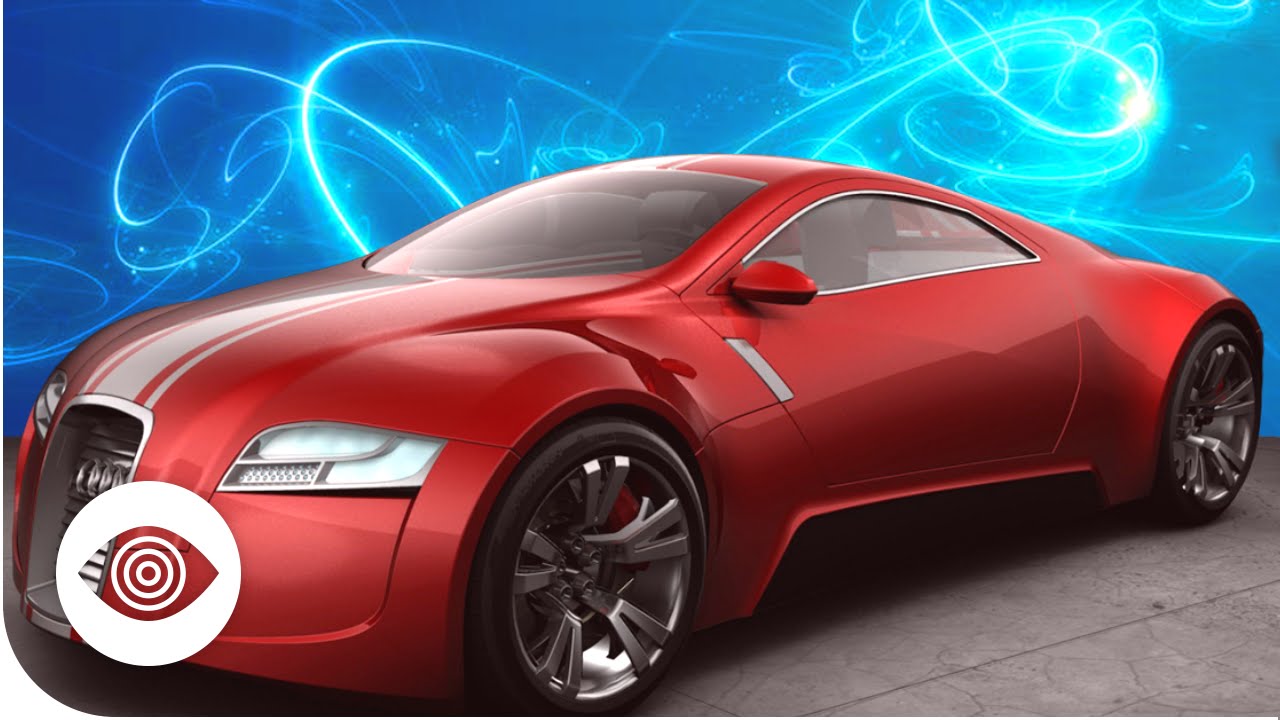
Home Films & Documentaries Are Electric Cars Being Suppressed?

Are Electric Cars Being Suppressed?

18
81

The Electric Car Conspiracy: A Stolen Future, A Century of Lies

You see them everywhere now. Silent. Sleek. Whispering past you on the street like ghosts from a future we were promised in science fiction movies. Teslas, Rivians, Lucids. The electric vehicle revolution is finally here, and we’re told it’s the cutting edge. The next big thing.

But what if I told you it’s not the next big thing?

What if I told you it was the *first* big thing?

What if I told you this silent, clean future was stolen from us over 100 years ago? Strangled in its crib by a handful of powerful men and their fire-breathing, smoke-belching invention. This isn’t a story of technological progress. This is a story of technological murder. A century-long conspiracy to keep us addicted to oil, and the evidence has been hiding in plain sight all along.

Get ready. Because the clean, quiet world you think is brand new was actually our birthright. And it was buried on purpose.

The Golden Age You Never Knew About

Close your eyes. Picture the year 1900. What do you see? Horses and buggies clopping down cobblestone streets? Men in top hats and women in corsets? The world was on the cusp of a massive change, and the automobile was its roaring herald.

But it wasn’t roaring. Not all of it.

You see, at the turn of the 20th century, there wasn’t just one kind of car. There were three. Steam, gasoline, and electric. And for a glorious, fleeting moment, electric was king.

Think about it. The first gasoline cars were monsters. They were loud, smelly, and belched foul-smelling smoke. They were difficult to start, requiring a dangerous and often bone-breaking hand crank. They leaked oil. They shook violently. They were, in a word, primitive.

Electric cars, on the other hand, were elegant. They were civilized. You simply turned a key or flipped a switch, and they glided away in near-perfect silence. No crank. No noise. No stinking exhaust fumes to stain your clothes and choke the air. They were the preferred vehicle of city-dwellers, doctors making house calls, and especially women, who could operate them without needing a chauffeur or a mechanic’s strength.

This wasn’t some niche hobby. This was the mainstream. In 1900, 38% of all cars in the United States were electric. Another 40% were steam-powered. That left the noisy, dirty gasoline car with a measly 22% of the market. Companies like Detroit Electric and Baker Motor Vehicle were producing beautiful, reliable cars that could go 50, even 80 miles on a single charge. More than enough for the typical city driver of the era. Even Henry Ford’s wife, Clara, drove a 1914 Detroit Electric because she preferred its simplicity and silence over her husband’s own Model T.

Let that sink in. The wife of the man who put the world on gasoline wheels… drove an electric car.

It was the future. A clean, quiet, simple future. So what happened? How did we go from that promising dawn to a century of smog, oil wars, and climate chaos? It wasn’t an accident. It was an execution.

The Unholy Trinity: Gasoline, Greed, and the Model T

The electric car wasn’t out-competed. It was ambushed. Three key events—a perfect storm of industry, invention, and infrastructure—ganged up to knock the EV off its throne and cement the dominance of the internal combustion engine (ICE).

Deep Dive: The Texas Oil Gusher

Before 1901, gasoline was a cheap, almost useless byproduct of refining kerosene for lamps. There just wasn’t that much of it. But on January 10, 1901, a drill rig at a place called Spindletop Hill in Texas hit something big. A geyser of black crude oil erupted into the sky, shooting 150 feet high and producing an insane 100,000 barrels of oil per day.

It was the start of the Texas Oil Boom. Suddenly, the world was swimming in cheap oil. Gasoline went from being a niche product to being dirt cheap and available everywhere. The fuel for the ICE dragon was now virtually free. Advantage: Gasoline.

The Assembly Line Assassin: Ford’s Model T

Henry Ford didn’t invent the gasoline car, but he did something far more revolutionary: he made it affordable for the common man. Electric cars were well-built and sophisticated, which also made them expensive, often costing more than twice as much as a gas car.

In 1908, the Ford Model T rolled off the assembly line. It cost $825. By the 1920s, thanks to Ford’s relentless efficiency, you could buy one for under $300. It was the car for the masses. It was a rugged, no-frills machine that could handle the terrible rural roads that made up most of America. Suddenly, car ownership wasn’t just for the wealthy elite in the city. It was for everyone. The sheer volume was staggering. Ford sold 15 million of them. The electric car, a finely crafted machine, simply couldn’t compete on price. It was a battle of craftsmanship versus mass production, and mass production won.

The Final Blow: Kettering’s Electric Starter

This was the real killer. The single biggest drawback of the early gas car was the dreaded hand crank. It was difficult to use and notoriously dangerous. A “backfire” could send the crank whipping backward, breaking arms and wrists. This single factor made electric cars the superior choice for ease of use.

Then, in 1912, Charles Kettering, working for Cadillac, invented the electric self-starter. With the push of a button, the gasoline engine roared to life. The biggest advantage of the electric car—its ease of use—vanished overnight. The gas car now had all the convenience of an EV, plus superior range and the backing of a massive, newly-rich oil industry.

The fight was over. Or, more accurately, the fix was in.

The Cover-Up: How an Entire Industry Was Buried

Losing a market battle is one thing. But what happened next wasn’t just competition. It was a systematic dismantling of a superior technology, and the evidence points to a coordinated effort to ensure the electric car stayed dead and buried for generations.

Exhibit A: The Great American Streetcar Scandal

To understand what they did to the electric car, you first have to look at what they did to its bigger cousin: the electric streetcar. In the early 20th century, over 90% of urban travel was via clean, efficient electric trolley systems. They were everywhere.

Then, in the 1930s and 40s, a new company called National City Lines (NCL) started buying up these streetcar systems in cities all over America. NCL was a front company, a shell. Who was really behind it? A consortium that included General Motors, Firestone Tire, and Standard Oil of California.

Their business plan was simple. And sinister.

They would buy a perfectly good electric trolley system, rip up the tracks, tear down the overhead power lines, and replace the clean, efficient streetcars with smoke-belching, gas-guzzling GM buses running on Firestone tires and fueled by Standard Oil gasoline. They did this in 45 cities, including Los Angeles, Baltimore, and St. Louis. They destroyed a multi-billion dollar public transit infrastructure to create a captive market for their own products. They were eventually convicted of conspiracy to monopolize transit in 1949, but the damage was done. The fine was a pathetic $5,000.

So, I ask you: If they were willing to do this in broad daylight to the entire public transit system of America, what do you think they were willing to do in the shadows to the personal electric car?

Exhibit B: The Phantom Battery and the Suppression of Innovation

A common argument is that early EVs failed because battery technology was poor. But was it? Or was any promising battery tech quickly bought and buried? There are persistent stories of inventors who created high-capacity, long-lasting batteries only to have their patents bought by mysterious shell corporations with ties to the oil and automotive industries. The invention would then disappear, never to be seen again.

Even Thomas Edison, a huge proponent of electric vehicles, developed a nickel-iron battery that was incredibly robust and could last for decades. It was promoted as being able to “last a century.” While its energy density was lower than lead-acid batteries, its durability was legendary. Yet, it never became the standard. Was it pushed aside because a battery that never needs replacing is terrible for business?

The business model of the gasoline car industry relied on planned obsolescence. An engine has thousands of moving parts that wear out. It needs constant oil changes, new spark plugs, tune-ups. It’s a goldmine for repeat business in parts and service. An electric motor, by contrast, has one moving part. It’s simple, reliable, and needs almost no maintenance. A car that doesn’t break down is a terrible business model if your goal is to make money for the next 100 years.

A Modern Assassination: The Ghost of the EV1

You’d think the story ends there. But the conspiracy didn’t die in the 1920s. It just went dormant. And it woke up with a vengeance in the 1990s.

In response to a new mandate from California requiring automakers to produce zero-emission vehicles, General Motors did the unthinkable: they actually built a brilliant, futuristic electric car. It was called the EV1.

It wasn’t a golf cart. It was a sleek, aerodynamic, two-seat marvel that could go from 0 to 60 in under 9 seconds. It was quiet, cheap to run, and its drivers absolutely adored it. Celebrities like Tom Hanks and Mel Gibson leased them. They were the hottest ticket in Hollywood. It was proof that a modern, desirable electric car wasn’t just possible; it was here.

And then GM killed it.

In 2003, despite a waiting list of people wanting to lease one and despite the existing drivers begging and pleading to buy their cars outright, GM systematically repossessed every single EV1. Every. Single. One.

They didn’t sell them. They didn’t donate them to museums or universities. They trucked them out to their desert proving grounds in Arizona and crushed them. They flattened them into pancakes. Video footage of the slaughter is still online, and it’s heartbreaking. It looks like an execution.

Why? GM’s official line was that the EV1 program was unprofitable and they couldn’t guarantee a supply of spare parts. It was a “business decision.”

That is a lie.

The real reasons are far darker. Insiders and researchers, featured in the documentary *Who Killed the Electric Car?*, point to a list of suspects. Big Oil was lobbying furiously against the California mandate. The other automakers feared it would set a precedent. But the most damning evidence points to GM itself. They saw the EV1 not as an opportunity, but as a threat to their entire business model. A threat to their profitable gasoline-powered trucks and SUVs. A threat to their dealership service centers. A threat to the whole ecosystem of combustion.

So they committed infanticide. They murdered their own creation to protect the status quo. The crushing of the EV1 was a message, sent loud and clear: We control the future, and the future runs on gas.

The Future They Couldn’t Kill

For a while, it seemed like they had won again. The EV dream was dead for a second time. But they made one crucial mistake. They forgot about the internet.

The story of the EV1, of its passionate drivers and its brutal demise, couldn’t be buried like the stories from the 1920s. It spread online, becoming a legendary tale of corporate malfeasance. It inspired a new generation of engineers and entrepreneurs who saw the crime and decided to fight back.

A small Silicon Valley startup, led by a man named Elon Musk, saw what GM had done. They saw that GM had proven two things: that the technology worked, and that a passionate market for it existed. The only thing missing was the will. Tesla Motors took that will, combined it with better lithium-ion battery technology and a Silicon Valley mindset, and set out to finish what GM was too afraid to start.

They proved the EV could be fast. They proved it could have range. They proved it could be desirable. They shattered the myth that electric cars had to be slow, boring compliance cars. They forced the hand of the very same legacy automakers who had spent a century suppressing the technology.

A Stolen Century: What Did the Delay Cost Us?

Here we are. The electric revolution is finally happening. But don’t for a second think this is a victory lap. This is a recovery mission. We are finally clawing our way back to a future that was our rightful path all along.

Imagine it. Imagine a 20th century without the smog that choked our cities. A world without the geopolitical conflicts and wars fought over oil. A world where the effects of climate change weren’t a looming crisis but a manageable problem we solved generations ago. Imagine the trillions of dollars, the millions of lives, the irreparable damage to our planet that could have been avoided.

Was it a grand, smoke-filled-room conspiracy by a cabal of oil barons and auto executives? Or was it simply a series of greedy, short-sighted business decisions that snowballed into a century of technological arrested development?

In the end, does it even matter?

The outcome is the same. Our future was delayed by 100 years. They couldn’t kill the idea. They could only hold it back. The question we all have to live with now is… what did that stolen century truly cost us all?

Originally posted 2014-12-09 18:10:26. Republished by Blog Post Promoter