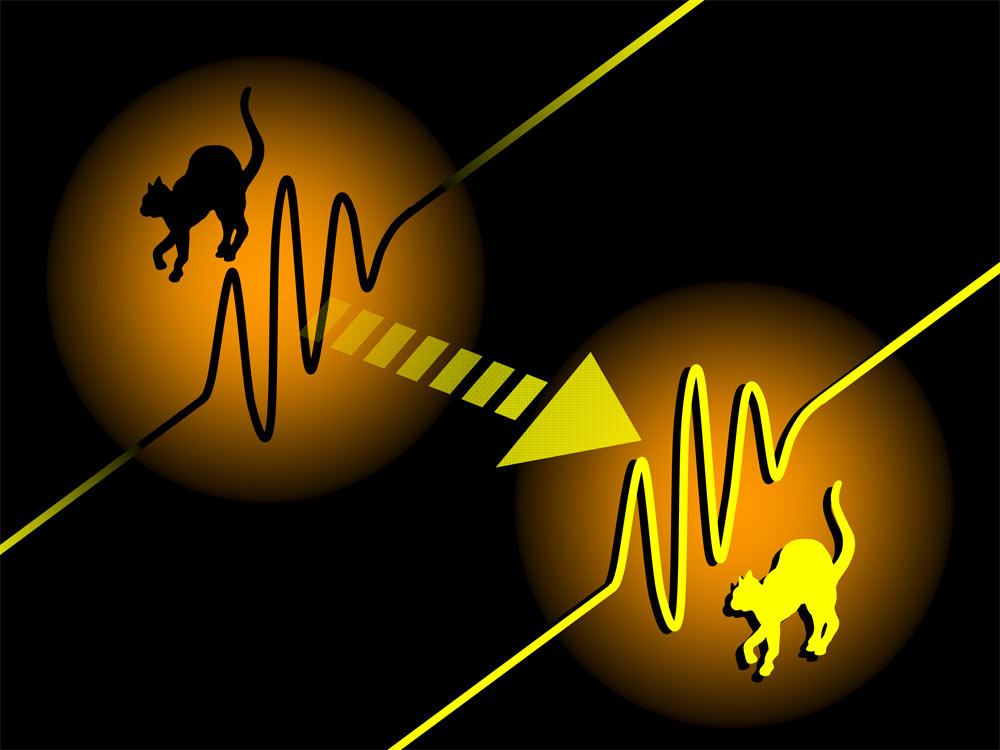
Teleportation. The word alone conjures up images of shimmering lights, the hum of the Transporter Room on the Enterprise, or perhaps a mad scientist stepping into a pod and turning into a fly. It’s the holy grail of travel. Breakfast in Paris, lunch in New York, back home for dinner in Tokyo. No jet lag. No TSA lines. Just… zap.
But here is the unsettling truth that mainstream science is terrified to admit: Teleportation is not just a futuristic dream. It might be an ancient nightmare.
We think of it as technology. We imagine sleek machines and complex equations. But what if teleportation has been happening for millions of years? What if it is a raw, chaotic, natural force—like a tornado or an earthquake—that we simply don’t understand yet? The evidence is scattered throughout history, buried in old newspapers and whispered in terrified rumors. People disappearing in plain sight. Objects vanishing from locked rooms. Stones raining from clear blue skies.
Science is playing catch-up. While physicists in sterile labs are high-fiving over moving a photon across a room, the universe has been moving us across dimensions for centuries. And it doesn’t ask for permission.
The Origin of the Glitch: Charles Fort and the “Transportory Force”
Let’s rewind. Way back. Before the internet, before Reddit threads about “Glitches in the Matrix,” there was Charles Hoy Fort. In 1931, this man looked at the weirdness of the world and refused to look away. He was the original conspiracy theorist, the grandfather of the paranormal investigation. And he coined a word that would change everything: Teleportation.
Fort didn’t use the word to describe a machine. He used it to describe a “transportory force.” A natural law. He believed that just as gravity pulls things down, there is a force in the cosmos that pulls things… away.
Think about that. We accept that magnetism is invisible. We accept that gravity is invisible. Why is it so hard to believe there are other invisible currents sweeping through our reality? Fort suggested that this force was responsible for the spontaneous movement of objects and people. He wasn’t writing fantasy. He was categorizing thousands of reports of anomalous events that scientists of his day ignored because they were too scary to explain.
The Pre-Fort Warning
Technically, the word popped up once before Fort, in a dusty 1878 article. But back then, it was pure speculation about the future—wild guesses made after the telephone was invented. “If we can send a voice through a wire,” they thought, “why not a body?” That matches our modern sci-fi obsession. But Fort? Fort was talking about the now. He was talking about the dark corners of reality where physics breaks down.
Consider spontaneous human combustion (SHC). For decades, it was dismissed as a myth. Old wives’ tales. Then, forensic science had to admit that under very specific, horrifying circumstances, a human body can indeed act like a candle, burning from the inside out while leaving the chair they sit on untouched. Ball lightning—those glowing orbs of electricity that float through walls—was laughed at by meteorologists. “Swamp gas,” they said. “Optical illusions.” Now? It’s a documented weather phenomenon. We have videos.
Teleportation is next. It is the final frontier of the unexplained.
Vanished: The Mystery of MH370
We like to think we are masters of our domain. We have GPS, satellites that can read a license plate from space, and radar covering the globe. Yet, on March 8, 2014, the impossible happened.
Malaysian Airlines Flight MH370. A Boeing 777. A massive metal bird carrying 239 souls. It took off, climbed into the night sky, and then… blinked out.
How? How does a 64-meter long aircraft simply cease to exist? The official narrative is a crash in the Indian Ocean. They found a few barnacle-covered flaperons years later. But the core mystery remains unsolved. The “Inmarsat” data—those ghostly pings sent to a satellite—suggested the plane kept flying for hours after it went dark. But flying where? And why did calls to passengers’ cell phones ring and ring, connecting to nothingness?
Family members reported that when they dialed their loved ones, the lines remained open. No voicemail. Just ringing. Search parties from over a dozen nations scoured the ocean floor. Nothing. It was as if the plane had slipped through a crack in the sky.
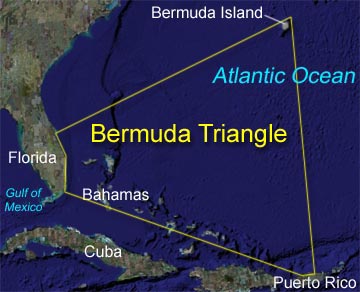
In the absence of debris, the mind wanders to darker places. Was it a hijacking? A pilot suicide? Or did MH370 hit a “pocket” of turbulence that wasn’t made of wind, but of warped space-time? If natural teleportation exists—a wandering vortex in the atmosphere—a plane flying at 500 miles per hour would be the perfect candidate to get snatched.
The Farmer Who Walked into Nothingness
Aircraft are one thing. But what about a man standing in his own field?
The legend of David Lang is the cornerstone of disappearance folklore. Tennessee, 1880. A sunny day. David Lang is walking across his pasture. His wife is watching from the porch. A buggy carrying Judge August Peck and his brother-in-law is approaching on the road. Everyone sees him. He is there. Solid. Real.
He takes a step. And then he doesn’t take another.
He didn’t fall. He didn’t fly up. He simply erased. Gone. Before his foot hit the ground. The witnesses ran to the spot. The ground was hard. No hole. No trapdoor. Just fading grass. The story goes that for years afterward, the grass wouldn’t grow in a specific circle where he vanished. The animals refused to go near it. And the most chilling detail? Months later, his children claimed that if they stood near the circle and shouted, they could hear their father’s voice, thin and terrified, crying for help from a place that seemed to be under the ground—or perhaps, from a dimension folded right on top of ours.
Skeptics call this a hoax. A tall tale from the 1800s. But it mirrors thousands of modern reports. People vanishing in National Parks (the “Missing 411” phenomenon) often disappear in seconds, with search dogs unable to find a scent, as if the person was plucked vertically off the earth.
The “JOTT” Phenomenon: Glitches in Your Living Room
Let’s bring this down to earth. You don’t need to be in a plane or a 19th-century field to experience this. You’ve probably experienced a minor teleportation event yourself. We call it “losing things.”
Researchers have a name for this: JOTT (Just One of Those Things). It’s when an object disappears from a place where it must be, only to reappear later in a place it cannot be.
Imagine you drop your car keys. You hear them hit the floor. Clink. You look down. They aren’t there. You search. You get on your hands and knees. You sweep the area. The room is empty. The keys are gone. You panic. You tear the room apart.
Then, two hours later—or two days later—you walk back into the room and the keys are sitting right there. In the middle of the floor. In the exact spot you searched ten times.
Where did they go? Did you simply miss them? Or did they slip out of our reality for a brief vacation? Some theories suggest that small wormholes—micro-singularities—drift through our homes like dust motes. Occasionally, they swallow a coin, a sock, or a key. Usually, the object “falls” back out a few moments later. But sometimes, it doesn’t. Sometimes that wedding ring you dropped ends up embedded inside a wall, or found years later inside a sealed box in the attic.
This is the “Disappearing Object Phenomenon.” It’s maddening. It feels like gaslighting by the universe. But if space-time is not a solid sheet, but a bubbling foam (as quantum physics suggests), then small holes are inevitable.
Raining Frogs and The Super-Sargasso Sea
If things can go up and vanish, they can also come down. And when they do, it gets messy.
Curtis Ellis, a researcher of high-strangeness, cataloged the bizarre stuff that falls from the sky. We aren’t talking about rain or hail. We are talking about biology. Frogs. Fish. Snakes. Alligators. Stones. Blood.
In 1861, Singapore experienced an earthquake followed by a torrential rain of Catfish. Locals found them in puddles in their courtyards. In 2005, thousands of tiny frogs rained down on a town in Serbia. The standard scientific explanation is wind. “A waterspout sucked them up from a pond and dropped them miles away.”
Okay, sure. That makes sense for fish. But here is the problem: The selectivity.
Why does the wind pick up only frogs? Why no mud? Why no reeds? Why no algae? If a tornado hits a pond, it should drop a slurry of pond scum, water, and confused animals. But these rains are often “pure.” Just frogs. Clean, alive, and confused. Sometimes it rains stones—smooth, polished river stones—falling on a single roof for days, while the neighbors’ houses are untouched. No wind can do that. That requires a target.
Charles Fort proposed a “Super-Sargasso Sea”—a place in the upper atmosphere (or another dimension) where these things get stuck. They teleport up, float around in a timeless limbo, and then, when the “sky quakes,” they fall back down. It sounds insane. Until you see a fish fall out of a cloudless sky and hit your windshield.
The Science: Einstein-Rosen Bridges
Let’s get technical. Is there any physics that supports this madness?
Actually, yes. In 1935, Albert Einstein and Nathan Rosen realized that the theory of relativity allowed for “bridges” in space-time. We call them wormholes. Picture the universe as a flat piece of paper. You are a bug walking from Point A to Point B. It takes a long time. But if you fold the paper so A touches B, you can step across instantly. That is a wormhole.
Science fiction treats wormholes like stable subway tunnels. You drive your spaceship in, you pop out in the Andromeda galaxy. But real theoretical physics suggests these bridges are unstable, chaotic, and fleeting.

If microscopic wormholes are constantly forming and collapsing around us (a concept known as “quantum foam”), it explains everything. A momentary bridge opens in your pocket. Your lighter falls into it. The bridge closes. The lighter is now floating in the void. Five minutes later, the bridge opens again near your foot. Clack. The lighter returns.
But if a larger wormhole opens? One big enough for a car? Or a person? Or a Boeing 777?
That object doesn’t just move through space. It might move through time. If you walked into a wormhole in 1880, you might step out in 2024. Or you might step out on Mars. Or you might never step out at all.
The Philadelphia Experiment: Man-Made Teleportation Gone Wrong?
We cannot discuss teleportation without touching on the granddaddy of all military conspiracies: The Philadelphia Experiment.
The story goes that in 1943, the U.S. Navy was trying to make a ship invisible to radar. They used massive electromagnetic generators on the USS Eldridge. But something went wrong. The ship didn’t just disappear from radar. It disappeared from the harbor. Physically gone.
Witnesses claimed they saw a green fog envelop the ship. Then—flash. It vanished. Some reports say it appeared instantly in Norfolk, Virginia, over 200 miles away, before teleporting back to Philadelphia minutes later.
When the ship returned, the crew was… broken. Some men went insane. Some were sick with a nausea that never went away. But the true horror was what happened to the men on the deck. According to the legend, some sailors had been molecularly fused with the ship. Hands embedded in steel bulkheads. Legs merged with the floor. The teleportation process had scrambled their atoms with the atoms of the ship. They were alive, but merged with the metal.
The Navy denies it ever happened. But the story persists. Was it an early, clumsy attempt to harness the “transportory forces” that Charles Fort wrote about? Did we try to play God and accidentally turn a battleship into a quantum smoothie?
The Final Verdict: Reality is Porous
It is comforting to believe the world is solid. We want to believe that if we put a cup on the table, it stays there. We want to believe that when we walk down the street, the ground won’t open up and swallow us into a different dimension.
But the accounts are too numerous to ignore. From the rain of fish in Yoro, Honduras (which happens so often they have a festival for it), to the vanishing of seasoned hikers in the blink of an eye, the evidence points to one conclusion: Reality is leaky.
We live on a thin crust of stability over a boiling ocean of quantum chaos. Most of the time, the rules of physics hold us in place. But every now and then, the rules glitch. A door opens. And something—or someone—slips through.
So, the next time you can’t find your keys, don’t get frustrated. Be grateful. Be grateful that it was only your keys that fell through the hole, and not you.
Originally posted 2016-03-30 14:19:38. Republished by Blog Post Promoter
Originally posted 2016-03-30 14:19:38. Republished by Blog Post Promoter

Arindam loves aliens, mysteries and pursing his interest in the area of hacking as a technical writer at ‘Planet wank’. You can catch him at his social profiles anytime.