Stop Everything and Look Up: The Math Just Changed Forever
We used to think we were special. For centuries, humanity sat on this little blue rock, gazing out into the obsidian void, convinced that the silence staring back meant we were alone. We told ourselves that life was a miracle. A one-in-a-trillion accident. A fluke of chemistry and divine luck that happened exactly once in the history of the universe.
We were wrong.
We were so incredibly, arrogantly wrong.
New analysis of data ripped from the cold, dead hands of NASA’s Kepler Space Telescope has dropped a bombshell that changes the entire game. It doesn’t just nudge the goalposts; it rips them out of the ground and throws them into another dimension. The numbers are in, and they are screaming at us.
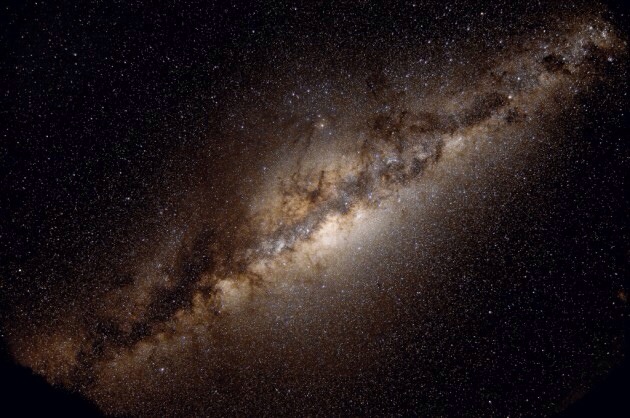
The 20 Billion Earths Theory
Let that number sink in for a second. Twenty. Billion.
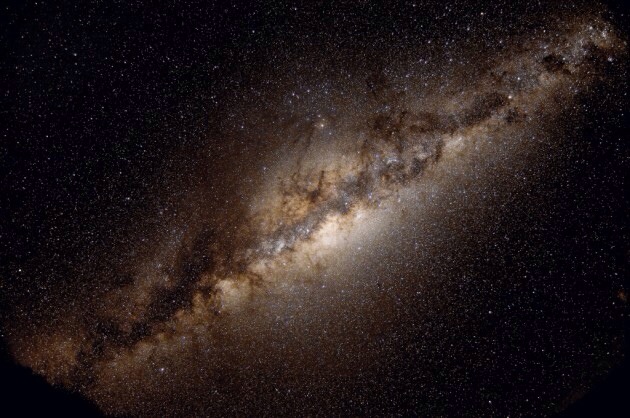
This isn’t a sci-fi writer’s fever dream. This is hard data. Scientists examining the Kepler findings have estimated that there are approximately 20 billion Earth-sized planets in our Milky Way galaxy alone. Not the universe. Just our local neighborhood.
Previously, the pessimists in the astronomical community wanted us to believe that habitable planets were rare gems—maybe 0.0001 percent of the galaxy. A rounding error. Now? That figure has exploded to above the 20 percent mark for Sun-like stars. If you look up at the night sky and pick five stars similar to our Sun, statistically, one of them has a planet roughly the size of Earth orbiting in the “Goldilocks Zone.”
That means liquid water. That means rocky surfaces. That means the potential for oceans, clouds, mountains, and—dare we say it—eyes looking back at us.
The “Next Door” Neighbor
Here is where it gets terrifyingly real. The statistics suggest that the nearest Earth-like twin isn’t across the galaxy. It isn’t in some unreachable quadrant that would take a warp drive to reach. It’s practically sitting on our front porch.
The data indicates an Earth-like world could be orbiting a star just 12 light-years away. In cosmic terms, that is nothing. That is breathing distance. On a clear night, you might be able to walk into your backyard, look up, and see the parent star of a world that has oceans and continents, visible to your naked eye.
Think about that next time you stare at the stars. You aren’t looking at nuclear fireballs in a dead vacuum. You might be looking at someone else’s sun.
Kepler: The Silent Hunter
To understand why this is happening now, you have to understand the machine that made it possible. The Kepler Space Telescope wasn’t just a camera. It was a hunter. It didn’t scan the whole sky; that would be too messy. Instead, it stared unblinkingly at one specific patch of darkness—about 150,000 stars—waiting for them to blink.
It’s called the Transit Method. Imagine a moth flying in front of a searchlight miles away. The light dims by a tiny, almost imperceptible fraction. That’s what Kepler looked for. It measured the brightness of stars with obsessive precision.
When a star dimmed, it meant something passed in front of it. A planet. By measuring how much light was blocked and how often it happened, scientists could calculate the size of the planet and how long its year is. From there, they figured out the distance from the star. If it’s too close, it’s a hellscape of molten lava. Too far? A frozen wasteland of ice.
But the data kept coming back with hits in the sweet spot. The Habitable Zone. The region where water flows and chemistry gets interesting.
The Great Filter and the Silence
So, we have a problem. A big one.
If there are 20 billion potential homes in our galaxy, and the galaxy is 13 billion years old, where is everybody?
This brings us back to the Fermi Paradox, but with a darker twist. Before this data, we could comfortably say, “Well, maybe Earths are just super rare.” That excuse is gone. Dead. Buried. We now know Earths are as common as dirt. They are everywhere.
This forces us to confront uncomfortable possibilities about our reality:
- The Zoo Hypothesis: They are watching us. With 20 billion potential civilizations, some must be millions of years older than us. Maybe we are a nature preserve. Maybe we are a reality TV show for a bored, immortal species.
- The Dark Forest: In a galaxy filled with life, the smart civilizations stay quiet. They know that if they broadcast their location, a predator will come. We are the noisy idiots shouting into the jungle, unaware of the eyes glowing in the bushes.
- The Great Filter: Maybe life starts often, but it dies quickly. Maybe civilizations inevitably blow themselves up or poison their atmosphere before they can leave their home rock. Are we approaching our own expiration date?
“These planets are only Earth-like in terms of their size and the amount of energy they receive from their stars,” warns Erik Petigura, the lead author of the findings. He’s the voice of reason in the room, trying to keep everyone calm. “We don’t know if they have rocky compositions, oceans of water, plate tectonics or life.”
Sure, Erik. We don’t know. But the odds? The odds are stacked so high they are toppling over.
What Exactly Are We Looking For?
When astronomers talk about “Habitable Zones,” they are talking about liquid water. Water is the solvent of life as we know it. It allows chemicals to mix, react, and form complex chains that eventually decide to stand up and invent the internet.
Basically, researchers took a subset of Kepler’s massive list—about 40,000 stars—and crunched the numbers. They extrapolated that data to apply to the rest of the Milky Way’s 300 billion stars. Most of these stars are M-dwarfs (red dwarfs). These stars are smaller and cooler than our Sun, but they live seemingly forever.
Here’s the catch with M-dwarfs: they are temperamental. They have a nasty habit of throwing out massive solar flares that could strip a nearby planet of its atmosphere in an afternoon. So, even if a planet is in the “Goldilocks Zone” for temperature, it might be getting blasted by radiation that would fry a human in seconds.
However, life is stubborn. We find life on Earth in boiling acid vents, inside nuclear reactors, and deep under the Antarctic ice. Who is to say that life on a world orbiting a red dwarf hasn’t evolved a natural lead shield? Or maybe they live underground, harvesting geothermal energy, completely indifferent to the flares raging above.
The Hunt for Biosignatures
The game has shifted from “finding planets” to “smelling their air.”
Since the nearest candidate could be just 12 light-years away, we don’t need to send a ship there to know if someone is home. We can use the next generation of telescopes, like the James Webb Space Telescope (JWST), to analyze their atmosphere.
When a planet passes in front of its star, some of the starlight filters through the planet’s atmosphere on its way to Earth. That light picks up the chemical fingerprint of the air. We can analyze that light and look for things that shouldn’t be there.
We are looking for:
- Oxygen and Methane together: These two gases destroy each other quickly. If we see both, something is constantly replenishing them. On Earth, that “something” is life. cow farts and breathing plants.
- Industrial Pollutants: This is the wild card. What if we detect CFCs (chlorofluorocarbons)? Nature doesn’t make CFCs. Factories do. If we see that, we have found a civilization.
- Artificial Light: If we can image the night side of a planet and see city lights, the debate is over.
The Philosophical Vertigo
It is hard to wake up and go to work, pay your taxes, and worry about traffic when you really internalize this information. 20 billion.
Somewhere among them, I’d like to believe there’s one identical to Earth. A world with blue oceans, green forests, and a moon that pulls the tides. Maybe there is another version of you there, looking up at their sky, wondering if they are alone. They might be wondering if we exist.
Unfortunately, confirming this takes time. It will take years of careful analysis to determine if one of those 20 billion Earth-like planets is actually suitable for biology or if it’s just a wet rock floating in the dark. We need to know if they have magnetic fields to protect them. We need to know if they have plate tectonics to recycle carbon.
Are We Ready for the Answer?
This data reveals an entire galaxy’s worth of possibilities. It forces us to ask the ultimate question: If we aren’t alone, what does that mean for our religions, our borders, and our wars? If there are billions of worlds, Earth is not unique. It’s just… one of many.
The skepticism is fading. The math is winning. The universe is teeming with real estate, and for the first time in human history, we have the map.
So, go outside tonight. Find a star. Any star. Chances are, there is a world circling it. And maybe, just maybe, someone is standing on that world, pointing at our Sun, and asking the exact same questions.
Originally posted 2013-11-24 22:54:25. Republished by Blog Post Promoter

Aloha, I’m Amit Ghosh, a web entrepreneur and avid blogger. Bitten by entrepreneurial bug, I got kicked out from college and ended up being millionaire and running a digital media company named Aeron7 headquartered at Lithuania.