You think you see the world exactly as it is. You think your eyes are just passive cameras, recording the reality in front of you. But what if I told you that your brain is actively filtering out a massive layer of information? What if you possessed a dormant superpower, hidden in plain sight, that our ancestors used to navigate the oceans long before GPS was even a dream?
This isn’t science fiction. It isn’t a conspiracy theory. It is a biological fact.
Recent scientific breakthroughs have confirmed that the human eye is not just capable of seeing color and depth. We have a secret, suppressed ability. We can see polarized light.
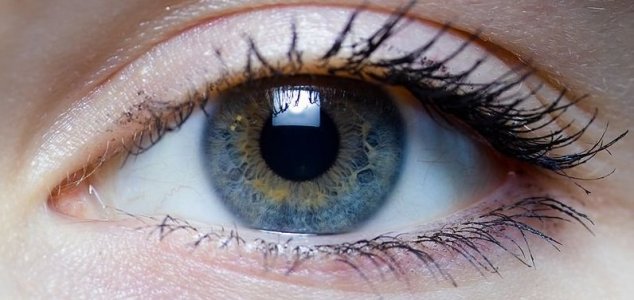
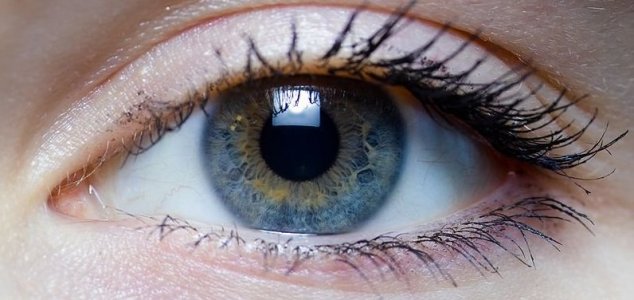
The human eye can pick up more than most people realize. In fact, you might be walking around with a built-in compass that you forgot how to use.
The Sixth Sense You Didn’t Know You Had
For decades, biology textbooks told us a specific story. They told us that the ability to perceive polarized light—the angle at which light waves wiggle—was a superpower reserved for the animal kingdom. We knew bees used it to find flowers. We knew ants used it to march in straight lines. We knew fish and mantis shrimp had vision so complex it makes our high-definition cameras look like potato quality.
Humans? We were supposed to be blind to this hidden layer of reality.
But that narrative is crumbling.
A new study has revealed that the human eye is capable of seeing polarized light, an ability that is more traditionally associated with vision in animals such as bees, ants, and fish. We aren’t just observing the intensity of light; we have the hardware to detect its geometric orientation.
Why does this matter? Because light is information. When light hits a surface—water, glass, the atmosphere—it changes. It aligns. By seeing this alignment, you can see things that are otherwise invisible. You can see the sun’s position even when it’s hidden behind clouds. You can spot camouflage. You can see beneath the glare of the ocean.
The Viking Compass: Lost Ancient Tech?
Let’s rewind the clock. Imagine you are a Viking navigator in the North Atlantic, 1,000 years ago. No magnetic compass. No satellite feed. Just grey waves and a grey, overcast sky. How do you find land? How do you not die?
Historians have long argued about the legendary “Sunstones” mentioned in the sagas. These were magical crystals that could locate the sun in a completely cloudy sky. For years, skeptics laughed it off as a myth.
But recent findings suggest these stones were real calcite crystals—polarizers. By looking through the stone, the Vikings could detect the concentric rings of polarized light that circle the sun, even when the sun itself was blocked by heavy fog.
Here is the kicker: Scientists now believe that this ‘hidden sense’ would have proven extremely valuable to our distant ancestors as a navigational aid. It is entirely possible that some ancient navigators didn’t even need the stone. If their eyes were sharp enough, and if they knew what to look for, they could read the sky directly.
We didn’t just invent tools; we were the tools.
The Glitch in the Matrix: Haidinger’s Brushes
So, what does this actually look like? Are we talking about laser vision? Predator heat maps?
Not quite. It’s subtler. It’s a ghost in your vision.
“Generally, light is a mixture of polarizations, but sometimes – for example in parts of the sky, on your computer screen and in reflections from water or glass – a large percentage of the waves are oscillating in the same orientation and the light is strongly polarized,” said Dr Shelby Temple.
When you view this highly ordered light, your eye creates a distinct artifact. It’s a sensory glitch.
One way to see polarized light is to look for what is known as “Haidinger’s brushes”, a short-lived visual effect that resembles yellow and blue bow-tie shapes that quickly fade after a few seconds.
Picture a small, faint propeller in the center of your vision. One set of blades is yellow; the other is blue. It lies directly over your focal point. It spins as you rotate your head. It’s been there your whole life, staring you in the face, but your brain has been trained to ignore it.
How to Hack Your Vision (Right Now)
You don’t need a lab coat to test this. You can force your brain to acknowledge this hidden signal right now. You are holding the source in your hand.
“You can see Haidinger’s brushes if you look at a blank white portion of an LCD screen on a computer, tablet or phone,” said Dr Temple.
Here is the step-by-step protocol to activate your hidden sight:
- Step 1: Find a clean white background. Open a blank Google doc or a white image on your phone. Turn the brightness up.
- Step 2: Stare at the center of the screen. Relax your focus slightly. Do not stare too hard.
- Step 3: “Tilt your head from side to side and faint yellow brushes should become visible.”
Do it quickly. Rotate your head left and right like a confused dog. You are looking for a faint yellow hourglass shape. It will be horizontal or vertical depending on the polarization of your specific screen.
The Catch: It fades fast. The human brain is an efficiency machine. It hates static noise. As soon as your neurons fire and say “Hey, there’s a weird yellow smudge here,” your brain replies, “It’s not important, delete it.” And it vanishes.
By rotating your head, you keep the image moving across different photoreceptors, forcing your brain to keep refreshing the image. That is the secret. You have to trick your own mind into seeing reality.
The Biology of the Invisible
Why is this happening? Is it a defect?
No. It’s anatomy. The effect happens because of the macula—the highly sensitive center of your retina responsible for sharp, detailed vision. This area is packed with pigment molecules called carotenoids (specifically lutein and zeaxanthin). These are the same yellow pigments found in corn and marigolds.
These long, stringy molecules are arranged in a very specific, concentric circle pattern. Because of this geometry, they absorb blue light differently depending on the angle of polarization. This phenomenon is called “dichroism.”
When polarized blue light hits these molecules, some of it gets blocked, and you see the complementary color—yellow. That is the bow-tie. You are literally seeing the physical structure of your own eye superimposed on the world.
Tests carried out on volunteers found that the average polarization sensitivity threshold was 56%.
This means most people can do this. You aren’t crazy. You aren’t imagining things. You are just accessing raw data that your perceptual filters usually toss in the trash.
A Warning Sign for the Future?
This isn’t just a cool party trick to show your friends. This discovery has massive implications for modern medicine. It turns out that your ability to see this phenomenon is directly linked to the health of your eyes.
Remember those yellow pigments I mentioned? They act like internal sunglasses. They protect your retina from high-energy blue light (the kind that blasts out of your phone and the sun). If you don’t have enough pigment, you are at high risk for Age-Related Macular Degeneration (AMD)—a leading cause of blindness.
This could in the future make it easier for doctors to screen people for signs of age-related macular degeneration.
Think about it. Currently, detecting AMD is slow and requires expensive tech. But what if a doctor could just ask you to look at a spinning polarization wheel? If you see the “Haidinger’s Brushes” clearly, your pigment density is high. You are safe. If you can’t see them at all? That might be an early warning system that your internal defenses are down.
Why Did We Forget?
The biggest mystery remains: Why is this sense so weak in humans compared to octopuses or bees? An octopus can see transparent prey by detecting the polarized light bouncing off its muscles. It’s a survival mechanism.
Perhaps we “devolved” this ability because we didn’t need it. As we moved from hunting and navigating open waters to farming and living in cities, the need to read the polarization of the sky faded. Our brains reallocated that processing power to other things—like reading text or recognizing faces.
“As 2015 is the Unesco International Year of Light, we are delighted to have been able to use 21st-century technology to gain new insight into an effect that has interested and entertained scientists for more than 160 years,” said co-author Dr Juliette McGregor.
We are using cutting-edge tech to rediscover ancient biology. It’s a poetic cycle.
The Reality Filter
What else are we missing? If our brains aggressively filter out polarized light patterns to give us a “cleaner” image of the world, what other data streams are being censored?
UV light? Magnetic fields? We know birds can see magnetic lines. We know flowers have patterns only visible in ultraviolet. We walk through a world teeming with invisible signals, confident in our belief that we see “everything.”
But Haidinger’s Brushes are a glitch in that confidence. They are a reminder that our perception is a construction. It is a user-friendly interface designed for survival, not for truth.
So, the next time you are staring at a blank blue sky, or the white glow of your laptop, tilt your head. Look for the yellow hourglass. Remind yourself that there is more to this world than meets the eye. You just have to know how to look.
Originally posted 2015-11-28 10:27:01. Republished by Blog Post Promoter

Arindam loves aliens, mysteries and pursing his interest in the area of hacking as a technical writer at ‘Planet wank’. You can catch him at his social profiles anytime.