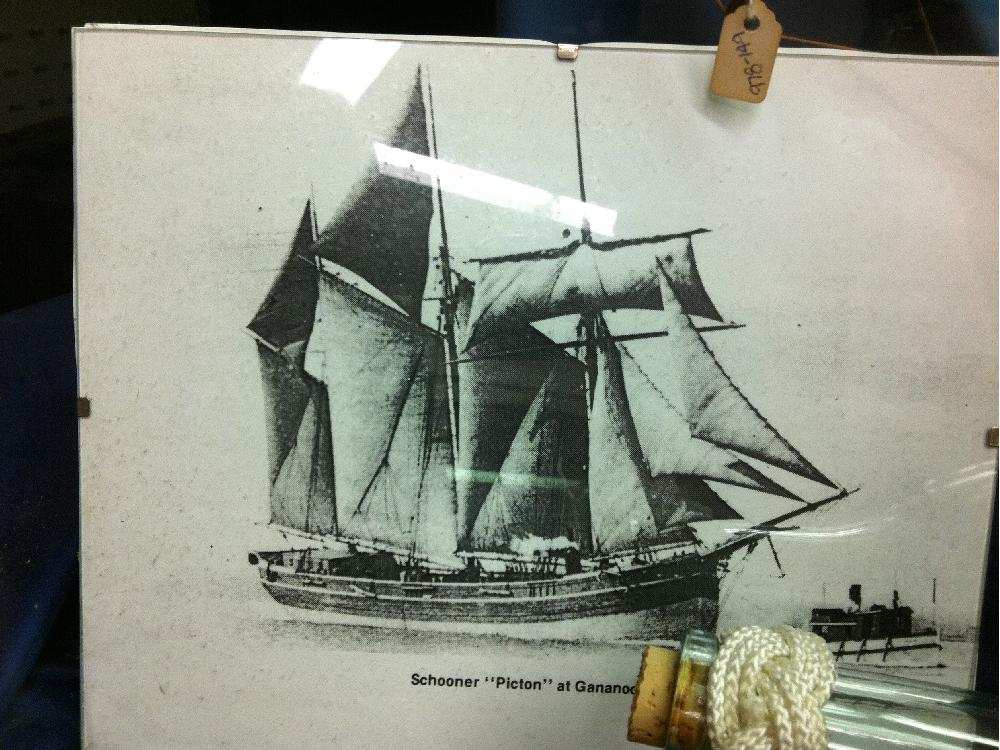
It was a perfect day for a sailing trip. Late June. 1900. The sun was hammering down on the decks of the Picton, a proud 100-foot schooner docked in Rochester, New York.
Captain J. Sidley stood at the helm. Beside him was his son, Vessy. Just twelve years old. The boy was ready for adventure. The crew of five was ready to work. They had a belly full of coal and a destination set for Belleville, Ontario. The plan was simple. Cross the lake. Drop the cargo. Go home.
They never made it.
As the Picton cut toward the open water, picking up speed, the lake decided to wake up. Lake Ontario is beautiful, but she has a temper. A sudden, violent wind ripped the topsail clean off the schooner. It happened fast. Too fast.
Two other ships were trailing the Picton. The sailors on board watched in horror. One moment, the schooner was fighting the wind. The next? Gone. It didn’t sink slowly. It didn’t capsize and float. Witnesses said it looked like a giant hand reached up from the depths and dragged the ship straight down to the bottom. It vanished.
By the time the other ships reached the coordinates, the water was empty. Silent. The only thing left of the massive vessel was a single sailor’s cap and some splintered wood bobbing in the chop. No bodies. No lifeboats. Just the lake, keeping its secrets.
Weeks passed. Hope faded. Then, a boy walking the shoreline off Sackett’s Harbour, New York—miles away at the extreme eastern edge of the lake—spotted something in the surf. A bottle.
It was corked tight. Sealed with wrapped wire. Inside, a scrap of paper. The handwriting was frantic. Scrawled in pencil by a man who knew he was about to die.
“Have lashed Vessy to me with heaving line so will be found together. -J. Sidley, Picton”.
Chills. That is the only reaction to a note like that. A father, in his final terrifying moments, tying his son’s body to his own, just praying that someone, somewhere, would find them. They never were found.
This tragic story is immortalized on a plaque inside the Mariners Park Museum in Prince Edward County, Ontario. But here is the scary part: The Picton isn’t an isolated incident. It is just one casualty in a long, dark history.
Welcome to the Marysburgh Vortex.
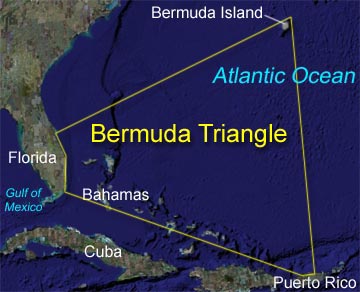
The Bermuda Triangle of the North
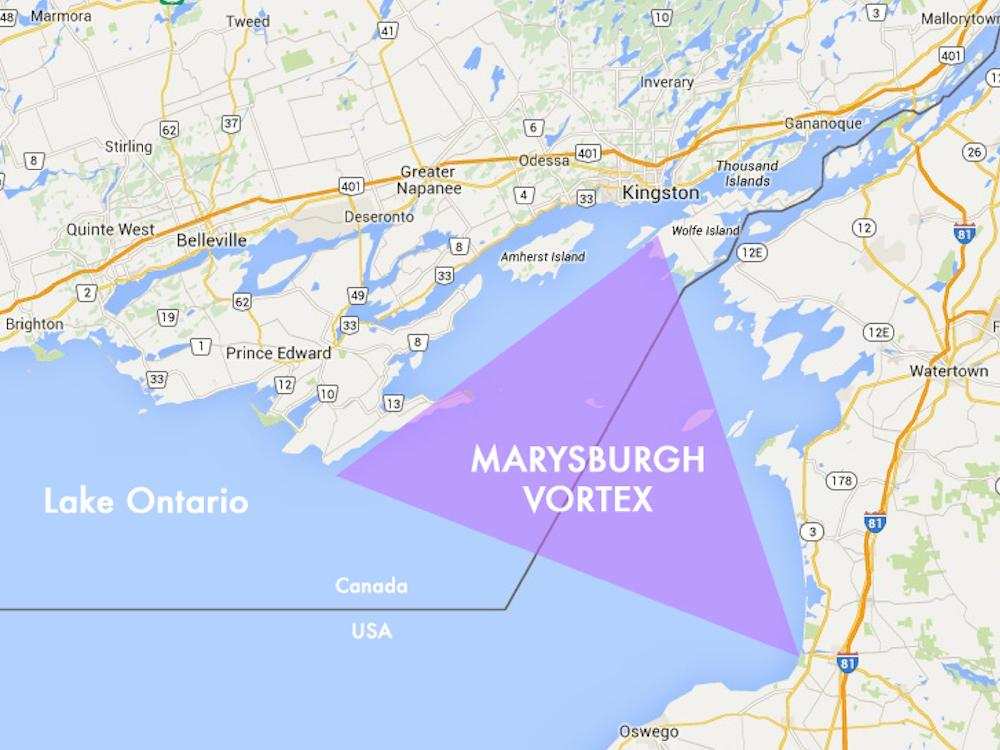
You have heard of the Bermuda Triangle. Everyone has. But did you know the Great Lakes have their own graveyard? Local legends call it the Marysburgh Vortex. It is a patch of treacherous water in eastern Lake Ontario that eats ships. Over the last two centuries, more than 100 vessels have gone missing here. Poof. Gone.
We aren’t talking about bad sailors or leaky boats. We are talking about seasoned captains and sturdy ships that simply cease to exist. Bizarre tales float around the local docks. Compasses spinning wild. Sudden, inexplicable fogs that stick to the water like glue. Ships that appear and disappear in the mist.
I grew up on these shores. The legend wasn’t just a story to me; it was the backdrop of my childhood. Old timers would look out at the water and shake their heads. They knew better than to trust a calm day in the Vortex. So, I decided to stop listening to the ghost stories and look at the facts. I wanted to know what is actually down there.
Is it paranormal? Is it aliens? Or is the planet itself attacking these ships?
A Personal Brush with the Anomaly
I have felt it myself. Sailing with my family through the Vortex, things get weird. You can be enjoying a sandwich one minute, and the next, the sky turns a bruised purple. The wind shifts 180 degrees in a snap. But the scariest part? The equipment.
I have watched our boat’s compass drift. It doesn’t point North. It points… elsewhere. Navigational charts for this area actually carry a warning. It’s right there in black and white, admitting that the government knows something is wrong.
“Magnetic Anomaly: Anomalies in the variation of the compass readings may range from 27 degrees west to 3 degrees east.”
Think about that. A 30-degree swing! If you are a captain in a storm, blindly trusting your compass, a 30-degree error means you aren’t heading for safety. You are driving your ship straight into the rocks.
Cold War Secrets: Project Magnet
This isn’t just folklore. The government took this seriously. Very seriously. In the 1950s, the buzz about magnetic anomalies—and yes, UFOs—was at an all-time high. The Canadian and U.S. governments launched a joint effort. They called it Project Magnet.
It sounds like science fiction, but it was real. Initiated in 1950 by the Canadian Department of Transport, the Defence Research Board, and the National Research Council (NRC), the goal was officially to “determine characteristics of the Earth’s magnetic fields.”
But dig a little deeper. The man heading the Canadian side was Wilbert Smith, a senior radio engineer. He was obsessed with geomagnetism as a potential propulsion source. He believed that if you could understand these magnetic vortices, you could understand how flying saucers moved. He wrote memos claiming that the “flying saucer” matter was the most highly classified subject in the U.S. government, rating higher than the H-bomb.
So, you have the military flying over Lake Ontario, hunting for invisible magnetic traps.
The United States jumped in a year later. The U.S. Navy ran their own Project Magnet. They kept it running until 1994! For over forty years, the Navy flew Lockheed Constellation aircraft—massive planes packed with sensitive electromagnetic sensors—back and forth over these waters. They were mapping the invisible lines of force that wrap around our planet.
According to the National Geophysical Data Center (NGDC), this data was supposedly for “making maps.” Sure. But when you look at what they found in Lake Ontario, you start to wonder if they found exactly what they were looking for.
The Scar on the Lake Floor
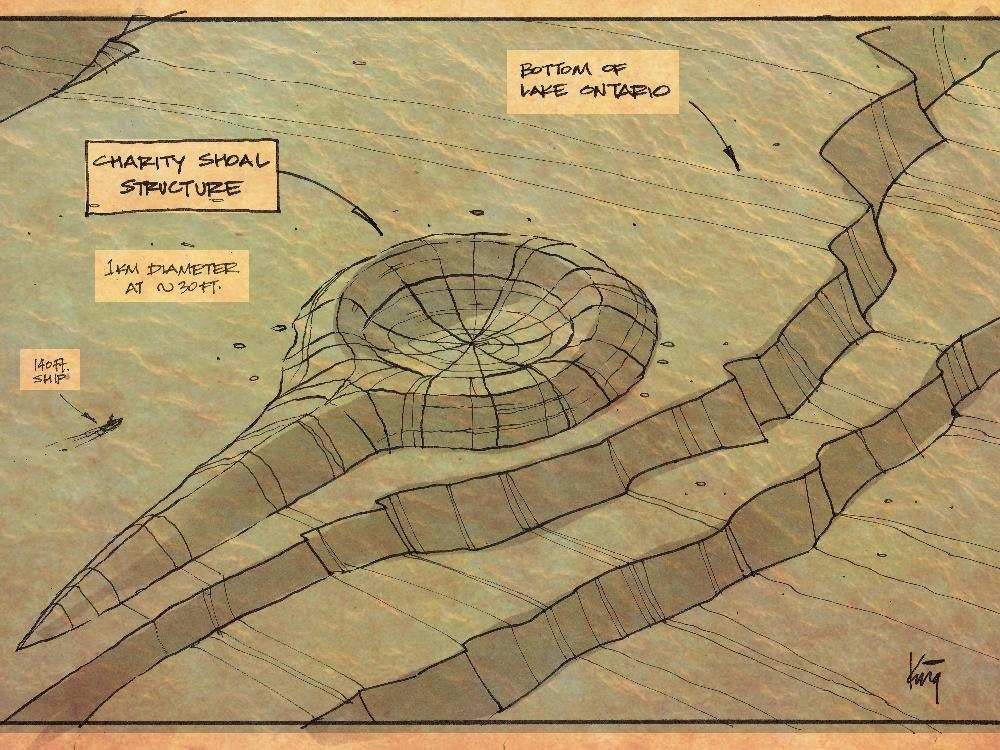
If you drain the water out of the Marysburgh Vortex, you see something terrifying. There is a ring down there. A perfect, massive circle carved into the limestone bedrock.
It is known as the Charity Shoal. It sits about 25 kilometers south of Kingston, Ontario. To a sailor, it’s a hazard. To a geologist, it’s a smoking gun.
The shoal is one kilometer wide. It is a crater. The rim rises up to within just a few meters of the surface—waiting to tear the hull off any ship that drifts too close—while the center drops into a deep basin. The NGDC and the National Oceanic and Atmospheric Administration (NOAA) took a hard look at this thing.
Here is what the NGDC report says:
“A small equidimensional circular depression 1000 meters in diameter, with a continuous encircling rim… An elongated ridge extends southwest from the feature… Aeromagnetic mapping by the Geological Survey of Canada revealed a negative magnetic anomaly over Charity Shoal, which is a characteristic feature of simple impact craters.”
Did you catch that? Impact crater.
They are saying something hit us. Something big.
In 2013, the Universities Space Research Association (USRA)—a heavy-hitter independent research corporation—did a deep dive on the structure. They didn’t mince words. Their document states, “The origin of the CSS is uncertain but it has been interpreted as an Ordovician age meteorite impact.”
A Visitor from the Void
Let’s rewind the clock. 460 million years ago. The Earth was a different place. The land that is now Ontario was likely underwater, part of a tropical shallow sea. Life was primitive.
Then, the sky caught fire.
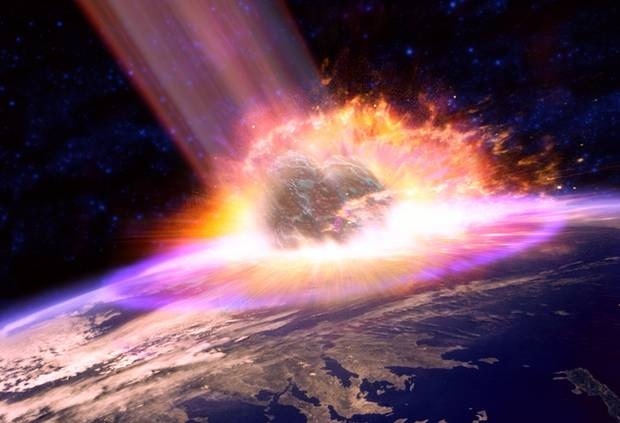
A rock from space, screaming through the atmosphere at 40,000 miles per hour, slammed into the planet. It wasn’t just a rock; it was likely an iron-nickel meteorite. Dense. Heavy. Magnetic. The impact would have been catastrophic. A massive explosion. A tsunami. The crust of the Earth shattered.
Richard Herd, the retired curator of the National Meteorite Collection of the Geological Survey of Canada, explained that an impact this violent doesn’t just leave a hole. It changes the geology. It can “depress the earth’s crust and have brought up molten material from inside.”
So now, you have a double-whammy.
- The Space Rock: If the meteorite was iron-heavy, remnants of that alien metal are buried deep in the crater. Iron is magnetic.
- The Magma: The impact cracked the world, allowing magma from the mantle to bubble up and solidify. This rock can also be highly magnetic.
The 2013 USRA study created a 2-D magnetic model of the crater. They found a “ring-like magnetic high and central magnetic low.” The anomaly is huge. It defies normal geological explanation. The only thing that fits the data? A massive meteorite impact.
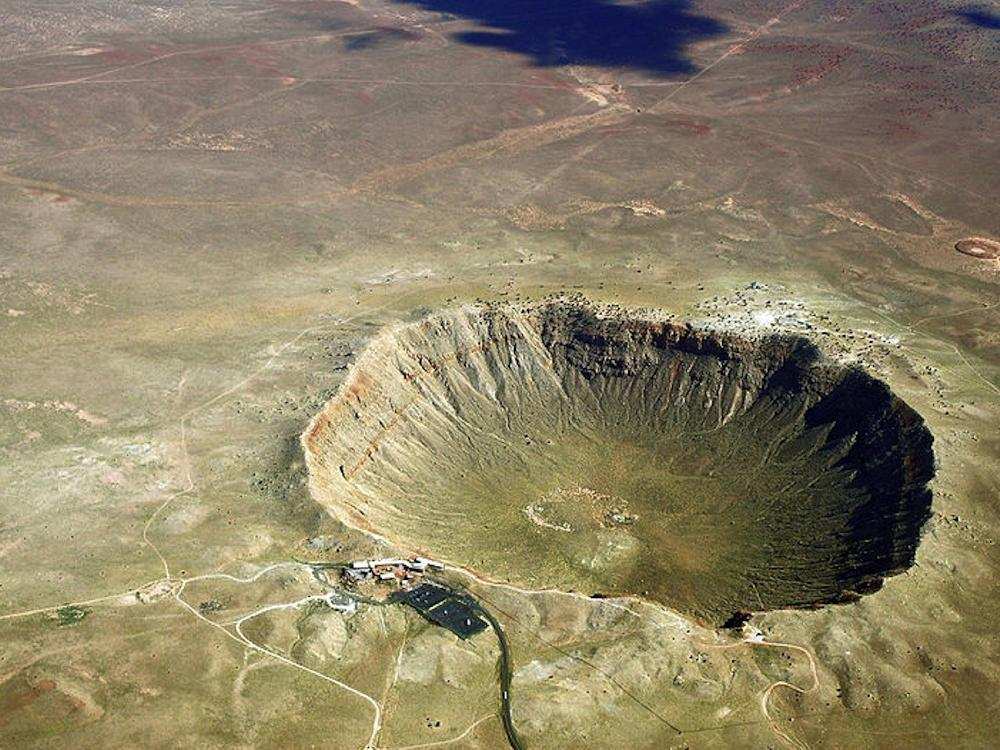
Think about the Barringer Crater in Arizona. It is a tourist attraction. You can walk up to the rim and look down. It is awesome. The Charity Shoal crater is a twin to the Barringer Crater. Same size. Similar properties. The only difference? Charity Shoal is hiding under water.
Because it is submerged, we forget it is there. But the magnetic field doesn’t care about water. It pulses right through the lake, reaching up to grab the compass needles of passing ships.
The Ghost Ship of 2013
You might be thinking, “Okay, cool history, but that was 1900. We have GPS now. We have radar. We are safe.”
Are we?
The Marysburgh Vortex hasn’t gone to sleep. It is still hungry. In 2013—the era of smartphones and satellites—another mystery unfolded. This wasn’t a dusty old legend. This was breaking news.
An unmanned sailboat was spotted drifting off the southern shore of Prince Edward County. It was the Persnickety, a 32-foot beauty. It had sailed out of Sodus Bay, New York. When the recovery crew boarded the vessel, the hair on their arms must have stood up.
The boat was in perfect condition. The sails were up, catching the wind. There was no damage. No sign of a struggle. No blood. No chaos.
Authorities searched the cabin. They found the operator’s wallet. His driver’s license. A stash of money. All untouched. But the detail that really keeps me up at night? They found food and ice in the cooler.
The ice hadn’t melted.
Whatever happened to the captain, it happened fast. Just like the Picton. One minute he was there, maybe reaching for a cold drink. The next? Gone. Vanished into the ether.
A massive three-day search operation was launched. Helicopters. Boats. Divers. They combed the Vortex. They found nothing. No body. No clues. The disappearance of the Persnickety operator remains unsolved to this day.
The Verdict
So, what is happening out there?
Is it a portal? A curse? Probably not. The truth is likely more grounded in science, but that makes it no less deadly.
We have a 460-million-year-old star wound on the bottom of the lake. A massive deposit of alien iron and smashed earth that generates a magnetic field strong enough to twist a compass needle 30 degrees off course. For two hundred years, captains have sailed into that trap. They check their compass. They trust their instruments. And the Vortex lies to them.
It guides them toward the shoals. Toward the rocks. And when the weather turns—when the “white squalls” of Lake Ontario descend—confusion turns to panic. The ship hits the reef. The hull breaches. The lake rushes in.
With modern GPS, the number of disappearances has dropped. Satellites don’t care about magnetic fields. But technology fails. Batteries die. electrical systems short out. And when they do, the mariner is left alone with the compass.
The Marysburgh Vortex is waiting. It has claimed over a hundred ships. It has claimed fathers, sons, and solo sailors. The crater is still down there, pulsing in the dark. Until we send a submarine down to map every inch of that alien impact site, the “Bermuda Triangle of the North” will keep its title as one of the most mysterious places on Earth.
Next time you are on Lake Ontario, and the fog rolls in, check your compass. If it starts to spin… turn back.

Arindam loves aliens, mysteries and pursing his interest in the area of hacking as a technical writer at ‘Planet wank’. You can catch him at his social profiles anytime.