Home Alien Life Will the Aliens Be Nice?

Will the Aliens Be Nice?

0
78

First Contact: Why a Message from the Stars Could Be Our Death Sentence

Look up at the night sky. Go ahead. That velvet blackness, sprinkled with a billion distant diamonds. It’s beautiful, isn’t it? Inspiring. It makes you feel small, but also part of something immense, something grand.

And it fills you with the Question. The one that has haunted humanity since we first huddled around a fire and looked up in wonder.

Are we alone?

Every day, the math screams NO. The James Webb telescope peels back layers of the cosmos, revealing galaxies and nebulae in mind-bending detail. We’ve found thousands of exoplanets. Worlds orbiting other suns. Many of them are in the “Goldilocks Zone,” not too hot, not too cold, just right for liquid water. For life.

The probability that we are the only thinking, tool-using creatures in this sprawling, infinite universe is becoming statistically absurd. So the real question isn’t “if” there is intelligent life out there. The real question is far more terrifying.

Where are they?

This is the Fermi Paradox. The Great Silence. A cosmic emptiness that is profoundly unsettling. And if that silence ever breaks… we should be very, very afraid.

The Myth of the Friendly Star-Trek Welcome

Forget what you’ve seen in the movies. Forget the benevolent, wise aliens who arrive to give us world peace and cure cancer. That’s a comforting bedtime story we tell ourselves because the alternative is too monstrous to consider.

But we have to consider it.

What is the most likely thing to happen if we make contact with an extraterrestrial intelligence? Given the unimaginable distances between stars, many scientists assume the only real possibility is an exchange of messages. A long-distance pen-pal relationship playing out over centuries, with signals crawling at the speed of light. Little chance of harm there, right?

Wrong. That assumes they are just like us. It assumes their intentions are purely conversational. It’s a dangerously naive assumption.

Will the Aliens Be Nice?

The non-zero probability of actual, physical contact is the one we need to worry about. Because if they show up on our doorstep, one fact is already established beyond any doubt: they are incomprehensibly more advanced than we are.

They will have mastered interstellar travel. They will wield energies we can only dream of. Their technology might as well be magic. We would be like ants trying to understand the internet. And if they’ve crossed the interstellar void to get to Earth, you can bet your last dollar they didn’t do it just to say “hi.”

They will want something. Something worth the colossal effort of the journey.

Deep Dive: The Dark Forest Theory

There’s a modern theory, born from science fiction but bleeding into serious scientific discussion, that explains the Great Silence perfectly. It’s called the Dark Forest theory.

Imagine the universe is a dark forest at night. It’s filled with countless hunters, all armed, all creeping silently through the trees. Every hunter is a civilization. They know the forest is full of other hunters. Some might be friendly. Many are not. But there’s no way to know for sure.

Communication is impossible to trust. A friendly “hello” could be a trick. A sign of weakness. So what is the safest course of action for any hunter in the forest?

Stay silent. Erase your tracks. Hold your breath.

Because if you make a sound—if you light a fire to reveal your existence—you expose your position to every other hunter in the forest. And the first one to find you has a terrible choice to make. They can’t be sure of your intentions. You might be peaceful now, but your technology could grow. You could become a threat tomorrow. The only truly safe option for them is to eliminate you before you can eliminate them.

In the Dark Forest, revealing your location is a death sentence. The universe is silent because the smart civilizations are hiding. The ones who made noise? They’re already gone.

We, on Earth, have been lighting a bonfire for over a century. Our radio waves, our TV signals, our deep-space messages. We are screaming our location into the dark.

A History Lesson Written in Blood

If you think a technologically superior civilization would automatically be morally superior, you haven’t been paying attention to our own history. It’s the single greatest predictor we have for what a “first contact” scenario would look like.

Think about it. When has a more advanced human society ever met a less advanced one and had it end well for the latter? It’s a story written over and over again, in blood and tears, across every continent on this planet.

When Hernán Cortés arrived in the Aztec Empire, did he come to exchange wisdom and culture? No. He came for gold. He came for conquest. The Spanish had steel, gunpowder, and horses. The Aztecs did not. The result was the complete and utter destruction of a civilization.

When European powers colonized Africa and the Americas, did they see the indigenous people as equals? Or did they see them as obstacles? As resources to be exploited? As savages to be “civilized” or, more often, exterminated?

The pattern is chillingly consistent. The powerful take what they want from the weak.

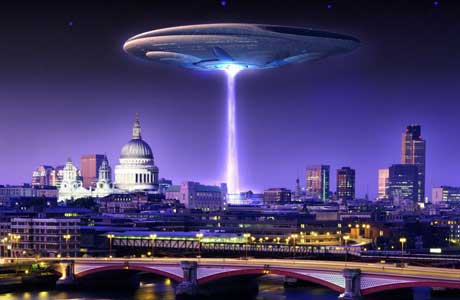
They will hunt us down, they will find us, and they will kill us!

An alien race that can cross the galaxy would be to us what we are to a chicken. Do you pause to consider the hopes and dreams of a chicken before you make a sandwich? Do you worry about the social structure of the ant colony whose hill you just paved over for a new driveway? No.

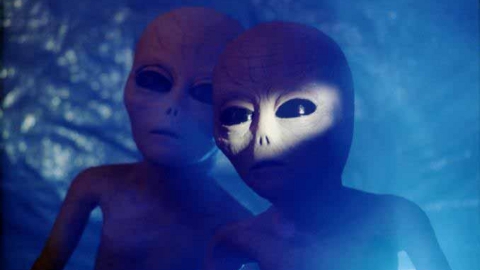
To them, we might be nothing more than intelligent animals. They could enslave us. Hunt us for sport. Dissect us as objects of cold, detached scientific curiosity. Or worse, they could simply wipe us out as an inconvenience, a bacterial infection on a planet they now want for themselves, and leave no trace that our civilization ever existed.

What Could They Possibly Want from Earth?

So if they come, what’s the prize? What could be so valuable on this little blue marble that it justifies an interstellar invasion?

Scenario 1: Resources? Probably Not What You Think.

The old sci-fi trope is that aliens will come for our water or our precious metals. This is highly unlikely. Water is one of the most common molecules in the universe. Asteroids are packed with heavy metals. It would be far, far easier for a super-advanced civilization to mine an asteroid belt than to fight a messy, gravity-bound war on a planet teeming with annoying life forms.

But what about biological resources? Our planet’s DNA is the product of four billion years of evolution. Our biosphere is a complex, unique system. Perhaps *we* are the resource. Our genetic code could be a treasure trove. Or maybe they’re just hungry.

Scenario 2: Prime Real Estate.

Forget the raw materials. The planet itself is the prize. Earth is a paradise. A self-regulating, water-rich, oxygen-producing haven in the cold vacuum of space. Finding a world like this might be exceptionally rare. If an alien species is looking to expand, to colonize, Earth is a turnkey property. And we’re just the current tenants, facing a cosmic eviction notice served with plasma cannons.

Scenario 3: Pre-emptive Strike.

This goes back to the Dark Forest. Maybe they aren’t evil. Maybe they’re just pragmatic. And terrified. They detect our civilization. They see our rapid, chaotic technological growth. They see that we figured out nuclear fission less than a century ago and immediately used it to build weapons of mass destruction. They see our probes starting to poke around the solar system. From their perspective, humanity looks like an aggressive, unpredictable species that is about to burst onto the galactic scene. Are they going to wait around for a few thousand years to see if we become a threat to them? Or do they just snip the problem in the bud? It’s nothing personal. Just pest control.

The Great Filter and the Sounds of Silence

There are other explanations for the silence. One is the “Great Filter” theory. This idea posits that there is some barrier, some predictable challenge that is so difficult to overcome that it stops almost all civilizations from ever becoming interstellar.

Maybe it’s a technological filter, like the invention of nuclear weapons, which leads to self-destruction. Maybe it’s a biological filter, like a pandemic that inevitably arises on a crowded planet. Or maybe… maybe the Great Filter is out there. It’s the first super-predator civilization that achieves interstellar travel and makes it its mission to eliminate all competition.

This leads to the most nightmarish possibility of all: The Berserker Hypothesis. Named after a series of science fiction stories, this theory suggests the galaxy could be filled with autonomous, self-replicating probes—Berserkers. Their programming is simple and horrifying: seek out any and all signs of life, and sterilize the planet. Utterly. Completely. This would explain the Great Silence in the most final way imaginable. The universe isn’t quiet. It’s been silenced.

On the flip side is the Zoo Hypothesis. This suggests that advanced civilizations are out there, and they know about us. But they have deliberately chosen not to make contact. They observe us from a distance, treating Earth as a protected wildlife preserve. They don’t interfere because doing so would contaminate our natural development. We are cosmic curiosities, living in a carefully maintained terrarium. It’s a less terrifying thought, but it’s still deeply unsettling. It means we’re being watched.

The Insanity of METI: Shouting Into the Jungle

For decades, we’ve engaged in SETI: the Search for Extraterrestrial Intelligence. This is a passive act. We are listening. We’re scanning the skies for signals, hoping to overhear a conversation. It’s a safe, logical first step.

But recently, a more aggressive and, many would argue, reckless movement has gained traction: METI, or Messaging Extraterrestrial Intelligence. This is not listening. This is shouting.

Scientists involved in METI are actively beaming powerful, information-rich messages at nearby star systems, hoping someone… or something… will hear us. The famous Arecibo message of 1974 was an early example. More are being planned.

This is an unbelievable gamble, taken on behalf of every single person on this planet, without our consent. It’s like a child lost in the dark forest, yelling “I’m here! I’m friendly!” into the shadows, hoping the thing that finds them is a rescuer and not a wolf. The late, great Stephen Hawking warned against this exact thing. He said that any encounter with an advanced civilization would be like when the Native Americans first met Christopher Columbus. “That didn’t turn out so well,” he drily noted.

Why are we risking it all? For what? The potential benefits are enormous, proponents say. They could give us technologies that solve all our problems: disease, poverty, climate change. They could usher in a golden age.

Perhaps. But there is no reason to believe that a paradise is more probable than a hell of slavery or total extermination. And here’s the cold, hard calculus: enormous gains are never worth the equal risk of a horrendous, species-ending loss.

You don’t play Russian Roulette just because there’s a small chance the gun is loaded with a winning lottery ticket instead of a bullet.

We cannot know what awaits us out there. We cannot predict their motives or their morals. All we know is that there is a very real chance of an unthinkably horrible outcome.

The Fermi Paradox, the Great Silence… maybe it’s not a puzzle to be solved. Maybe it’s a warning. The quiet is a gift. It’s the sound of survival.

So the next time you look up at those beautiful, silent stars, ask yourself a different question. Don’t ask, “Are we alone?”

Ask, “Should we be praying that we are?”

Originally posted 2013-03-27 22:30:10. Republished by Blog Post Promoter