The Madman on the Mountain: Did a Cross-Dressing Novice Secretly Conquer Everest?
Some stories are just too wild to be true. And then there’s the story of Maurice Wilson.
In 1935, a British expedition stumbled upon a frozen body high on the desolate slopes of Mount Everest. A body in a tattered tent, a diary clutched nearby. This was not unusual. The mountain has always been a graveyard. But this man… this man was different. He was a World War I veteran, a self-proclaimed mystic, and a complete, total, absolute amateur.
He had a plan so audacious, so utterly detached from reality, that it sounds like fiction. A plan to fly a tiny plane from England to the Himalayas, crash-land it near the summit, and simply walk to the top.
He knew nothing about flying. He knew less about climbing.
What he possessed was something far more dangerous: unshakable, terrifying self-belief. This is the story of Maurice Wilson, a man who aimed for the roof of the world and became one of Everest’s most bizarre and enduring mysteries. Did he fail spectacularly, as everyone assumes? Or did the madman actually pull it off?
Who Was Maurice Wilson? The Man Before the Mountain
To understand the madness, you have to understand the man. Maurice Wilson wasn’t born an adventurer. Born in 1898 in Yorkshire, his early life was unremarkable until it was shattered by the Great War. Like millions of others, he was thrown into the meat grinder of the Western Front. He earned a Military Cross for his bravery, but the trenches took their toll. A machine gun tore through his left arm, leaving him in constant, agonizing pain for the rest of his life.
The war broke something in him. But it also forged something new. An iron will. A belief that he had survived the worst humanity could offer, so what was a little pain? What was a mountain?
After the war, he drifted. He ended up in New Zealand, running a women’s clothing shop—a strange detail that will become shockingly relevant later. But the pain in his arm never left. Doctors were useless. So Wilson turned inward. He discovered a radical new treatment: prayer and extreme fasting. He claimed that after 35 days of nothing but water, he was cured. The pain was gone. This was his epiphany. He believed he had found a secret power, a direct line to a force that could overcome any physical obstacle. If faith and fasting could heal his shattered body, what else could it do?
His eyes turned to the newspapers, filled with tales of gallant British expeditions trying—and failing—to conquer the ultimate prize. Mount Everest. He saw the failures of men like George Mallory and Andrew Irvine, who vanished near the summit in 1924, not as a warning, but as an opportunity. They had relied on science, on oxygen, on experience. He would rely on something greater. Divine providence.
The Plan So Crazy It Just Might… Fail?
Wilson’s plan wasn’t just half-baked; it was raw dough thrown at a glacier. It was a beautiful, elegant, three-step masterpiece of insanity.
Step One: Learn to Fly (Sort Of)
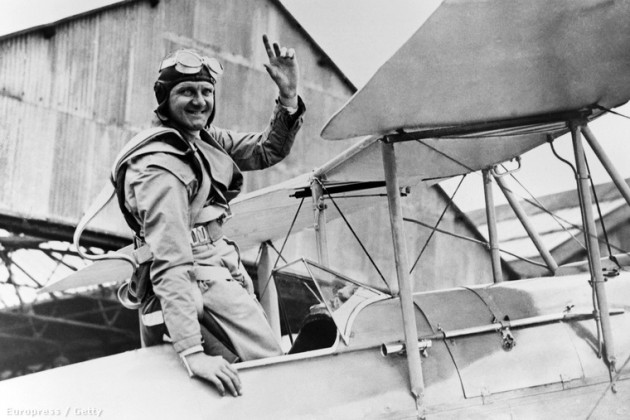
He needed to get to the mountain. Why sail for months when you could fly? The fact that he’d never been in a cockpit was a minor inconvenience. He bought a second-hand Gipsy Moth biplane, a fragile thing of wood and fabric. He christened it Ever Wrest. Get it? He spent a grand total of two months learning to fly. His instructors were horrified, calling him a “bloody awful” pilot who ignored their advice and seemed to fly on instinct alone. He barely scraped a pilot’s license.
Step Two: The Flight of the Ever Wrest
In May 1933, he took off from London, pointed east, and just… went for it. The flight itself was an epic saga of near-disasters and blind luck. He navigated with a cheap pocket compass across Europe and the Middle East. Authorities in every country tried to stop him, knowing his flight plan was suicidal. He ignored them. He was denied permission to fly over Persia, so he just flew over it anyway. After two weeks of harrowing, death-defying flying, he landed in India. He had made it. The hardest part, he believed, was over.
Step Three: The Crash-Landing Gambit
This was the genius stroke. He would fly from India into forbidden Tibet, soar up the side of Everest to a high-altitude meadow called the North Col, and perform a controlled crash. Just belly-flop the Ever Wrest onto the snow. From there, it would be a simple, brisk walk to the summit. A weekend hike, really. Anyone with even a shred of mountaineering knowledge knows this is impossible. The air is too thin for a Gipsy Moth to generate lift. The “meadow” is a treacherous, vertical sheet of ice. Landing there wouldn’t be a crash; it would be an obliteration.
From Cockpit to Crampons: The Himalayan Deception
The British authorities in India were not amused. They grounded him immediately, impounding his beloved Ever Wrest. His dream of an aerial assault was dead. For any normal person, this would be the end. Game over. Go home.
Not Maurice Wilson.
He simply sold his plane for 500 pounds and pivoted to Plan B. If he couldn’t fly into Tibet, he’d walk. He spent the winter in Darjeeling, plotting. He hired three Sherpas, including two named Tewand and Rinzing. Then, disguised as a Buddhist monk, muttering prayers and spinning a prayer wheel, he slipped across the border on foot.

This was it. The real journey began. He was a man walking toward his destiny, armed with little more than a cheap tent, a few pounds of grain, and a will forged in the fires of war and fasting.
Alone on the Ice: The Diary of a Doomed Man
Most of what we know about Wilson’s final weeks comes from the diary they found with his body. It is a terrifying, heartbreaking record of monumental courage meeting catastrophic ignorance.
The First Assault
Upon reaching the Rongbuk Monastery at the foot of Everest, he sent his Sherpas away. He wanted to do this alone. This was his spiritual quest. He set off up the Rongbuk Glacier, following the path of previous, far better-equipped expeditions. He was immediately, hopelessly lost. He had no map-reading skills. No understanding of glaciers. He wandered for days across the ice, getting nowhere. He was wearing flimsy hiking boots on a surface that demanded specialized gear.
The “Crampon Incident”: A Fatal Mistake?
In one of the most tragicomic moments in mountaineering history, Wilson stumbled upon an abandoned camp from a previous expedition. Lying in the snow was a pair of crampons—spiked frames that attach to boots for gripping ice. They were the single most important piece of gear he could possibly have found. They would have saved him days of struggle and potentially his life. He picked them up, looked at them, decided they were excess weight… and threw them away. He documented this in his diary. It was a death sentence, and he didn’t even know it.
Beaten, But Not Broken
After nearly three weeks of brutal, fruitless struggle, he was forced to retreat. He stumbled back to the monastery, half-dead, snowblind, and in searing pain from his old war wounds. He had failed to even reach the base of the mountain proper. His diary entry was telling: “It’s the weather that’s beaten me – what damned bad luck.” He didn’t blame his lack of skill, his poor gear, or his idiotic decision to discard the crampons. He blamed the weather. Bad luck. In his mind, the plan was still sound.
One Last Push into the Void
After 18 agonizing days of recovery, he decided to try again. This time, he convinced Tewand and Rinzing to help him. With their knowledge, they made swift progress, reaching the old British Camp III at the base of the North Col in just three days. They had reached the real start of the climb.
But then a storm hit, trapping them in their tent for days. The Sherpas, seeing the icy, vertical slopes above and knowing Wilson had no real climbing gear, begged him to go back. It was suicide. He wouldn’t listen.
On May 29, he gave them a note for his landlady and sent them down the mountain. He was going on alone. He would use the fixed ropes and cut steps left by a 1933 expedition. He wrote in his diary: “Not taking short cut to Camp V as at first intended as should have to cut my own road up the ice and that’s no good when there is already a hand rope and steps (if still there) to Camp IV.” It shows he had a sliver of a plan, but one entirely dependent on the gear of others.
His last diary entry was on May 31, 1934. It reads, simply: “Off again, gorgeous day.”
Those were the last words Maurice Wilson ever wrote. A year later, climber Eric Shipton found his body, frozen solid, lying beside the wreckage of his tent. The diary was in his pocket.
The Summit Conspiracy: Did Wilson Secretly Succeed?
The story should end there. A tragic tale of a deluded man paying the ultimate price for his hubris. But in the strange world of Everest lore, nothing is ever that simple.
In 2003, climbing author Thomas Noy dropped a bombshell. He proposed a wild theory: What if Maurice Wilson, against all odds, actually reached the summit of Everest and died on his way down?
The Gombu Testimony
The core of this theory comes from a single, electrifying piece of testimony. Noy interviewed Gombu, a Tibetan climber who was part of the successful Chinese expedition in 1960. Gombu recalled finding the remains of an old tent at an astonishing altitude: 8,500 meters (about 27,900 feet). This is higher than Everest’s “Death Zone.” Critically, it’s far, far higher than any of the camps established by the British expeditions of the 1920s and 30s. So who could have pitched a tent there?
Noy’s answer: Maurice Wilson. If true, it means Wilson got dramatically higher than anyone ever thought possible, tantalizingly close to the summit itself.
Analyzing the Evidence (or Lack Thereof)
Could it be true? The mountaineering establishment scoffs at the idea. Chris Bonington, a legend of the sport, stated, “I think you can say with absolute certainty that he would have no chance whatsoever.” An amateur, with no gear, no oxygen, and no experience, climbing the North Face of Everest alone? It’s unthinkable.
Historians point out that Gombu’s memory, decades after the fact, could be mistaken about the altitude. No other member of the 1960 Chinese team ever mentioned finding a tent so high. And if the tent did exist, could it have belonged to someone else? Whispers of a secret, failed Soviet expedition in 1952 have circulated for years—another Everest ghost story. Perhaps the tent was theirs.
What if… He Made It?
But just for a second, what if? What if Wilson’s faith was so strong, his pain tolerance so high from his war injuries, that he achieved the impossible? Powered by belief, he could have clawed his way to the top in a single, desperate push, only to collapse from exhaustion on the descent. It’s an incredible story. It’s almost certainly not true. But on Everest, the line between history and myth is often blurred by wind and snow.
The Final, Bizarre Twist: The Secret in Wilson’s Rucksack
Just when you think this story can’t get any stranger, it does. When Shipton’s team found Wilson’s body, they made a peculiar discovery. Tucked away in his rucksack were women’s clothes. Reports from the time, though often whispered, claimed he was found wearing women’s underwear. A silk chemise. A frilly bra.
The final enigma of Maurice Wilson had nothing to do with climbing.
The story went cold for decades, dismissed as rumor. Then, the 1960 Chinese expedition that Gombu was on made another discovery. At an altitude of 21,000 feet, not far from where Wilson’s body lay, they found a woman’s high-heeled shoe frozen in the ice.
What is going on here? Was Wilson a cross-dresser? It seems likely, especially given his past work in a ladies’ dress shop. But why bring these items on a life-or-death expedition to the highest point on Earth? Were they comfort items? A secret identity he embraced when truly alone? Some have even floated the wild theory that he wasn’t alone at all, though there is zero evidence for this.
This final, deeply personal secret makes Maurice Wilson an even more compelling and tragic figure. He wasn’t just a man fighting a mountain; he was a man wrestling with forces inside himself that we can only guess at.
So who was he? A fool? A spiritual warrior? A secret pioneer who touched the sky and was erased by history? Or just a deeply troubled man on the ultimate quest for meaning?
We have his diary. We have his body. But the final chapter of his story was never written. The truth, whatever it is, remains frozen in time, locked away on the unforgiving slopes of Everest, one of the most wonderfully bizarre mysteries the world has ever known.