Home Weird World Paranormal The Myrtles Plantation Hauntings

The Myrtles Plantation Hauntings

0
58

The Myrtles Plantation: Deconstructing the Lies of America’s Most Haunted House

There are some places where the past isn’t dead. It isn’t even past. It’s breathing. It’s watching. It’s waiting.

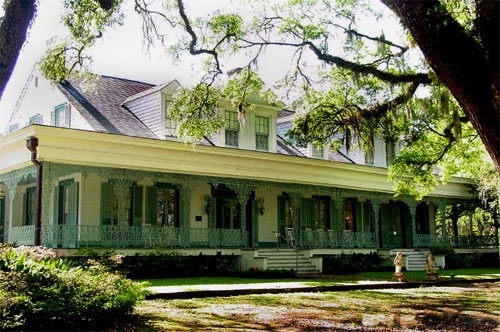
Deep in the humid heart of St. Francisville, Louisiana, shrouded by the weeping branches of ancient live oaks dripping with Spanish moss, stands a house. From the outside, the Myrtles Plantation is a picture of antebellum elegance. A sprawling, graceful home with a 125-foot veranda, intricate ironwork, and a sense of drowsy, Southern charm. But don’t let the postcard fool you. The air here is heavy. Thick with stories. Saturated with sorrow.

They call it America’s Most Haunted House. A place where history and horror are woven together so tightly you can no longer see the seams. The official legend whispers of no fewer than ten murders committed within its walls. A vengeful slave, poisoned children, a bloody Civil War skirmish, and a man shot in cold blood who still crawls up the grand staircase every single night.

It’s a terrifying, perfect story. But here’s the secret they don’t always tell you at the start of the tour.

Most of it might be a lie.

Today, we’re not just telling the ghost stories. We’re ripping them apart. We’re going to sift through the historical records, the whispered legends, and the modern-day paranormal claims to find the truth. What is real, what is folklore, and what is something far, far stranger? Buckle up. We’re checking in to the Myrtles Plantation.

The Ghost in the Green Turban: The Poisonous Legend of Chloe

Every great haunted house needs a signature ghost. Its leading lady of the afterlife. For the Myrtles, that specter is Chloe. The story, as it’s almost always told, is a brutal gut-punch of a tale.

20140110-001022.webp

Chloe was an enslaved woman on the plantation, owned by Clark and Sara Woodruff. The details get murky here, shifting with each retelling. In some versions, she was a house slave forced into being Clark’s mistress. In others, she was simply an incorrigible eavesdropper, always listening at keyholes to gather information. One day, she was caught. As punishment, Clark Woodruff had one of her ears sliced off. To hide the disfigurement, she took to wearing a green turban, which would become her spectral trademark.

Her spirit broken, Chloe plotted a strange form of redemption. Or was it revenge? She decided to bake a birthday cake for one of the daughters. But she added a secret ingredient: the boiled and reduced leaves of the oleander plant, a common decorative shrub on the property. And a plant that is violently poisonous.

The plan, the legend says, was not to kill. It was to make the family just sick enough that she could nurse them back to health with a homemade remedy, proving her worth and securing her position in the household. A desperate gamble.

It went horribly wrong.

The poison was far more potent than she anticipated. Only Sara Woodruff and her two young daughters ate the cake. All three died in agony. When the other enslaved people discovered what Chloe had done, they panicked. Fearing the master’s wrath would fall upon all of them, they took matters into their own hands. They dragged Chloe from her quarters, hanged her from a nearby oak tree, and then, to hide the evidence, weighted her body down and threw it into the churning brown waters of the Mississippi River.

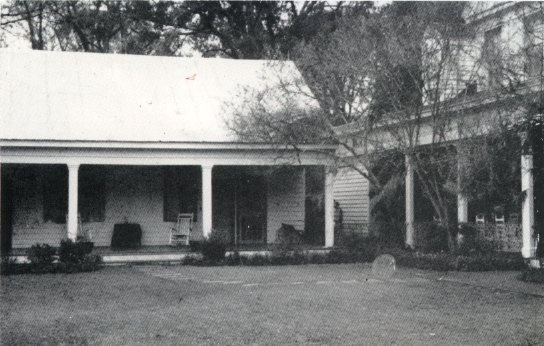
A tragic, horrifying story. And a powerful one. To this day, visitors to the Myrtles report seeing the spectral figure of a woman in a green turban, wandering the grounds, her face a mask of eternal sorrow. Some have even captured a famous, hazy photograph that purports to show her ghostly form standing between two of the buildings.

Deep Dive: The Problem with Chloe’s Story

Here’s where it gets complicated. The story is incredible. But is it true? Historians have scoured the records. They’ve checked census data, property records, and personal journals from the period. And they’ve found… nothing.

There is zero historical evidence that the Woodruff family ever owned a slave named Chloe. Zero. Furthermore, while Clark and Sara Woodruff did live at the plantation, historical records show that Sara and only *one* of her children died in 1823 and 1824. And they died of yellow fever, a common and devastating Scourge of the time. The other daughter grew to adulthood and married. There was no mass poisoning. No killer cake.

So where did this incredibly detailed, emotionally powerful story come from? Most evidence points to one place: marketing.

In the mid-20th century, a new owner purchased the home and began publishing advertisements and pamphlets promoting it as a haunted tourist destination. It appears the story of Chloe was either invented wholesale or wildly embellished from a far less dramatic local tale to create a marketable legend. It worked. The story of the slave girl in the green turban became the central pillar of the Myrtles’ terrifying reputation.

It forces us to ask a chilling question. If the most famous ghost story at America’s Most Haunted House is a fabrication, what else is?

Blood on the Grand Staircase: The True Story of William Winter

While the story of Chloe may be built on a foundation of sand, there is one murder at the Myrtles that is all too real. It’s the one event that needs no embellishment, no ghostly spice. It is the historical anchor of the plantation’s bloody reputation, and it centers on a man named William Drew Winter.

Winter was an attorney who purchased the plantation in 1865, after the Civil War. He lived there with his wife, Sarah, and their children. By all accounts, he was a respected man, but the post-war South was a violent and chaotic place. And that violence came calling on William Winter one evening in 1871.

He was standing on the side porch when a man rode up on horseback. A stranger. Words were exchanged—we’ll never know what they were—and then a single, deafening crack echoed through the twilight air. A pistol shot.

The stranger wheeled his horse around and vanished into the darkness, leaving William Winter mortally wounded. Stunned, clutching a bleeding wound in his side, Winter staggered back into his home. His only thought was to get to his family upstairs. He entered the grand central hallway, a space now famous for its haunted mirror, and began to climb the main staircase.

He made it one step. Two. Ten. He was dragging himself up, leaving a trail of blood on the polished wood. His wife, hearing the commotion, rushed to the top of the stairs and saw the horrific scene unfolding below. She screamed his name. He reached the seventeenth step… and collapsed. He died right there, in his wife’s arms, on the seventeenth step of the grand staircase.

This isn’t a legend. It’s a verified, documented murder. And it’s said that William Winter never finished his climb.

To this day, guests and employees report hearing the sound. The heavy, agonizing thud of dying footsteps on the stairs. It often happens late at night. Slow, pained, dragging sounds. THUMP… THUMP… THUMP… They ascend the staircase, only to stop abruptly before reaching the top. Always on the seventeenth step. Paranormal investigators have captured countless EVPs (Electronic Voice Phenomenon) on that staircase, faint whispers and groans that many believe are the last moments of William Winter, replaying for eternity.

A Legion of Lost Souls

While Chloe and William Winter are the headliners, the Myrtles is said to host an entire ensemble cast of apparitions. The sheer variety of the reported phenomena is staggering, suggesting that the plantation isn’t just haunted by one or two spirits, but is more like a spiritual Grand Central Station.

20140110-001403.webp

The Woodruff Children in the Mirror

Let’s go back to the Woodruffs. Even if they weren’t poisoned, their tragic deaths from yellow fever left a mark. In the main hallway hangs an ornate, gilded mirror. It’s been there since the house was built. The legend surrounding this mirror taps into old deathbed superstitions. When someone dies in a home, all the mirrors are supposed to be covered, lest the spirit of the deceased become trapped within the glass.

After Sara and her child died, custom was followed. Every mirror in the house was draped in black cloth. Except one. The grand mirror in the hall was overlooked.

The story goes that the spirits of Sara Woodruff and her two children—yes, two, just like in the Chloe tale—were ensnared by the reflective surface. People who look into the mirror today report seeing more than just their own reflection. They see shadowy figures moving behind them. Small, childlike handprints appear on the glass, even moments after it has been cleaned. Some have photographed strange, distorted faces that seem to be looking out from within the mirror itself. Is it a trick of the light on antique, flawed glass? Or is it a window to another world, a prison for a family that never left?

Echoes of War and Whispers of Voodoo

The plantation’s history is a catalog of American tragedy. It’s said the house is built atop a Native American burial ground of the Tunica tribe, and some visitors have reported seeing the ghost of a young Native American woman near the property’s edge. While a common trope in haunted lore, the sheer weight of history in this part of the country makes it feel disturbingly possible.

The Civil War also left its scars. Union soldiers allegedly ransacked the home, and three were supposedly killed in the process. This story is tied to another of the Myrtles’ physical mysteries: a stubborn stain on the floorboards in a doorway. It’s about the size and shape of a human body, and for decades, staff have claimed it’s a bloodstain that simply cannot be scrubbed away. Mops and brooms are said to stop dead, refusing to pass over the spot, as if hitting an invisible wall. Modern analysis suggests it’s likely a chemical burn or a simple wood discoloration, but for those who feel a cold spot as they walk over it, the explanation is far more sinister.

Then there is the Voodoo. Louisiana is a place where different cultures and belief systems have collided for centuries. One of the property’s creepiest legends involves a young girl who fell ill in the late 1860s. When modern medicine failed, her desperate family brought in a local voodoo practitioner to perform a healing ritual. The ritual failed, and the girl died in her bed. That room is now known as the “Voodoo Room,” and guests who sleep there report terrifying experiences. Waking up paralyzed, unable to move or scream. The feeling of being watched by an unseen presence. Some even claim to have seen the ghost of the young girl, standing at the foot of the bed, as if trying to complete the ritual on the room’s terrified new occupant.

And the list goes on. The grand piano that occasionally plays a single, haunting chord on its own. The ghosts of former slaves who appear in the kitchens, asking guests if there are any chores that need doing, forever trapped in a loop of servitude.

The Myrtles Today: A Paranormal Playground

In the 21st century, the Myrtles Plantation has fully embraced its haunted reputation. It operates as a popular bed and breakfast and offers historical and ghost tours day and night. It has been featured on countless paranormal investigation shows, each one leaving with “compelling evidence” of the afterlife.

Recent internet theories have only added to the legend. A TikTok video went viral last year, allegedly showing a face peering out from an upstairs window in the background of a tourist’s selfie. A popular ghost hunting YouTube channel claimed to capture an EVP on the staircase that, when cleaned up, clearly says “Get… out…”

But this raises a fascinating question. How much of the activity at the Myrtles is genuine, and how much is influenced by the power of suggestion? When you check into a hotel that is world-famous for being haunted, you are primed for a spooky experience. Every creak of the floorboards, every shadow in the corner of your eye, every cold draft becomes potential proof of the paranormal.

So what is the ultimate truth of the Myrtles Plantation? Is it a house that stands on a confluence of tragedy, its wooden bones saturated with the pain and suffering of generations? A place where the echoes of real, documented horrors like yellow fever and a cold-blooded murder have become so powerful they refuse to fade?

Or is it something else? A brilliant, evolving piece of Southern Gothic storytelling, a legend carefully crafted and polished over the years for our entertainment? A campfire story told on a grand scale?

Perhaps the answer is a messy, uncomfortable mix of both. The lines between history, horror, and hoax have blurred so completely that they may never be separated again. Maybe the Chloe story was invented, but that invention gave a name and a face to the very real, un-speakable suffering that took place on that land, giving a voice to the voiceless.

The only way to know for sure, they say, is to spend a night. To walk the grand veranda in the moonlight and listen to the whisper of the wind through the moss. But when you hear those slow, dragging footsteps begin their climb up the grand staircase, or you catch a glimpse of a small handprint appearing on the mirror in the hall, you’ll have to decide for yourself what you believe. Just try to stay away from the oleander.

Originally posted 2014-01-09 22:20:54. Republished by Blog Post Promoter