The Lost Romanov Treasure: A $150 Million Hunt for the World’s Most Fabulous Missing Eggs
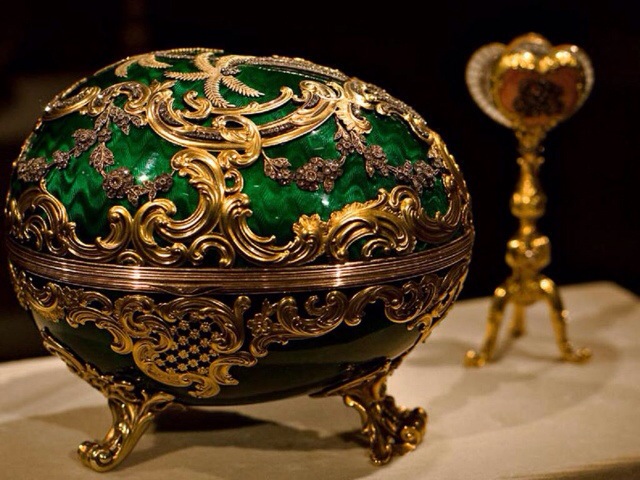
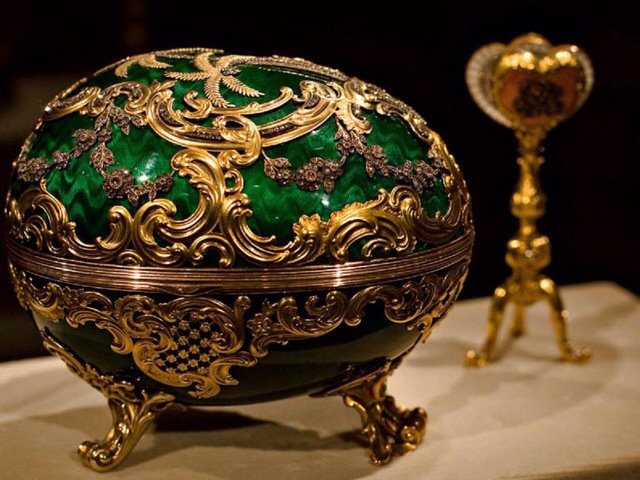
Picture a treasure born from the twilight of an empire. A collection of artifacts so intricate, so dripping with jewels and secrets, that they seem more like objects from a fairy tale than reality. They are the Imperial Fabergé Eggs. Fifty unique masterpieces created for the two most powerful women in Russia. And then, in a storm of revolution and blood, they vanished.
Most were recovered. But not all.
Eight remain missing. Eight jeweled ghosts of the Romanov dynasty, scattered to the winds by the chaos of history. A treasure hunt spanning a century, with a prize pot easily topping $150 million. The official records are cold, the paper trails have crumbled to dust, but the whispers persist. In forgotten vaults, dusty attics, and maybe, just maybe, hiding in plain sight.
This isn’t just a story about lost jewels. It’s a story of genius, imperial power, violent collapse, and one of the greatest unsolved mysteries in the art world. So, where did they go? The truth is stranger than you can imagine.
The Mastermind in St. Petersburg
Let’s rewind. Before the revolution, before the firing squads and the mystery, there was a man. Peter Carl Fabergé. You might know him as Karl Gustavovich Fabergé. A Russian jeweler, yes, but with the soul of a French artist and the mind of an inventor. His family’s small jewelry business in St. Petersburg was respected, but Carl had bigger ideas. He and his brother Agathon weren’t just making jewelry; they were crafting dreams from gold, platinum, and diamonds.
Their work was different. It possessed a life, a spark. They perfected ancient techniques like guilloché enameling, a process so demanding that a single speck of dust could ruin weeks of work. They created translucent layers of color over intricately engraved gold, giving their pieces an impossible, liquid depth. This wasn’t just bling. This was magic.
An Easter Gift That Forged a Dynasty
The story of the Imperial Eggs begins with a love story. In 1885, Tsar Alexander III wanted a special Easter gift for his wife, Empress Maria Feodorovna. He wanted something to delight her, something to remind her of home. He went to the one man in Russia who could pull it off: Fabergé.
The result was the ‘Hen Egg’. On the outside, it looked simple. A plain, opaque white enamel shell. But it twisted open. Inside was a golden yolk. The yolk opened, too, revealing a multi-colored golden hen. And even the hen opened, originally containing a miniature diamond replica of the imperial crown and a tiny ruby pendant. A puzzle box of pure opulence.
The Empress was beyond enchanted. She was captivated. What started as a one-off commission exploded into a 33-year-old imperial tradition. Fabergé was granted the title ‘Goldsmith by Special Appointment to the Imperial Crown’. The rules were simple: every Easter, he would deliver two eggs, one for the ruling Empress and one for the Dowager Empress. Fabergé was given total creative freedom. The Tsar’s only condition? Each egg had to contain a surprise.
From that point on, 50 Imperial eggs were made for the Romanovs. Each one more complex and personal than the last. They weren’t just objects; they were chronicles of the family’s life. One egg, the Trans-Siberian Railway Egg, contained a miniature, functioning clockwork train of solid gold. Another held a tiny, perfect replica of the Gatchina Palace. They were the ultimate status symbol in a world drowning in excess.
Deep Dive: What Makes Them So Special?
So it’s a fancy egg. Big deal, right? Wrong. To understand the obsession, you have to understand the artistry. Each egg took over a year to make, consuming thousands of man-hours from a team of the world’s finest craftsmen—goldsmiths, jewelers, enamelers, and miniaturists—all working in absolute secrecy.
Think about the materials. We’re talking gold, platinum, silver, diamonds, rubies, emeralds, sapphires, pearls, and ivory. But it wasn’t just the raw value. It was the innovation. Fabergé’s workmasters pioneered techniques that are still baffling to jewelers today. They could make enamel appear like watered silk or lustrous oyster shells. They could set thousands of microscopic diamonds so perfectly they looked like a dusting of sugar. The surprises inside were marvels of micro-engineering, from tiny portraits that appeared on rotating discs to mechanical, singing birds that would rise from the top of an egg.
The World Catches Fire
Then came 1917. The Russian Revolution. The world of the Tsars, with its opulent balls and jewel-encrusted Easter gifts, came to a violent, crashing end. Tsar Nicholas II, his wife Alexandra, and their children were arrested. The Bolsheviks had seized power.
In the chaos, the Romanov family’s treasures were systematically confiscated. Palaces were inventoried. Safes were cracked. And the Imperial Fabergé Eggs, along with countless other priceless artifacts, were packed into crates and moved to the secure vaults of the Kremlin Armoury in Moscow. They were symbols of the old regime’s obscene wealth, and their fate was uncertain.
A year later, in a cellar in Yekaterinburg, the royal family was executed. Their world was gone. Fearing for his own life, Carl Fabergé fled Russia, a refugee from the world he had helped decorate. He died in Switzerland in 1920, a broken man whose name was synonymous with a lost empire.
The Great Soviet Sell-Off
In the 1920s, the new Soviet government was desperate for Western currency to fund its industrialization. What did they have to sell? The very treasures they had condemned as decadent. Under a policy starkly titled “Treasures into Tractors,” they began quietly selling off the Romanovs’ collection.
Art dealers, connoisseurs, and savvy businessmen swooped in. Men like American industrialist Armand Hammer bought up crate after crate of imperial art, including at least ten Fabergé eggs, which he brought back to the U.S. and sold through department stores. This is where the trail for many of the eggs goes cold. Inventories were sloppy. Records were lost or intentionally destroyed. Some eggs were sold for a pittance to buyers who had no idea of their true history or importance. Others simply… disappeared from the records. Vanished.
Of the 50 Imperial eggs, we know the location of 43. But what about the others? The number is actually eight missing Imperial eggs, as one of the 50, the Constellation Egg, was never finished due to the revolution.
This is where the hunt begins.
The Hunt for the Lost Eight: An Intelligence Briefing
For treasure hunters, collectors, and historians, these eight missing eggs are the ultimate prize. Each one has a story, a phantom profile pieced together from old invoices and brief descriptions. Let’s break down the cold cases.
1. The Hen with Sapphire Pendant (1886)
The Dossier: The second egg ever made for Empress Maria. Described in archives as a golden hen, studded with rose-cut diamonds, pulling a sapphire egg out of a golden basket. The “surprise” was the tiny sapphire pendant within. It was last seen in the Kremlin Armoury in 1922 but vanished from the inventory afterward.
Modern Theories: This is one of the most likely to have been broken up. The hen was covered in diamonds and the pendant was a valuable sapphire. In the desperate 1920s, it’s tragically plausible that a Soviet official or a clueless buyer simply stripped it for its raw materials, melting down the gold and selling the stones individually. Its identity, and its soul, would have been lost forever.
2. The Cherub with Chariot Egg (1888)
The Dossier: A tantalizingly vague description exists: an angel (or cherub) pulling a chariot which contains an egg. A single, grainy black and white photograph from an early exhibition is the only visual proof we have. It was sold by Armand Hammer’s gallery in the 1930s, with a listed price of $2,375. The buyer is unknown.
Internet Sleuths Whisper: The trail leads to an American private collection. For years, the rumor has been that it sits in a vault on the East Coast, owned by a family who either doesn’t know what it is or prefers to keep it hidden from the world. Forum posts occasionally pop up claiming a grainy photo has surfaced from an estate sale, but they always prove to be dead ends.
3. The Nécessaire Egg (1889)
The Dossier: This egg was shaped like an elaborate coffer, a “nécessaire” or lady’s utility case, encrusted with diamonds, rubies, and emeralds. The surprise was a set of 13 miniature diamond-encrusted toiletries. It was sold by a London auction house in 1952 for £1,250 (about $40,000 today) to a buyer listed only as “A Stranger.” Then, silence.
The Word on the Street: The “Stranger” has fueled decades of speculation. Was it an agent for a reclusive billionaire? A royal from a deposed monarchy? The most persistent theory is that it remains in the UK, passed down through a family that has no idea of its imperial Russian origins. It could be sitting on a dusty dressing table right now, mistaken for a very nice, but not world-famous, piece of antique jewelry.
4. The Egg with Alexander III Portraits (1896)
The Dossier: We know this one existed because we have the Fabergé invoice for it. It was covered in diamonds and contained a series of miniature portraits of the late Tsar Alexander III. Its fate is a complete black hole. It disappears from all records after being confiscated in 1917.
A Chilling Possibility: Unlike the others that were sold off, this one never even made it to the sales lists. This has led some researchers to believe it was stolen during the chaotic transfer of treasures to the Kremlin. It may have been pocketed by a guard or a clerk and sold on the black market within Russia, its trail vanishing almost immediately.
5. The Mauve Egg (1897)
The Dossier: A beautiful egg made of mauve enamel with rose-cut diamonds. Its clever surprise was a folding, heart-shaped picture frame that opened like a flower to reveal portraits of Nicholas II, Alexandra, and their first child, Olga. While the egg itself is lost, the surprise was found! In 2004, the bejeweled frame was identified in the collection of a Russian oil tycoon. But the shell it came in? Gone.
What If?: Finding the surprise but not the egg is a uniquely frustrating twist. Did someone separate them long ago? Perhaps the egg was damaged, and the “surprise” was salvaged. Or maybe, just maybe, the two pieces are out there, waiting for a historian to play matchmaker.
6. The Empire Nephrite Egg (1902)
The Dossier: Carved from the deep green Siberian gemstone nephrite (a type of jade), this was a more austere, formal egg. Its surprise was a miniature portrait medallion of the late Alexander III. Like the 1896 egg, it disappears from all records after being seized by the Bolsheviks. No photos, no detailed descriptions. Just a name on a ledger.
Conspiracy Corner: Because so little is known, this egg is a blank slate for theories. Some believe its simple, classical design might have allowed it to pass as a non-imperial piece. It could have been misidentified in the Kremlin vaults and sold as a simple “nephrite box,” its true identity still unknown to its current owner.
7. The Royal Danish (Jubilee) Egg (1903)
The Dossier: Created to commemorate the 40th anniversary of the King and Queen of Denmark, the parents of Empress Maria. It was enameled in light blue and white and featured miniature portraits of the Danish royals. The surprise was a two-sided portrait of the King and Queen. We have a single, fuzzy photograph of it. It was last recorded in 1917.
Modern Scuttlebutt: This is another egg that internet detectives love to chase. Its strong connection to the Danish royal family has led to speculation that it was somehow spirited out of Russia and returned to Denmark before the official sales. Could it be sitting in a forgotten corner of a Danish palace, its records lost to time?
8. The Alexander III Commemorative Egg (1909)
The Dossier: An egg made of platinum, gold, and white enamel, covered in diamonds. Its surprise was a miniature gold bust of Alexander III. Another ghost. It was photographed once before the revolution but has not been seen since it was inventoried by the Bolsheviks.
The Collector’s Dream: This is considered one of the “big fish.” Its stark, elegant design and heavy use of platinum make it instantly recognizable. Experts believe this egg is almost certainly in a private collection somewhere, its owner fully aware of what they possess but unwilling to face the media storm and ownership claims that would come with revealing it.
The Junk Shop Miracle: Proof That They’re Still Out There
Think this is all just fantasy? Think again.
In the early 2000s, a scrap metal dealer in the American Midwest bought a heavy, gold-ish ornament at a flea market. He paid around $13,000 for it, hoping to flip it for a small profit by melting it down for its gold and selling the jewels. But he overestimated its scrap value. No one would buy it. For years, the little golden egg sat on his kitchen counter.
Frustrated, he started searching online. He Googled “egg” and “Vacheron Constantin,” the name he saw engraved on the tiny clock inside it. What he found made his heart stop. He was staring at an article about the lost Imperial Fabergé eggs. And there, in a grainy old photograph, was his kitchen ornament. The Third Imperial Egg of 1887. An artifact worth millions.
He flew to London, carrying the egg in his cupcake tin. After authentication, it was sold to a private collector for an estimated $33 million. A man was one bad day away from melting down a $33 million piece of history for less than $14,000.
This single, incredible story electrified the art world. It was proof. The eggs weren’t all destroyed or locked away by the super-rich. Some of them are just… out there. Lost. Waiting.
Could You Be Sitting on a Fortune?
The hunt is far from over. The rediscovery of the Third Imperial Egg reset the clock. Every auction house, historian, and amateur treasure hunter is on high alert. The estimated value of the remaining eight is a moving target, but it’s easily north of $150 million, with a single egg potentially fetching over $30 million at auction.
So check your grandmother’s attic. Look twice at that weird knick-knack at the estate sale. The story of the Fabergé eggs is a reminder that history’s greatest treasures don’t always stay in museums. Sometimes, they hide in plain sight, waiting for a curious eye and a quick Google search to bring them back into the light. One of the eight is out there. Maybe more. And the next chapter in this incredible story is just one discovery away.