Thursday, June 4, 2026
HomeWeird WorldStrange PlacesThe largest ship graveyard in the world.

The largest ship graveyard in the world.

The Ghost Fleet of the Sahara: Uncovering the World’s Largest Ship Graveyard

What if I told you there’s a place where the Sahara Desert meets the sea, and the coast isn’t lined with sand, but with the skeletons of giants? A place where hundreds of steel leviathans have come to die, their rusting hulls forming a man-made reef of epic, and terrifying, proportions. This isn’t a sci-fi movie. It’s not a forgotten legend.

It’s real.

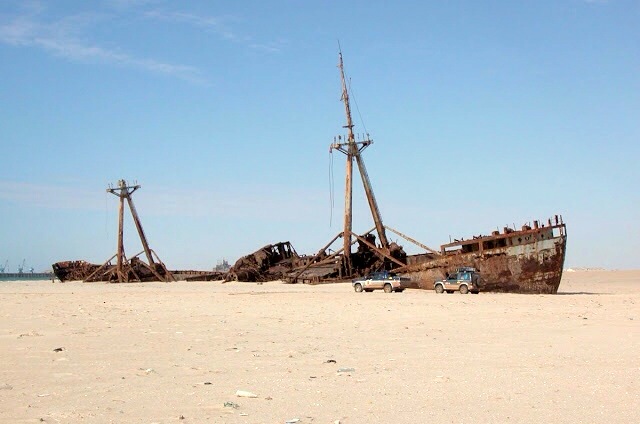
Sticking out from the west coast of Africa like a crooked finger is the Ras Nouadhibou peninsula, a sliver of land split between Mauritania and Western Sahara. On the Mauritanian side, protected from the savage fury of the Atlantic, lies Nouadhibou. It’s the country’s economic hub, a bustling city of over 100,000 souls. But it holds another, darker title. It is, without question, the largest ship graveyard on planet Earth.

This isn’t an ancient mystery. This is a modern one. A sprawling, rusting monument to corruption, desperation, and the dark underbelly of global commerce. For decades, a toxic agreement of convenience was made. A blind eye was turned. For the right price, you could bring your old, dying ship here and just… leave it. Forever. The result? A coastline choked with the corpses of more than 300 vessels, from small fishing trawlers to colossal cargo ships.

Map of Mauritania

A Frontier Town Forged in Sand and Greed

To understand how this steel apocalypse came to be, you have to look back. You have to peel back the layers of history, back to a time before the ghost fleet.

From Port-Étienne to a Pirate’s Paradise

Before it was Nouadhibou, it was Port-Étienne. A name given by French merchants who saw opportunity here just before the world erupted into the First World War. They weren’t fools. They saw the bay, a calm, sheltered harbor perfect for protecting their ships from the temperamental Atlantic. It was a safe haven. A place to do business.

Nouadhibou

At first, the economy was simple. Fishing. Trade. But deep within the Mauritanian desert, something else lay buried. Iron ore. Massive deposits of it. And Nouadhibou, with its perfect port, became the artery through which this iron blood would be pumped to the rest of the world. The city boomed. Money flowed. And with money comes a certain kind of attitude. The kind of attitude you find in frontier towns all over the world.

Anything goes. Everything has a price.

The rules that governed other, more “civilized” places felt very far away. Here, in the heat and the dust, cash was king. If you had enough of it, you could make problems disappear. Or, as it turned out, you could make very, very large problems appear and simply walk away.

Nouadhibou_street
Street in Nouadhibou

Shipping companies around the world have a huge, expensive problem: old ships. Decommissioning a vessel is a costly, complicated process, tangled in environmental regulations and labor laws. You have to strip it, clean it, and carefully take it apart. It costs millions. But what if there was another way? A cheaper way? What if you could pay someone a fraction of that cost, and your ship problem would just… vanish? This was the dark service Nouadhibou began to offer. A whispered secret in the shipping world. For a fee, the city would look the other way. For a fee, you could give your ship one last burial at sea. A very, very shallow burial.

The First Ghost: The Tale of the Chasseloup-Laubat

Every graveyard has a first body. Patient Zero. In Nouadhibou, that honor belongs to a French Navy cruiser, the *Chasseloup-Laubat*. Its story is different from the hundreds that would follow. It wasn’t scuttled in a shady, late-night deal. It was a relic, left behind and eventually repurposed in the 1920s as a bizarre floating stage. A strange beginning for a place that would become a tomb.

Nouadhibou

But it set a precedent. An idea. The idea that this bay was a place where things could be left. Forgotten. As Mauritania’s own economic struggles deepened through the 20th century, the temptation grew. The whispers got louder. By the 1980s, the trickle had become a flood. The ghost fleet was born. Ship after ship began appearing, silently, almost overnight. Anchored and then abandoned, their crews spirited away, leaving behind nothing but a steel carcass to slowly bleed rust into the bay.

Nouadhibou

How Do You Create the World’s Biggest Ship Graveyard?

It sounds like something out of a dystopian novel. How does a place like this even happen in the 21st century, with satellite imagery and global watchdogs? The answer is a toxic cocktail of desperation, greed, and plausible deniability. It wasn’t one single act, but a slow, creeping corruption that poisoned the entire system.

The Anatomy of a Scuttling

Imagine you’re the owner of a shipping company in Europe or Asia. You have a 30-year-old tanker. It’s failing inspections. Its technology is obsolete. The cost to scrap it properly is astronomical. Then you hear about a “disposal service” operating out of West Africa. For a fraction of the cost, they’ll take the ship off your hands. No questions asked.

Nouadhibou

So you hire them. Your ship sails on its final voyage. The local “entrepreneurs” in Nouadhibou guide it into the bay, find a nice shallow spot, and drop anchor. The crew is paid off. The paperwork vanishes. And you, the original owner, are thousands of miles away, your hands legally clean. You paid for a disposal service. What they did with it isn’t your problem. Is it?

The Broken Dreams of Local Shipping

But it wasn’t just foreign ships. There’s a more tragic side to the story. Many Mauritanians, seeing the wealth from the iron ore trade, dreamed of their own shipping empires. They would pool their money to buy older, cheaper vessels from international sellers, hoping to compete. But they were buying rust buckets. Ships on their last legs.

The maintenance costs were a killer. The fuel consumption was inefficient. They simply couldn’t compete with the modern fleets. When the first major repair bill came due, it was often game over. Bankrupt. With no money to fix the ship, and certainly no money to scrap it properly, what was the only option left? They did what everyone else was doing. They abandoned it in the bay, another ghost joining the fleet of broken dreams.

The numbers just keep growing. Even with the world watching, ships are still finding their way to this final, watery resting place.

Nouadhibou

Nouadhibou

Nouadhibou

Nouadhibou

Nouadhibou

Deep Dive: The United Malika – A Beached Titan

Among the hundreds of anonymous wrecks, one stands out. A true giant, a local celebrity of decay. The *United Malika*. If you’ve seen a stunning, apocalyptic photo of the Nouadhibou graveyard, chances are you were looking at her.

Nouadhibou-United-Malika-4
The United Malika

The Final Voyage

On August 4th, 2003, the unthinkable happened. The *United Malika*, a nearly 400-foot refrigerated cargo ship—a “reefer”—was carrying a shipment of fish when it ran aground. Hard. Not in the bay with the others, but further south, near the pristine white sands of Cap Blanc. The official story is that it was an accident. An unfortunate navigational error. The Mauritanian Navy swooped in and rescued all seventeen crew members. A happy ending, right?

Nouadhibou-United-Malika-1

But the whispers tell a different story. Online forums and maritime blogs are full of theories. Was it really an accident? Or was it an “accident”? A convenient grounding that allowed the owners to collect insurance money and avoid the massive costs of decommissioning their aging vessel? The ship was never salvaged. It was simply left. Abandoned. A massive, 400-foot piece of evidence rusting on the beach.

Today, the *United Malika* is an icon. A colossal, decaying piece of modern art. It’s a landmark for sailors and a dream for photographers who make the pilgrimage to capture its slow, dramatic death. Waves crash against its breached hull. The sea breeze whistles through its empty corridors. It’s a stark, beautiful, and deeply unsettling monument to the entire, sordid affair.

Nouadhibou United Malika

Nouadhibou

Nouadhibou United Malika

Nouadhibou United Malika

Nouadhibou United Malika

Nouadhibou United Malika

The Secret Life of the Dead Ships

You’d think a massive graveyard of rusting metal would be an unmitigated disaster. An ecological dead zone. And in many ways, it is. The slow leak of oil, asbestos, and heavy metals is a chemical nightmare. But here’s where the story takes a strange, unexpected turn.

Nature’s Reclamation Project

Nature doesn’t like a vacuum. The silent, sunken hulls didn’t stay empty for long. They became artificial reefs. The metal structures provided a perfect, complex habitat for marine life. Algae and corals attached to the steel. Small fish moved in to hide from predators. Bigger fish followed. The result?

Nouadhibou

A shocking revival of the local fishing industry. An industry that had been on the brink of collapse due to years of international overfishing was suddenly booming again. The ghost fleet, a symbol of human failure, had ironically become a sanctuary for marine life. Birds flocked to the undisturbed superstructures, creating new nesting grounds. Complete, vibrant ecosystems have sprung up in and around these rotting titans.

The Scrappers: A City Built on Skeletons

It’s not just the fish that found a new home. The people of Nouadhibou, living in a region with few economic opportunities, saw the graveyard for what it was: a mine. A floating scrap mine.

Nouadhibou

A whole new economy emerged, built on the bones of the dead ships. Armies of scrappers, armed with little more than blowtorches and sheer nerve, descend on the wrecks. It’s dangerous, back-breaking work. They are the city’s antibodies, slowly dismantling the metallic infection. Mechanics are hired to strip engine parts. Electricians salvage wiring and electronics. Plumbers recover valuable copper and steel piping. Anything of value is cut away, hauled to shore, and sold.

Guards are even paid to watch over the more valuable wrecks, protecting them from rival salvage crews. It’s a wild, unregulated industry, a microcosm of the frontier spirit that allowed the graveyard to form in the first place. It’s a profitable, if perilous, business for a city with few other options.

Nouadhibou

The Cover-Up? Why Hasn’t It Been Cleaned?

This is the big question. Why is it still there? The world knows about it. The European Union has offered funding. Environmental groups have screamed from the rooftops. So why do the ships remain?

The simple answer is that the problem is just too big. Removing over 300 ships, many of them half-sunk and structurally unsound, is a logistical nightmare of epic proportions. It would cost hundreds of millions, if not billions, of dollars.

But the conspiracy-minded among us see a different reason. The truth is, the graveyard works for a lot of people. The local politicians and officials who still get “fees” for looking the other way. The international shipping companies who still need a cheap, deniable place to dump their old assets. And, paradoxically, the thousands of local scrappers and fishermen whose livelihoods now depend on the ghost fleet’s existence. It’s an ecosystem of corruption and desperation, and nobody has a real incentive to tear it down.

Could there be an active effort to block cleanup operations? It’s not hard to imagine. Powerful interests benefit from the status quo. The phantom cleanup proposals come and go, press releases are issued, but on the ground, nothing changes. The ships continue to rust, a silent testament to a system that is profitable for everyone involved. Except, of course, the environment.

Absent a massive, sustained international intervention, the Bay of Nouadhibou will likely remain the world’s largest ship graveyard for decades to come. A silent, sprawling monument to the true cost of convenience.

Amit Ghosh
Amit Ghoshhttps://coolinterestingnews.com
Aloha, I'm Amit Ghosh, a web entrepreneur and avid blogger. Bitten by entrepreneurial bug, I got kicked out from college and ended up being millionaire and running a digital media company named Aeron7 headquartered at Lithuania.
RELATED ARTICLES
- Advertisment -

Most Popular

Recent Comments

Warren Pan Abbott on The legend of the Devil Monkey !
chris davies on The McPherson Tape Mystery
Reed Reedly on ET has Internet!
Bea Houseoffashion on Proof Of Time Travellers – Gallery
Marcus2012 on ET has Internet!
Reed Reedly on ET has Internet!
LaughsAtConspiracyNuts on The 9/11 Conspiracy – Myths and Facts
Alex Sliverman on Did the ancients fly?
Doctor Wholigan on Time Traveler in 1938 film
chris davies on The McPherson Tape Mystery
Archie1954 on 10 secret UFO hideouts
chris davies on Ghosts of flight 401
Marcus2012 on ET has Internet!
jason Macdonald on Proof of Time Travel? – China
chris davies on Long-Lost Pyramids Found?
Reed Reedly on ET has Internet!
Milkman on Connected Universe
Tenmiles on Baigong Pipes Mystery
Simon Foster on Sirius – The Documentary
From the 1st April on 2013 – Alien Contact date ?
SkyWatcher on Is ET ignoring us?
I Come From The Future on Obama to make UFO Alien disclouser soon ?
ÛñK?øWn on 2013 – Alien Contact date ?
Just another person on 2013 – Alien Contact date ?
Malcolm Windowcleaner on The strange case of Rudolph Fentz
Mason Servio on Strange Things on Mars
Marke Wisdom Seeker on What will we find as arctic melts?
Andrea A Elisabeth Levyne on Aliens Captured in Varginha, Brazil
Mitch Grouyeki on Amazing Space Shuttle pictures