The Ultimate Conspiracy? The Secret Plan to Build a Giant Umbrella in Space and Block Out the Sun
What if I told you the solution to our planet’s biggest problem wasn’t on Earth at all? What if the answer was hanging in the blackness of space, waiting to be built?
We’re not talking about reducing emissions. We’re not talking about planting trees. We’re talking about a plan so audacious, so unbelievably sci-fi, it sounds like it was ripped from a discarded movie script.
The plan? To build a colossal shield. A planetary parasol. A giant space umbrella to literally block out the sun and cool our overheating world.
Sounds crazy. Impossible, even.
But it’s real. And powerful people are taking it very, very seriously. The question is… should they be?
Our Planet is Running a Fever. Is The Cure Worse Than The Disease?
Let’s be blunt. The Earth is sick. It’s running a fever, and the thermometer keeps climbing. We see it every day. Searing heatwaves. Storms that feel like they’re ripped from the apocalypse. Ice caps vanishing like ghosts in the morning sun.
For decades, the message has been the same: cut back, reduce, stop. A global effort to wean ourselves off the carbon that’s cooking us alive. But what if that’s not enough? What if it’s too little, too late?
This is where the whispers begin. Whispers from the fringes of science, from top-secret labs and hushed boardroom meetings. They’re talking about geoengineering.
Geoengineering. Planetary-scale surgery. The idea isn’t to just slow the bleeding, but to perform a radical, high-stakes operation on the entire globe. Some ideas are terrifyingly direct. Think about pumping the upper atmosphere full of sulfur particles to mimic a volcanic eruption, creating a chemical haze to reflect sunlight. The potential side effects? Catastrophic acid rain, a permanently white sky, and a complete disruption of global weather patterns we can’t even begin to predict. It’s a messy, terrifying gamble.
Another plan, even more extreme, involved detonating a massive bomb to literally shift the Earth’s orbit further from the sun. You don’t need to be a rocket scientist to see the million ways that could go wrong.
Faced with these earth-bound nightmares, the most ambitious thinkers looked up. Away from our fragile atmosphere. They looked to the void. And they came up with an idea that is either sheer genius or absolute madness.
Enter the Space Umbrella: A Sci-Fi Dream or Our Last Hope?
Block the sun. It’s so simple. So direct. If the stove is too hot, you turn down the flame. If the sun is too hot, you… cast a shadow.
But how do you cast a shadow on an entire planet? You build something big enough in space to do it.
This isn’t some new-fangled internet theory. The concept has been floating around for decades, a persistent ghost in the machine of climate science. It represents the ultimate technological flex—humanity grabbing the planetary thermostat and dialing it down to a more comfortable temperature.
The 1989 Blueprint: A Glass Shield Built on the Moon
The story of the modern space sunshade begins in 1989 with an engineer named James Early. Working at the Lawrence Livermore National Laboratory, a place known for thinking about world-changing (and world-ending) technologies, Early published his proposal. And it was a monster.
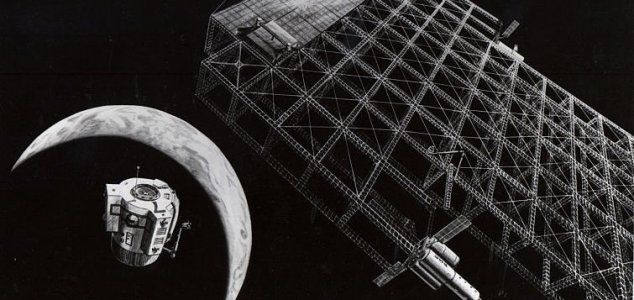
His vision wasn’t some flimsy sheet of mylar. No. Early proposed a two-thousand-kilometer-wide shield. A translucent disc made of glass, a single pane of celestial engineering designed to deflect just 2% of the sun’s light.
Just 2%. Doesn’t sound like much, does it? But that tiny fraction would be enough to halt and potentially reverse the effects of global warming. It would be a constant, gentle cooling effect on the entire planet.
But the craziest part wasn’t the size. It was the manufacturing plan. Launching that much glass from Earth would be economically and physically impossible. The cost would bankrupt every nation on Earth combined. So Early proposed a different solution.
Build it on the Moon.
The idea was to use electromagnetic mass drivers—essentially giant space cannons—to mine the silicon-rich lunar soil, process it into glass right there on the moon’s surface, and then launch the finished panels into space. An off-world factory for an off-world solution. The sheer, mind-bending audacity of it is breathtaking. It was a plan that required a moon base, advanced robotics, and a level of space-based industry that we still can’t achieve today. It was, and remains, one of the most ambitious engineering proposals in human history.
If Not Glass, Then What? The Wild Evolution of the Space Sunshade
Early’s glass behemoth was a beautiful, impossible dream. The cost, the complexity… it was just too much. But the core idea—a sunshade in space—refused to die. It just mutated. Scientists and engineers kept chipping away at the problem, trying to find a cheaper, smarter, and more feasible way to cast a shadow on the Earth.
A Cloud of Cosmic Dust: The ‘Moon Dust’ Proposal
One of the most intriguing modern proposals ditches the idea of a solid shield altogether. Why build one giant object when you can create a massive, diffuse cloud?
The plan, recently explored by researchers, is simple in concept. Go back to the Moon. Mine fine lunar dust—the regolith that covers its surface. Then, use a mass driver to fire that dust into space, aiming for a very specific point between the Earth and the Sun. The L1 Lagrange point.
The result? A carefully maintained, semi-permanent cloud of dust. It wouldn’t be a solid shadow, but a faint, hazy filter, constantly dimming the sunlight just enough to make a difference. The advantage is that you don’t need complex manufacturing. You just need a big space cannon and a lot of dust. The problem? The cloud would naturally disperse due to solar wind and gravitational pulls. It would need to be constantly replenished. We’d be forever blasting the Moon to keep our cosmic dust bunny in place. What are the long-term effects of that? Nobody knows.
55,000 Mirrors: The Shimmering Wire-Mesh Swarm
Another concept moves away from brute-force blocking and towards elegant reflection. Proposed by astronomer Roger Angel, this plan envisions not one big shield, but a swarm. A massive cloud of trillions of small, independent spacecraft.
Each “flyer” would be a hyper-thin, lightweight mirror, perhaps just a few feet across and made of a fine wire mesh. They would be stacked into rockets and launched into space, where they would unfurl and form a colossal, 100,000-kilometer-long cylindrical cloud. A shimmering, artificial nebula.
This swarm of mirrors could be actively controlled, adjusting its density and angle to reflect just the right amount of sunlight away from Earth. It’s a more delicate, high-tech approach. But the logistics are a nightmare. How do you launch and deploy trillions of objects? How do you keep them from crashing into each other? The computational power required to manage such a swarm is immense. It’s less of an umbrella and more of a programmable cloud of space glitter.
The Robot Swarm: A Self-Assembling, Configurable Shield
Perhaps the most futuristic idea takes Angel’s swarm and adds a terrifyingly powerful new element: artificial intelligence and robotics.
Imagine launching millions of tiny, simple robots into space. Each one a small, hexagonal tile with basic thrusters and the ability to link up with its neighbors. On command, this swarm of “nanobots” or “microsatellites” could converge and assemble themselves into a solid shield of any shape or size.
This is the ultimate in configurability. Need to cool the poles to stop the ice from melting? Assemble the shield to cast a shadow just over the Arctic. Is a killer hurricane forming over the Atlantic? Move the shield to cool the ocean surface in its path, robbing it of its power. This plan offers a level of precision that is both amazing and bone-chilling. It would be a tool of unimaginable power.
The Deep Dive: The Physics and the Politics
All of these plans, from moon dust to robot swarms, have one thing in common. They need a place to park. You can’t just stick a giant object anywhere in space and expect it to stay put. And that brings us to the most important piece of cosmic real estate you’ve never heard of.
The L1 Point: Earth’s Parking Spot for a Planetary Sunshade
Between any two large bodies in space, like the Sun and the Earth, there are special spots called Lagrange Points. These are unique locations where the gravitational pull of the two bodies perfectly cancels out. It’s a gravitational sweet spot. A pocket of stability.
If you place an object at a Lagrange point, it tends to stay there, orbiting the sun in perfect lockstep with the Earth. It’s like finding the one perfectly flat spot in a giant parking lot where your car won’t roll away. For a sunshade, the L1 point, located about 1.5 million kilometers from Earth directly towards the sun, is the perfect location. It’s a stable, permanent position from which to cast a shadow back on our world.
Finding this spot was a major breakthrough. It made the idea of a space sunshade physically plausible. But the physics was the easy part. The human element is where it gets truly messy.
Who Gets to Hold the Thermostat? The Terrifying Geopolitics
This is the question that keeps security experts up at night. Who builds it? Who controls it? Who gets to decide the planet’s temperature?
Imagine one nation, or one corporation, builds the sunshade. They now have their finger on a switch that can affect every single person on Earth. They could use it for good, carefully managing the climate for the benefit of all. Or… they could weaponize it.
What if they threatened to plunge a rival nation into a mini-ice age to win a trade dispute? What if they engineered a drought in a farming region to manipulate global food prices? This isn’t just a tool; it’s the ultimate weapon. A tool of global blackmail with the power to create floods, famines, and freezes on a whim.
And what if it breaks? A sudden failure of the system could be catastrophic. If the Earth gets used to 2% less sunlight, and that shield suddenly vanishes, the planet would experience a “termination shock”—a terrifyingly rapid surge in temperature that could trigger ecological collapse faster than anything we’ve seen before.
The unforeseen consequences are staggering. What would a permanent dimming of the sun do to plant life? To the complex process of photosynthesis that forms the basis of our entire food chain? What would it do to our solar power infrastructure, a key part of the clean energy solution? We would be solving one problem by potentially creating a dozen others we can’t even imagine.
Is This All Just a Distraction? The Real Conspiracy Behind Geoengineering
This brings us to the darkest, most plausible conspiracy of all. Maybe these grandiose, impossibly expensive space projects aren’t a serious solution. Maybe they’re a distraction.
Think about it. Who benefits from the idea that we don’t need to stop polluting because a magic tech fix is just around the corner? The massive fossil fuel corporations, of course. The industries that have fought tooth and nail against climate action for decades.
Geoengineering, especially a project as far-off as a space sunshade, is the perfect “get out of jail free” card. It allows polluters to continue business as usual, while soothing the public with the promise of a future technological miracle. “Don’t worry about the carbon we’re pumping into the air today,” the logic goes, “because tomorrow we’ll build a giant space umbrella to fix it!”
Is this talk of planetary sunshades just a calculated, brilliant piece of public relations designed to delay meaningful action? A way to keep the profits flowing while passing the buck to a future generation of engineers to solve a problem that might, by then, be unsolvable? That’s a conspiracy theory that feels chillingly real.
A Shadow in Space: Our Greatest Triumph or Our Final Mistake?
So we stand at a crossroads. Behind us, a planet warming at an alarming rate. Ahead, a collection of wild, desperate, and potentially catastrophic solutions.
Is the space umbrella a symbol of human ingenuity at its finest? The moment we took control of our own destiny and saved ourselves from our own mistakes?
Or is it the ultimate act of hubris? Are we like children playing with matches, about to set fire to a system we don’t remotely understand?
The dream of a sunshade in space remains just that—a dream. A glittering, terrifying concept hanging in the void. It’s a monument to our ambition, and a stark warning about our desperation. The choice to one day build it, or to find another way and walk away from such power, might be the most important decision humanity ever makes.