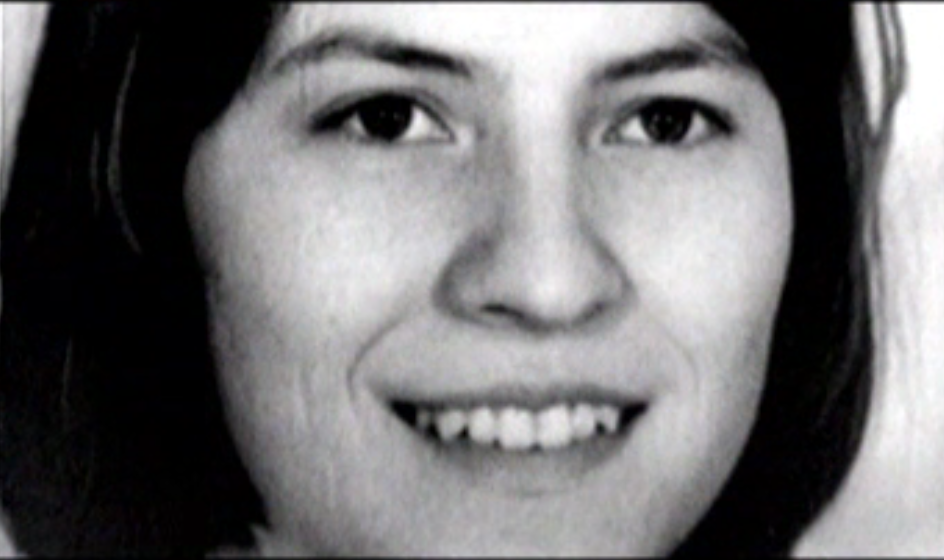

The Anneliese Michel Case: The Terrifying True Story That Shook the World
What you are about to read is not a work of fiction. It’s a documented case. A story of a young woman, a devout family, and a battle against an enemy that couldn’t be seen, measured, or diagnosed with any medical instrument known to man. Was Anneliese Michel a victim of a catastrophic mental illness, failed by both medicine and the people who loved her? Or was she the site of a genuine, horrifying demonic possession, a spiritual war waged within the confines of her own body? The official story is one of tragedy. The tapes, however… the tapes tell a different story entirely.
Forget what you think you know from the movies. This is the raw, unfiltered account of what happened in that small house in Klingenberg, Germany. A story that ends with a 68-pound body and a court case that put the Devil himself on trial.
A Shadow in a Pious Home
Before the convulsions, before the screaming, before the exorcisms, there was just a girl. Anneliese Michel, born in 1952 into a deeply, intensely Catholic family in Bavaria, West Germany. To understand what happened to her, you have to understand the world she grew up in. It was a world of rigid faith, prayer, and penance. A world where sin was a tangible stain and redemption was a constant, exhausting pursuit.
But there was a secret. A source of quiet shame. Four years before Anneliese was born, her mother, Anna, had an illegitimate daughter. In their devout community, this was a profound disgrace. That first daughter died at age eight, and Anna’s guilt became a permanent fixture in the household. It’s reported that young Anneliese felt this weight, this inherited shame, and believed it was her duty to atone for her mother’s past. From a young age, she was known for her piety, sleeping on the bare floor in the winter to do penance for the sins of others. She was preparing for a spiritual battle before she even knew one was coming.

The First Tremors
The year was 1968. Anneliese was sixteen. A normal high school student with dreams of becoming a teacher. Then, it started. It began with a violent convulsion, a sudden loss of control over her own body. More followed. Doctors were consulted. Tests were run. The diagnosis came back: temporal lobe epilepsy. A neurological condition known to cause seizures, sensory disturbances, and even hallucinations.
A neat little box. A medical label. Pills were prescribed. Life was supposed to go on.
But the pills didn’t work. Not really. Anneliese finished high school and enrolled in college, but a darkness was gathering at the edges of her life. She started experiencing terrifying waking nightmares while praying. She would see demonic faces, twisted and grotesque, mocking her. She would hear voices damning her to Hell. Was this part of the epilepsy? The doctors thought so. But for Anneliese, it felt different. It felt… personal. Malicious.
Deep Dive: The Pilgrimage That Changed Everything
The true turning point, the moment the path forked irrevocably, came during a pilgrimage. A family friend, Thea Hein, was a fervent believer who organized trips to “unapproved” holy sites—places of supposed miracles not yet officially recognized by the Vatican. One such place was San Damiano in Italy.
It was here that the invisible illness became shockingly visible. Anneliese, a girl steeped in Catholic ritual her entire life, suddenly found herself physically unable to approach a crucifix. It was as if an invisible wall stood before her. She refused to drink the holy water from a spring at the site, claiming it burned like fire. For Thea Hein, the explanation was immediate and absolute. This wasn’t epilepsy. Epileptics don’t recoil from the sacred. This was demonic possession.
The idea was planted. It was a terrifying, yet strangely validating, explanation for what Anneliese was going through. It wasn’t that her brain was broken; it was that her soul was under attack. For her desperate family, who had watched modern medicine fail, this new, ancient diagnosis offered a chilling kind of hope.
When Doctors Fail, Who Do You Call?
Convinced, the Michel family began a new quest. They weren’t looking for better neurologists; they were looking for a priest. An exorcist. They pleaded with their local clergy, explaining Anneliese’s aversion to holy objects, the demonic faces she saw, the voices she heard. But the modern Catholic Church was wary. Post-Enlightenment, the institution had grown cautious, favoring psychological and medical explanations over supernatural ones.
Time and again, they were turned away. The priests recommended continued medical care and psychiatric evaluation. They explained that a true exorcism, under the rules of the Rituale Romanum, was an absolute last resort. It required specific signs of possession: speaking in languages the person has never learned, superhuman strength, knowledge of hidden things, and a violent aversion to the sacred. And even then, it required the express permission of a bishop.
The rejections plunged the family deeper into despair. They felt abandoned by the very institution they had dedicated their lives to. Then they found Father Ernst Alt.
The Priests Who Said Yes
Father Alt was a vicar in a nearby town. When he met Anneliese, he didn’t see a patient. He saw a victim. He later stated she “didn’t look like an epileptic.” He witnessed her fits, her aggressive outbursts, and her fear of religious icons. He became convinced. Father Alt began advocating on the family’s behalf, writing letters, pushing for action. He was joined by Father Arnold Renz, a seasoned pastor and a former missionary.
Together, they presented their case to Bishop Josef Stangl. They argued that Anneliese’s condition had deteriorated past the point of medical help. They believed they had a duty to intervene spiritually. Finally, after months of pressure and seeing Anneliese’s state for himself, Bishop Stangl relented. In September 1975, he granted permission for the Great Exorcism to be performed on Anneliese Michel according to the 1614 Roman Ritual. But there was one condition.
It had to be done in total secrecy.
The Horrifying Tapes: Voices from a War Zone
With the bishop’s blessing, all medical treatment stopped. Anneliese’s fate was now entirely in the hands of Fathers Renz and Alt. Over the next ten months, they conducted 67 exorcism sessions, each lasting up to four hours.
And they recorded them.
Over 40 hours of audio tapes document the horror that unfolded in that room. The sounds are the stuff of nightmares. On them, you hear a young woman’s voice twist and contort into something guttural, monstrous, and inhuman. It snarls, hisses, and growls. It speaks in different tones, different cadences, claiming to be not one demon, but many.
The priests believed they had identified at least six demons possessing Anneliese:
- Lucifer: The original fallen angel, filled with pride and rage.
- Cain: The Bible’s first murderer.
- Judas Iscariot: The apostle who betrayed Jesus.
- Nero: The depraved Roman Emperor who persecuted Christians.
- Valentin Fleischmann: A disgraced Frankish priest from the 16th century.
- Adolf Hitler: Referred to on the tapes only as “The Fuhrer.”
The demons, speaking through Anneliese, would argue with the priests, mock them, and blaspheme. They spoke of the horrors of Hell. They revealed secrets the priests believed no one could know. The audio evidence is the single most compelling and disturbing aspect of the entire case. For skeptics, it’s the sound of a severely mentally ill woman acting out a role created for her by religious fervor. For believers, it is the unfiltered sound of Hell itself.
A Body Breaking Down
As the spiritual war raged, Anneliese’s physical body was paying the price. The sessions were brutal. She would thrash with such force that she had to be chained to a chair. She performed hundreds of genuflections—deep, prayerful knee-bends—obsessively, day after day, until her knee ligaments ruptured. She screamed for hours on end. She attacked her family members, biting and scratching.
At some point, she began to refuse food. She spoke of a vision from the Virgin Mary, who she said offered her a choice: be freed from the demons, or continue to suffer as a martyr to atone for the sins of the youth and the faithless priests of the era. She chose to suffer.
Her body withered. Her teeth were chipped and broken from biting the walls and floor. Her eyes were sunken and blackened from lack of sleep. She was starving to death, but her family and the priests saw it as part of the spiritual process. The demons, they believed, were trying to destroy their vessel.

The photographs from her final months are almost impossible to look at. The bright-eyed young student is gone, replaced by an emaciated figure consumed by an ordeal that defies easy explanation. She was a ghost in her own home, a living skeleton animated by a force no one could control.

The Final Words and the Aftermath
On June 30th, 1976, Anneliese was weak, feverish, and suffering from pneumonia. She was completely emaciated. Yet she endured one final, exhausting exorcism session. Her last words to the priests were, “Beg for Absolution.” To her mother, she whispered, “Mother, I’m afraid.”
The next morning, on July 1st, 1976, Father Alt called for a doctor. But it was too late. Anneliese Michel was dead.
She was 23 years old. The autopsy reported the cause of death as severe malnutrition and dehydration. At the time of her death, she weighed a mere 68 pounds (30.9 kilograms).
The secret was out. The story exploded across Germany and then the world. This wasn’t some medieval tale; it had happened in modern Europe. The state prosecutor launched an investigation. Anneliese’s parents, Josef and Anna, along with Fathers Renz and Alt, were charged with negligent homicide.
Deep Dive: The Trial That Put Faith on the Stand
The trial, which began in 1978, became a media circus. It wasn’t just two priests and two parents on trial; it felt like the entire belief system of faith versus science was being judged. The prosecution’s case was simple: a young woman with a history of diagnosed epilepsy and probable psychosis was denied life-saving medical care and food by religious zealots who subjected her to archaic rituals until she died.
The defense’s argument was astonishing. They played the audio tapes in the courtroom. The horrifying sounds of the “demons” filled the space, shocking the jury and reporters. The defense argued that Anneliese was not mentally ill but genuinely possessed, and that they were engaged in a spiritual battle to save her soul. They were not negligent; they were soldiers of God fighting an enemy the court refused to acknowledge.
The verdict was a strange and telling compromise. The court ultimately declared that Anneliese had died as a result of the exorcism and starvation. The parents and priests were found guilty of manslaughter resulting from negligence. But the sentence was light: six months in prison, which was suspended, and three years of probation. The court seemed to acknowledge the defendants’ sincere belief, even while punishing their actions. In a way, nobody won.
The Legacy: A Warning or a Martyrdom?
The Anneliese Michel case left a deep scar. For the Catholic Church, it was a public relations nightmare that led to a complete overhaul of the exorcism rite in 1999. The new rules demand that a thorough medical and psychological evaluation must be completed before an exorcism can even be considered. The days of secret rituals sanctioned on a priest’s word alone were over.
The story has echoed through pop culture, most famously as the inspiration for the film The Exorcism of Emily Rose. But the movie sanitizes the reality. It captures a sliver of the courtroom drama, but it cannot convey the ten-month-long descent into starvation and madness that occurred.
To this day, Anneliese’s grave is a pilgrimage site for a small group of believers who see her not as a victim of abuse, but as a willing martyr who gave her life to warn the world about the reality of demonic forces. They believe her suffering was redemptive.
So what really happened? Did a family’s extreme faith, combined with the power of suggestion, push a mentally ill girl into a fatal psychosis? Or did Anneliese Michel open a door to another world and become a casualty in a war that has been raging since the dawn of time? The medical records say one thing. The coroner’s report says another. But the tapes… the tapes will haunt you forever. And they leave you with one chilling, unanswerable question: who, or what, was that speaking?
Originally posted 2013-03-20 12:49:31. Republished by Blog Post Promoter