Home Films & Documentaries Nostradamus – 2012 Documentary

Nostradamus – 2012 Documentary

2
72

The Day the World Was Supposed to End: What REALLY Happened on December 21, 2012?

Remember the feeling? The buzz. The low-grade, persistent hum of anxiety that filled the air as the calendar pages flipped closer and closer to that one, single date.

December 21st, 2012.

It was more than just a day. It became a phenomenon. A global obsession. Hollywood made blockbuster movies about it. Documentaries flooded the airwaves. Every corner of the burgeoning internet lit up with theories, warnings, and survival guides. The world held its collective breath, waiting for… well, what exactly?

A massive cosmic collision. A rogue planet named Nibiru tearing through our solar system. A global environmental disaster of unprecedented scale. An Armageddon-like religious showdown. Or maybe something quieter. A subtle transformation of human consciousness.

Then the day came. And it went. The sun rose on December 22nd. The world, for all intents and purposes, was still here. A collective sigh of relief was followed by a wave of cynical jokes and I-told-you-sos. The great 2012 doomsday scare became a punchline, a relic of a more naive time.

But what if we were all looking at it wrong? What if the prophecies weren’t about a fiery end, but a seismic *change*? What if the apocalypse happened, and we just didn’t notice?

The line between historical fact and hysterical fiction is impossibly blurred. Let’s cut through the noise and look at the evidence, the prophecies, and the strange aftermath of the day the world was supposed to die. The story is far stranger than you remember.

The Mayan Calendar: A Cosmic Odometer, Not a Doomsday Clock

The entire 2012 frenzy began with a misunderstanding. A big one.

At the heart of the prophecy was the Mesoamerican Long Count calendar, a staggeringly complex and beautiful system of timekeeping developed by the ancient Maya civilization. It wasn’t a simple calendar like the one on your wall. It was a grand, cyclical map of time itself. Think of it less as a book with a final page and more like the odometer in your car. When it hits 999,999, it doesn’t mean the car explodes. It just rolls over, starting a new count.

The Long Count calendar tracked time in cycles. The largest of these was the Great Cycle, lasting roughly 5,125 years. And according to the math, the 13th of these Great Cycles—or 13th B’ak’tun—was set to conclude on… you guessed it. December 21, 2012.

For the Maya, this wasn’t a terrifying end. It was a moment of profound transition. A celestial reset button. The end of one world age and the birth of another. Modern Mayan elders and shamans tried to explain this. They spoke not of destruction, but of transformation, of a change in global consciousness. But their voices were drowned out by the much louder, much more profitable, chorus of doom.

Deep Dive: What Did the Carvings Actually Say?

So where did the apocalypse idea come from? It hinges on a handful of fragmented inscriptions. The most famous is Tortuguero Monument 6, a stone tablet from 7th-century Mexico. Damaged and difficult to read, its final passage appears to mention the end of the 13th B’ak’tun and the appearance of Bolon Yokte K’u, a mysterious Mayan god associated with both creation and war.

That’s it. A cryptic, broken reference. From this tiny seed, a global panic grew. Scholars argue its meaning is far from clear. It could be a simple dedication, a note about a future celestial alignment, or a political statement lost to time. It was certainly not a clear-cut prophecy that tsunamis would swallow continents.

The panic wasn’t ancient. It was a modern invention, a feedback loop of internet forums, cable TV specials, and our own deep-seated cultural fascination with the end of everything.

Nostradamus: The Perennial Prophet of Doom

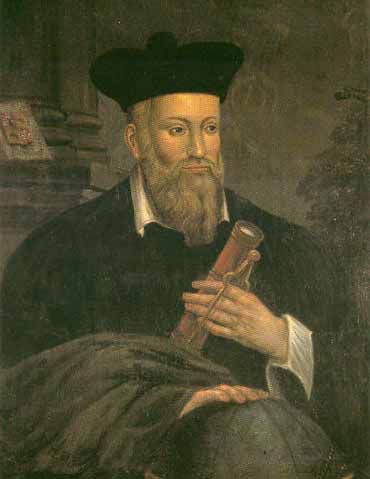
You can’t have a good doomsday prophecy without involving the 16th-century’s most famous and enigmatic seer, Michel de Nostredame. Nostradamus.

Nostradamus - 2012

His book, *Les Prophéties*, a collection of 942 poetic four-line stanzas called “quatrains,” has been a source of fascination and debate for centuries. Written in a maddening mix of French, Latin, Greek, and esoteric jargon, the quatrains are famously vague. They are Rorschach tests in verse. You can see almost anything you want to see in them.

So, did Nostradamus ever mention 2012? Directly? Not a chance.

But that didn’t stop modern interpreters from connecting the dots. They would pluck phrases from one quatrain, a date from another, and a celestial event from a third, stitching them together to form a patchwork prophecy that seemed to point directly at December 2012. Verses speaking of “fire from the sky,” a “great king of terror,” and shifts in the earth were all retrofitted to align with the Mayan date.

It’s a classic case of confirmation bias. The interpreters already had their end date—2012—and simply worked backward, mining Nostradamus’s cryptic poetry for anything that could be twisted to fit their narrative. Was he a true prophet? Or was he a master of ambiguity whose work serves as a blank canvas for every generation’s fears?

A Symphony of Destruction: The Other Voices in the Choir

The Maya and Nostradamus weren’t singing solo. As 2012 approached, it seemed like prophecies from every culture and every era were being pulled into the vortex. Each one added another layer of dread.

The Hopi and the Blue Star Kachina

Among the most compelling were the prophecies of the Hopi people of Arizona. For generations, their elders have passed down stories of the “Great Purification.” They foretell a time when humanity will have lost its spiritual balance, when the world will “teeter and spin out of control.”

According to their wisdom, a sign will appear in the heavens: the Blue Star Kachina. Its arrival would signal the start of the purification, a potentially cataclysmic period that would cleanse the Earth and destroy those who have strayed from the spiritual path. For many, the strange celestial alignments and the growing social unrest of the early 21st century felt like the fulfillment of these ancient warnings. They saw the 2012 date as the potential trigger for the Blue Star’s appearance.

The Web Bot Project: Prophecy by Algorithm?

It wasn’t just ancient wisdom. The digital age produced its own prophets. Or, rather, a prophetic algorithm. The “Web Bot Project,” created in the late 1990s, claimed to predict future events by using “spiders” to crawl the internet, analyzing collective chatter, keywords, and emotional tones in forums and social media.

It supposedly predicted 9/11 and the 2004 Indian Ocean tsunami. And as 2012 drew near, its creators reported that their data showed a massive, undefined “tipping point” or cataclysmic event centered around that specific date. The internet, it seemed, was subconsciously screaming about its own demise.

The Pseudoscience of the Apocalypse

To give the prophecies a modern, scientific-sounding sheen, doomsayers hijacked and distorted real astronomical and geological concepts.

  • Planet X / Nibiru: The big one. This was the idea of a massive, undiscovered planet in our solar system on a long, elliptical orbit, set to pass dangerously close to Earth in 2012. Its gravitational pull would supposedly trigger earthquakes, volcanoes, and polar shifts. Astronomers patiently explained, over and over, that if such an object existed and were that close, we’d be able to see it with the naked eye. It would be the brightest thing in the sky besides the sun and moon. It wasn’t there.
  • The Polar Shift: This theory mixed up two different things: a magnetic polar shift (which happens gradually over thousands of years and is not dangerous) and a physical, crustal displacement (a catastrophic, instantaneous reorientation of the planet’s crust). The latter is a fringe idea with no scientific support, but it made for great disaster movie visuals.
  • Solar Flares: The sun does have cycles of activity, and massive solar flares *can* disrupt satellites and power grids. 2012 was near a “solar maximum.” Prophecy believers took this fact and amplified it to absurd levels, predicting a “superflare” that would literally cook the planet.

This cocktail of ancient myth, cryptic seers, and twisted science created a perfect storm of fear. But when the storm passed, it left behind a very strange and unsettling quiet. And in that quiet, new questions began to emerge.

The Aftermath: Did We Shift Timelines?

So the world didn’t end in fire and flood. But did it change? Oh, yes. Radically. And some believe this *was* the prophecy.

Think about the world *before* 2012 and the world *after*. The years following that date saw a dramatic acceleration of everything. The explosion of social media as the primary driver of culture and politics. The rise of extreme polarization and information tribalism. The normalization of concepts like “fake news” and “alternative facts.” It felt like the very fabric of our shared reality began to fray.

Could this have been the “transformation” the Mayans spoke of? Not a physical apocalypse, but a psychological and informational one. An end to the old world of consensus reality and the birth of a new, chaotic, hyper-connected age.

The Consciousness Shift Hypothesis

One of the most popular post-2012 theories is that the event was never meant to be physical. It was a deadline for humanity. A spiritual wake-up call. The date was a focal point, a concentration of global psychic energy that forced a kind of “upgrade” in human consciousness.

Proponents point to the increased interest in mindfulness, spirituality, and alternative wellness in the years since 2012. They argue that while the world seems more chaotic on the surface, a deeper, positive shift is happening beneath. Others argue the opposite—that we failed the test, and the chaos we see today is the result of that failure.

What If CERN Smashed Us Into a New Reality?

Here’s where it gets really wild. Some theorists point their fingers at a very specific place: CERN’s Large Hadron Collider (LHC) on the Franco-Swiss border.

The LHC, the world’s most powerful particle accelerator, was fully operational around 2012. It smashes particles together at near the speed of light to study the fundamental building blocks of the universe. In July 2012, just months before the Mayan deadline, CERN announced the discovery of the Higgs boson, the particle that gives mass to matter. It was a monumental achievement.

But the conspiracy community wondered: what else did they find? Or, more terrifyingly, what else did they *do*? Theories erupted that the immense energies of the LHC could have created microscopic black holes, or, more plausibly to some, opened a doorway to another dimension or timeline.

Is it possible that on December 21, 2012, as the world braced for impact, scientists at CERN conducted an experiment that subtly—or not so subtly—knocked our entire reality onto a slightly different track? This is the core of the “timeline shift” theory. It suggests that the world *did* end, or was on a path to ending, and we were shunted into a parallel reality where the cataclysm was averted. The price? We ended up in a timeline that is just… off. This is sometimes used to explain the Mandela Effect, the phenomenon of large groups of people misremembering the same detail from the past.

Did we dodge the bullet only to land in a stranger, more unpredictable world?

Watching the World That Was

Looking back now feels like watching a historical document from another age. The fear was so real, so palpable. The clips and documentaries from that time are a powerful reminder of our collective obsession with the end.

Why do we do it? Why are we, as a species, so consistently drawn to apocalyptic narratives? Perhaps it’s a desire for a clean slate, a cosmic reset button to wipe away the complexities and injustices of the world we’ve built. Maybe it’s a deep-seated fear of our own mortality projected onto a global scale. Or maybe, just maybe, it’s a kind of racial memory, an echo of past cataclysms that our ancient ancestors survived.

The 2012 phenomenon faded, but our obsession with “the end” has not. It just finds new dates, new prophets, new fears. Y2K, Harold Camping’s rapture predictions, planetary alignments, asteroid threats—the list goes on.

December 21, 2012, was not the end of the world. But it may have been the end of the world *as we knew it*. It stands as a massive, bizarre, and unforgettable moment in recent history when the entire planet stared into the abyss together. And when the abyss didn’t stare back, we were left with an even more unsettling question.

If the prophets were wrong about the date… what else were they wrong about? Or what if, in some way we can’t yet comprehend, they were right all along? Keep your eyes open. The cycles are still turning.

Originally posted 2016-04-10 16:29:30. Republished by Blog Post Promoter