Home Weird World Science Disney’s new car can drive up vertical walls

Disney’s new car can drive up vertical walls

0
69

Disney’s Wall-Climbing ‘Toy’ Car: The Terrifying Government Tech Hiding in Plain Sight

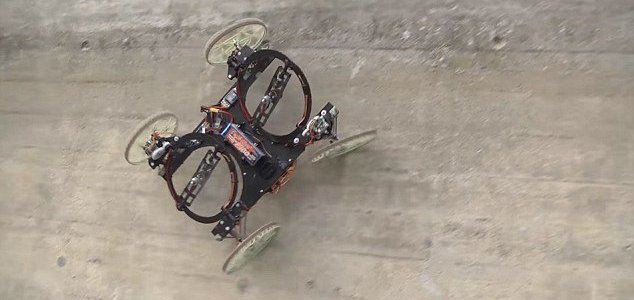
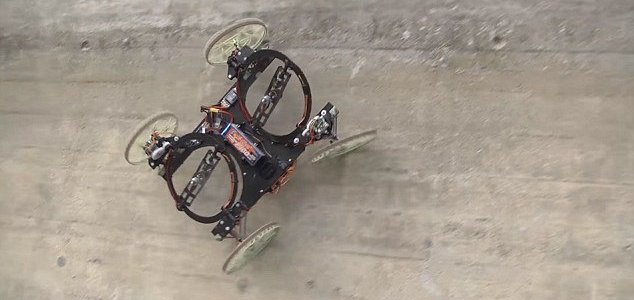
Look at it. Go on, look closely. It seems simple enough, right? A funky-looking remote-controlled car. A plaything. Something you might find under a Christmas tree, destined to be crashed into a wall one too many times before being forgotten in a closet.

That’s what they want you to think.

In 2016, the world was given a brief, tantalizing glimpse of a project called ‘VertiGo.’ The official story, spun by the globe-spanning media empire of Disney, was that it was a research project. A collaboration. A neat little piece of engineering cooked up by Disney Research and the brilliant minds at ETH Zurich.

A car that could drive on the floor. And then drive up a wall.

Cool, right? A novelty.

Wrong. It wasn’t a novelty. It was a message. It was a quiet, public test of a technology so profound, so potentially world-changing, that they had to disguise it as a child’s toy to keep us from asking the real questions. Questions like: why is the world’s largest entertainment company building military-grade spy robotics? And more importantly, after this brief public appearance… where did VertiGo go?

The story vanished. The project went dark. The silence is your first clue that the official explanation is a lie.

Today, we’re tearing that lie apart. We’re going to follow the breadcrumbs from a Zurich lab all the way to the shadowy corridors of power. Buckle up. The truth about this “toy” is far more bizarre and unsettling than you could ever imagine.

The Official Story: A Harmless Experiment in Fun?

Let’s start with the cover story. The narrative fed to the mainstream tech blogs and news outlets. It’s simple, clean, and perfectly believable if you don’t think about it for more than five seconds.

The ‘VertiGo’ vehicle is a four-wheeled chassis, light as a feather, with a remarkable secret weapon: two onboard, tiltable propellers. On the ground, it zips around like any other RC car. But when it approaches a vertical obstacle—a wall, a box, a building—the magic happens. The propellers pivot, generating a powerful downward thrust. Not down towards the ground, but down towards the *surface* the car is on.

This thrust effectively pins the vehicle to the wall, creating enough friction for its wheels to find purchase. It’s like an invisible hand pressing it firmly against the surface, allowing it to defy gravity itself. It could seamlessly transition from a horizontal floor to a vertical wall and keep on driving. No hands. No special tracks. Just pure, physics-bending ingenuity.

Here’s the “official” demonstration they released to the world. Watch it. See the clean, laboratory environment. See how effortless it looks. It’s a perfect piece of corporate propaganda.

The minds at Disney Research and ETH Zurich praised their creation. They spoke of “new forms of locomotion” and “navigating complex indoor and outdoor environments.” They used safe, academic language to describe something that should have set off alarm bells everywhere.

The stated purpose? Unclear. Maybe a future toy for Disney Stores. Maybe a tool for theme park maintenance. Maybe just a fun experiment. They kept it vague. They always do. Vague is safe. Vague doesn’t invite scrutiny.

But we’re here to scrutinize.

Peeling Back the Curtain: Why Is Mickey Mouse Building Advanced Robotics?

This is the first thread you have to pull. The one that makes the whole story unravel. Why Disney?

We’re talking about the company of Snow White, The Avengers, and Star Wars. A company that sells dreams, nostalgia, and hundred-dollar theme park tickets. What business do they have in developing advanced, gravity-defying, wall-climbing robotic platforms?

The answer is Disney Research. It’s a division of the company that sounds innocent enough, focused on computer graphics, video processing, and AI for animation. But dig a little deeper. Disney Research isn’t just about making cartoons look prettier. It’s a network of high-tech labs staffed by some of the most brilliant roboticists, computer scientists, and engineers on the planet. They work on things far beyond the scope of a simple movie studio.

Disney's VertiGo Car climbs a wall

Think about it. Disney is a master of logistics, crowd control, and data collection. Their theme parks are some of the most surveilled and controlled private spaces on Earth. They are pioneers in animatronics—which is just a friendly word for robotics. The line between a lifelike Captain Jack Sparrow robot in a ride and an autonomous machine designed for other purposes is thinner than you think.

Is it really such a stretch to believe that a company with this level of technical expertise, global reach, and immense wealth would have projects operating behind the curtain? Projects that have nothing to do with making you smile, and everything to do with power and control?

VertiGo wasn’t a toy. It was a proof of concept. And to understand who it was being proven for, you have to look at Disney’s long, and very cozy, relationship with the American government and its intelligence agencies.

Deep Dive: The Hidden History of Disney and the Deep State

This isn’t a new development. The partnership between the House of Mouse and the halls of Washington D.C. goes back decades. It’s a well-documented history, if you know where to look.

It began with World War II. After the attack on Pearl Harbor, the U.S. government needed propaganda, and they needed it fast. Who better to turn to than the master storyteller, Walt Disney himself? The Disney studio effectively became a war machine, churning out training films for sailors, educational shorts for the public, and even insignia for over 1,200 different military units. Donald Duck was explaining income taxes to fund the war effort. The Seven Dwarfs were teaching people how to conserve resources. It was a total fusion of entertainment and state messaging.

But the relationship went deeper. Much deeper.

It’s now a declassified fact that Walt Disney himself was a secret informant for the Federal Bureau of Investigation (FBI) for nearly three decades. From 1940 until his death in 1966, he fed information to the infamous J. Edgar Hoover, reporting on anyone in Hollywood he deemed a “subversive” or a communist. He was more than a filmmaker; he was an asset for the domestic intelligence apparatus of the United States.

Then there’s the strange vision of EPCOT—the “Experimental Prototype Community of Tomorrow.” Walt’s original plan wasn’t for a theme park. It was for a real, functioning city. A corporate-run utopia where every aspect of life would be monitored and controlled by the Disney corporation. A city with no private property ownership, where residents’ lives would be optimized for efficiency. It was a blueprint for a perfect surveillance state, disguised as a futuristic paradise. The government studied these plans with great interest. Was it a laboratory for future social engineering?

Given this history, the idea of Disney developing a piece of advanced robotics and *not* having government agencies interested is naive. The VertiGo project wasn’t an anomaly. It fits a long-established pattern of collaboration between Disney’s technological prowess and the government’s insatiable need for new tools of power.

The VertiGo’s True Purpose: A Spy on Your Wall

So, if VertiGo wasn’t meant to be a toy sold in a cheerful Disney box, what was it for? Let’s analyze the technology not as an engineer, but as an intelligence analyst. Let’s think about its applications in the real world. The world of shadows, secrets, and espionage.

Urban Warfare and Close-Quarters Reconnaissance

Imagine a squad of soldiers entering a hostile building in a dense city. Their biggest fear is the unknown. Who is on the next floor? Is the hallway booby-trapped? Is there an ambush waiting around the corner?

Now, imagine they release a VertiGo. It zips silently down the corridor, reaches the stairwell, and climbs straight up the wall, faster than any human. It peeks over the top, its high-resolution camera streaming a live feed back to the soldiers’ heads-up displays. It can scan rooms, identify threats, and map the entire floor without putting a single human life at risk. It’s small, quiet, and can go where no other ground-based robot can. It’s the perfect tool for urban combat.

The Ultimate Surveillance Device

This is where it gets truly terrifying. Forget urban warfare for a moment and think about intelligence gathering. A foreign embassy, a corporate headquarters, a suspect’s high-rise apartment. How do you get eyes and ears inside?

A VertiGo-type device is the answer. Deployed from a nearby rooftop at night, it could scuttle across the roof, drive down the side of a skyscraper, and position itself right outside a window on the 50th floor. Its payload wouldn’t be a toy driver; it would be a sophisticated camera with a zoom lens, a laser microphone capable of picking up conversations through glass, or a device to hack the building’s Wi-Fi network.

Its propellers, while audible in a quiet lab, would be masked by the ambient noise of a city—the hum of traffic, the whisper of the wind. It would be a ghost. A spider on the wall that sees and hears everything. How many of these could be clinging to the sides of buildings in major cities right now, their technology refined from the “toy” Disney showed us?

A Platform for Anything

The beauty of a device like VertiGo is that it’s a platform. The chassis is just the delivery mechanism. What it carries is what matters. A camera is obvious. A microphone, too. But what else? Could it carry a small explosive charge for precise sabotage? A tranquilizer dart? A device to inject a virus into a secure computer network through a vent? The possibilities are limited only by the dark imagination of the agencies that would use it.

This wasn’t a toy car. It was the prototype for a multi-role, semi-autonomous, all-terrain infiltration and surveillance platform. And the public reveal was likely a carefully managed leak to gauge public reaction and to misdirect anyone paying attention.

The Great Disappearing Act: Where Is VertiGo Now?

This is perhaps the most damning piece of evidence. The project was announced in early 2016. It made a splash. Tech websites wrote articles. People were amazed. And then… crickets.

Nothing.

No VertiGo toy ever appeared on Disney store shelves. There were no follow-up announcements from Disney Research. No new videos. The entire project, after its grand debut, simply evaporated. It was scrubbed from the public consciousness.

Projects this promising don’t just die. They don’t just get filed away in a drawer. Especially when the proof of concept is so successful.

So where did it go?

The answer is almost certainly that it “went black.”

This is a common term in the world of military and intelligence R&D. A technology is developed in the open, in a university or corporate lab. Once its viability and potential are proven, a government agency—think DARPA, the CIA’s In-Q-Tel, or a specialized branch of the military—steps in. They acquire the technology, the patents, and sometimes even the entire research team. The project is then pulled from the public domain, given a classified designation, and its development continues in secret, funded by a black budget.

The VertiGo we saw was likely the civilian-friendly V1.0. Somewhere, in a secure facility in the Nevada desert or a non-descript building in northern Virginia, the V2.0, V3.0, and V4.0 have been developed. They are smaller, quieter, faster, and have capabilities that would make the original prototype look like, well, a toy.

Chatter on deep-web forums and from anonymous engineering sources has, for years, mentioned “wall-crawling drones” and “gecko-bots” being tested by various three-letter agencies. The descriptions often match the basic principles of VertiGo: a hybrid ground-and-climbing vehicle using propeller-based thrust. Was Disney’s project the grandfather of them all?

The Children of VertiGo Are Already Watching

The genie is out of the bottle. The technology demonstrated by Disney in 2016 didn’t vanish; it evolved. It merged with the explosive advancements in drone technology, battery life, and AI that we’ve seen over the past several years.

The legacy of VertiGo isn’t a forgotten toy. It’s the swarm of micro-drones that can map a building in seconds. It’s the quiet, spider-like robots that can scale any surface. It’s the technology that has likely already been deployed in fields of conflict and cities around the world, completely unseen by the public.

They showed us a toy car to hide the fact that they were perfecting the ultimate spy. They counted on us being amazed by the spectacle for a moment, and then moving on to the next shiny object. And for the most part, it worked.

But now you know. You’ve seen the history. You’ve connected the dots. The “what if” isn’t a fantasy; it’s the most logical conclusion based on the evidence.

The next time you see a strange drone, or hear a faint, unexplainable whirring sound outside your window on a quiet night, don’t just dismiss it. Remember the little grey car that could drive up a wall. Remember the magic kingdom’s long and shadowy history. And ask yourself: is another one of Disney’s “toys” just out of sight, doing the work it was always truly designed for?

Originally posted 2016-01-18 14:52:21. Republished by Blog Post Promoter