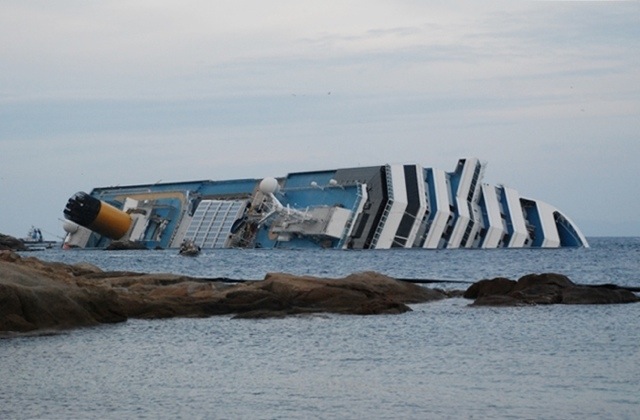
It was a Friday. Friday the 13th, to be exact. January 2012. You couldn’t write a script this cheesy for a Hollywood disaster movie because nobody would buy it. But this wasn’t a movie. It was the night the impossible happened to a floating palace.
The Costa Concordia wasn’t just a boat. It was a titan. A 114,500-ton beast of steel, glass, and pure Italian ego. Imagine a skyscraper toppled on its side, drifting in the Mediterranean. That’s what we are dealing with here. When this thing went down, it didn’t just sink; it shattered the illusion that modern technology makes us invincible.

The “Inchino”: An Ego Trip Gone Wrong?
Let’s cut through the official reports for a second. Why was the ship so close to the island of Giglio? The official term is an “inchino”—a bow. A salute. It’s a maritime drive-by meant to impress people on shore. It’s showboating. Literally.
Captain Francesco Schettino, a man whose name is now synonymous with maritime disgrace, allegedly ordered the ship off its computerized track. He wanted to get close. Too close. He was steering a vessel the size of an aircraft carrier through a passage meant for fishing boats.
At 9:45 PM, the ocean fought back.
Boom.
The port side of the ship tore open. We aren’t talking about a scratch. We are talking about a 160-foot gash. That is half a football field of steel ripped apart like wet paper. A massive chunk of rock, known as “Le Scole,” actually wedged itself into the hull. The ship was bleeding out. Fast.
Chaos in the Dining Hall
Picture this. You are sitting down for a gala dinner. You’re wearing your best clothes. The wine is flowing. The chandelier is sparkling. Suddenly, a shudder runs through the floorboards. Plates slide off tables. Glasses smash. The lights flicker and die.
The crew? They told passengers it was an “electrical failure.” An electrical failure? The ship was taking on thousands of gallons of water per minute, and the PA system was telling people to go back to their cabins. This single decision—the delay in sounding the general emergency alarm—is likely what turned an accident into a massacre.
The Tilt of Death
Physics took over. As the engine rooms flooded, the ship lost power. It began to list. At first, it was subtle. Then, it was undeniable. Gravity shifted. Walls became floors. Floors became walls. People were sliding down corridors, desperate to find a life vest, desperate to find a way out of the labyrinth.
The ship capsized on Jan. 13, 2012. It settled on a rocky shelf, half-submerged, looking like a dead whale washed ashore. Thirty-two people lost their lives that night. It wasn’t the impact that killed most of them. It was the confusion. The darkness. The cold water rising in the corridors while they waited for orders that came too late.
Where Was the Captain?
This is where the story gets infuriating. While passengers were forming human chains to escape the tilting deck, Captain Schettino was… not on board. He claimed he “fell” into a lifeboat. Gravity is a cruel mistress, apparently. But the Italian Coast Guard wasn’t buying it.
The recorded phone call between Schettino (safe in a lifeboat) and Coast Guard Commander Gregorio De Falco is legendary. De Falco screaming, “Vada a bordo, cazzo!” (Get back on board, dammit!) became a rallying cry for a nation embarrassed by the Captain’s cowardice. Schettino never went back. He watched his ship die from the shore.
There are still no signs of the bodies of two people among the 32 dead who have been missing since the ship tumbled onto its side. For a long time, the wreck held onto them, a steel tomb refusing to give up its last secrets.
On September 17, during a complex, unprecedented 19-hour operation, the Concordia was pulled upright.
The Engineering Miracle: The Parbuckling
How do you lift a mountain? That was the question facing Titan Salvage and Micoperi. The ship weighed over 114,000 tons. It was filled with water, rotting food, personal belongings, and sludge. You can’t just hook a crane to it. It would snap in half.
They had to invent a new way to move it. They called it “The Parbuckling.” It sounds like a dance move, but it was actually the most expensive maritime salvage operation in the history of mankind. We are talking over $2 billion. Yes, billion with a ‘B’.
The Setup
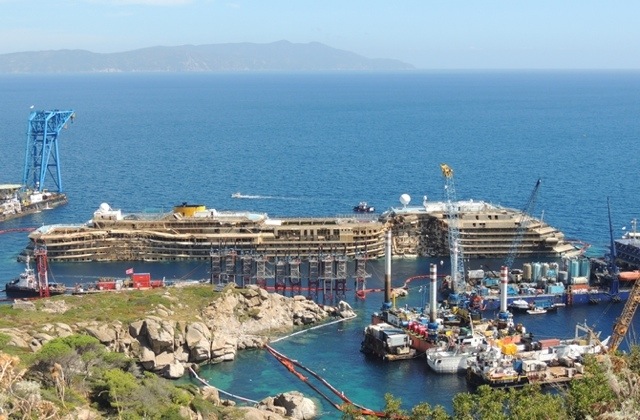
They built a false sea floor underneath the ship. Massive underwater platforms were drilled into the granite bedrock. Then, they welded gigantic steel boxes—called sponsons—to the side of the ship that was sticking out of the water. These boxes were filled with water to act as counterweights.
Cables the size of tree trunks were attached to the hull. Hydraulic jacks pulled. Inch by inch. Degree by degree. The world watched on live streams. It was agonizingly slow. If they pulled too hard? The ship breaks apart, spilling toxic chemicals and oil into a protected marine sanctuary. If they pulled too soft? Nothing happens.

The Ghost Ship Emerges
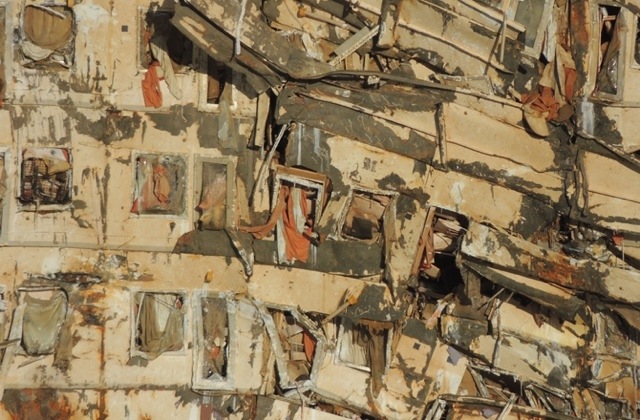
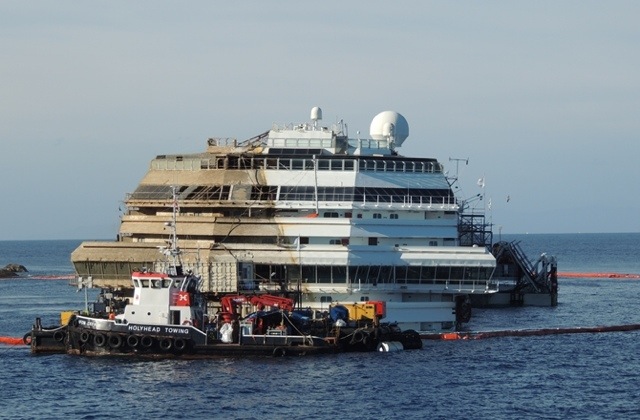
Look at the photos. Really look at them. When the Concordia finally rose from the water, it didn’t look like a ship anymore. It looked like a zombie.
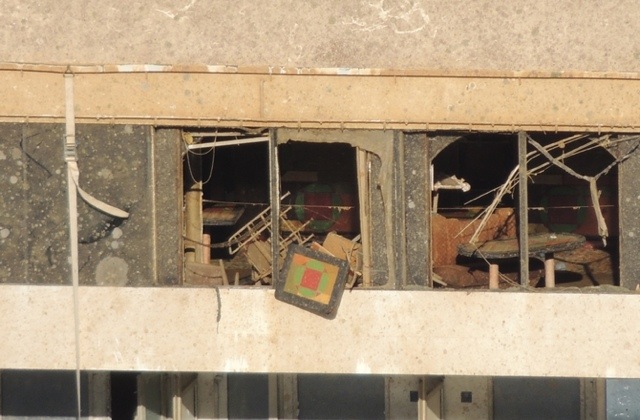
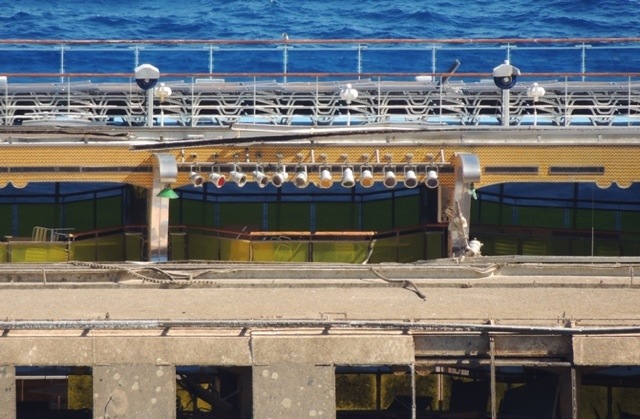
The side that had been submerged for 20 months was crushed. Compressed. Brown and rusted. It looked like it had been on the ocean floor for a hundred years, not two. The contrast was horrifying. One side was white and relatively clean; the other was a mangled mess of twisted metal and exposed cabins.

Inside, the scene was even creepier. Divers and salvage workers reported seeing suitcases floating in hallways. unopened bottles of champagne sitting on bars that were now vertical. The ghostly remnants of a vacation frozen in time. It was a time capsule of panic.
The Conspiracy Theories: Mafia and Coke?
You didn’t think we’d get through this without looking at the shadows, did you? The official story puts the blame on Schettino’s ego. But the internet never sleeps, and the theories surrounding the Costa Concordia are wild.
Here is one that keeps popping up: The ‘Ndrangheta connection. The ‘Ndrangheta is a powerful Italian mafia syndicate. Reports surfaced years later suggesting that a massive shipment of cocaine was hidden aboard the ship. Not in a passenger’s suitcase, but stashed deep in the operational areas. Was the ship carrying mob contraband?
Some theorists speculate that the erratic behavior of the captain, or the specific route taken, was related to a drop-off or a signal gone wrong. Did the Mafia want the ship to sink to hide the evidence? Or was the sinking a botch-job that cost the mob millions in lost product?
Investigators reportedly found traces of cocaine on Schettino’s hair samples, though not enough to prove he was using. Was he a user? Or was he just surrounded by it? The mystery remains murky.

The Mystery Woman on the Bridge
And then there’s Domnica Cemortan. The blonde Moldovan dancer. She wasn’t crew. She wasn’t a registered passenger. Yet, she was on the bridge with Captain Schettino when the ship hit the rock.
Why was she there? Was she a distraction? A lover? A spy? Her presence adds a layer of scandal to the tragedy. While thousands were screaming in terror below decks, the Captain was allegedly trying to impress his mistress with a view of the island lights. It paints a picture of arrogance so profound it makes your blood boil.
She later admitted to having a romantic relationship with him. She even defended him in the press. But her presence on that bridge at that critical moment raises questions about focus, protocol, and who was actually paying attention to the sonar.
The Missing Safes
Here is a detail the mainstream news glossed over. The ship was full of rich people. Rich people travel with cash, jewelry, and diamonds. There were safes in the cabins and a main vault on the ship.
During the salvage operation, rumors flew about treasure hunters. Not pirates in boats, but insiders. Did everything make it back to the owners? Or did the chaos of the salvage provide the perfect cover for a heist? Some debris was lost to the sea forever. It is entirely possible that millions of dollars in diamonds are still sitting in the silt off the coast of Giglio.

The Environmental Time Bomb
We need to talk about the toxic sludge. The Costa Concordia was loaded with fuel. Heavy fuel oil. If those tanks had ruptured, the pristine waters of the Tuscan Archipelago would have turned black. It would have been an ecological apocalypse for Italy.
The salvage team had to “hot tap” the fuel tanks while the ship was underwater. They drilled into the tanks and sucked the oil out, replacing it with water to keep the pressure stable. It was surgery. Dangerous, high-stakes surgery performed by divers in pitch-black water filled with floating furniture and debris.
They succeeded. It is one of the few wins in this entire sorry saga. The coast was saved, even if the ship was doomed.
The Final Voyage to Genoa
Once upright, the ship couldn’t move on its own. It was a corpse. They had to attach more sponsons to the other side—the side that had been in the air. By pumping air into these steel boxes, they made the wreck float.
In July 2014, the Concordia took its final trip. It was towed at a snail’s pace to Genoa for scrapping. It took four days. A convoy of tugboats, environmental monitoring ships, and police escorts surrounded it. It was a funeral procession for a giant.
In Genoa, they tore it apart. Piece by piece. They recycled the steel. They stripped the copper. They processed the waste. The ship that had once hosted thousands of laughing vacationers was reduced to scrap metal and memory.
What Have We Learned?
Looking back, the Costa Concordia disaster feels like a warning. It’s a testament to human error. It proves that no matter how big the ship, no matter how advanced the radar, it all comes down to the person behind the wheel.
It also changed the cruise industry forever. Muster drills—safety briefings—must now happen before the ship leaves the dock. No more waiting. The “Schettino Rule,” if you want to call it that.
But for those who believe in something more sinister, the questions linger. The dark shapes on the sonar. The missing hard drives. The strange, erratic path of the ship. Was it just incompetence? Or was the Concordia a victim of something darker, something hidden in the cargo hold that we will never know about?
The ocean keeps its secrets. And for the 32 souls who never came home, the silence is deafening.