Home Unexplained Mysteries Crime Mysteries The Strange murder case of Carmen Colon

The Strange murder case of Carmen Colon

0
85

The Pattern That Should Not Exist

There are coincidences, and then there are patterns so dark, so mathematically impossible, that they freeze your blood. This is one of those stories. It starts with a name. Then another. Then a terrifying realization that someone wasn’t just killing—they were playing a game. A sick, twisted game with the alphabet.

Imagine the odds. Millions of people. Thousands of miles. Decades of silence. Yet, the bodies kept appearing, linked by a signature so subtle that for years, nobody even saw it. We are talking about the Double Initial Murders. The California Alphabet Killings. A saga of strangled women, lonely roads, and a killer who kept a diary of his sins.

You might think you know the story of the serial killer next door. But this? This is different. This spans coasts. It spans generations. And it centers on a specific, chilling obsession with alliteration.

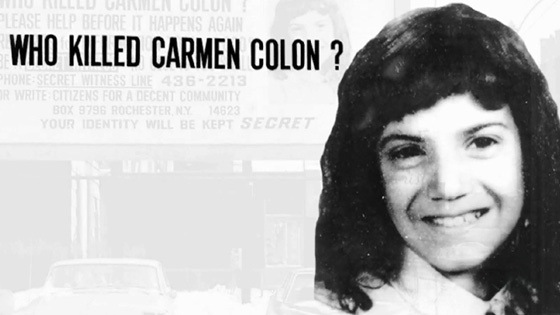
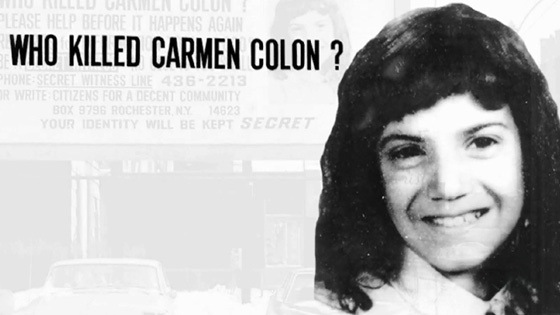
Carmen Colon

1977: The Nightmare Begins in Marin County

Let’s rewind the tape. It’s January 10, 1977. The “Summer of Love” is long dead. California is entering a darker era. The highways are lonely, and the hitchhiking culture is starting to curdle into something dangerous. In the quiet hills near Fairfax, California, a silence hangs over the scrub brush. That silence is broken by a phone call.

An anonymous tip. A voice on the line. The police drive out to a desolate stretch of road where a car had reportedly stalled. They aren’t expecting a crime scene. But under the desert brush, face down, they find her.

Roxene Roggasch. Eighteen years old. A petite redhead with freckles and her whole life ahead of her. The brutality of the scene was immediate. She wasn’t just killed; she was discarded. Pantyhose were wrapped tight around her neck—a garrote. Her feet were bound. The killer had taken time. He had been up close. Personal. Police estimated she had been dead less than twenty-four hours.

The First Mistake: Tunnel Vision

In 1977, police work wasn’t like it is on TV today. No DNA databases. No sophisticated profiling. Just shoe leather and hunches. And their first hunch? It was lazy.

Roxene was suspected of sex work. Her family fought this label, screaming that she was a good girl, but the stigma stuck. The authorities put on their blinders. They looked at the usual suspects. They hauled in a local man, an alleged pimp accused of assault by another woman who knew Roxene. It seemed like an open-and-shut case of street violence.

But the pieces didn’t fit. The “pimp” theory fell apart. The evidence wasn’t there. The suspect walked. And just like that, the trail turned into ice. Roxene Roggasch became a file in a cabinet. A cold case. A tragedy forgotten by everyone except those who loved her.

But the killer wasn’t done. He was just getting started.

1978: The Second Letter Drops

One year later. The memory of Roxene is fading from the public consciousness. But the monster is back. This time, the body appears in Port Costa, a small, eerie town some thirty miles away from the first crime scene. The victim is another young woman, just twenty-two years old.

Her name? Carmen Colon.

Stop right there. Look at the name. Carmen Colon. Look back at the first victim. Roxene Roggasch. See it? The first name and the last name start with the same letter. Alliteration. It’s a literary device used in poetry. Here, it was a signature written in blood.

Carmen was found dumped, just like Roxene. Strangled. Discarded like trash in a rural area. The killer was hunting a specific type, in specific places, leaving a specific mark. But in 1978, the police departments didn’t talk to each other the way they do now. Computers were rare. Faxes were futuristic. The link between R.R. and C.C. went unnoticed by the press.

But the name “Carmen Colon” sent a shockwave through a totally different group of investigators on the other side of the country. Why? Because this wasn’t the first Carmen Colon to be murdered.

Deep Dive: The Impossible Coincidence

Here is where the story gets absolutely brain-melting. Seven years prior to the California murders, in the early 1970s, a series of killings rocked Rochester, New York. They were called the “Alphabet Murders.”

The victims in New York?

  • Carmen Colon.
  • Wanda Walkowicz.
  • Michelle Maenza.

Read that again. A young girl named Carmen Colon was murdered in New York in 1971. Then, a totally different woman named Carmen Colon was murdered in California in 1978. Both strangled. Both double initials. Both unsolved.

What are the odds? Seriously, think about it. Is it a copycat? Did the killer move from New York to California? Or is the universe just playing a cruel joke? Conspiracy theorists went wild. Was there a cult? A single traveling serial killer crossing state lines, hunting girls with matching initials? The “Double Initial” theory was born, but for decades, it remained just that—a theory.

The Great Silence (1978–1993)

After the murder of the Californian Carmen Colon, the line went dead. Silence. For fifteen long years, no bodies with that specific signature turned up. Or if they did, nobody connected them.

Serial killers don’t usually stop. They don’t retire. They don’t take a fifteen-year sabbatical to find themselves. They escalate. Or they get caught for something else. Or they die. Where was the man who hated women with alliterative names? Was he in prison? Did he move again? Or was he right there, watching, waiting, blending in?

The 80s roared by. The 90s arrived. The tech changed. The music changed. But the file on Roxene and Carmen gathered dust in the basement of justice.

The 90s Resurgence: The Killer Returns

1993. Yuba County, California. The landscape is rural, quiet, perfect for hiding secrets. The silence breaks again.

Pamela Parsons. Thirty-eight years old. A waitress. She had her struggles, sure. But she didn’t deserve to die in the dirt. Her body was found dumped. The cause? Strangulation. The details echoed the crimes from the late 70s, but the timeline was so disjointed that investigators were baffled.

Pamela Parsons. P.P. The pattern was back.

One year later, 1994. Another body. Tracy Tafoya. Thirty-one years old. Also found in Yuba County. Tracy had a hard life; she had battled demons, drugs, and the dangers of the street. But the killer didn’t care about her struggle. He drugged her. He raped her. And then he tossed her body into a cemetery like she was nothing.

Tracy Tafoya. T.T.

Forensics estimated Tracy had been dead for a week before anyone found her. The killer was getting sloppy, or maybe he was getting arrogant. He was leaving bodies in places where they would rot before being discovered.

Connecting the Dots: The “Alphabet” Profile

By the mid-90s, police began to zoom out. They looked at the map. They looked at the names.

R.R. (1977)
C.C. (1978)
P.P. (1993)
T.T. (1994)

All four women were strangled. All four were dumped in rural, out-of-the-way areas. All four were found naked or partially clothed. All four had histories that made them “high risk”—sex work, addiction, vulnerability. The killer was a predator who chose victims he thought society wouldn’t miss. He was wrong.

But the names… the names were the key. It wasn’t just a coincidence anymore. It was a ritual. This guy wasn’t just killing for the act; he was collecting. He was selecting. Who looks for victims based on the first letter of their name? It speaks to a deep, obsessive compulsion. A need for order in the chaos of murder.

The “Rochester” Ghost

The shadow of the Rochester killings loomed large. Internet sleuths and cold case detectives couldn’t shake the New York connection. The shared name of “Carmen Colon” was the anchor. Modern theories suggest that perhaps the killer lived in Rochester, killed the first three girls, felt the heat, and fled to the West Coast. Once in California, he tried to suppress the urge but failed. He found another “Carmen Colon” to relive the high of his New York crimes, then went dormant.

It sounds like a movie plot. But the truth was far stranger.

The Breakthrough: A Man Named Naso

The case might have stayed cold forever if not for a mundane mistake. In 2010, probation officers made a routine visit to a house in Reno, Nevada. The man living there was Joseph Naso. He was an elderly man, a former photographer, seemingly harmless.

But Joseph Naso was a pack rat. He kept things. He hoarded.

During a search of his home—standard procedure for a probation check—officers found something that made their skin crawl. They found a collection. Thousands of photos of women. Some appeared to be sleeping. Others… looked dead.

And then, they found the “List.”

Tucked away in his belongings was a handwritten “List of 10.” It wasn’t a grocery list. It was a list of descriptions. “Girl from the woods.” “Girl near the cemetery.” It listed locations. It didn’t use names, but the descriptions matched the murder scenes of Roxene, Carmen, Pamela, and Tracy perfectly.

But here is the kicker: The list had ten entries. Police only knew of four alphabet victims. Who were the other six?

The “Rape Diary” and the Mannequins

As investigators tore Naso’s house apart, the horror deepened. They found mannequin parts dressed in lingerie. They found journals—tens of thousands of pages of handwritten notes. Naso had chronicled his assaults on women for decades. He called them his “dates.” He described drugging them, photographing them in explicit poses, and yes, strangling them.

This wasn’t just a killer; this was a man who lived to document his own depravity. He had photos of Roxene Roggasch. He had DNA on the pantyhose used to strangle her. The science finally caught up to the 1977 crime scene.

Naso had traveled extensively between New York and California during the 70s. He was a photographer who used his camera as a lure. “I can make you a model,” he would say. It was the oldest trick in the book, and it worked.

The Verdict and The Lingering Mystery

In 2013, a jury sentenced Joseph Naso to death for the murders of the four “Alphabet” victims in California. The DNA was undeniable. The trophy photos were damning. The “List of 10” was a confession in his own handwriting.

But what about New York?

This is where the story leaves you with a shiver. Naso lived in Rochester, New York, during the time of the original Alphabet Murders. The Double Initial killings of the early 70s happened in his backyard. He travels to California, and suddenly, the Double Initial killings start happening there? Including a victim with the exact same name as a New York victim?

Despite the overwhelming circumstantial evidence, Joseph Naso was never charged with the Rochester murders. DNA from the New York cases didn’t match him (though samples were old and degraded). Some believe a different killer operated in New York—Kenneth Bianchi, the Hillside Strangler, is a suspect there. Others believe Naso had an accomplice. Or perhaps, in a twisted turn of fate, Naso was a copycat of the New York killer, so obsessed with the Rochester crimes that he hunted down his own “Carmen Colon” to mimic the original.

Final Thoughts: The Letters of Death

We may never know the full extent of Joseph Naso’s crimes. His “List of 10” implies there are at least six more women out there, buried in unmarked graves, waiting to be found. Were their names alliterative too? Did he kill a B.B.? An S.S.?

The California Alphabet Murders serve as a grim reminder. Evil doesn’t always look like a monster. sometimes it looks like an old man with a camera, a hoarding problem, and a fetish for letters. Next time you meet someone new, pay attention to their name. It’s just a label, right? Or, in the hands of the wrong person, is it a target?

Originally posted 2016-02-05 19:17:41. Republished by Blog Post Promoter