Home Unexplained Mysteries Amazing Ancient Objects – unexplained?

Amazing Ancient Objects – unexplained?

1
74

The Artifacts That Break History: 4 Relics That Shouldn’t Exist

History is a story we tell ourselves. A neat, tidy timeline of progress. Stone. Bronze. Iron. The rise and fall of empires. We learn it in school. We see it in museums. It’s comfortable. It makes sense.

But what if it’s wrong?

What if, scattered across the globe, hidden in dusty museum drawers or buried deep in the earth, are objects that spit in the face of that timeline? Artifacts that whisper a different story. A story of forgotten technologies, impossible journeys, and visitors from somewhere else entirely. These aren’t just curiosities. They’re glitches in the matrix of our past. They are the puzzle pieces that don’t fit, the ones historians quietly push to the side because they threaten to shatter the entire picture.

Today, we’re not pushing them aside. We’re putting them under the microscope. We’re diving headfirst into the abyss of the unknown to examine four artifacts so baffling, so out-of-place, that they force us to ask a terrifying question: What do we really know about our own past?

The Roman Dodecahedron: An Enigma Cast in Bronze

Picture a Roman soldier. What do you see? A shield, a sword, a segmented armor breastplate. You see roads, aqueducts, and the Colosseum. You see practicality. You see ruthless efficiency. Now, look at this.

Amazing Ancient Objects – unexplained?

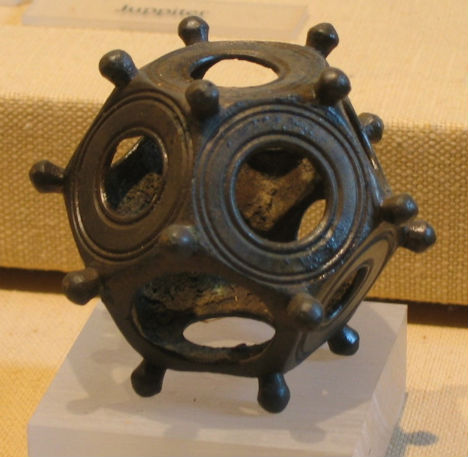
This is the Roman Dodecahedron. Over a hundred of these bizarre objects have been unearthed, from the fields of France to the hills of Germany and Switzerland. They are always made of bronze, hollow, and roughly the size of a fist. Each one has twelve flat, five-sided faces. Each face has a hole in it, and the holes are all different sizes. And from each corner, a small, decorative knob juts out.

Here’s the kicker. Despite the Romans being meticulous record-keepers—they wrote about everything from military tactics to plumbing—there is not a single known mention of these objects. Not one. It’s as if they never existed. So, what on Earth are they?

Deep Dive: The Theories That Just Don’t Add Up

The “official” explanations feel… weak. They feel like a desperate attempt to stuff a square peg into a round hole.

The most popular, and perhaps laziest, theory is that they were decorative candlestick holders. Archaeologists point to a single dodecahedron found with wax residue inside as “proof.” But does that really make sense? Why create such a complex, mathematically precise object just to hold a candle? Why the different-sized holes? Why the knobs? It’s like using a supercomputer to toast bread. It works, but it’s absurd overkill.

Then there’s the idea that they were a surveying instrument, a tool for measuring distances or angles on a battlefield. Again, it falls apart under scrutiny. For a measuring device to be effective, it needs to be standardized. Yet, no two dodecahedra are exactly the same size, and the holes are never consistent. Using them for precise measurement would be impossible.

A more recent guess is that it was a knitting tool, specifically for making the fingers of Roman gloves. The knobs would hold the yarn, and the different holes would serve as a gauge for finger sizes. It’s a clever idea. But why would you forge such a costly and ornate object from bronze for such a mundane task? Wouldn’t a simple piece of wood or bone suffice? And why are they found concentrated in the northern provinces, far from the heart of Rome?

What if It’s Something Else Entirely?

This is where things get interesting. The 12 faces. Twelve. Does that number ring a bell? The twelve signs of the Zodiac. The twelve months of the year. Some of the dodecahedra are even found with symbols that seem to relate to the Zodiac.

Could this have been a religious artifact? A divination tool used by a Gallic mystery cult that operated within the Roman Empire? Perhaps it was a celestial calendar. By looking through one hole, and aligning it with another, you could determine the optimal time to plant crops based on the angle of the sun. This would explain the different hole sizes—each corresponding to a different date or season.

This theory explains the expense, the complexity, and why the Romans never wrote about it. If it was part of a “barbarian” pagan religion or secret society, it would have been suppressed. The records would have been destroyed. The knowledge lost. All that remains are these silent, bronze puzzles, daring us to rediscover their true, forgotten purpose.

The Stone Spheres of Costa Rica: A Prehistoric Giant’s Game of Marbles

Imagine walking through the dense jungle of Costa Rica. The air is thick, the sounds of wildlife are all around you. And then you see it. A perfectly round stone sphere, as tall as a man, resting in a clearing. Then you see another. And another.

Amazing Ancient Objects – unexplained?

This isn’t science fiction. This is the Diquís Delta. Over three hundred of these incredible stone spheres, or *Las Bolas*, are scattered across the landscape. They range in size from a few inches across to over six feet in diameter, weighing up to a staggering 16 tons. Many are carved from granodiorite, a rock as hard as granite, and they are so perfectly spherical that they defy belief.

The people who made them, the Diquís culture, vanished around 1500 C.E., leaving behind no written language. No explanation. Nothing. Just these silent, stone giants.

Deep Dive: The How and The Why

How did a culture with no metal tools, no draft animals, and no wheels create these flawless objects? The official explanation is a process of pecking and grinding with harder stones, followed by polishing with sand. It’s a process that would have taken a lifetime, an unimaginable amount of labor to achieve such precision. But the bigger question isn’t how. It’s *why*.

Why move a 16-ton block of stone over 50 miles from the nearest quarry, through mountains and swamps, just to carve it into a perfect ball? The theories are as wild as the jungle they were found in.

  • Status Symbols: The simplest theory. They were placed outside the homes of important chiefs to signify power and wealth. Plausible, but it feels like it’s missing the sheer scale of the undertaking.
  • Astronomical Markers: A favorite theory among alternative historians. The spheres were once arranged in massive patterns that mirrored the constellations. They were a giant, land-based map of the heavens, a way to track the solstices and predict eclipses. Unfortunately, most of the spheres have been moved from their original locations over the years to make way for farming, so we may never be able to prove this.
  • Navigational Aids: Could they have marked sacred paths or tribal boundaries across the land? A giant’s breadcrumb trail through the impenetrable jungle?

But then there’s the fringe theory. The one that keeps you up at night. What if the Diquís people didn’t make them at all? What if they just *found* them? What if the spheres are the relics of a much older, much more advanced civilization? A civilization lost to time, whose only remaining legacy is these impossible objects? It’s a mind-bending thought. The spheres aren’t just art. They’re echoes of a world we’ve completely forgotten.

The Maine Penny: A Viking Souvenir in a Time Before Columbus

The year is 1957. An amateur archaeologist named Guy Mellgren is excavating a sprawling Native American settlement in Naskeag Point, Maine. It’s a significant site, a former hub of trade and culture. He and his team are sifting through the soil, finding arrowheads, pottery shards, the usual remnants of a lost people. And then they find something… wrong. Something that absolutely should not be there.

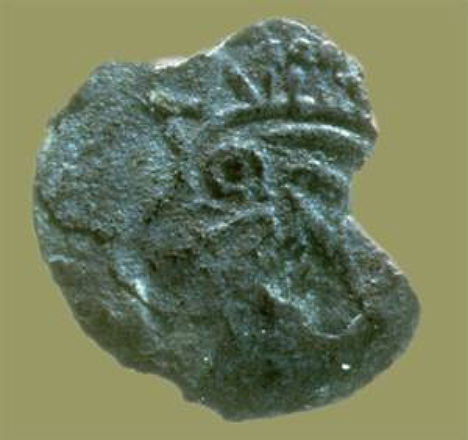
A small, silver coin. Thin and worn. On its face, a faint cross and what looks like an animal. It’s not English. It’s not French or Spanish. It’s Norse.

so-maine-penny (1)

Experts later confirmed it. The “Maine Penny” is a genuine Norse coin, minted during the reign of Olaf Kyrre, King of Norway, sometime between 1067 and 1093 C.E. It was found at a site dated to centuries before Christopher Columbus was even born. The implications are staggering. We know Vikings landed in Newfoundland, Canada, around 1000 C.E. But this coin, found thousands of miles south, suggests something more. Direct contact. Trade. A chapter of American history that has been completely erased from the books.

Deep Dive: Proof of a Lost History or a Red Herring?

This single coin could rewrite everything. It’s the smoking gun that proves Vikings didn’t just touch the edge of the New World; they explored it. They met and traded with the ancestors of the Penobscot people. It’s a romantic, incredible idea.

But there’s a problem. A big one.

It’s the *only* Norse artifact ever found at the site. If a group of Vikings had set up camp or even just a trading post, you’d expect to find more. A piece of a longship. A rusty axe head. A metal rivet. Anything. But there’s nothing. Just the one coin.

This leads to the more accepted, but far less exciting, theory. The coin didn’t get to Maine in a Viking’s pocket. It got there through the vast and complex trade networks of the Native American peoples. Imagine it: a Viking trader in Newfoundland gives the coin to a member of the Beothuk or Mi’kmaq tribes in exchange for furs. That tribe then trades the coin to a neighboring tribe for tools. The coin then travels south, hand to hand, tribe to tribe, over hundreds of miles and possibly hundreds of years, its original meaning completely lost. It becomes just a curious trinket, a shiny piece of silver, before finally being dropped and lost in the soil of Maine.

So which is it? Is the Maine Penny a monumental piece of evidence that shatters the Columbus myth? Or is it just an ancient piece of pocket change that went on an incredible journey all on its own? The coin isn’t talking.

The Vladivostok Gear: A 300-Million-Year-Old Machine Part?

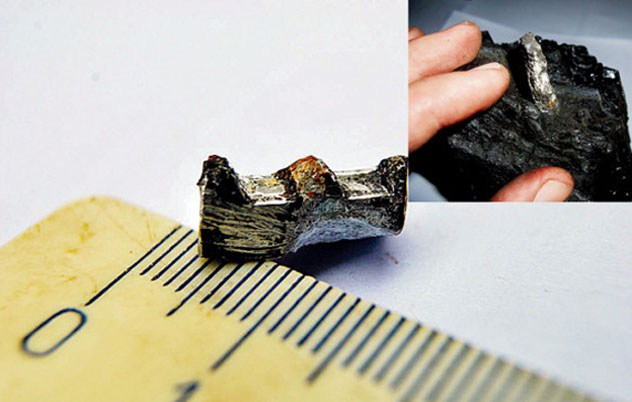
This story sounds like something out of a science fiction novel. A Russian man in the far-eastern city of Vladivostok is getting ready to light a fire. He grabs a lump of coal, and as he does, something strange catches his eye. Embedded in the dark rock is a piece of metal. It’s light, silvery, and shaped like a gear or a section of a toothed wheel.

Amazing Ancient Objects – unexplained?

Thinking it was just a piece of junk from an old factory, he was about to toss it. But his curiosity got the better of him. He took it to scientists for analysis, and the results that came back were impossible.

The object was 98% aluminum and 2% magnesium. Pure, man-made aluminum. The problem? Humans only figured out how to produce aluminum on an industrial scale in 1886. But the coal it was embedded in? That coal was from the Carboniferous period. It was 300 million years old.

Deep Dive: A Message From Before Time

Let’s be clear. 300 million years ago, there were no humans. There were no primates. There weren’t even dinosaurs yet. The dominant life forms on Earth were giant insects and sprawling, primeval swamp-forests. To find a manufactured aluminum alloy gear in a lump of coal from this period is, to put it mildly, a paradox.

So what could it be?

The knee-jerk reaction from skeptics is that it must be a hoax or a mistake. That it’s just a piece of a modern mining machine that broke off, fell into a pile of coal dust, and was compressed into a new “lump.” A neat and tidy explanation. But does it hold up? The reports claim the object was firmly embedded *inside* a solid piece of coal, not pressed into loose dust.

If we entertain the impossible for a moment, the possibilities are wild.

  • Ancient Astronauts: The most popular theory in online forums. This is a fragment of an alien spacecraft that crashed on Earth 300 million years ago. Its wreckage was buried in the swamps, fossilized, and became part of the coal seam, waiting to be discovered.
  • Time Travelers: Is it a piece of machinery from our future? Something that fell out of a time machine and became lodged in the distant past, creating an unresolvable paradox?
  • A Lost Terrestrial Civilization: This is perhaps the most profound and disturbing idea. What if we weren’t the first? What if another intelligent, technological species rose and fell on Earth millions of years before us, leaving behind almost no trace? The so-called “Silurian Hypothesis.” This small aluminum gear could be one of the only surviving relics of a world that existed in a time we can barely imagine.

The object from Vladivostok is the ultimate out-of-place artifact. It’s either a simple piece of industrial junk that created a fantastic misunderstanding, or it’s hard evidence that our entire understanding of life on Earth is fundamentally wrong.

The Past is a Foreign Country

A Roman star-chart. Prehistoric globes of perfect geometry. A Viking coin that wandered a continent. A machine part from a time before time. These objects don’t belong. They are the footnotes of history, the anomalies that the textbooks ignore. They ask questions we don’t have answers for. They suggest that the past is not a settled, dusty thing, but a place of deep, unresolved mystery. They prove that we are not the pinnacle of some grand, linear story. We are just the latest chapter in a book with many, many pages torn out.

Originally posted 2016-08-23 11:20:32. Republished by Blog Post Promoter